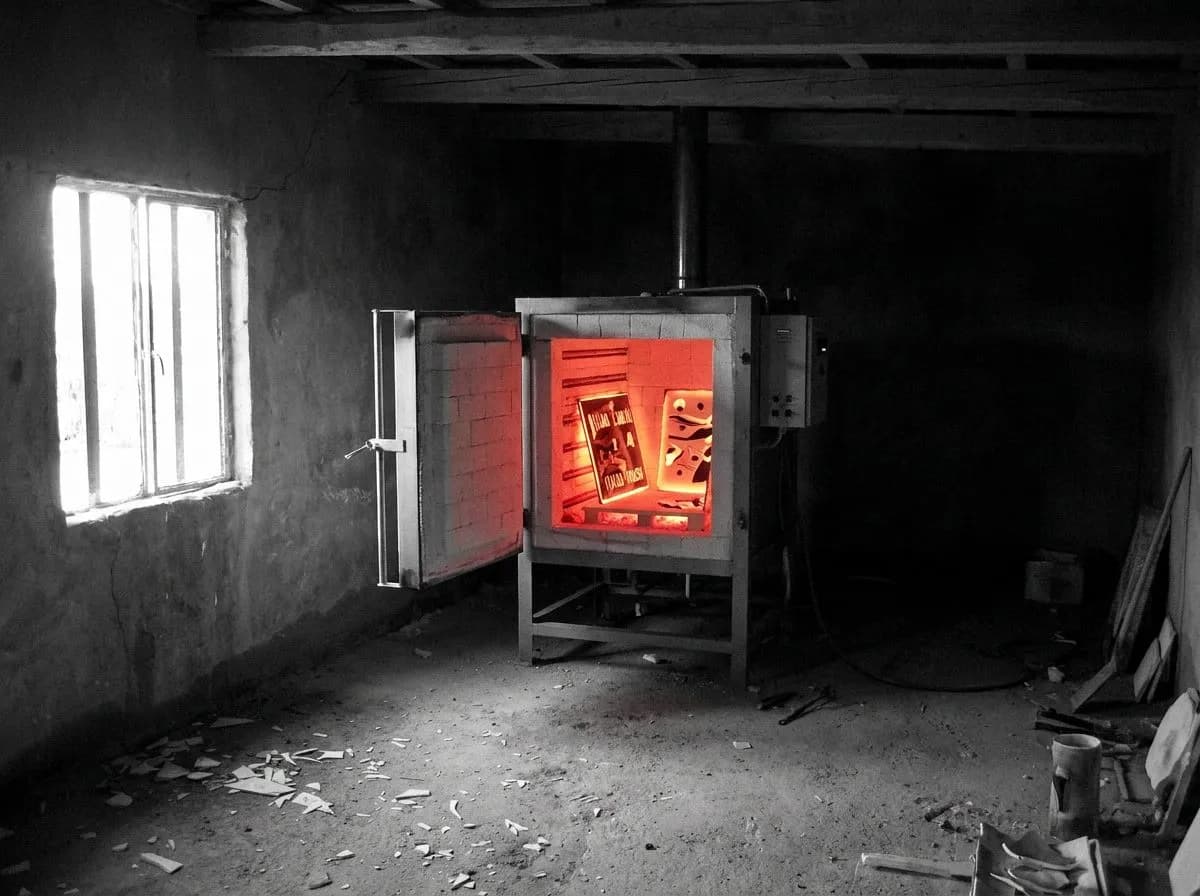
The studio occupies a former sheet-metal shop off Atlantic Avenue, where the smell of flux and hot metal greets you at the door. Inside, vintage advertising signs line industrial shelving—rusted Gulf Oil placards, chipped railroad warnings, faded apothecary shingles awaiting restoration. At the center of the space sits a gas kiln, its door propped open to reveal racks of cooling signs. This is where porcelain enamel signs are brought back to life through a meticulous process that combines chemical stripping, metalwork, hand stenciling, and high-temperature firing. The craft draws directly from the golden age of American signage, when every corner drugstore and rail crossing bore hand-fired enamel that could outlast nearly anything.
The archive and the formulas
The studio's approach is rooted in primary sources. Floor-to-ceiling shelves hold a reference library of trade catalogs from Ingram-Richardson, Burdick Enamel Company, and other long-defunct manufacturers. These manuals—brittle pages detailing pigment ratios, firing schedules, substrate preparation—are treated like sacred texts. The vitreous paint formulas used here were reverse-engineered from 1920s Burdick Enamel Company trade catalogs acquired at a Pennsylvania estate sale, each recipe adjusted through trial and error until the results matched archival examples.
Vitreous enamel paints are mixed on-site from dry pigments and gum arabic, ground to a fine consistency on a glass slab. The palette is limited—cobalt blue, chrome yellow, iron oxide red, lamp black, titanium white—but those colors, once fired, achieve a gloss and permanence that modern paints cannot replicate. The studio keeps detailed logs of every batch, noting humidity, pigment source, and firing outcomes.
Stripping, patching, blasting
Every sign arrives with its own damage profile. Rust blooms along edges, enamel flakes away in patches, steel substrates bend or buckle. The first step is chemical stripping: caustic solutions dissolve decades of grime and failing enamel, revealing the bare metal beneath. What cannot be stripped is sandblasted in a cabinet at the rear of the studio, filling the space with a rhythmic hiss.
Steel substrates are then assessed. Minor rust pitting is ground smooth; deeper corrosion requires patching with welded steel stock. The repaired panels are primed with a thin coat of ground coat enamel, a milky suspension that bonds metal to the layers of color that will follow. Edges are filed, surfaces checked for levelness. Nothing goes into the kiln until it is geometrically sound.
Stencils and layering
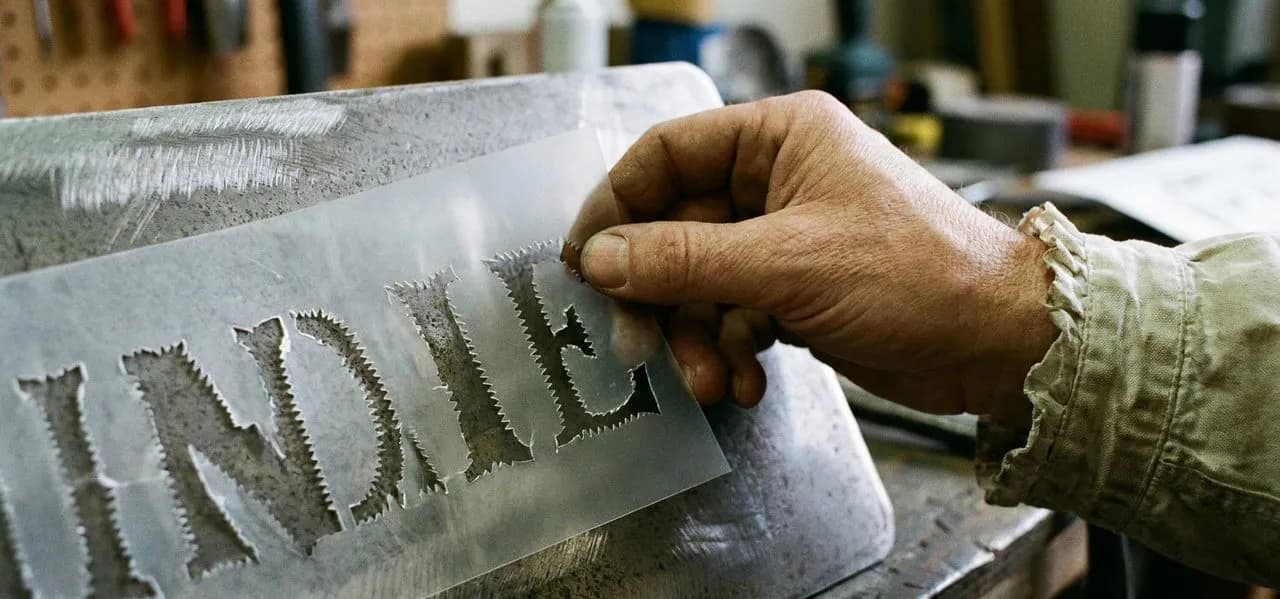
Hand-cut stencils are the heart of the process. Working from photographs or surviving fragments, the studio recreates original lettering and logos in Mylar, each character traced and cut with an X-Acto knife. For a simple sign—say, a gas station logo—this might mean four stencils. For a railroad crossing sign with fine serif lettering, the count climbs higher.
Railroad crossing signs require three separate kiln firings—white base coat, black lettering, and final clear flux seal—each at slightly different temperatures. The white base is fired first at 1,450°F, cooling overnight before the black layer is stenciled on and fired at a slightly lower temperature to prevent underfiring. The final flux seal, a glassy topcoat, goes on last, adding depth and weather resistance. Between firings, signs rest on wire racks, their surfaces checked for blistering or color shift.
Each firing takes hours. The kiln climbs slowly, holding temperature for a precise window before cooling begins. Rushing the process invites disaster—cracking, bubbling, colors that bleed or dull. Patience is non-negotiable.
The rhythm of the week
The studio operates on a firing schedule. The studio’s firing schedule should be verified directly before publication. By mid-afternoon, the space is warm, the kiln glowing through its observation port. Thursday and Friday are reserved for second and third firings, stencil work, and client consultations. The rest of the week is spent on prep—blasting, grinding, mixing paint, cutting stencils.
Projects take six to eight weeks depending on sign size and damage. A straightforward apothecary shingle might turn around faster; a multi-panel gas station sign with intricate logos and heavy rust damage can stretch longer. Clients are walked through the process during consultations, shown examples of before-and-after restorations, given realistic timelines.
What gets restored
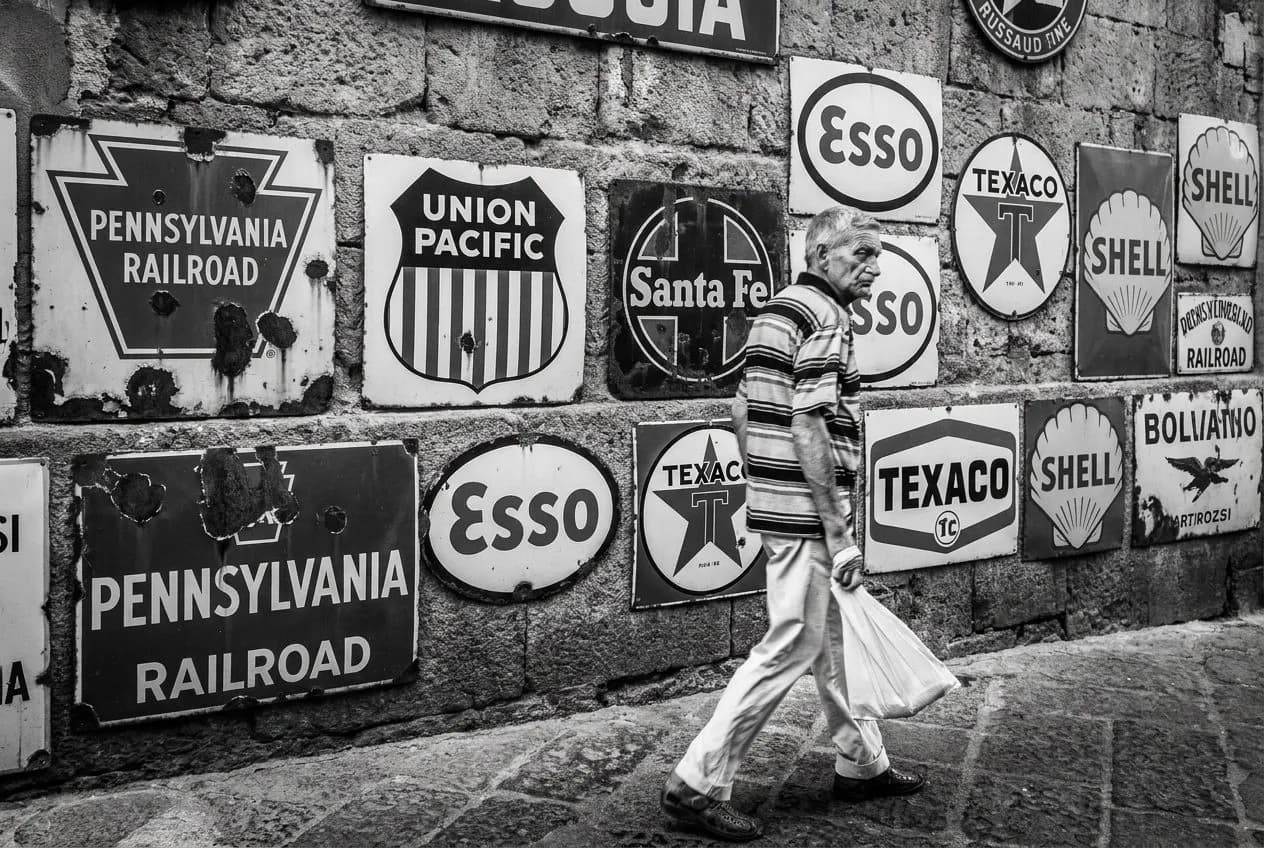
The studio sees a wide range of work. Railroad crossing signs are a specialty—those black-and-white warnings that once dotted every grade crossing, now prized by collectors. Gas station logos from the mid-century—Sinclair, Texaco, Pure Oil—arrive regularly, often pulled from barn walls or estate cleanouts. Apothecary shingles, with their serif typefaces and gold leaf accents, require extra care; the gilding is applied after the final firing, burnished by hand.
Occasionally, the studio takes on custom work—new signs executed in the old style, using the same materials and techniques. These are indistinguishable from originals once they leave the kiln, acquiring that same jewel-like surface and heft. For those exploring this corner of Brooklyn's industrial craft scene, the studio offers a glimpse into a vanished trade, still practiced with exacting care.
The finished product
Completed signs cool on racks beside the kiln, their surfaces hard and glossy, colors locked beneath a layer of glass. Up close, you can see the slight texture of the stencil edge, the way light catches the flux seal. These are objects built to last—weatherproof, fade-resistant, tough enough to survive another century outdoors.
The studio is open by appointment Wednesday through Friday, and visiting feels less like shopping than bearing witness to a slow, heat-driven resurrection. Signage that once shouted from street corners and rail crossings is given a second life, pulled back from rust and ruin by fire, patience, and an obsessive attention to historical detail. If you are building a city guide to Brooklyn's quieter maker spaces, this one belongs on the list.
Practical notes
The studio is located in Brooklyn; exact address should be verified before publication. Nearest subway access should be verified directly with the studio before publication. Limited street parking; metered spots along Atlantic. Open by appointment Wednesday through Friday; consultations typically last thirty to forty-five minutes. The space is ground-level accessible. Bring photographs or the sign itself if possible; projects are quoted on-site based on condition and complexity. Turnaround is six to eight weeks. Verify hours and availability directly before visiting.
Tags: #HandPaintedEnamel #CrownHeights #BrooklynMakers #PorcelainEnamel #SignRestoration #VintageSignage #KilnFired #TheOddEdit #NYCCraft #IndustrialCraft #RestorationStudio #BrooklynCityGuide #Fall2026 #TradeRevival #AmericanSignage
Sources consulted: Vitreous Enamel · Crown Heights, Brooklyn · NYC Crown Heights Business · Historic Signs Preservation · Atlas Obscura Brooklyn
All trademarks are the property of their respective owners.