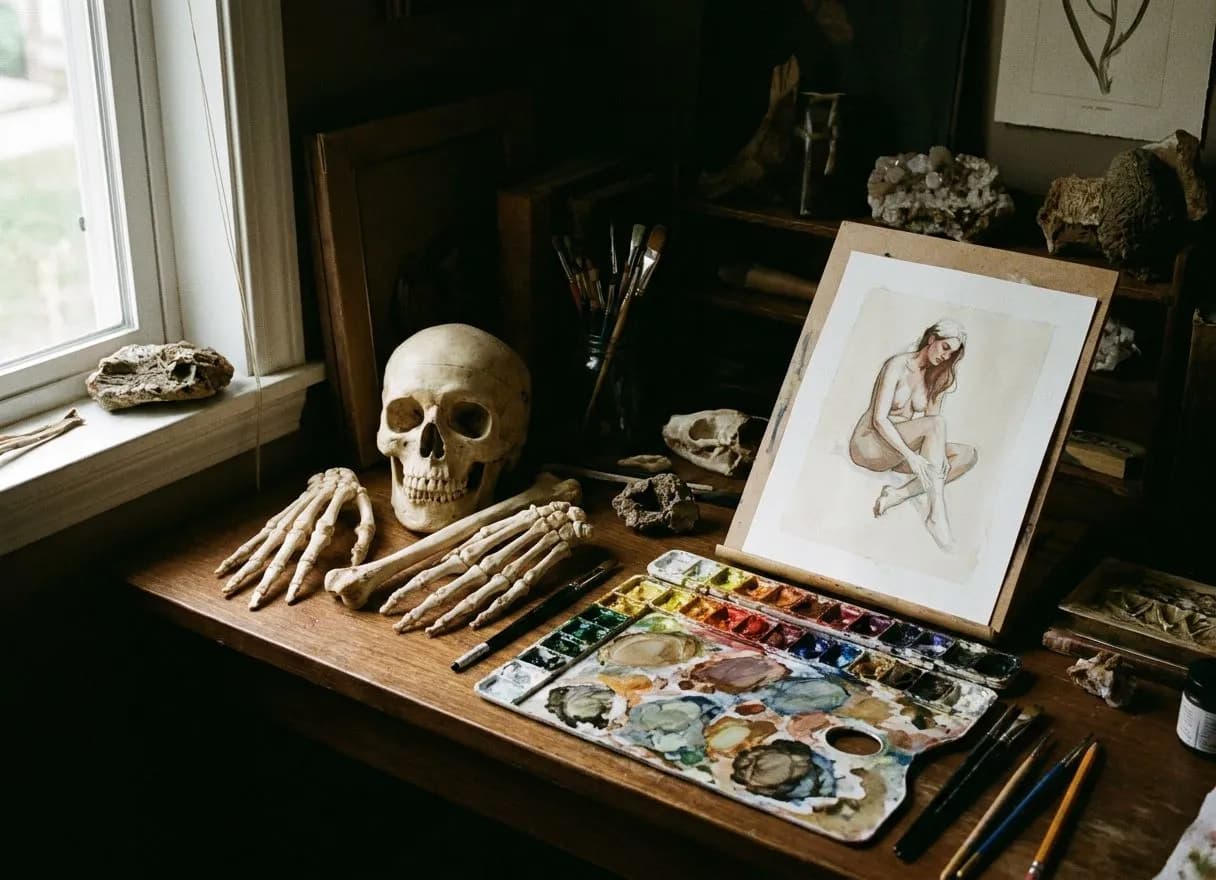
The studio occupies two rooms on the second floor of a Ditmas Park Victorian, where afternoon light slants through tall windows onto a drafting table scattered with crow quill pens and tubes of Windsor & Newton gouache. A human skull sits on a bookshelf beside articulated hand bones, both serving as reference models. The air carries the faint sweetness of gum arabic mixed with the sharper note of fixative spray. This is where a trained medical illustrator spends her weekdays painting cross-sectional organ studies and skeletal articulations using techniques lifted directly from 19th-century surgical atlases—work that feels less like decoration and more like a disciplined form of translation.
The reference library
One wall is lined floor-to-ceiling with vintage surgical texts, field guides to medicinal plants, and facsimiles of Netter Atlas plates. The crown jewel is a first-edition 1858 Gray's Anatomy with hand-colored plates, purchased from a London medical book dealer in 2015. The illustrator pulls it down carefully during consultations, showing clients how earlier anatomists rendered muscle striations or vascular networks before photography flattened everything into high-resolution sameness.
The books aren't just decorative. They're working tools, referenced daily for proportion, shading techniques, and the particular visual grammar that makes an anatomical illustration legible rather than merely accurate. A magnifying glass lives on the shelf for studying crosshatching patterns in 19th-century engravings—how the density of ink lines can suggest depth, texture, the firmness or softness of tissue. Adjacent shelves hold bound volumes of surgical journals from the 1920s, their plates showing the evolution of illustration techniques as printing technology advanced. Some mornings begin with simply looking—studying how an illustrator from 1887 solved the problem of rendering transparent fascia, or how a botanical artist from the 1910s suggested the delicate membrane of a seed pod.
The work itself
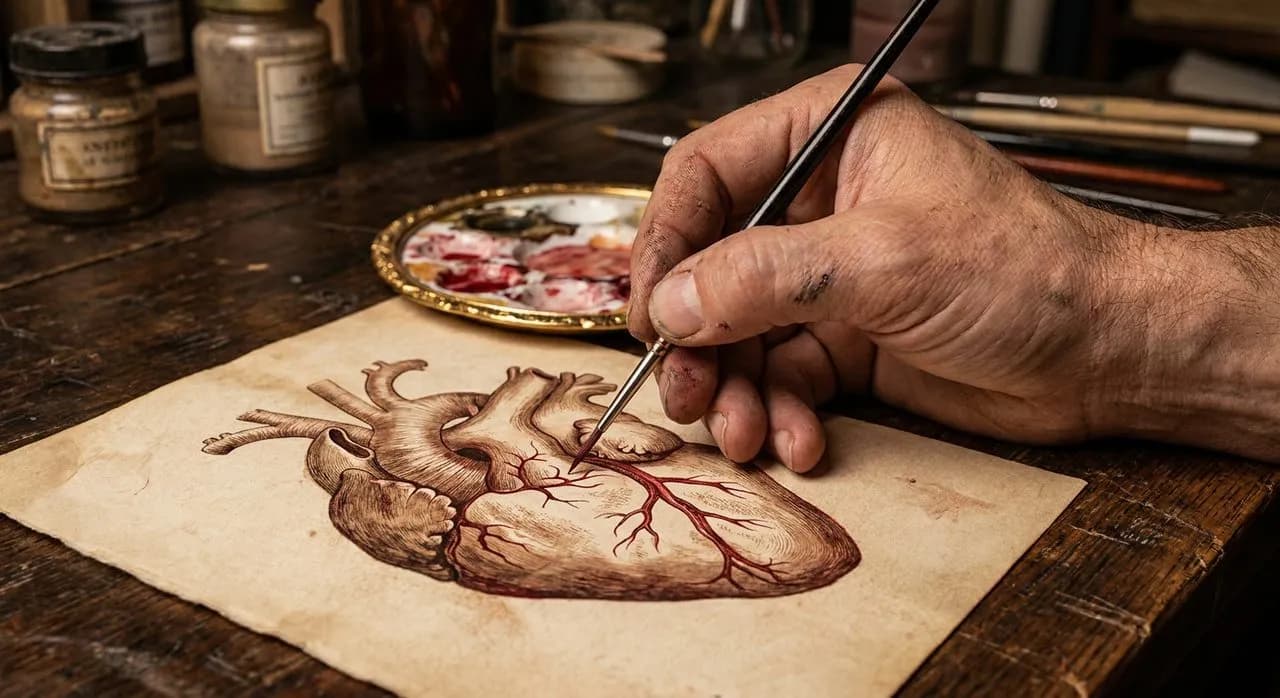
Each illustration begins on hot-press watercolor paper, its smooth surface ideal for fine detail work. Gouache illustrations require three layers: underpainting for base tones, detail work for structures, and final highlights using titanium white mixed with gum arabic. The process is slow. A single cross-section of a human heart—chambers labeled, vessels color-coded—can take twelve to fifteen hours spread across a week.
The illustrator works from photographic references, cadaver studies, and her own dissection sketches made during her scientific illustration training. But the final paintings don't mimic photography. Instead, they clarify: simplifying backgrounds, adjusting colors for pedagogical clarity, emphasizing the relationships between structures in ways a photograph can't. A liver illustration might exaggerate the hepatic artery in crimson to distinguish it from the portal vein rendered in cooler blue-violet. The choice of what to include and what to omit requires as much anatomical knowledge as artistic skill—understanding which details serve comprehension and which merely clutter the frame.
Botanical medicinal plant studies make up the other half of the portfolio—detailed renderings of foxglove, valerian root, echinacea showing root systems, leaf veination, and flowering stages. These feel like a natural extension of the anatomical work, the same attention to structural logic applied to vegetable rather than animal forms.
Who commissions this work
Tuesday appointments often involve client consultations where surgeons request specific anatomical views for teaching slides or office display. A hand surgeon might want an illustration of carpal bones in dorsal view; a tattoo artist needs a reference drawing of a ribcage with accurate costal cartilage spacing. Collectors of medical ephemera commission pieces to hang alongside antique phrenology charts or apothecary labels.
The commissions vary wildly in tone. Some clients want sober, textbook-accurate renderings. Others request something slightly uncanny—a heart painted in jewel tones, a skull wreathed in anatomically correct medicinal herbs. The illustrator navigates these requests with the same careful attention she brings to the painting itself, clarifying intent, setting boundaries around what will and won't serve the image. A recent commission from a Park Slope obstetrician requested a series showing fetal development stages rendered in the style of 1890s German medical texts—muted earth tones, precise stippling, labeled in a clean sans-serif rather than period typeface. The balance between historical technique and contemporary aesthetic requires ongoing negotiation.
The archive and process
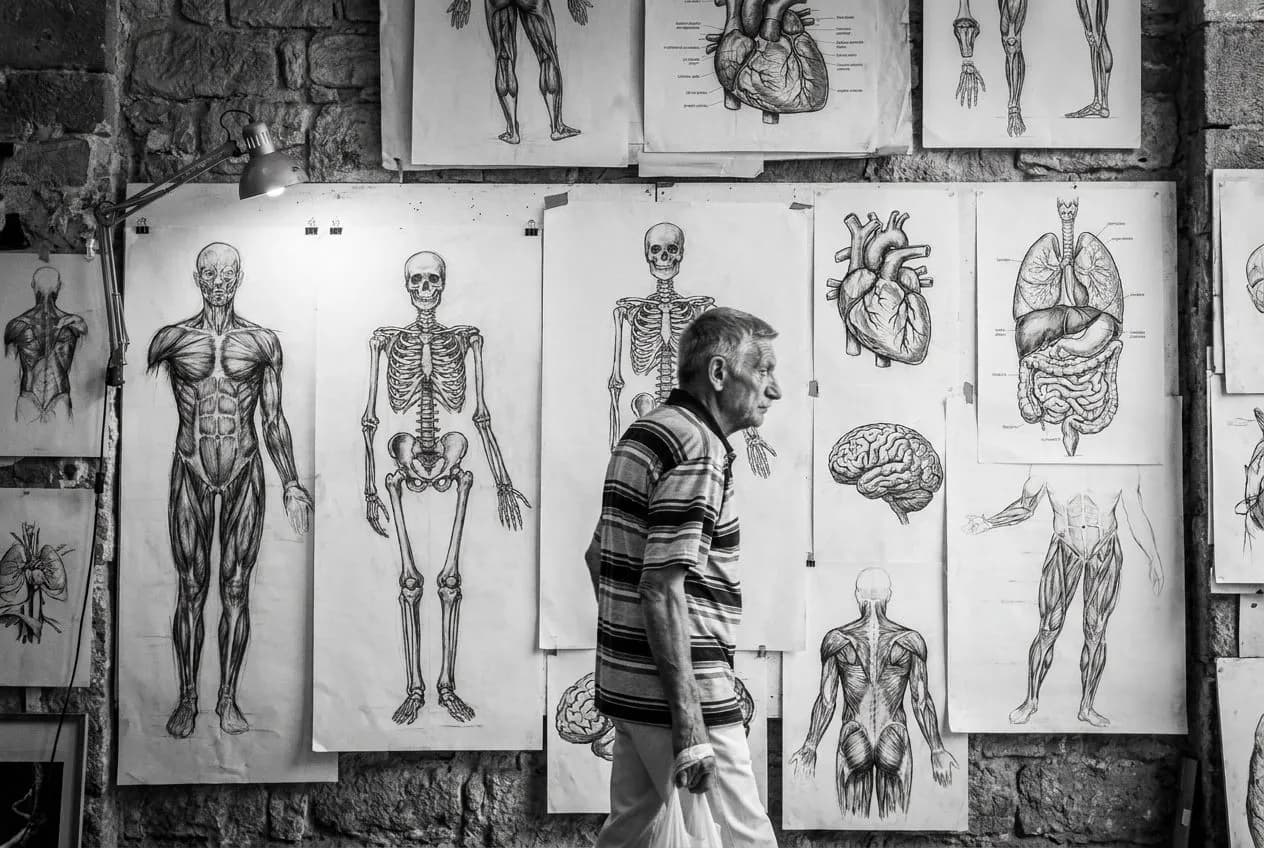
Before any piece ships, it's photographed under controlled lighting and archived in a portfolio that now dates back to 2012. The digital files serve as both record and insurance, but they also reveal the evolution of the illustrator's hand—early work more tentative, recent pieces showing the confidence that comes from a decade of close looking.
The studio maintains a quiet, almost monastic atmosphere. No music, no podcasts. Just the scratch of nib on paper, the occasional sigh of the space heater in late 2026 as fall deepens toward winter. It's the kind of focus that resists documentation, that doesn't photograph well for any casual city guide. You have to see the work up close to understand the precision involved—the way a single brushstroke can articulate the curve of a scapula or the delicate branching of bronchioles.
The neighborhood that houses it
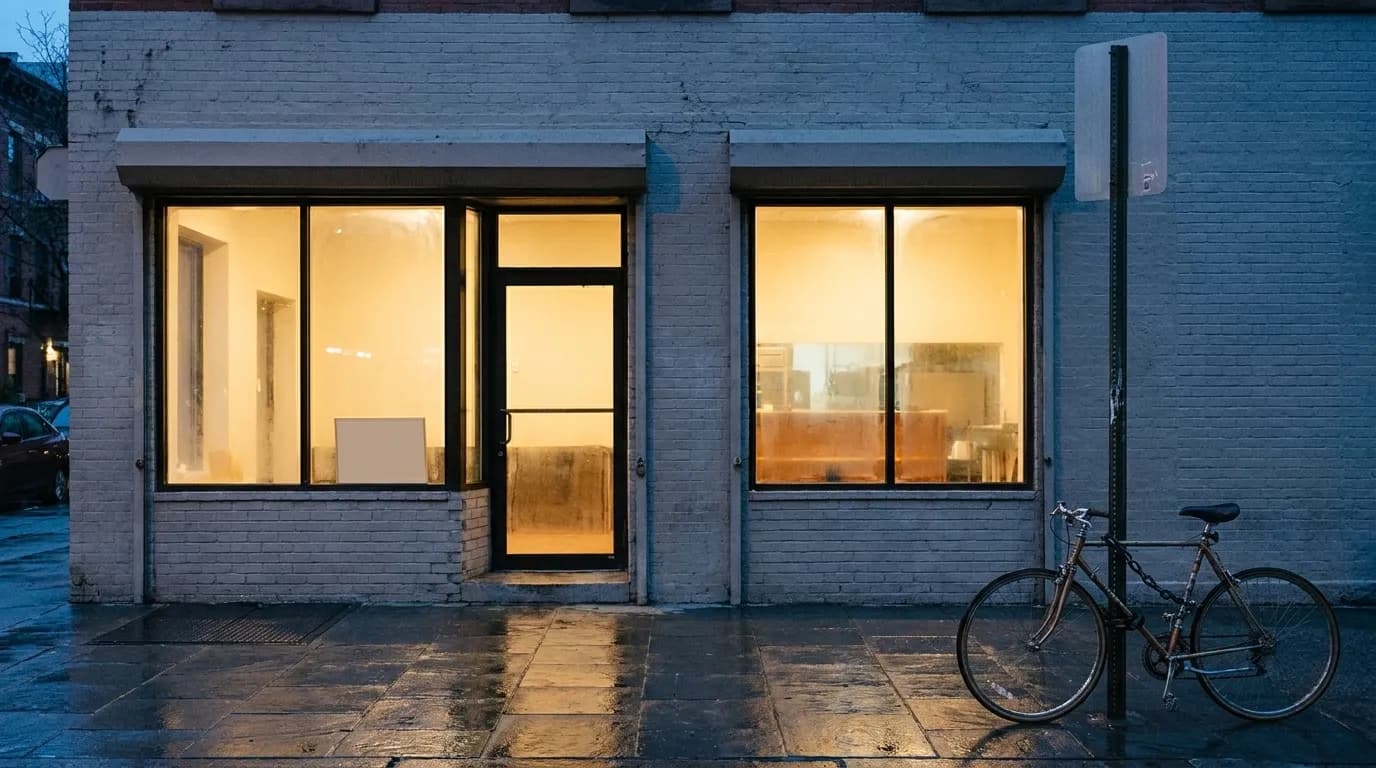
Ditmas Park feels like an unlikely setting for this kind of specialized work, but the neighborhood's combination of residential quiet and architectural character makes a certain sense. The surrounding blocks are lined with Victorian homes built between 1900 and 1920, their front porches and turrets suggesting an era when craftsmanship moved at a different pace. The studio sits among these houses like a secret kept in plain sight—no storefront, no signage, just a brass nameplate by the door that most passersby never notice.
The walk from Newkirk Plaza takes you past community gardens, a Turkish bakery, and several streets where London plane trees form green tunnels in summer and skeletal archways in winter. It's a neighborhood that still supports small-scale, idiosyncratic work—a violin repair shop three blocks north, a letterpress studio on the adjacent street, a bookbinder working out of a converted garage. The studio fits this ecosystem of patient, manual labor, the kind of work that requires insulation from the rush of commercial strips and the pressure of foot traffic. Here, the rhythm of residential life—dog walkers passing, schoolchildren on afternoon routes, the distant hum of Coney Island Avenue—provides just enough ambient presence without intrusion.
Why it matters now
In an era when AI can generate passable anatomical diagrams in seconds, there's something almost defiant about painting by hand with techniques borrowed from the 1800s. But the surgeons and collectors who seek out this studio aren't interested in speed or convenience. They want the thing a machine can't quite replicate: the evidence of a human hand translating complex three-dimensional structures into two-dimensional clarity, one careful layer at a time.
The work is pre-modern in method but not in sensibility. These aren't nostalgic recreations. They're contemporary illustrations made with historical tools, bridging the gap between art and science in ways that feel newly relevant as both fields grow more specialized, more siloed, more dependent on screens.
Practical notes
The studio is located on a residential block in Ditmas Park, address provided upon booking. Nearest subway: B/Q to Newkirk Plaza, then a ten-minute walk through tree-lined streets of Victorian homes. Street parking is generally available. Open by appointment only, Tuesday and Thursday afternoons; email ahead to schedule a consultation or portfolio viewing. The studio is up one flight of stairs, not wheelchair accessible. Bring reference images if commissioning work—surgical textbook pages, specific anatomical views, or examples of the style you're after. Commission pricing varies by complexity and size; allow four to six weeks for completion.
Tags: #HandPaintedArt #MedicalIllustration #DitmasPark #TheOddEdit #NYCStudios #AnatomicalArt #TraditionalTechniques #ScientificIllustration #BrooklynArtists #GouachePainting #VintageReference #Fall2026 #CityGuideNYC #ArtisanCraft #CollectorsEdition
Sources consulted: Medical Illustration · Ditmas Park, Brooklyn · NYC Parks - Ditmas Park · MTA Transit to Brooklyn · The New York Times Arts
All trademarks are the property of their respective owners.