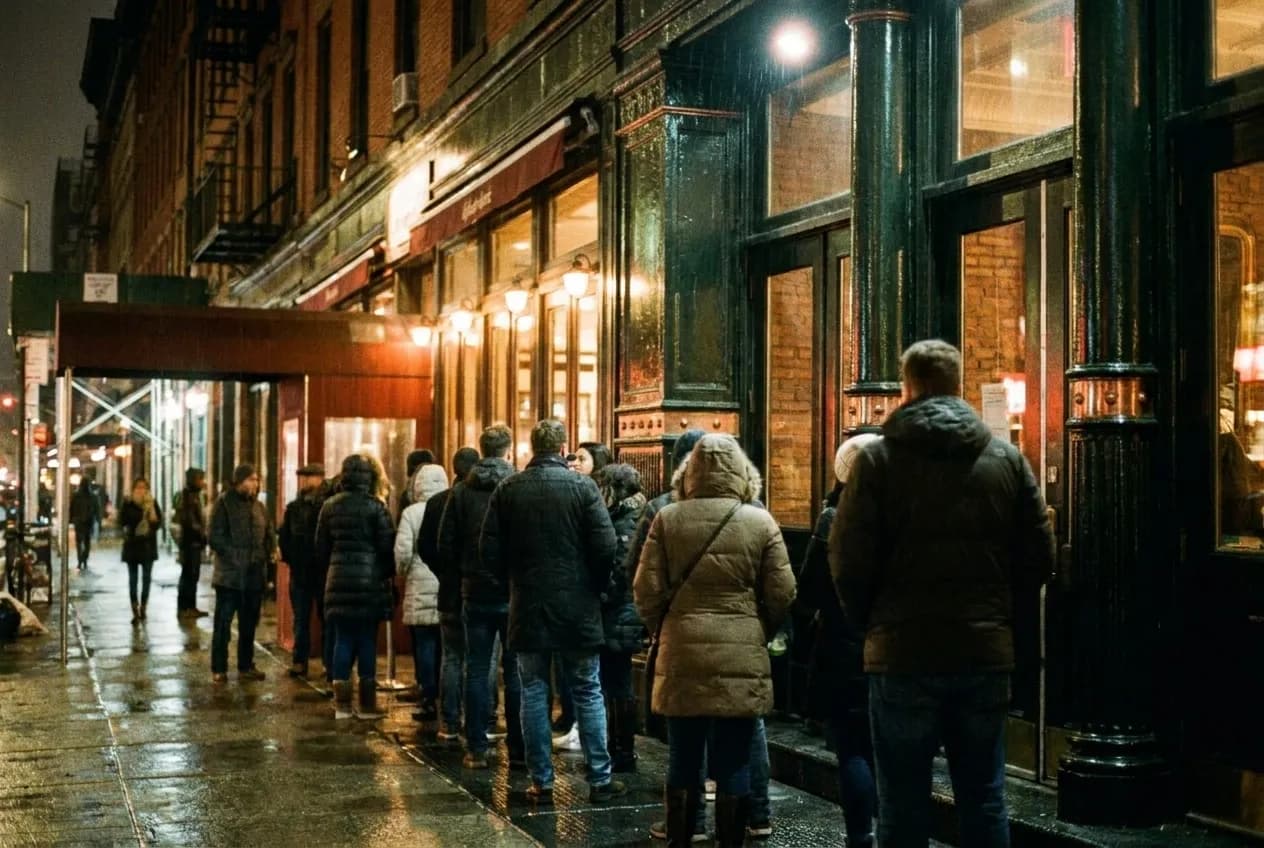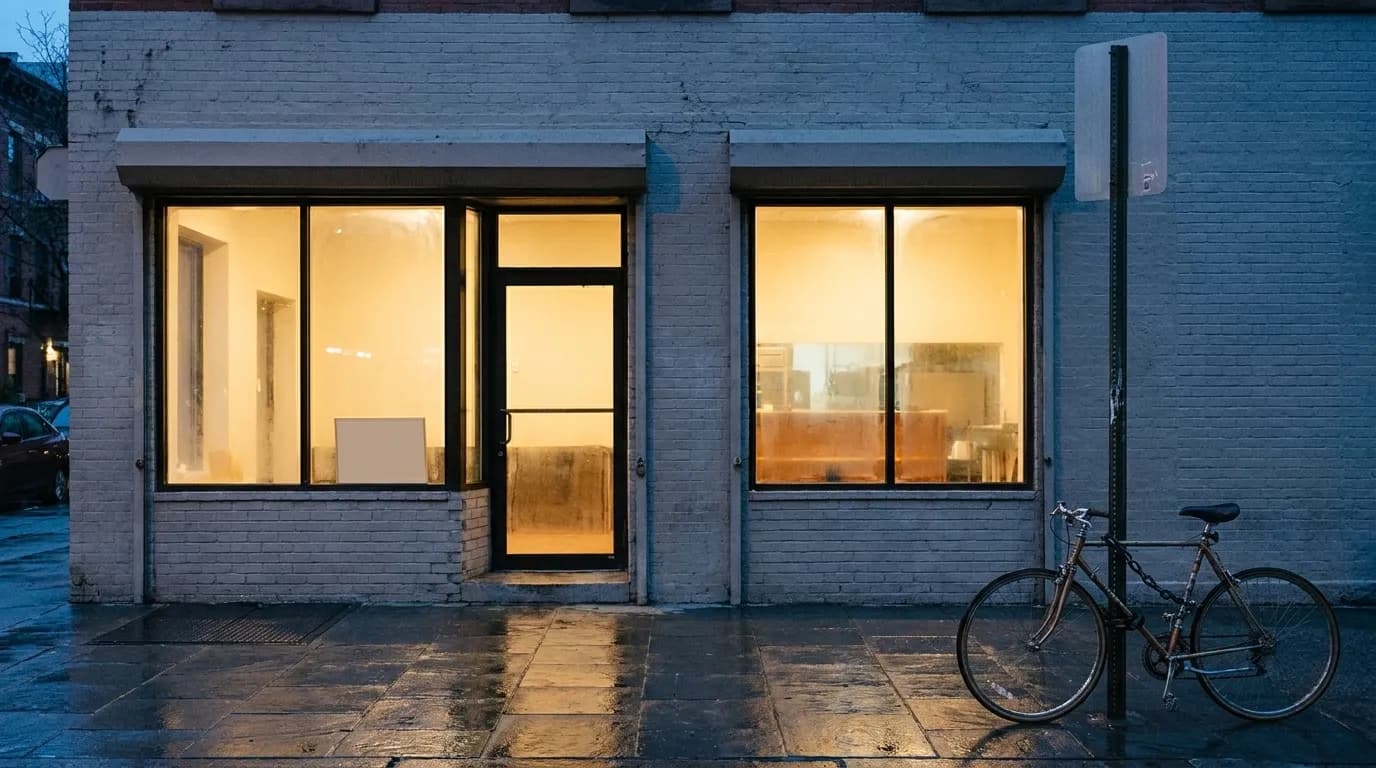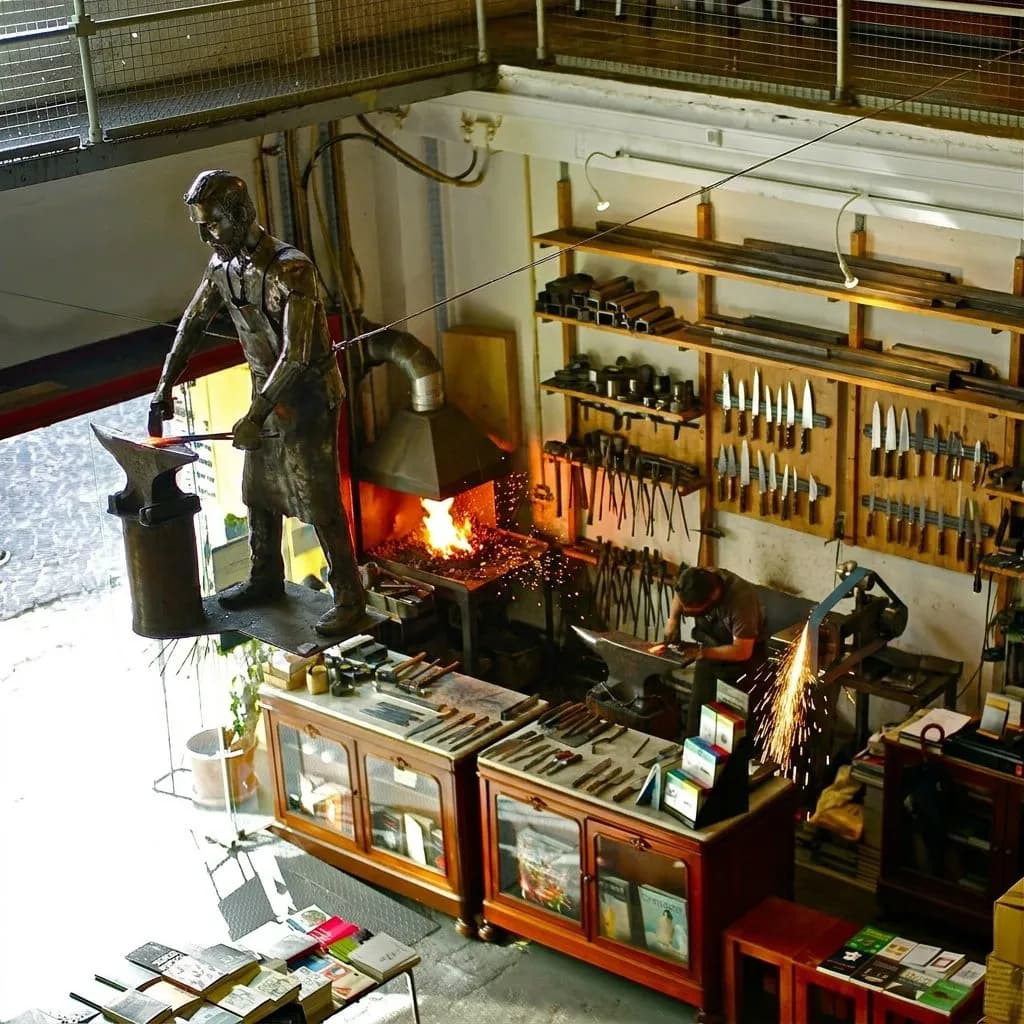
The coal forge glows orange in the corner, casting restless shadows across cinderblock walls as the bladesmith pulls a length of reclaimed saw steel from the fire. The anvil rings—clean, metallic, almost musical—under measured hammer blows. Sparks scatter like fireflies when the belt grinder screams to life, and the air smells of hot metal, coal smoke, and machine oil. This is not a showroom. It's a working studio in Long Island City where knives are forged, ground, quenched, and finished by hand, one blade at a time.
The Workshop
The studio occupies a utilitarian industrial bay with high ceilings, good ventilation, and the kind of concrete floor that forgives stray sparks. A magnetic strip along one wall displays finished knives—chef knives, cleavers, hunting blades—handles wrapped in bone, stabilized wood, brass, or micarta. Wooden bins near the workbench overflow with handle blanks, scales, and bolsters, each material chosen for durability as much as beauty. The tools are purposeful: a two-burner coal forge, a 72-inch belt grinder with slack-belt attachment, a sturdy post vise, and an anvil that's seen decades of use.
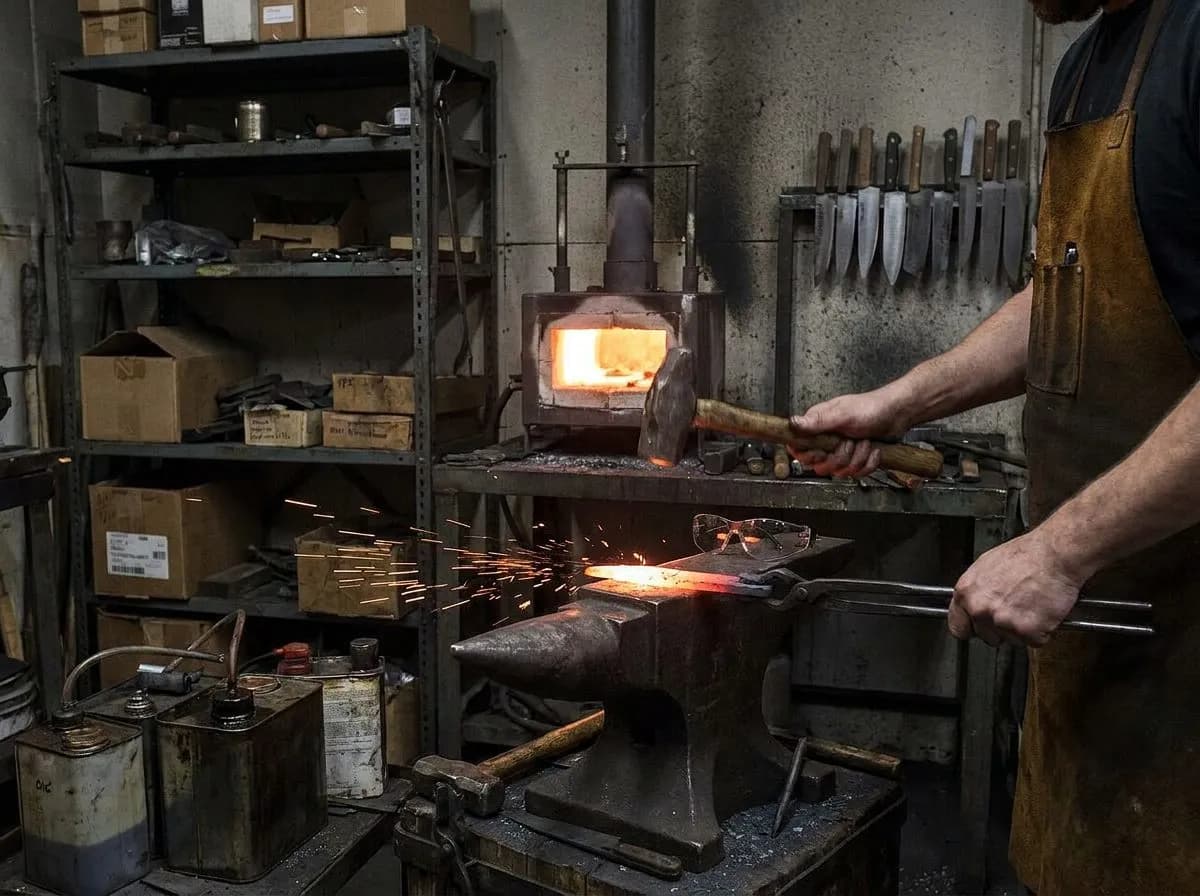
The bladesmith works mostly with reclaimed steel—old saw blades, railroad spikes, leaf springs—because the carbon content is predictable and the material has a history. New stock steel sits on a rack for clients who want specific alloy chemistry, but there's something appealing about a kitchen knife forged from a sawmill blade that spent fifty years cutting timber. The forge heats steel to a radiant yellow; the hammer spreads and thins it; the quench bath—industrial oil, dark and viscous—freezes the crystalline structure into hardness.
The Bladesmith's Cleaver
A heavy cleaver hangs near the belt grinder, its handle worn smooth from use, the edge honed to a clean, toothy finish. It's not for sale. The cleaver is the bladesmith's personal kitchen knife, used daily to test edge geometry and heat treatment before replicating the profile on client orders. If a blade design works through months of dicing onions, breaking down chickens, and splitting winter squash without chipping or losing its edge, it earns a place in the commission catalog.
That cleaver has informed nearly every chef knife that leaves the studio. The height of the blade, the curve of the belly, the thickness behind the edge—each dimension has been tuned through real-world feedback. It's a working prototype in the truest sense, and it doubles as a teaching tool during open studio hours when visitors ask why one bevel angle performs differently than another.
Custom Commissions and Pricing
Custom chef knives are priced on request, with materials and specifications discussed during consultation. Handle material upgrades—stabilized burl, bone, brass fittings—add $40 to $80 depending on the complexity and sourcing. Etched personalization, applied with ferric chloride after the final polish, adds $25. Commissions require a deposit, and lead times stretch into months during busy seasons; the work is methodical, and each knife passes through a dozen stages from raw steel to final stropping.
The bladesmith will discuss steel selection, blade profile, and handle ergonomics in detail before accepting a commission. Some clients arrive with specific requests—a tall cleaver for Chinese cooking, a petty knife for detail work, a boning blade with a flexible spine. Others prefer to defer to the smith's judgment, trusting the process that's been honed over years of trial, error, and fire.
Saturday Open Studio
Saturday open studio hours should be verified before visiting. The bladesmith demonstrates forging and grinding techniques between commission work, pausing to explain why a particular steel needs a slower quench or how a slack belt creates a convex edge that's easier to maintain than a flat grind. Visitors can handle finished knives, ask questions about heat treatment, and discuss custom projects without an appointment.
The atmosphere is relaxed but focused. The forge stays lit, the grinder runs intermittently, and the rhythm of the work continues even as guests wander through. It's a working studio first, a gallery second, and the transparency is part of the appeal. If your weekend plans can accommodate a trip to Long Island City, the Saturday session offers a rare look at a craft that's equal parts metallurgy, design, and stubborn problem-solving.
The Maker's Mark
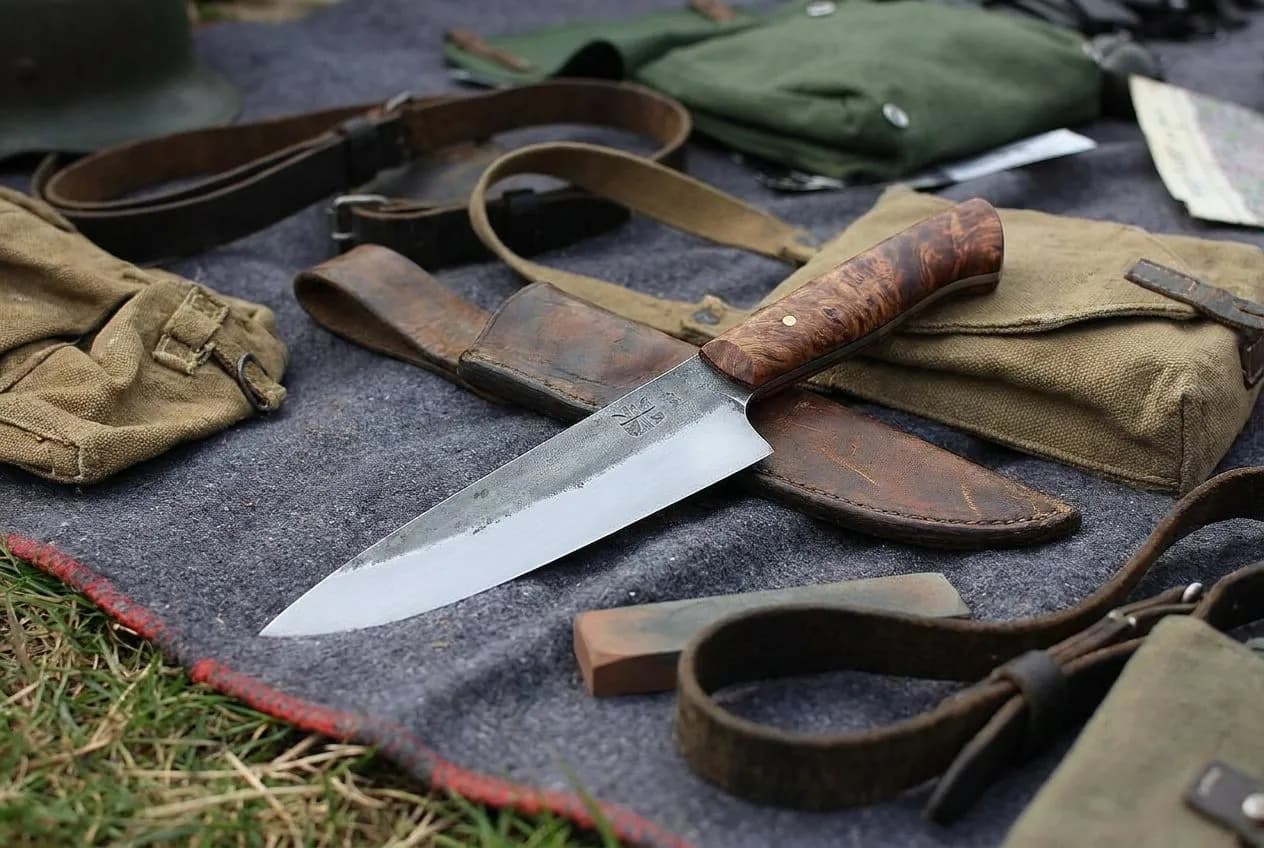
Each finished blade receives a maker's mark—etched into the steel with ferric chloride, a mordant that darkens the surface while leaving masked areas bright. The mark is small, discreet, placed near the heel or on the ricasso where it won't interfere with sharpening over the years. It's a signature, but also a promise: the bladesmith stands behind the work and will resharpen or adjust any knife that returns to the studio.
The etching process happens after final polishing and before handle attachment, and it's one of the last steps before a knife leaves the bench. The mark itself is simple—initials, a small anvil symbol—but it ties each piece to the hands and tools that made it. In a city flooded with mass-produced kitchenware, that traceability matters.
Why Long Island City
Long Island City has quietly become a hub for makers who need space, power, and tolerant neighbors. The industrial zoning allows for metalwork, the rent hasn't yet climbed into Manhattan territory, and the community of fabricators, welders, and woodworkers creates a culture of shared knowledge. The studio fits naturally into a neighborhood where sparks, noise, and the smell of cutting oil are part of the landscape, not a nuisance complaint waiting to happen.
The location also offers convenient access for clients and visitors traveling from Manhattan or Brooklyn. The subway drops you a few blocks away, and street parking is reliably available on weekends. It's far enough from the tourist corridors to feel like a discovery, close enough to make the trip worthwhile when you're hunting for a knife that will outlast your kitchen.
Practical notes
The studio is located in Long Island City, Queens; exact address is provided when scheduling a visit or commission consultation. Nearest subway: verify current access and walking times before visiting, roughly a ten-minute walk. Street parking is typically available on weekends. Saturday open studio runs 10 a.m.–4 p.m.; verify current schedule before visiting. The space is ground-level with a single step at the entrance; reach out in advance if accessibility accommodations are needed. No appointment necessary for open studio; commissions require initial consultation and deposit. Bring questions, patience, and an appreciation for slow craft.
Tags: #HandForgedKnives #BladeSmithing #LongIslandCity #NYCMakers #CustomKnives #ChefKnives #TheOddEdit #QueensCraft #WeekendPlans #Metalwork #ArtisanBlades #KitchenTools #NYCWorkshops #Spring2026 #MadeInNYC
Sources consulted: Blacksmithing · Knife Making · Long Island City · Time Out New York: Long Island City · MTA: Long Island City
All trademarks are the property of their respective owners.