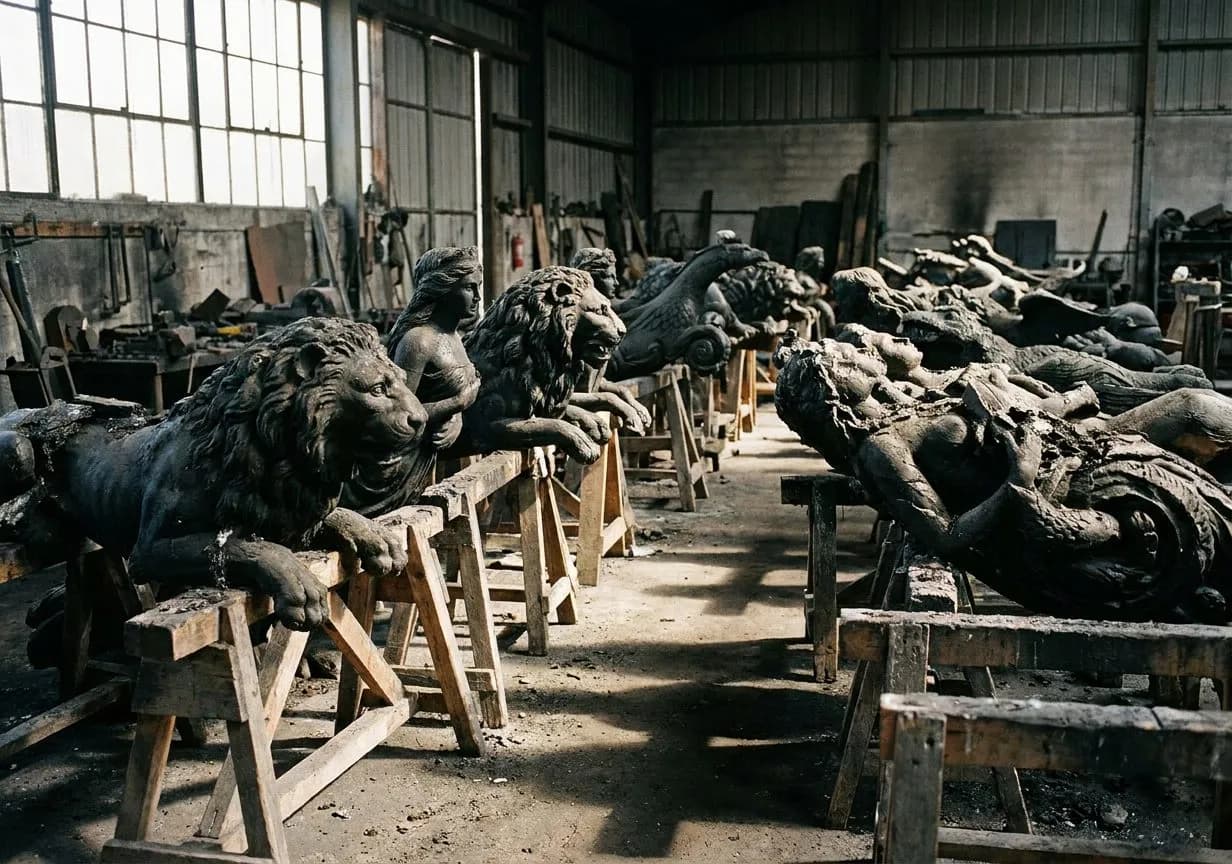
The scent hits first: linseed oil, old wood, and something faintly marine, a ghost of salt water that no amount of Brooklyn winter can scrub away. In a warehouse perched above Erie Basin, where container ships once docked and tugboats still occasionally grumble past, a maritime woodcarver is bringing figureheads back from the dead. Seven of them stand propped on custom cradles: a gilded eagle frozen mid-scream, a mermaid whose scales still shimmer with original paint, a Masonic compass missing its right arm. This is not a museum. It's a working shop where 19th-century techniques meet the kind of quiet obsession that makes a person spend years learning to read the grain of hundred-year-old pine.
The warehouse and its tenants
The workshop occupies the north end of a shared industrial space on Van Brunt Street, split with a marine hardware importer whose shelves of bronze cleats and teak handrails provide an oddly appropriate backdrop. Late-afternoon light slants through high transom windows, catching motes of sawdust that hang suspended like snow. The carver—trained in UK maritime museums before decamping to New York a decade ago—works Tuesday through Thursday, when the natural light is best and the weekend warehouse traffic hasn't yet kicked in.
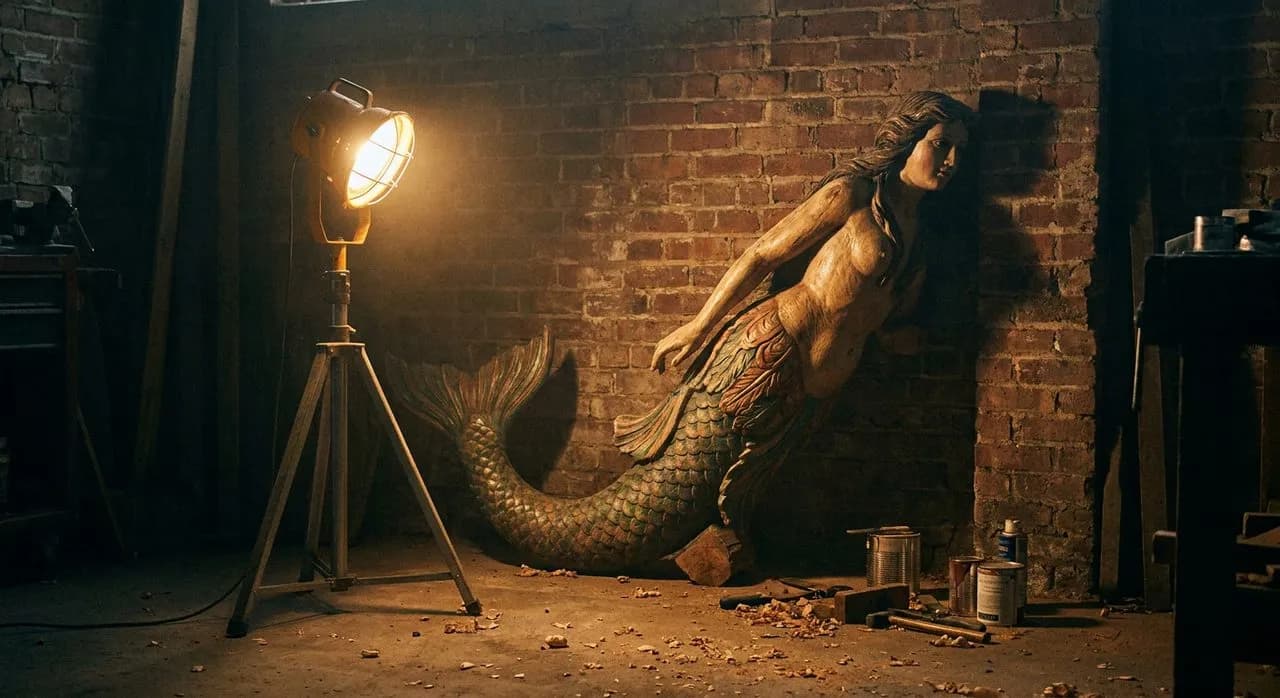
The figureheads themselves command attention even in their incomplete states. The eagle stretches nearly five feet wingspan to wingspan, its talons gripping a phantom spar. The mermaid, smaller and more delicate, curves in a sinuous S that would have graced the prow of a merchant schooner. And the Masonic compass, its symbolism once clear to every dockworker, waits patiently for its missing limb to be carved from matching timber sourced from a Pennsylvania barn demolition.
Tools and techniques from another century
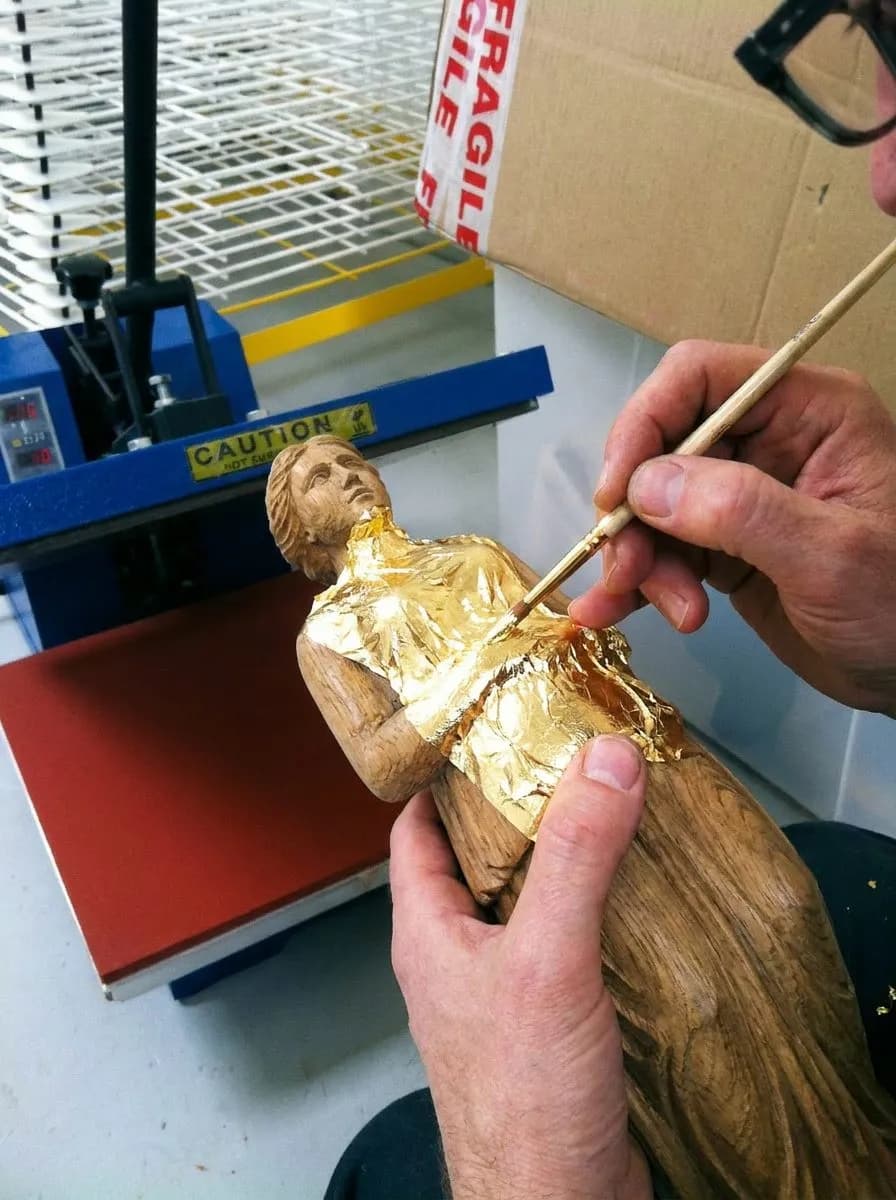
Curved adzes hang on pegboard like surgical instruments, each shaped for a specific cut—hollowing eye sockets, rounding shoulders, carving the ripple of wooden drapery. Pots of rabbit-skin glue simmer on a hot plate, filling the air with an earthy, ancient smell. Books of Dutch metal leaf rest in a humidity-controlled drawer, tissue-thin squares waiting to be pressed onto carved feathers and crowns. This is restoration work that refuses shortcuts.
The process begins with UV photography, a Lloyd's of London protocol that reveals ghost layers of original paint beneath decades of overpainting and grime. A figurehead that appears uniformly brown under tungsten light suddenly blooms with traces of vermillion, Prussian blue, flesh tones mixed with lead white. The carver consults a reference library of Lloyd's restoration manuals from 1880 through 1920, their hand-tinted plates showing original figurehead paint schemes in meticulous watercolor detail. These manuals, acquired over years from maritime auctions and UK antiquarian dealers, form the intellectual backbone of every restoration.
The eagle from Fire Island
The gilded eagle has its own origin story, one the carver recounts while brushing fresh rabbit-skin glue onto a repaired talon joint. Salvaged from a Fire Island wreck in 1983, the figurehead spent two decades in a Long Island garage before surfacing at an estate sale. It still bears barnacle scars on the port-side wing, small craters where marine life colonized the wood during its years underwater. Those scars will remain—a restoration philosophy that honors history rather than erasing it.
The eagle likely adorned an 1840s clipper, though definitive attribution is impossible without ship records. Its gilding, applied over red bole clay, follows a technique unchanged since medieval altar screens. The carver is rebuilding lost sections of the starboard wing, matching grain direction and carving style with a precision that borders on forensic. By late 2026, if all goes to plan, the eagle will be complete enough for a private collector who plans to install it in a Shelter Island library.
Tuesday morning gatherings
The workshop has developed an accidental community. Tuesday mornings, the carver demonstrates adze techniques for furniture makers and boat builders who stop by unannounced from nearby Red Hook shops, drawn by word of mouth and the rare chance to watch someone work with tools most woodworkers know only from textbooks. There's no formal schedule, no sign-up sheet—just coffee in chipped mugs and the rhythmic thunk of steel on pine as the carver shapes a replacement scroll or roughes out a cherub's face.
These impromptu sessions have an easy, collegial energy. A cabinetmaker brings questions about steam-bending oak. A yacht restorer shares tips on sourcing period-appropriate brass. The carver, in turn, benefits from the collective knowledge of Red Hook's maritime trades, a network that still remembers when this neighborhood built and repaired boats rather than simply admiring them.
Weekend workshops and the teaching calendar
Occasionally—three or four times a year—the carver offers weekend workshops in traditional ship carving joints: the scarfed splice, the mortise-and-tenon tailfin attachment, the blind-doweled neck joint that allows a figurehead to survive decades of wave shock. These sessions draw naval architects, summer travel enthusiasts planning boat restorations in distant harbors, and the occasional sculptor looking to expand their technical vocabulary. Class size tops out at four. Participants leave with sore shoulders and a new respect for the tonnage of labor embedded in every figurehead.
The workshops aren't advertised widely—inquiries come through maritime museum networks and the occasional design blog mention. But they fill quickly, driven by the same hunger for tangible skill that's fueling the renaissance of hand-tool woodworking across Brooklyn and beyond.
Appointment-only visiting
This is not a public gallery. The workshop is visitable by appointment and uninterrupted stretches of time. But the carver is generous with access for those genuinely interested—journalists, conservators, collectors considering a commission. A visit typically lasts ninety minutes, enough time to examine the figureheads up close, hear their provenance stories, and understand the months or years each restoration demands. The best visits happen on winter afternoons when the low sun ignites the gilt surfaces and the Erie Basin sparkles cold and gray beyond the windows.
Practical notes
The workshop is located on Van Brunt Street in Red Hook, Brooklyn, accessible via the B61 bus and NYC Ferry, subject to current schedules. Street parking is generally available. Visits are by appointment only; inquire through maritime museum networks or design conservation contacts. The space is a working warehouse with limited accessibility—expect stairs and uneven floors. Bring curiosity and respect for slow, meticulous craft. The carver works by appointment; workshop days vary Verify all details directly before planning a visit.
Tags: #HandCarvedShipFigureheads #RedHookWorkshop #MaritimeRestoration #ShipCarving #TheOddEdit #NYCCraftsmanship #ErieBrooklyn #TraditionalWoodworking #FigureheadConservation #19thCenturyTechniques #BrooklynArtisans #MaritimeHistory #WoodcarvingNYC #RedHookBrooklyn #WinterInBrooklyn
Sources consulted: Ship Figureheads · Red Hook, Brooklyn · Maritime Carving History · NYC Landmarks Preservation · South Street Seaport Museum
All trademarks are the property of their respective owners.