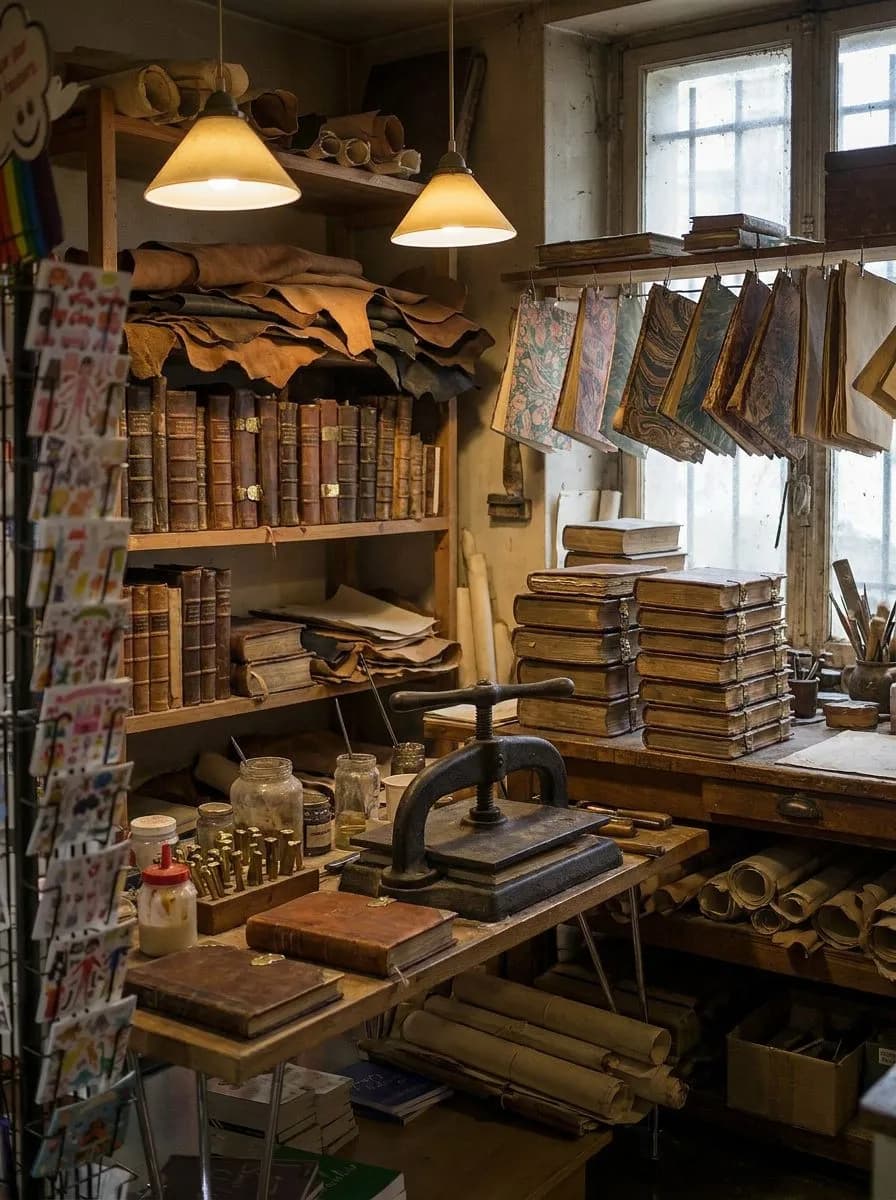
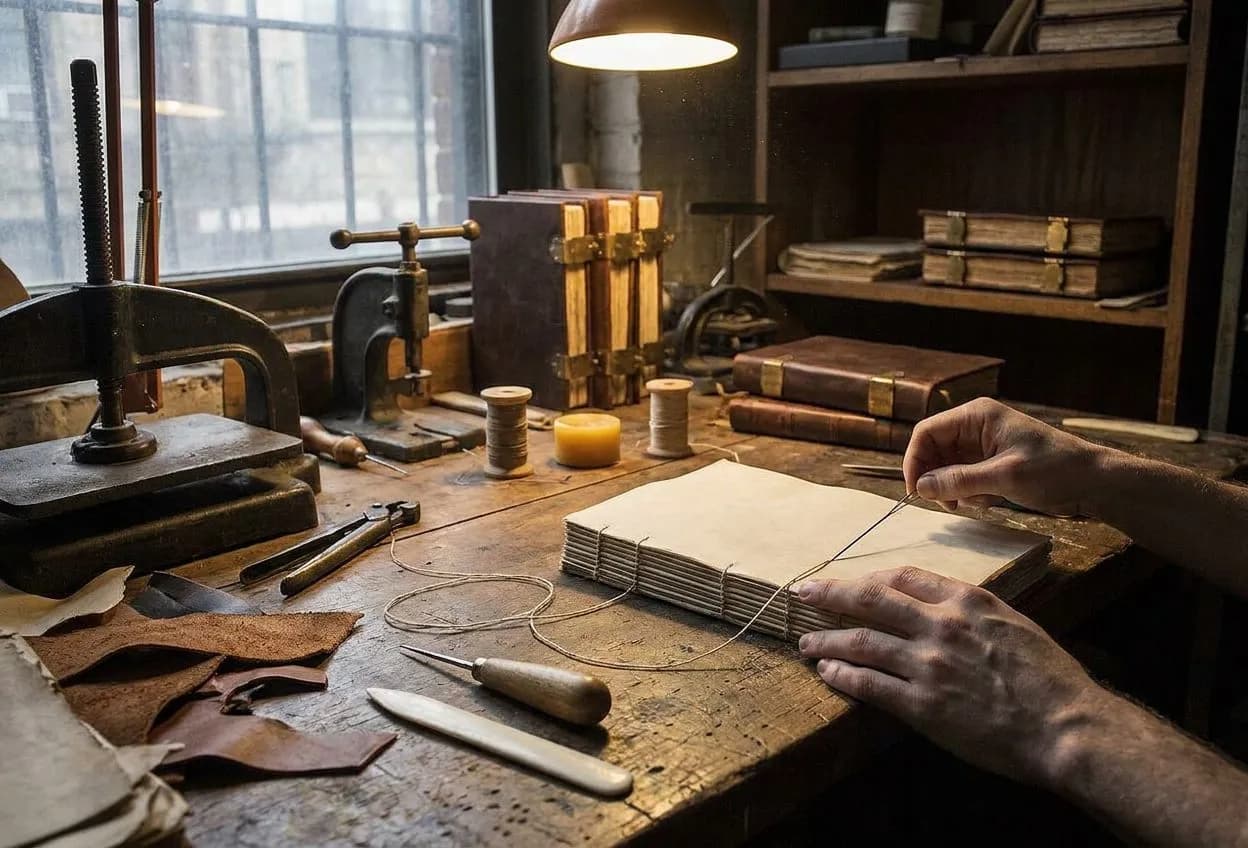
The stairwell smells of linseed oil and old paper. At the top, past a frosted-glass door marked only with a street number, leather hides hang on steel hooks along one wall—black goat, oxblood, forest green—and a cast-iron book press stands sentry near the window, its wheel burnished from years of pressure. On the worktable: bone folders, cutting mats scored with use, spools of linen thread in ivory and indigo, and shallow trays of water waiting for pigment. This is not a shop. It is a bindery, quiet and methodical, where books are built by hand for readers who believe the vessel matters as much as the text.
The consultation table
Commissions begin with conversation. The binder schedules consultations on Saturday mornings by email, and asks for a brief description of the manuscript's purpose and preferred cover material in the initial inquiry—no walk-ins, no browsing. The questions are specific: Will the book be read daily or opened only on particular dates? Are there planetary correspondences to observe? Should the spine lie flat or hold its shape when closed? The binder listens, makes notes in a cloth-bound ledger, and steers clients away from choices that will not wear well.
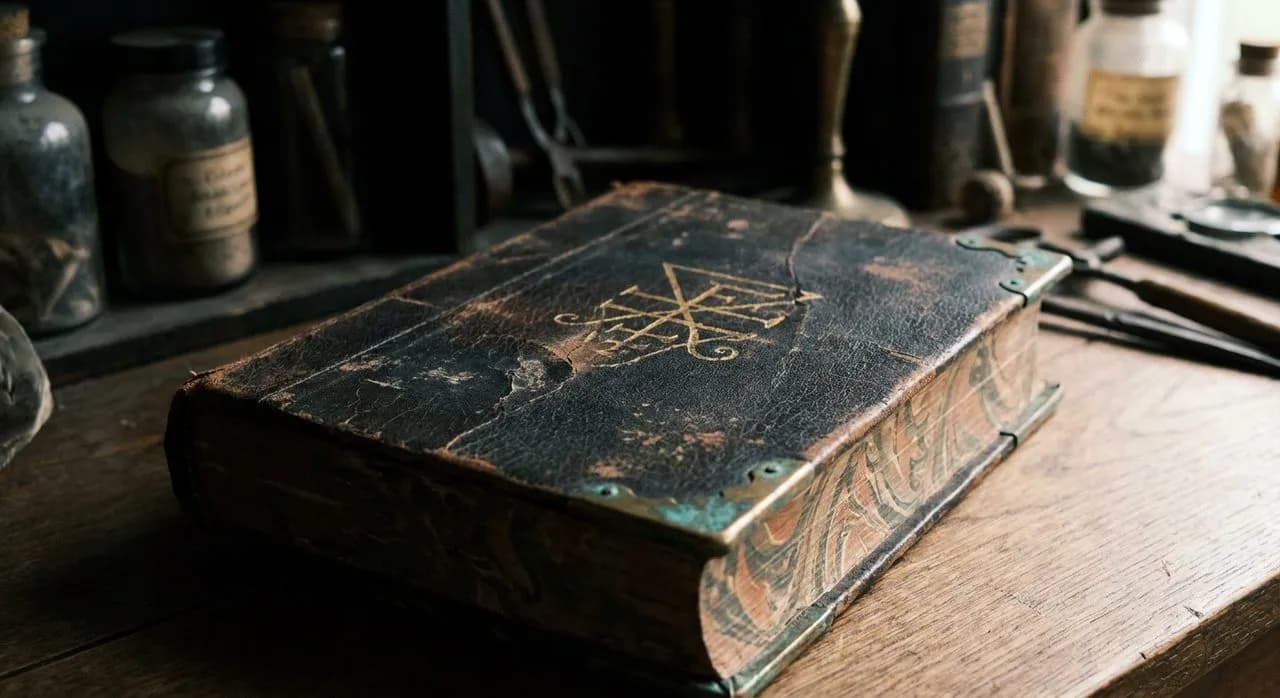
On the consultation table rests a sample grimoire, bound in black goat leather and tooled with planetary symbols in faint gold—a demonstration piece used to walk through stitching options, paper weights, and how deeply a sigil can be impressed without weakening the grain. You are invited to handle it, feel the heft, test the binding. The binder does not rush. This is the template against which all other decisions are measured.
Materials and process
Custom grimoires start at two hundred forty dollars for a standard folio—sewn signatures, plain endpapers, choice of leather. Hand-marbled endpapers add thirty-five dollars; the binder works in midnight blues, silvers, storm grays, occasionally a deep garnet that pools like wine. Brass corner guards, which require drilling and careful alignment, add fifty dollars per set. The prices are firm. The binder does not negotiate, does not offer discounts for multiples, and will not replicate someone else's commission.
The leather is cut on a self-healing mat with a rotary blade, the signatures folded and pressed overnight, the stitching done by hand with a curved needle and waxed linen. There is no machinery here beyond the press. Marbling happens in a shallow tray filled with carrageenan size; pigments are dropped, combed into patterns, then lifted onto dampened paper in a single irreversible pull. Each sheet is unique. The binder keeps no stock inventory—every element is made to order.
Tooling and sigils
Gold leaf tooling is the final act. The binder heats brass stamps on a small electric element, tests the temperature on scrap leather, then presses each symbol through a square of twenty-three-karat gold leaf. Planetary glyphs, alchemical marks, personal sigils drawn by the client and translated into metal—all are possible. The work requires a steady hand and patience; gold will not forgive a second impression. Some clients bring sketches. Others ask the binder to research historical correspondences and propose designs. Both approaches are accommodated.
The studio smells of warm hide and sizing as the afternoon light slants across the worktable. There is a rhythm to the process that does not accelerate for deadlines. Commissions take four to six weeks, sometimes longer if marbling conditions are poor or the leather needs additional conditioning. The binder does not overpromise. If your weekend plans include a ritual that requires a finished manuscript by a certain date, you are advised to inquire early.
Who commissions these books
The client list is quiet and varied. Tarot readers who want journals sturdy enough for daily draws. Ceremonial magicians ordering grimoires to hold handwritten invocations. Poets who prefer their work bound in something other than trade paperback. A handful of collectors who commission replicas of historical manuscripts, minus the vellum and iron gall ink. The binder does not ask for credentials or proof of practice, but the questions during consultation make it clear: this is a studio for people who take their books seriously.
Occasionally someone arrives expecting atmosphere—candles, incense, walls hung with occult ephemera. The studio offers none of that. It is a working space, lit by daylight and task lamps, organized with the pragmatism of a trade practiced daily. The magic, if it exists, is in the object itself: a book built to last decades, its pages sewn rather than glued, its cover conditioned against cracking, its spine flexible enough to open flat without breaking.
The broader context
Hand bookbinding has experienced a quiet resurgence in the past few years, driven in part by a desire for durable objects in an era of planned obsolescence. The East Village studio occupies a particular niche—neither fine press nor art binding, but a hybrid practice rooted in function and symbolic weight. The binder trained in traditional techniques but works primarily for clients outside academic or archival circles, people who need books that can withstand repeated handling and who care about the semiotics of materials.
Late 2026 has brought an uptick in commissions for ceremonial manuscripts, possibly tied to broader interest in personal ritual and analog practices. The binder keeps a waiting list and does not advertise beyond word of mouth and a bare-bones website with an email contact. There is no social media presence, no behind-the-scenes content, no newsletter. The work speaks quietly, one commission at a time.
Practical notes
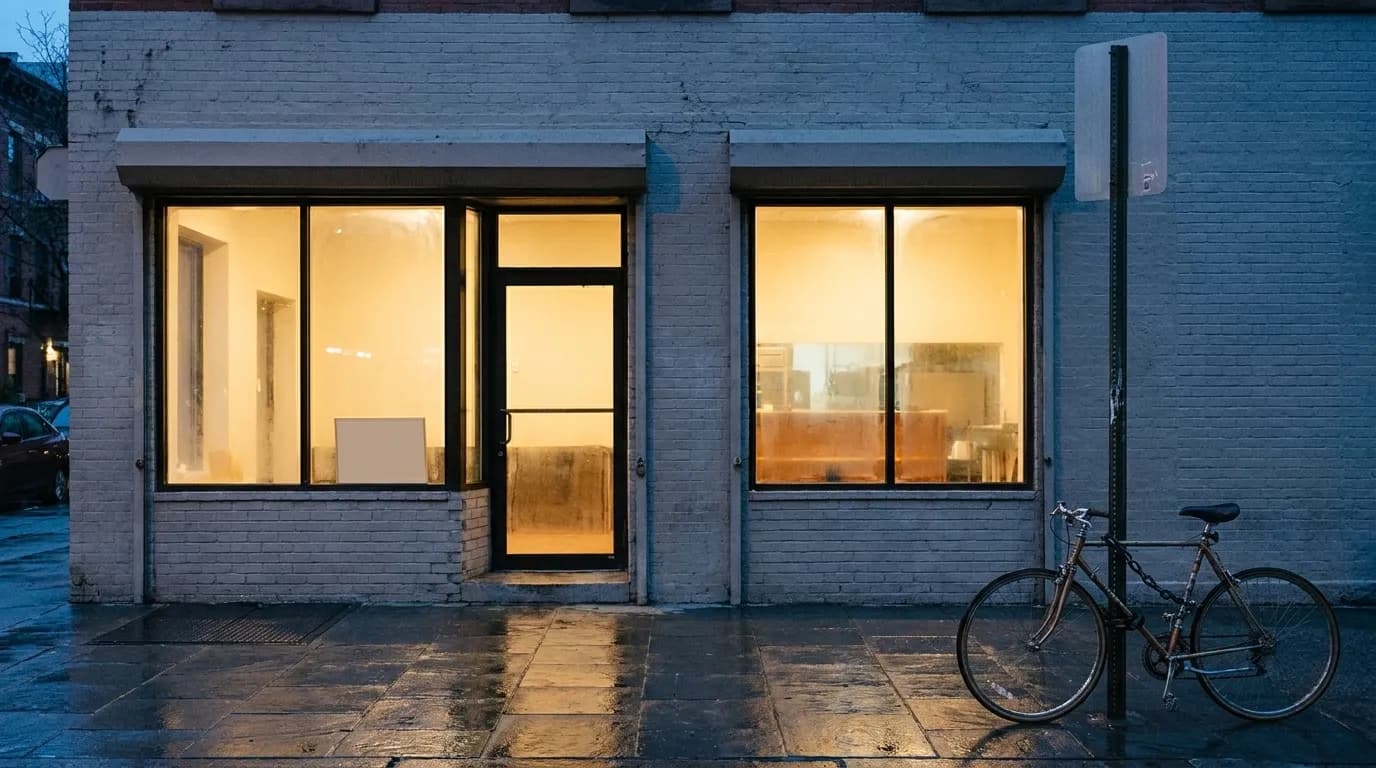
The bindery is located on a second-floor walk-up in the East Village; the exact address is provided upon confirmation of consultation. Nearest subway access is via the L or 6 train at Astor Place or First Avenue. Street parking is scarce; paid garages operate within a three-block radius. The studio is not wheelchair accessible due to the stairwell. Consultations are by appointment only, scheduled Saturday mornings via email. Bring reference images, measurements if the manuscript already exists, and a sense of how the finished book will be used. Payment is accepted by check or bank transfer; a fifty-percent deposit is required to begin work. Verify current lead times and availability directly before planning.
Tags: #HandBoundBooks #GrimoireBindery #EastVillageFinds #OccultManuscripts #CustomBindery #LeatherBound #BookbindingStudio #TheOddEdit #NYCCraftsmanship #MarbledPaper #BespokeBooks #CeremonialBooks #ArtisanBindery #Winter2026 #NYCWeekendPlans
Please drink responsibly. Must be of legal drinking age.
Sources consulted: Bookbinding · Grimoire · East Village, Manhattan · Time Out New York · New York Times - NY Region
All trademarks are the property of their respective owners.