Where the Towpath Empties and the Wheels Start Turning
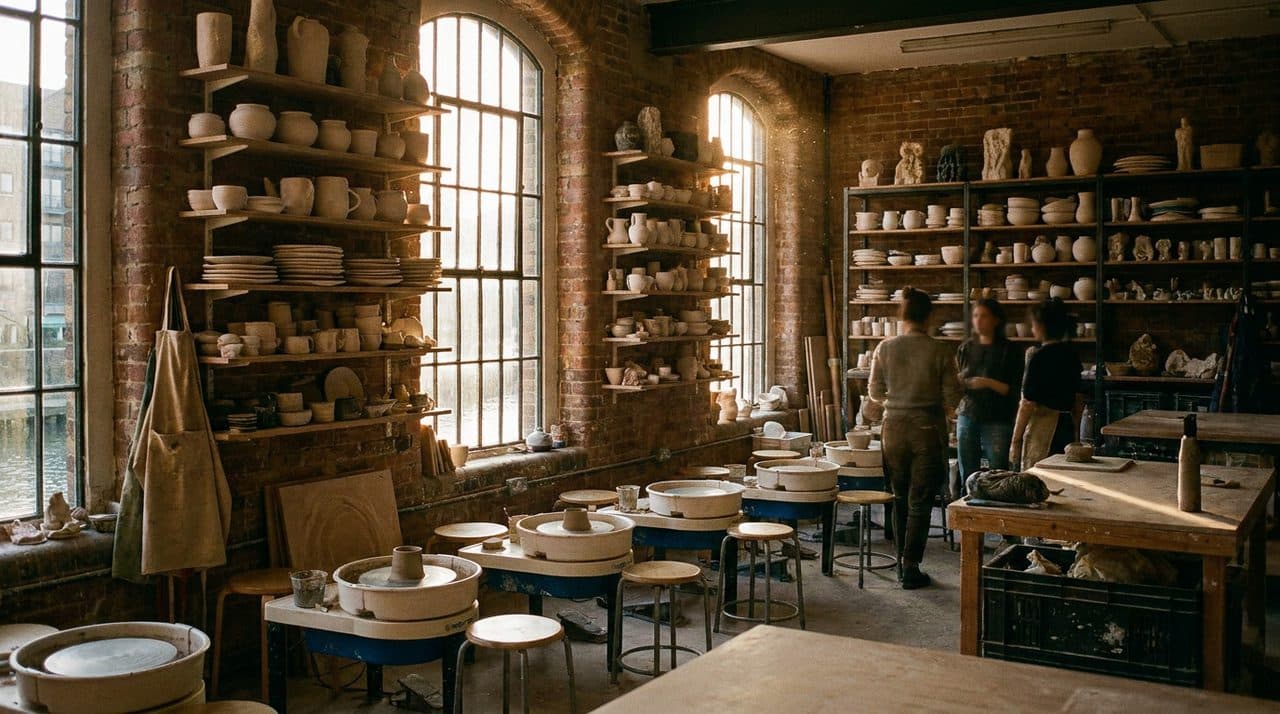
A narrow door on a side street off the Regent's Canal opens into a ceramics studio where the 6 PM drop-in session runs counter to the rhythm of rush hour. While commuters stream toward Hackney Central, a different crowd trickles in—still in work clothes, bags dropped by the door—to claim a wheel by the tall industrial windows. The light off the canal hits the room at an angle this time of day, turning clay dust into suspended gold. By seven, the towpath outside has gone quiet, but inside, eight wheels hum at different speeds, and the air smells like wet earth and the faint metallic tang of tools left in water buckets.
The Long Room With North-Facing Glass
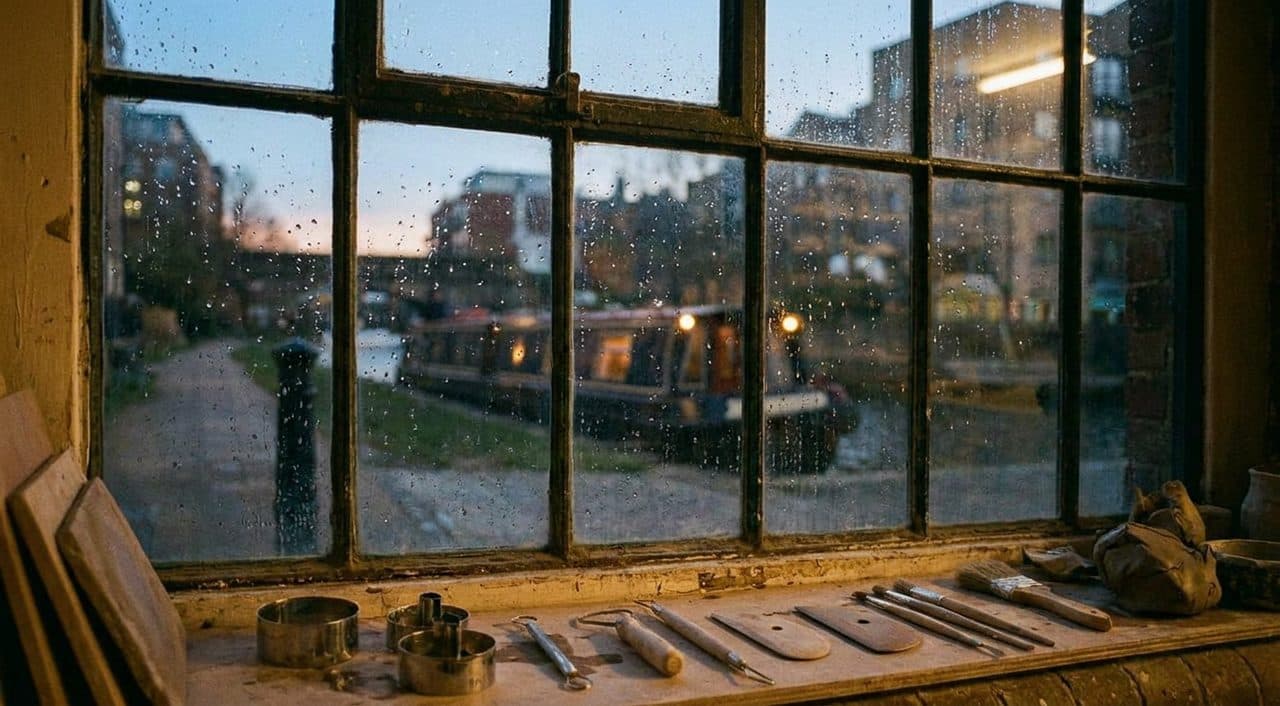
The studio occupies what used to be a print workshop, all exposed brick and steel beams, with a bank of north-facing windows that run the length of one wall. The glass is original—single-pane, slightly warped—and looks directly onto a stretch of canal where narrowboats moor two-deep in summer. In winter, the room holds cold until the kilns in the back corner start their cycle, then it becomes a study in microclimates: freezing by the windows, almost tropical near the firing area. The wheels are arranged in two rows, mismatched models collected over years, some with foot pedals that clunk, others electric and near-silent. Regulars have preferences. The wheel by the radiator goes first on cold nights. The one under the skylight gets claimed by anyone chasing the last of natural light before the overheads take over.
The Crowd That Arrives With Damp Collars
The drop-in pulls a specific cross-section of Hackney: architects still mentally in plan view, a booking agent who takes calls with clay-covered hands, someone's girlfriend visiting from Berlin who heard about it on a group chat. They arrive between six and half-past, sometimes alone, sometimes in pairs who don't speak much once they sit down. There's an understanding that this isn't a social hour in the conventional sense. Conversations happen in the gaps—while waiting for a piece to firm up on the bat, or in the queue for the only sink with good water pressure—but the room's baseline state is companionable quiet punctuated by the slap of clay hitting wheelheads. A regular who works in IT comes every Thursday, throws the same bowl form over and over, says it's the only two hours in his week without a screen in his sightline.
The Rhythm of Centering and the Sound of Near-Misses
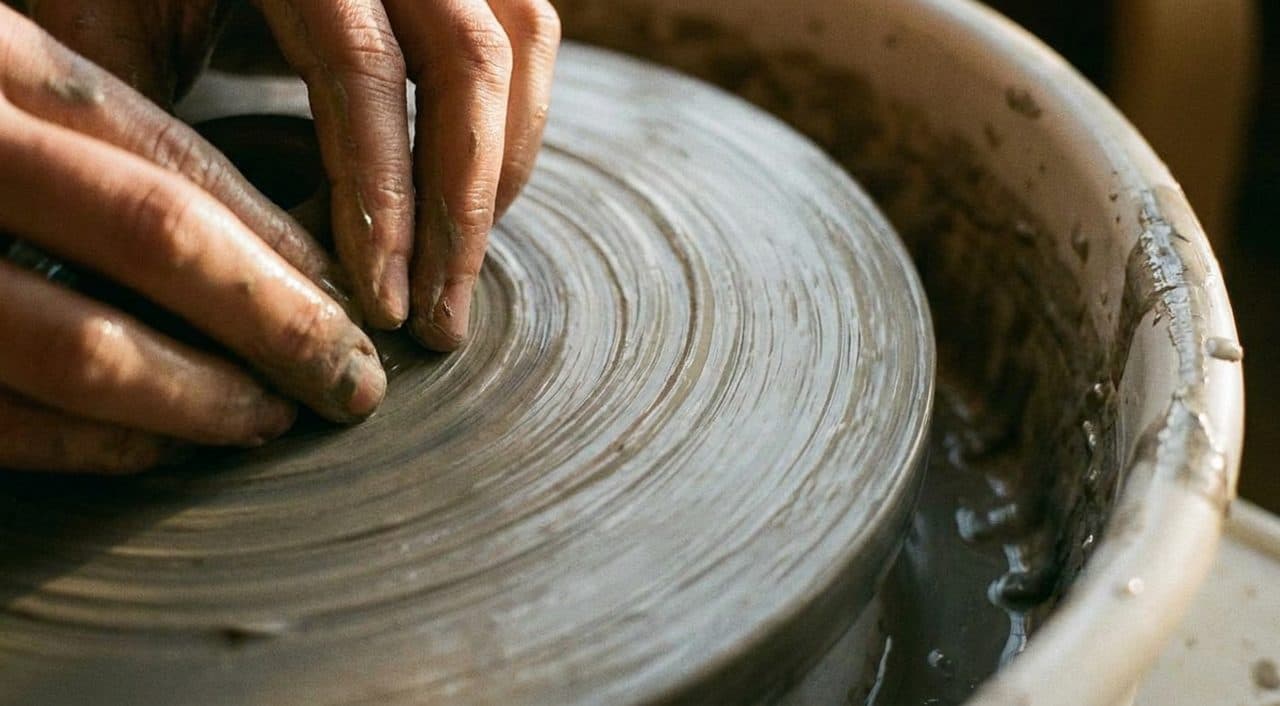
Centering clay on a wheel has a learning curve that's both physical and meditative, and the drop-in session makes that curve visible. Newcomers wrestle with wobbling mounds, elbows locked, faces set in concentration. The studio's resident potter—a woman in her fifties who's been here since the space opened—circles the room offering adjustments: a hand repositioned, a reminder to breathe, sometimes just a nod. She doesn't hover. When a piece collapses, there's a particular sound: a wet slump followed by a pause, then the wheel starting up again. No one comments. By the second hour, the room's collective skill level evens out. Even the struggling beginner finds a rhythm, and for ten minutes everything spins true before the clay memory betrays them and the walls buckle. The floor around each wheel tells the story—splatter patterns, trimmed scraps, the occasional full collapse that gets scooped back into the communal clay bin.
The Canal Light and the Shift Into Evening
The quality of light changes completely between six-thirty and eight. Early arrivals work in the blue-grey of dusk, everything soft-edged and cool. By seven-fifteen, the overheads are on, but the windows still hold some ambient glow from the city sky—that particular London evening light that's never fully dark, always a bit orange, a bit chemical. The canal itself becomes a black mirror, reflecting the studio's lit windows back at the room. Cyclists pass on the towpath less frequently. The last dog-walkers trail by. Inside, someone's thrown a tall cylinder that's going well until it isn't, and the collective attention shifts briefly to watch the save attempt. It fails. Clay hits the bat with a smack. The wheel next to them keeps spinning, unbothered, a small bowl taking shape with the kind of ease that only comes from repetition or luck.
What Gets Made and What Gets Left Behind
Most pieces made during the drop-in never make it past the drying shelf. The studio offers glazing and firing for an additional fee, but many participants seem content with the process itself—the tactile engagement, the enforced focus, the temporary mastery of a material that's been worked for thousands of years. Finished work that does get claimed tends to be simple: pinch pots, shallow dishes, the occasional mug with a wonky handle. These accumulate on the collection shelf by the door, tagged with names and dates, waiting for pickup. Some sit there for months. The unclaimed pieces eventually get recycled back into the clay supply, a kind of material reincarnation. On the shelf above the wheels, there's a gallery of studio-made work—test tiles, experimental forms, a series of tiny vessels no bigger than a shot glass—that serves as both inspiration and gentle reminder that this is a working studio, not a drop-in craft hour, even if the line blurs.
Practical Notes
The evening drop-in runs twice weekly, late afternoon into evening, and operates on a first-come basis with a cap on the number of wheels available. No booking required, though arriving before half-six increases the odds of snagging a preferred spot. The studio sits a short walk from Hackney Central overground and even closer to the canal towpath—accessible from several bridges if approaching on foot or bike. Sessions include clay, tools, and basic instruction. Participants should wear clothes that can handle splatter and bring a towel. The studio's entrance is easy to miss from the street; look for the black door with a small ceramic tile set into the frame at eye level. Firing and glazing services are available for an additional cost, with pieces typically ready for collection within three weeks. The studio occasionally closes for private workshops or kiln maintenance—checking their social channels before heading over is advisable, though walk-ins are generally accommodated outside of those windows.
Tags: #HackneyFinds #CeramicsStudio #LondonWorkshops #RegentsCanalLife #EastLondonCreative #DropInStudio #PotteryWheel #GoldenHourLondon #AfterWorkRitual #HackneyCreatives #CanalSideSpaces #ThrowingClay #LondonCeramics #HiddenStudioSpaces #TowpathLife
Sources consulted: timeout.com · secretnyc.co · thrillist.com
All trademarks are the property of their respective owners.
Ask Karpo first
Want to know which Hackney studios offer same-day pottery sessions?
Ask Karpo for the canal-side workshops with the most flexible drop-in schedules before you head out.