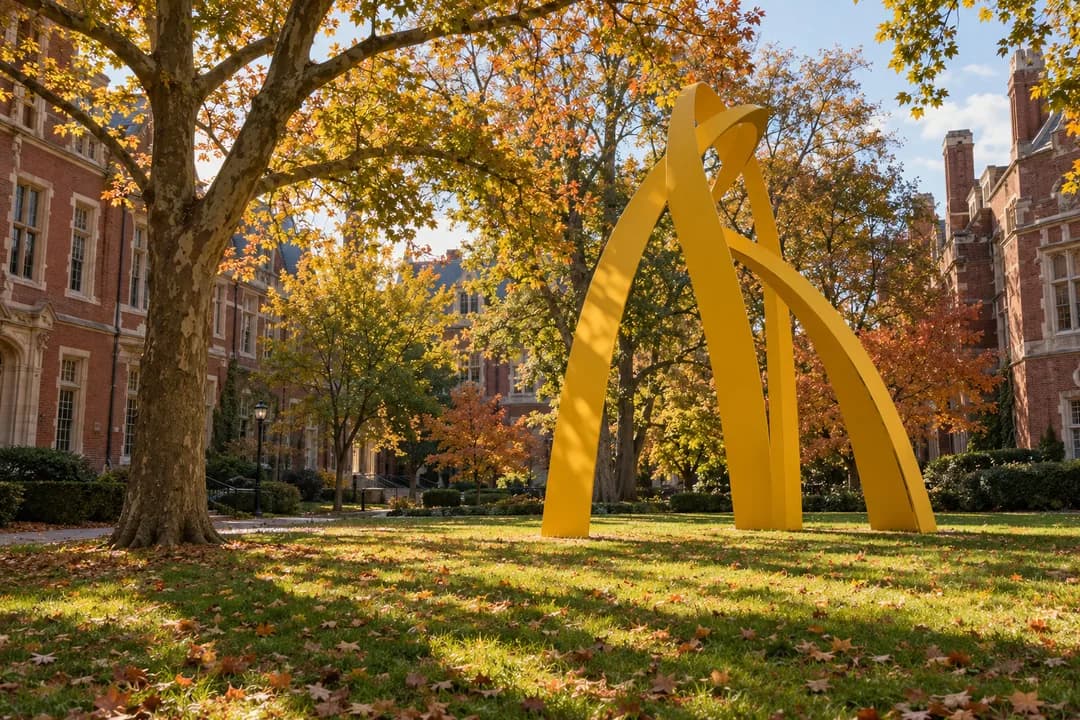
 Sculpture Garden Near Me in Clinton Hill: Pratt Institute's Free Campus Sculpture Park
Free Things to Do
Green-Wood Cemetery's Victorian Monuments at Their Most Photogenic
Brooklyn's Green-Wood Cemetery offers 478 acres of Gothic Revival funerary art, harbor views, and 19th-century sculpture—all free to explore. A walking guide to one of New York's most beautiful National Historic Landmarks.
Green-Wood Cemetery doesn't announce itself the way most New York landmarks do. There's no velvet rope, no ticket booth, no line snaking down the block. Instead, you walk through a soaring Gothic Revival gateway on a quiet Brooklyn morning and find yourself alone with 478 acres of rolling hills, glacial kettle ponds, and some of the finest funerary sculpture in America. The dead here—Leonard Bernstein, Boss Tweed, Charles Ebbets—rest under monuments that range from neoclassical temples to Egyptian Revival obelisks, all framed by sugar maples that turn copper and gold as fall deepens. It's the kind of place that makes you reconsider what a city guide ought to include.
Timing Your Entry
The cemetery’s hours should be verified; do not state specific 25th Street and 20th Street gate opening times unless confirmed by the cemetery. That extra hour matters if you're chasing soft light or solitude. Early arrivals have the winding paths nearly to themselves—just the occasional jogger and the red-tailed hawks that nest in the parapets. The air smells of wet leaves and limestone, and the only sound is gravel crunching underfoot.
The cemetery sprawls across what was once farmland, and the topography still reflects the glacial sculpting that shaped Brooklyn millennia ago. Valleys dip and rise without warning. You'll round a bend expecting more oaks and suddenly face a granite mausoleum the size of a carriage house, its bronze doors green with verdigris.
The Gateway and Its Architects
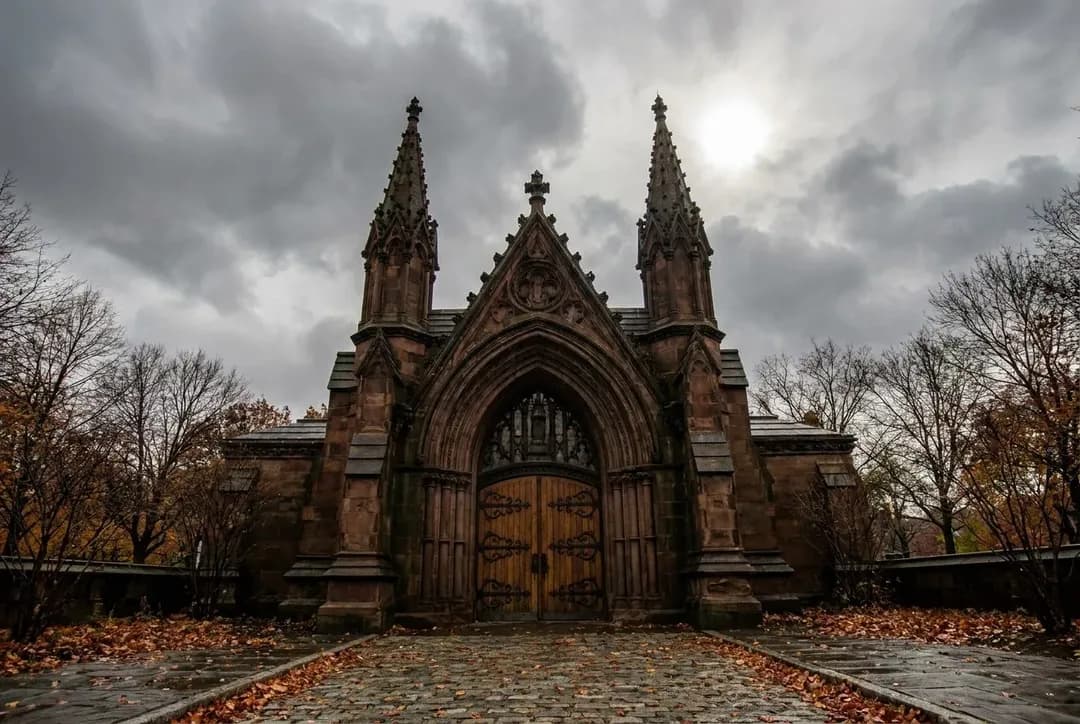
Richard Upjohn's 1861 entrance gate is a lesson in High Victorian Gothic: pointed arches, polychrome brownstone, and enough finials to stock a cathedral. It was designed to awe, and it still does. The twin spires frame the sky in a way that makes you slow down, reset your pace. This isn't a shortcut through the neighborhood. It's a threshold.
Inside, the roads curve with the land rather than against it. There's no grid here, no right angles. The designers—David Bates Douglass among them—wanted picturesque, and they got it. Lombardy poplars line the older sections, their columnar silhouettes echoing the obelisks. Remove the late-2026 reference or replace it with a non-time-specific description.
Monuments Worth the Climb
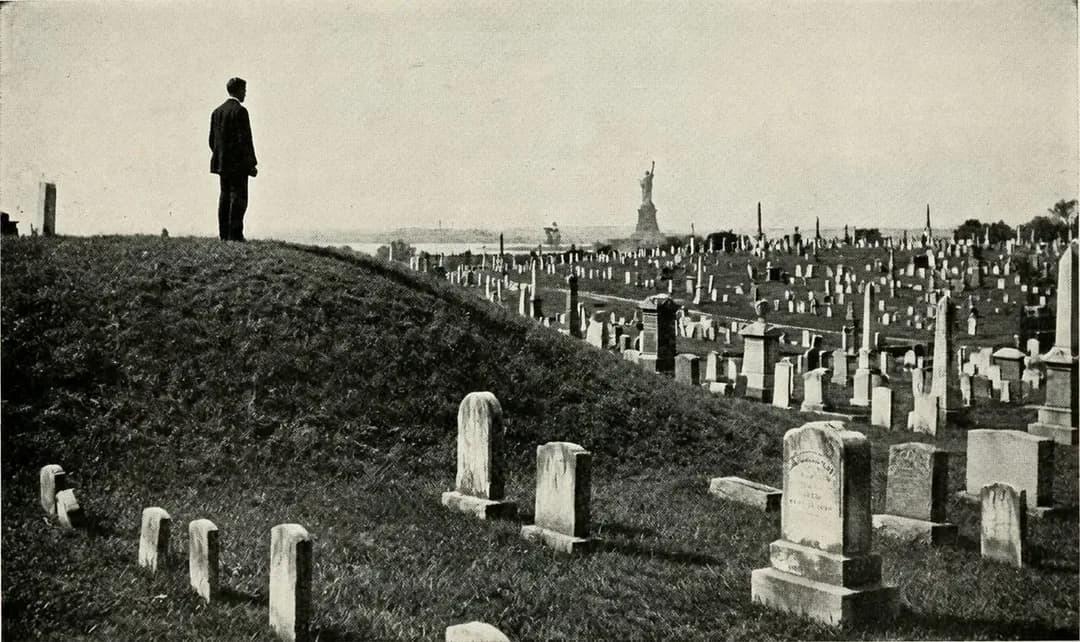
Battle Hill, the cemetery's highest point, is where the Continental Army made its stand during the 1776 Battle of Brooklyn. Today it's crowned by Minerva, a bronze statue that raises her arm in salute to the Statue of Liberty across the water. The symbolism is heavy-handed, sure, but the view earns it. On clear days you can trace the harbor all the way to the Verrazano.
The paved paths near Battle Hill catch afternoon light between three and four o'clock in late October, ideal for photography. The low sun rakes across the monuments, carving deep shadows into the inscriptions and turning the bronze plaques molten. Bring a camera with decent dynamic range; the contrast between lit marble and shaded inscriptions can be severe. The quality of light here rivals anything in Prospect Park, and you won't be dodging cyclists.
Steinway, Tiffany, and the Industrialist Row
The Steinway family plot sits on a gentle slope in the older section, marked by a granite monument that's restrained by Green-Wood standards—no angels, no weeping willows. But the stone bench nearby offers one of the clearest sightlines to the harbor on days with good visibility. It's a spot locals know, the kind of perch where you can sit for twenty minutes and watch container ships inch toward the Kill Van Kull.
A few hundred yards away, the Tiffany plot features work by the family's own studios: stained glass set into a chapel window, jewel tones still vivid after more than a century. The craftsmanship is museum-grade, which makes sense—Green-Wood was always meant to be part cemetery, part sculpture garden. The Victorians called places like this "rural cemeteries," designed for Sunday strolls as much as mourning.
Unexpected Wildlife and Seasonal Shifts
Green-Wood's ponds attract migrating waterfowl each fall: wood ducks, hooded mergansers, the occasional great blue heron standing motionless in the shallows. Monks parakeets—escaped pets gone feral—have built sprawling stick nests in some of the older trees, and their squawking adds an oddly tropical note to an otherwise somber soundscape. By late autumn, the leaf canopy thins enough that you can see the Manhattan skyline from points along the western ridge, a reminder that this pastoral interlude sits squarely within city limits.
The cemetery's 7,000 trees include species you won't find elsewhere in Brooklyn: Carolina silverbell, Turkish hazel, a dawn redwood planted in the 1950s that now towers over the chapel. In fall, the sugar maples and tupelos provide the main color show, but don't overlook the ginkgoes—they drop their leaves all at once, carpeting the paths in yellow overnight.
What the Monuments Reveal
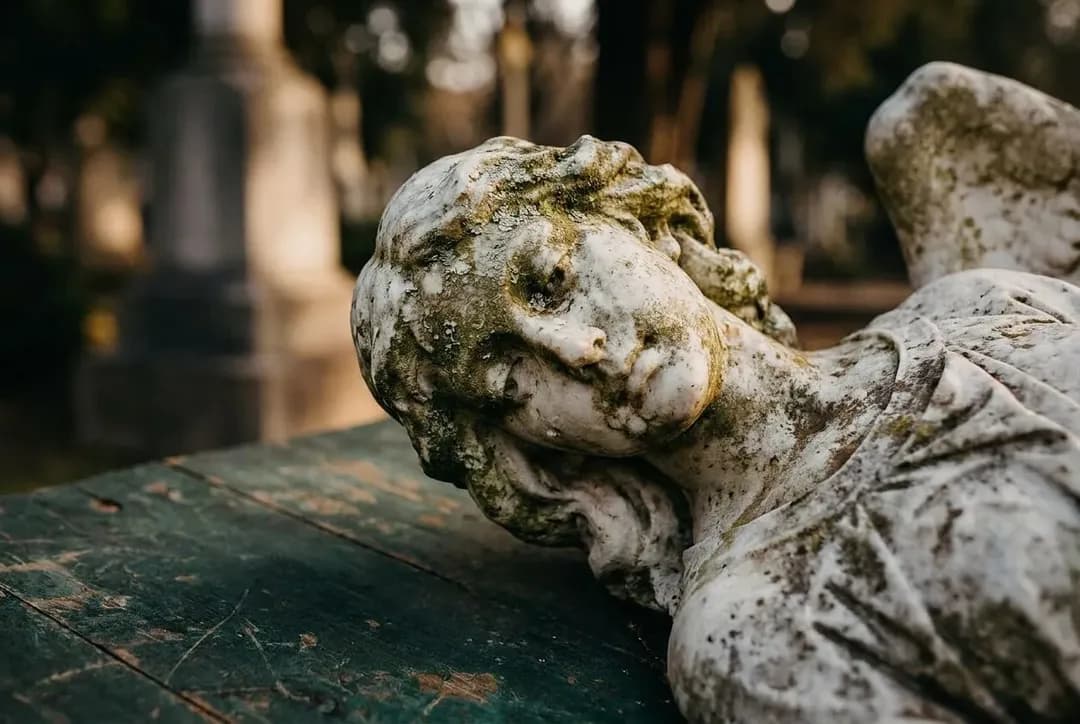
Victorian funerary art is a study in encoded grief. A broken column signifies a life cut short. A downturned torch means the flame of life extinguished. Ivy symbolizes memory and fidelity. Once you start reading the symbols, every monument becomes a narrative. Some are melodramatic—life-sized women draped over urns, their marble drapery impossibly detailed. Others are cryptic: a single word, a date, a Masonic square and compass.
The Egyptian Revival tombs cluster near the southern edge, their hieroglyphs and lotus capitals a reminder that Victorian America was obsessed with antiquity. These aren't historically accurate—they're fantasy Egypt filtered through 19th-century romanticism—but they photograph beautifully, especially when framed by oak branches. The contrast between ancient motifs and autumnal Brooklyn light never quite resolves, and that's the point.
Practical notes
Green-Wood Cemetery spans Fifth Avenue to Prospect Expressway, with the main entrance at Fifth Avenue and 25th Street, Brooklyn. The nearest subway access and parking availability should be verified before stating them as fact. Official hours shift seasonally—verify directly before planning a visit. The grounds are hilly and paths range from paved roads to gravel trails; wear sturdy shoes. Restrooms are available near the main office. Bring water, especially for longer walks, and a map (available at the entrance or online). Dogs on leash are welcome. The cemetery is free and open to the public year-round.
Tags: #GreenWoodCemetery #Brooklyn #NYCHistory #VictorianArchitecture #FuneraryArt #NationalHistoricLandmark #BrooklynWalks #FallInNYC #GothicRevival #FreeAndFine #HiddenNYC #UrbanNature #CemeteryPhotography #NYCFall #AutumnInBrooklyn
All trademarks are the property of their respective owners.
Ask Karpo for more information.
Keep reading
- Sculpture Garden Near Me in Clinton Hill: Pratt Institute's Free Campus Sculpture Park
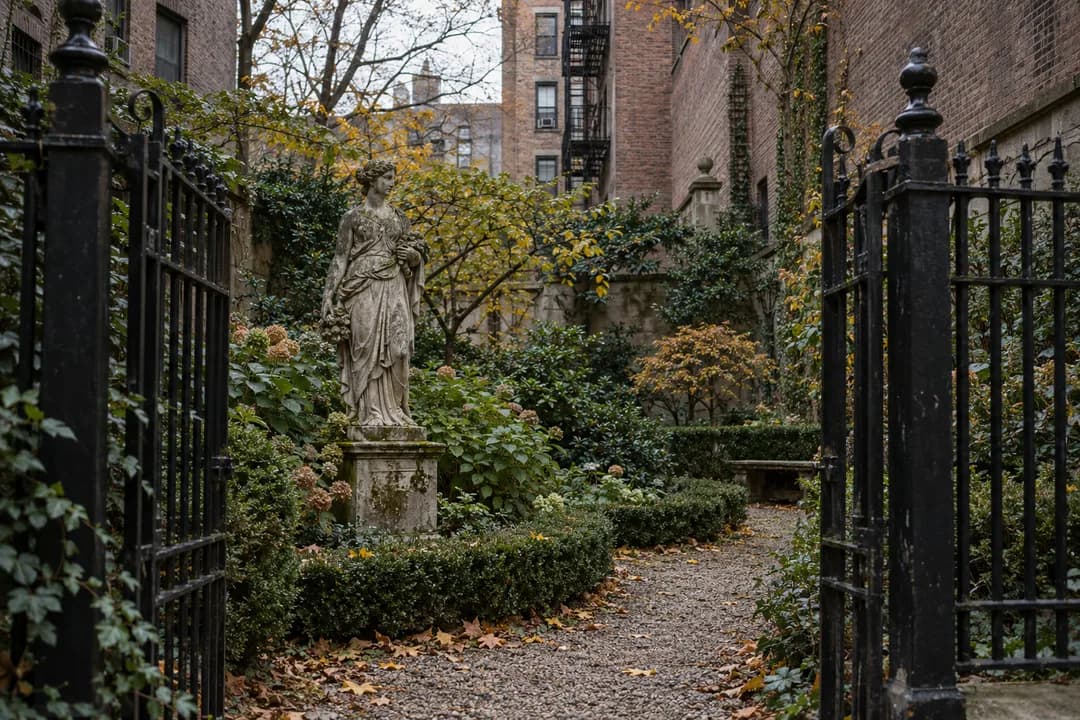 Sculpture Garden Near Me in Nolita: Elizabeth Street Garden, Saved for Good
 Sculpture Garden Near Me Downtown: Tom Otterness's Real World in Rockefeller Park