When news spread about a meteorite discovery made through careful examination of satellite imagery in Canada, it sparked fresh interest in what digital maps can reveal about the world around us. That same spirit of discovery—using technology to find hidden treasures in familiar landscapes—is inspiring a wave of park scavenger hunts across Queens, particularly around Flushing Meadows Corona Park during the 2026 US Open season. Whether you're visiting for a tennis session or exploring the borough's green spaces, designing a custom scavenger hunt transforms a simple park visit into an engaging exploration that works for families, friend groups, or solo adventurers looking to see the neighborhood from a new angle.
Text Karpo with your US Open session time and Queens starting point, and we’ll turn this park scavenger hunts idea into a practical local plan.

Why Scavenger Hunts Work Around Tournament Days
US Open sessions at the USTA Billie Jean King National Tennis Center typically run in day and evening blocks, leaving gaps before gates open or after you exit. A well-designed scavenger hunt fills those hours with purpose, especially if you're traveling with kids who need movement or adults who want to experience more of Queens than the tournament grounds alone. Flushing Meadows Corona Park spans nearly 900 acres with landmarks, art installations, playgrounds, and waterways—enough variety to support hunts focused on architecture, nature, history, or public art. The format also lets you control pacing: a quick challenge or a leisurely exploration, depending on your energy and schedule.
Designing Your Hunt: Themes and Structures
Start by choosing a theme that matches your group's interests. A landmarks hunt might include the Unisphere, Queens Museum, Queens Theatre, New York Hall of Science, and the observation towers near Meadow Lake. Verify access, hours, admission and policies for any cultural venues before your visit. A nature-focused hunt could target specific tree species, bird sightings, or water features like Willow Lake and the park's wetland areas. Public art hunts work well because the park holds dozens of sculptures and installations, many tied to the 1964 World's Fair legacy. For families with younger children, a color hunt—find something red, something round, something taller than an adult—keeps the challenge simple and flexible.
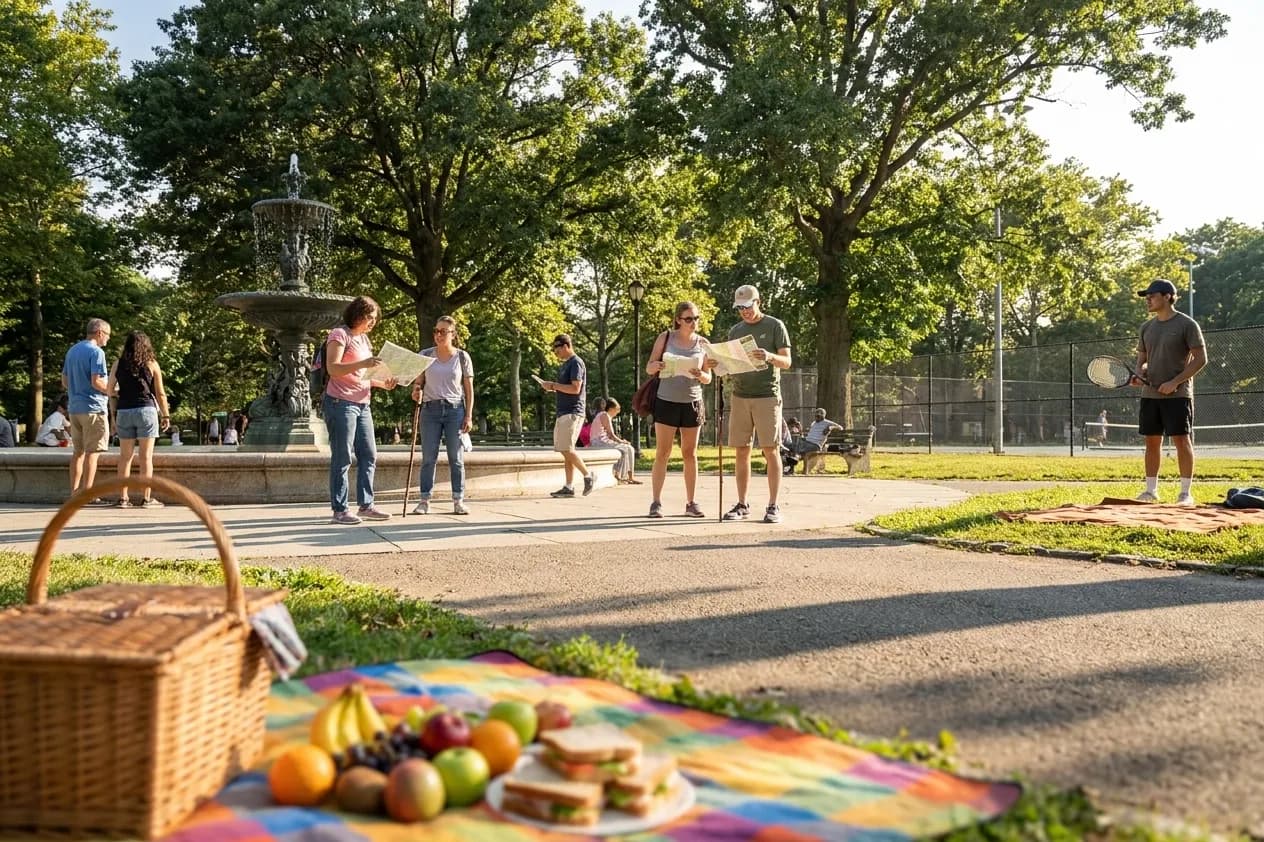
Structure your hunt as a checklist, photo challenge, or riddle sequence. Checklists are straightforward: participants mark off items as they find them. Photo challenges require proof—snap a picture of your group with each landmark or object. Riddle hunts add a puzzle layer: clues lead to the next location, and solving each riddle reveals the next destination. Mix formats if your group has varied ages or attention spans, and consider building in a reward or finish line, like a picnic spot or exploring nearby Flushing or Corona neighborhoods.
Mapping Tools and Offline Prep
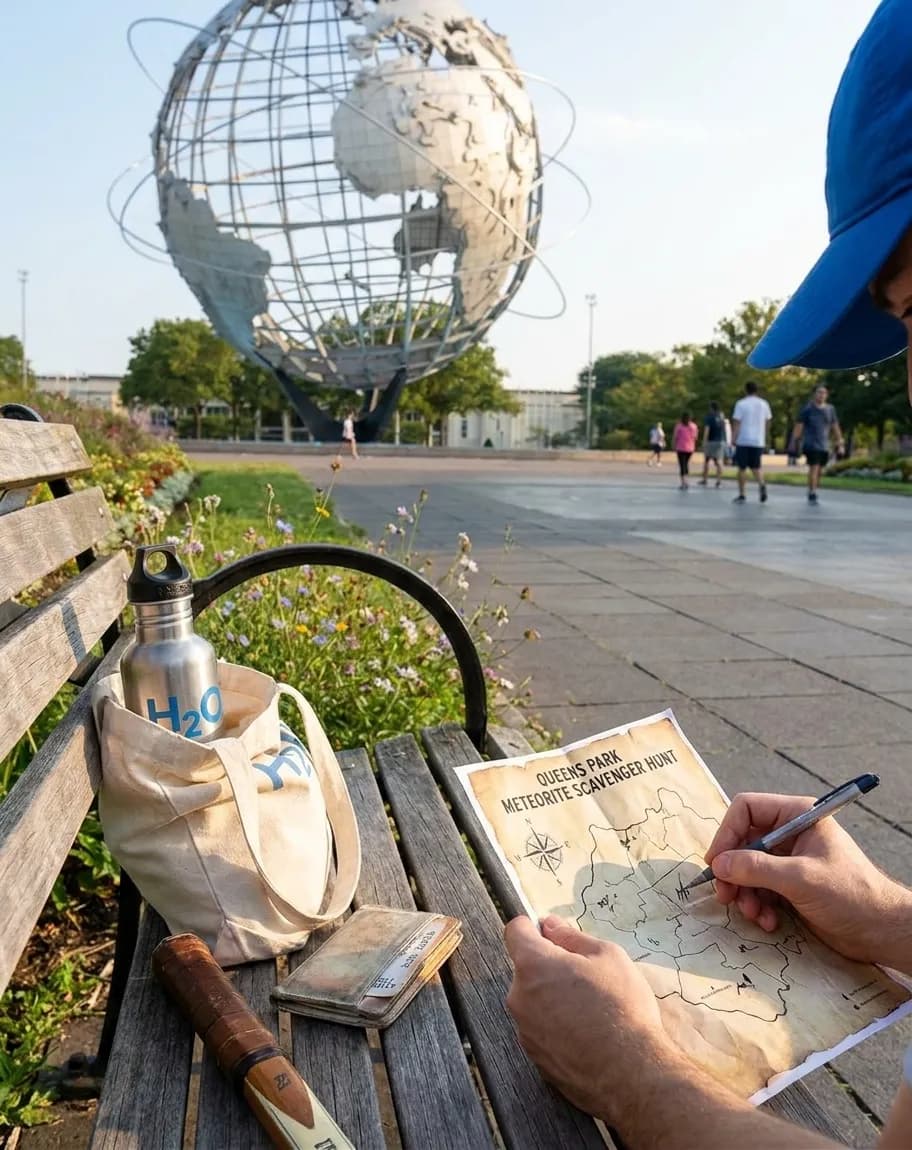
Digital maps make planning easier, but don't rely solely on live connectivity. Download offline maps of Flushing Meadows Corona Park and surrounding neighborhoods before you arrive—cell service can be spotty in some park areas, especially during high-traffic tournament days when networks are strained. Use satellite view to identify visual landmarks, then cross-reference with the NYC Parks map to confirm names and locations. Print or screenshot your hunt list so participants can check off items without draining phone batteries. If your hunt involves riddles or clues, write them on index cards or a small notebook for a screen-free experience that feels more like a classic treasure hunt.
For groups splitting up or racing, establish clear boundaries and a meeting time. The park's size means it's easy to lose track of time or wander farther than intended. Set a central rally point—the Unisphere is the most recognizable—and agree on a backup communication plan if phones fail.
Timing Your Hunt Around US Open Sessions
Check the official US Open event schedule well in advance to understand session times and plan your hunt accordingly. Day sessions often begin late morning, giving you a morning window for exploration. Evening sessions leave afternoons open, though summer heat can be intense—consider a post-session hunt when temperatures drop and the park empties. If you're attending multiple sessions across several days, vary your hunt themes to keep the experience fresh. One day might focus on the park's northern sections near the Hall of Science; another could explore the southern meadows and Meadow Lake shoreline.
Factor in transportation time from your hunt area to the tennis center gates. Walking from the Unisphere to the main entrance takes time, and longer if you're coming from the park's edges. The 7 train stops at Mets-Willets Point, placing you near the park's eastern side; plan your hunt route to end close to that station or the tournament entrance to avoid a last-minute sprint.
Extending the Hunt Beyond Flushing Meadows
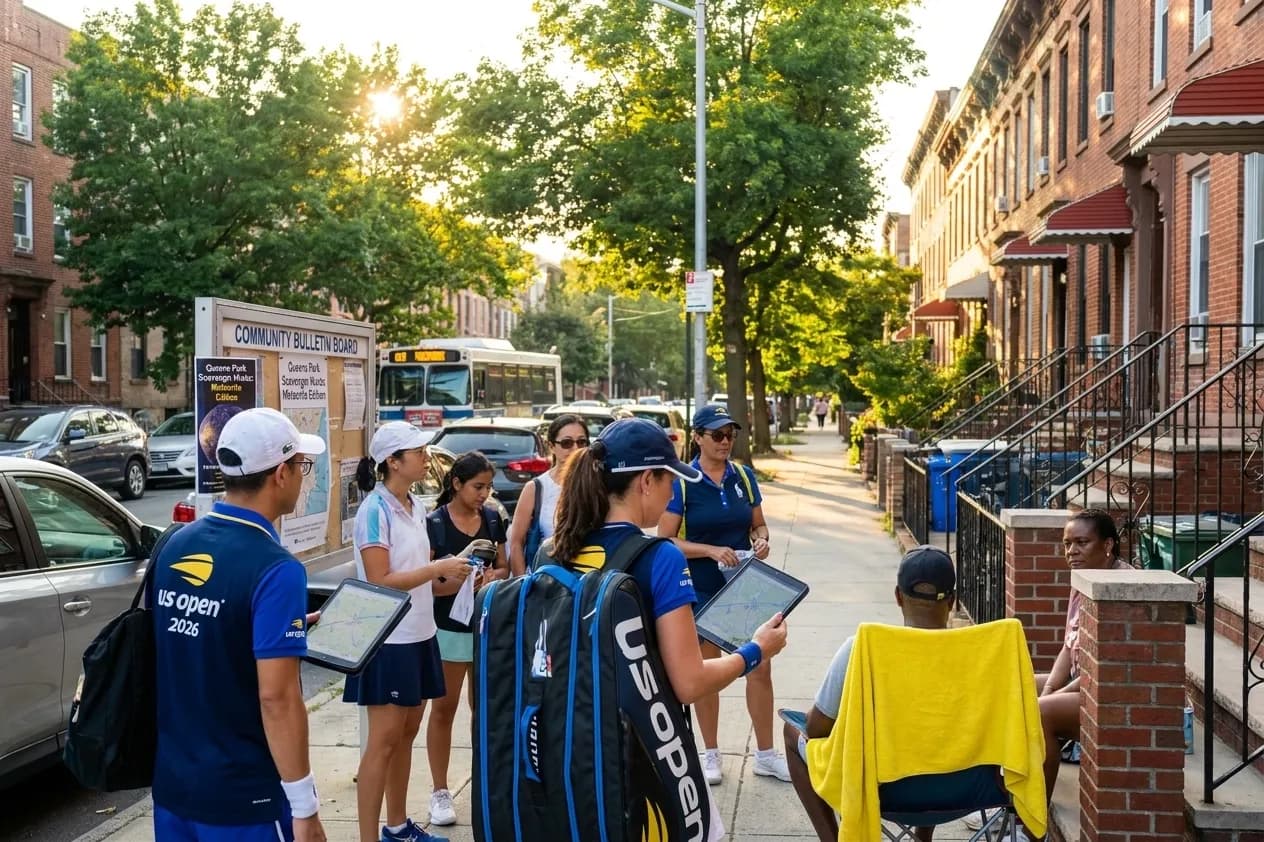
If your group finishes the park hunt quickly or wants a neighborhood component, extend the challenge into nearby Flushing or Corona. A food-focused hunt might include finding specific ingredients at a Flushing market, spotting menu items in different languages, or photographing different types of dumplings. An architecture hunt could target historic buildings, religious structures, or murals along Roosevelt Avenue. These extensions work best for groups comfortable navigating urban streets and interested in the cultural density that makes Queens unique. Keep the hunt list short and geographically tight—a few stops within a few blocks—to avoid fatigue and keep the experience fun rather than exhausting.
What to Bring and What to Skip
Pack light for your hunt, especially if you're heading to a US Open session afterward. Comfortable walking shoes, sunscreen, refillable water bottles, and a small backpack are essentials. Bring a portable phone charger if you're using maps or taking photos, and consider a small first-aid kit for blisters or scrapes. If your hunt involves younger children, pack snacks and a lightweight blanket for impromptu rest breaks. Review the official US Open prohibited-items guide before your visit—certain items allowed in the park may not be permitted inside the tennis center, so plan accordingly to avoid having to discard or store belongings.
Weather and Backup Plans
Summer weather in Queens can shift quickly, with afternoon thunderstorms common during the US Open's late-August and early-September window. Check the National Weather Service forecast the morning of your hunt and have an indoor backup ready. The Queens Museum and New York Hall of Science both offer engaging exhibits that can substitute for outdoor exploration if rain arrives—verify access, hours, admission and policies before your visit. If you're committed to the outdoor hunt, identify covered areas in the park—pavilions or public building entrances—where your group can wait out a brief storm. Adjust your hunt list to include some indoor-friendly elements, like finding specific exhibits or architectural details inside public buildings, so weather doesn't completely derail the plan.
Practical Notes for a Smooth Hunt
- Download offline maps of Flushing Meadows Corona Park and surrounding neighborhoods before you arrive to avoid connectivity issues during high-traffic tournament days.
- Set clear boundaries and a rally point, especially if groups are splitting up or racing—the park's size makes it easy to lose track of time or location.
- Review the official US Open transportation directions and prohibited-items guide to coordinate what you bring on your hunt with what you can carry into the tennis center.
- Plan your hunt route to end near the Mets-Willets Point station or the tournament entrance if you're attending a session afterward, allowing time for security lines and gate entry.
- Check NYC Parks information for Flushing Meadows Corona Park to confirm any temporary closures, construction zones, or event areas that might affect your hunt route.
- Recheck the National Weather Service forecast the morning of your visit and identify covered areas or indoor backups in case of sudden storms.
- Keep hunt lists short and geographically focused if extending into Flushing or Corona neighborhoods—a few stops within a few blocks prevents fatigue and keeps the experience enjoyable.
- Verify access, hours, admission and policies for any museums or cultural venues you plan to include in your hunt or use as weather backups.
Tags: #USOpen2026 #Queens #FlushingMeadows #KarpoFinds #Karpo #googlemapscanadameteoritedisco #NewYorkLocal #TennisTravel
Sources consulted: usopen.org — Official event schedule · usopen.org — Official visitor A-Z guide · usopen.org — Official transportation directions · usopen.org — Official prohibited-items guide · National Weather Service New York · NYC Parks — Flushing Meadows Corona Park
All trademarks are the property of their respective owners.