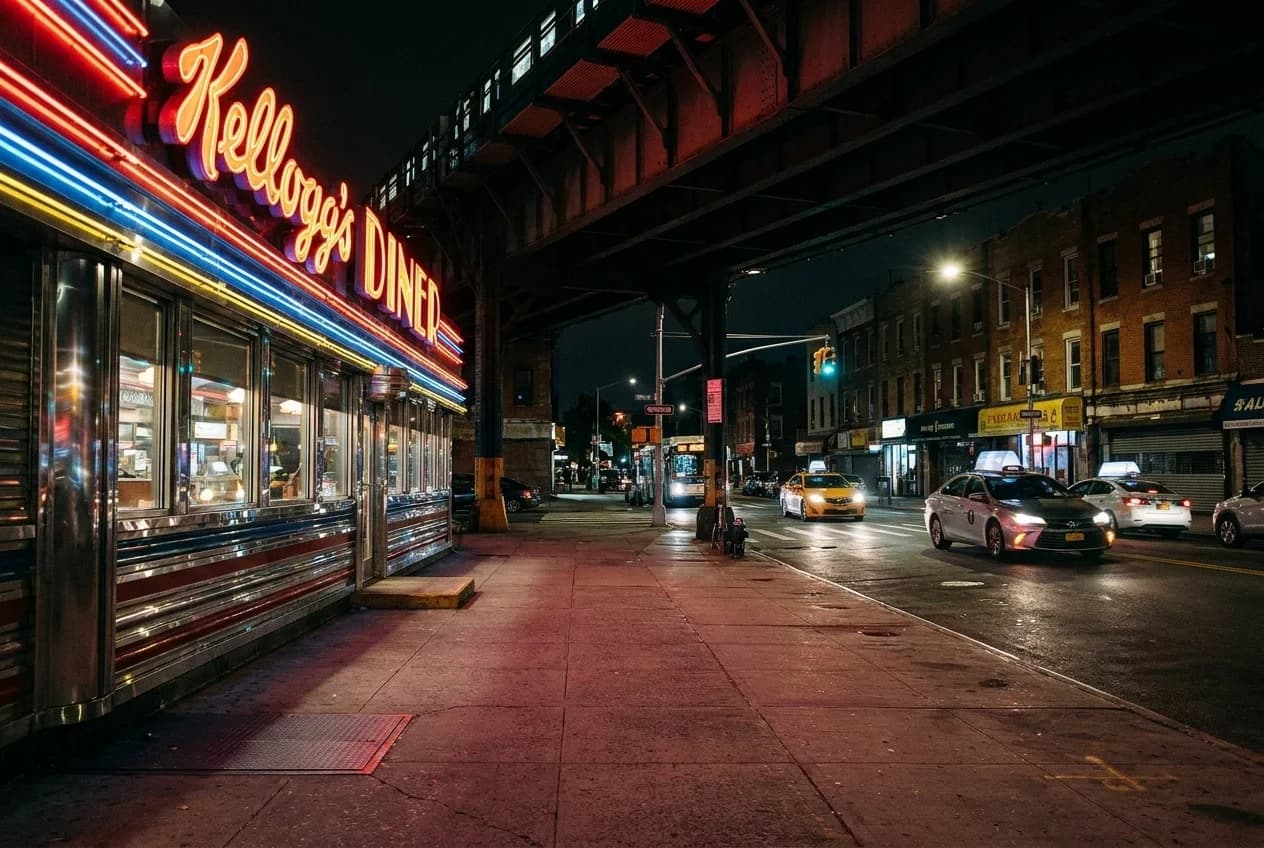
The phrase “google maps canada meteorite discovery” sounds like internet bait until you follow the evidence: a Quebec amateur astronomer noticed a strange circular landform while planning a trip, researchers later reached the remote Côte-Nord site, and reporting this month says the feature has been confirmed as an ancient impact crater now called Uhaachatik. For New Yorkers, the practical takeaway is not to book a wilderness expedition; it is to use the discovery as a reason to see real meteorites and planetary-science tools already in the city. NYC has one of the world’s strongest public meteorite stops at the American Museum of Natural History, plus nearby space-science context at the Hayden Planetarium and Intrepid Museum.
Text Karpo if you want this turned into a step-by-step Upper West Side to Intrepid route with transit timing. Ask Karpo for a kid-friendly version focused on touchable meteorites, planetarium shows, and map science.
What Was Actually Verified in Canada
The verified Canada story began with Joël Lapointe, an amateur astronomer who reportedly spotted an unusual circular feature on Google Maps while planning a camping trip in Quebec’s Côte-Nord region. Scientists later investigated the site on the ground and identified impact evidence, including shock-related rock features reported by science outlets. The crater has been described as roughly 25 kilometers, or about 15 miles, across and about 390 million years old. Its name, Uhaachatik, was selected after discussion with the Ekuanitshit Innu council, according to reports summarizing the research team’s confirmation.
That distinction matters: satellite imagery can suggest a crater, but it does not prove one. Earth is full of circles made by erosion, volcanism, glaciation, salt structures, lakes, and human activity. Confirmation depends on geology—especially minerals and rock textures formed under extreme shock pressure. The discovery is a useful reminder for city readers who love odd map finds: Google Maps can point attention somewhere, but field samples and peer review separate a real impact structure from a cool-looking ring.
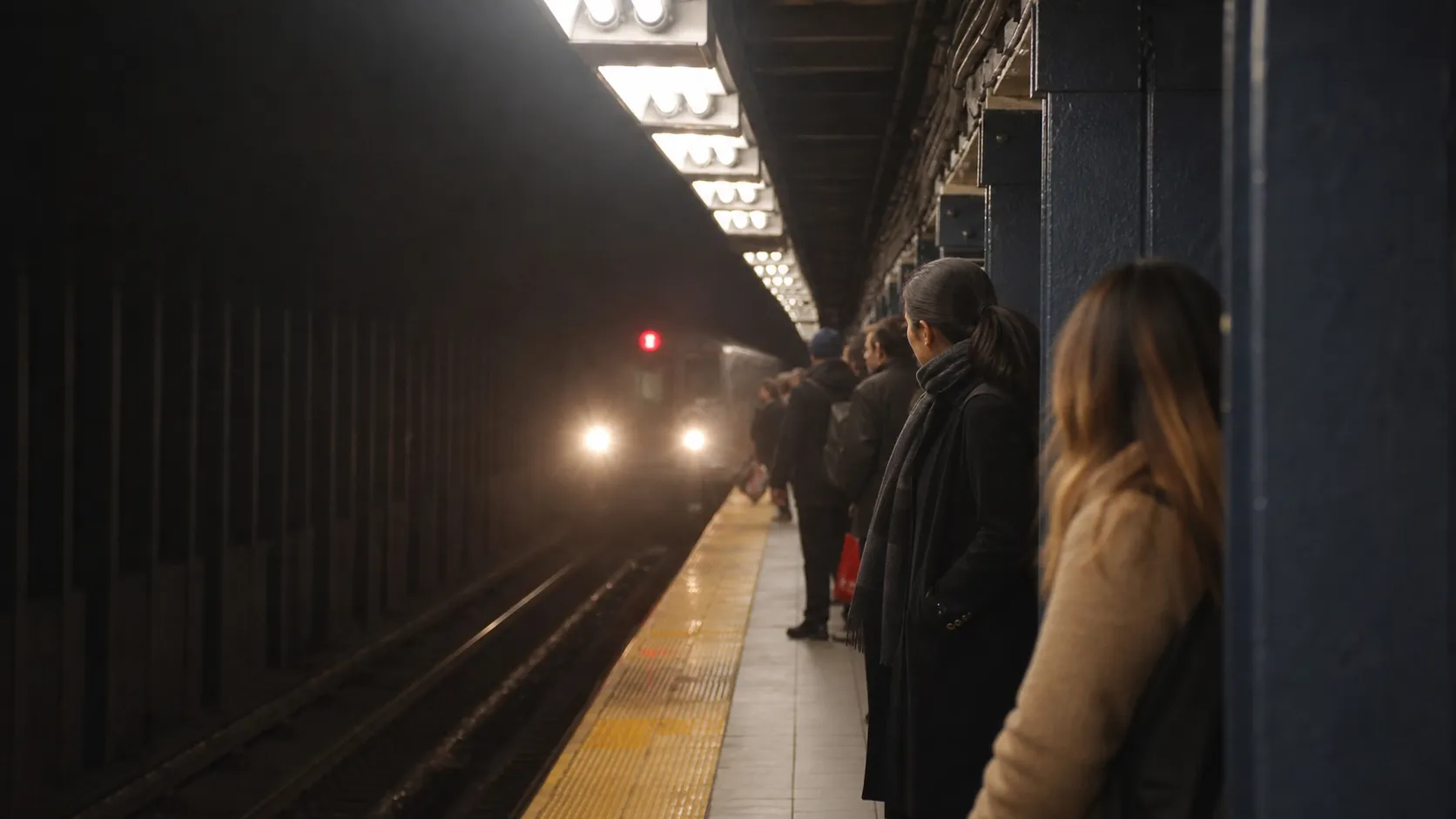
Why NYC Is the Right Place to Understand the Find
New York does not need a fresh crater to be part of the story. The city’s museums let visitors stand inches from space rocks that made the same cosmic journey, only on a more collectible scale. The American Museum of Natural History’s Arthur Ross Hall of Meteorites displays more than 130 scientifically significant meteorites and frames them around solar-system origins, planet formation, and impacts. That is exactly the background needed to understand why a 390-million-year-old scar in Quebec can matter in 2026.
A good NYC route also changes the headline from “look what someone found online” to “here is how scientists read the Solar System.” Start with a physical meteorite, move to a planetarium’s data-driven view of space, then finish with human spaceflight hardware. The result is a half-day or full-day itinerary that connects maps, rocks, orbits, and engineering without pretending that visitors can verify the Canadian crater themselves.
Stop 1: AMNH’s Arthur Ross Hall of Meteorites
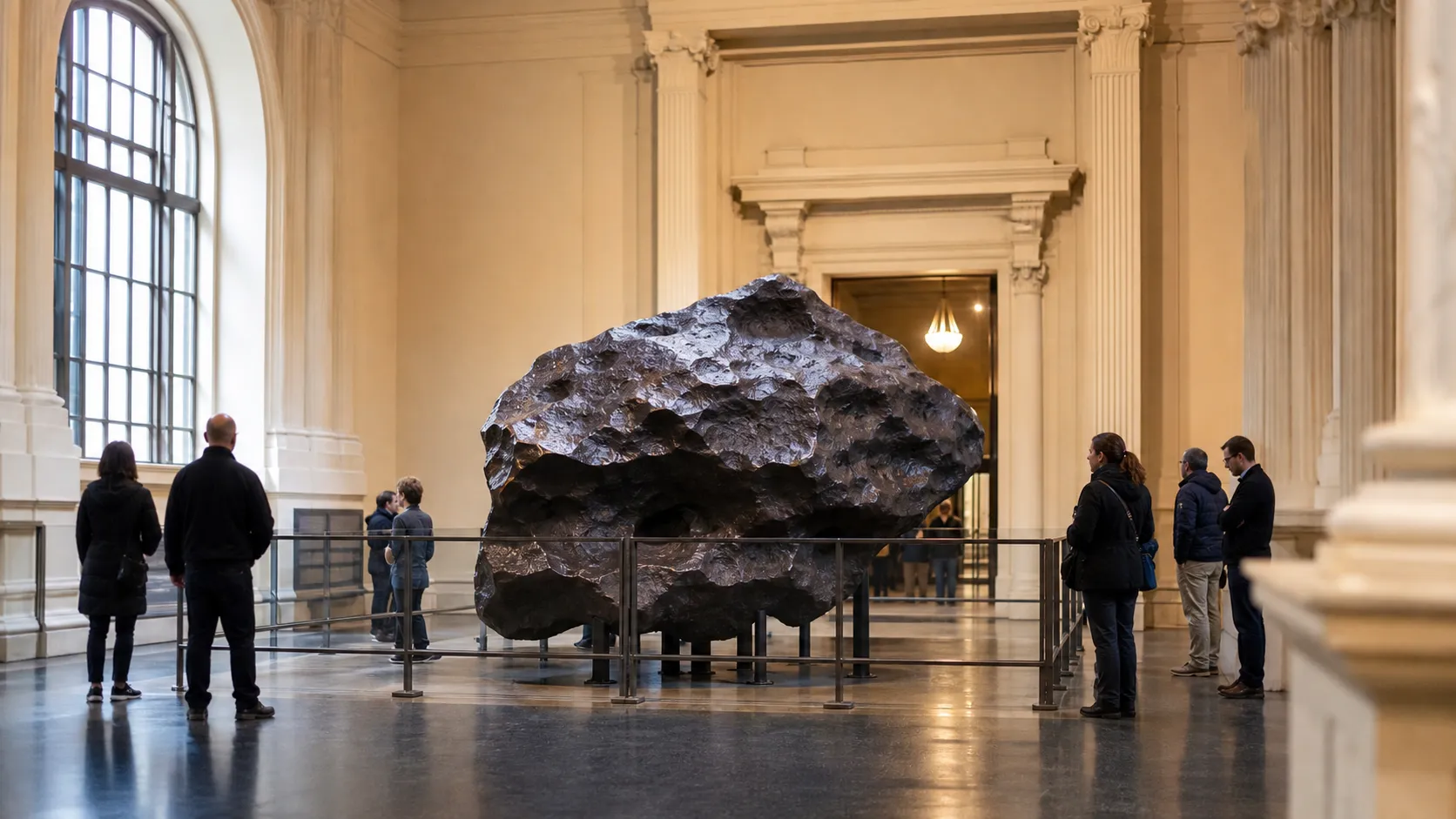
Begin at the American Museum of Natural History at 200 Central Park West, where the Arthur Ross Hall of Meteorites is the most direct NYC answer to the Canada discovery. The hall’s centerpiece is Ahnighito, the 34-ton section of the Cape York Meteorite from Greenland. AMNH says it is the largest meteorite on display in any museum, and its supports extend down to bedrock below the building. That detail alone makes the visit feel very New York: a space rock literally tied into Manhattan’s foundation.
Do not rush the smaller cases. The hall is designed around three themes: where the Solar System came from, how planets formed, and what impacts do to worlds. Look for displays that explain meteorites as fragments from asteroids, planetary bodies, or the Moon and Mars. The Canada crater is a landform; AMNH’s specimens are the surviving material record. Seeing both ideas together helps turn a map circle into a scientific chain of evidence.
What to Look for Around Ahnighito
Ahnighito is photogenic, but its best lesson is texture. AMNH notes that cut surfaces reveal Widmanstätten patterns, crystalline structures found in iron meteorites and not in ordinary terrestrial iron. Those patterns form through extremely slow cooling inside a parent body, which means the rock is not just old—it is a preserved interior of an asteroid. For anyone following the google maps canada meteorite discovery trend, that is the leap: the real evidence is often microscopic or mineralogical, not just visible from a screen.
The Cape York material also invites a more careful conversation about discovery and collection. AMNH identifies the meteorite as having landed in Greenland thousands of years ago, long before its museum life, and the museum’s own educational material discusses how the pieces traveled to New York. Treat that history as part of the visit. Meteorites are scientific objects, but they can also be cultural objects with complicated human stories.
Stop 2: Hayden Planetarium for the Bigger Impact Story
After the meteorite hall, stay inside AMNH and head toward the Hayden Planetarium. The planetarium’s space shows are built with data from NASA, the European Space Agency, the Japan Aerospace Exploration Agency, telescopes, simulations, and museum research. That makes it the right second stop: meteorites are the objects; planetarium visualization supplies the orbital and planetary setting. The Canada crater becomes easier to grasp when you think of Earth as one body in a busy Solar System.
This is also where the route becomes serviceable for families, visitors, and science-curious locals who do not want a geology lecture. A planetarium show can explain impacts as part of the same system that shaped the Moon, Mars, and early Earth. If you are short on time, pair the Hall of Meteorites with the Rose Center rather than trying to add too many stops. The Upper West Side portion can stand alone.
Stop 3: Central Park Bedrock as a Ground-Level Contrast
Before leaving the neighborhood, step outside and use Central Park as a reality check. The exposed Manhattan bedrock is not meteorite material and should not be treated as such, but it is excellent for comparing deep local geology with extraterrestrial rock. The point is not to hunt for meteorites in the park. It is to notice how Earth processes—folding, erosion, glaciation, and urban construction—can make dramatic shapes that are easy to misread in photos or maps.
That contrast is exactly why the Canadian confirmation is interesting. A circular form alone is not enough; researchers need shock features and field evidence. In NYC, the safe version of that lesson is simple: look at Ahnighito, then look at Manhattan’s own rock. One came from space. One records New York’s metamorphic and glacial history. Both can be spectacular, and confusing them is how map myths begin.
Stop 4: Intrepid Museum and the Spaceflight Link
For a longer route, take transit or a crosstown bus to the Intrepid Museum at Pier 86, West 46th Street and 12th Avenue. Its Space Shuttle Pavilion is home to Enterprise, NASA’s prototype orbiter, with exhibit zones using artifacts, photographs, audio, and film to explain the shuttle era. This stop does not display the Canada crater, and it should not be framed as a meteorite collection. Its value is context: how humans build machines to study and travel through the same space environment that sends meteorites to Earth.
The Hudson River setting also gives the route a cinematic finish. You move from a 4.5-billion-year-old meteorite supported by Manhattan bedrock to a spacecraft designed for atmospheric reentry and orbital test history. That arc is useful for visitors who want a science day that feels like NYC rather than a classroom sequence. It is also manageable: Upper West Side in the morning, Hell’s Kitchen waterfront in the afternoon.
How to Read Map Discoveries Without Falling for Every Circle
The Canada discovery is a win for public curiosity, but it should not encourage armchair certainty. If you see a ring on Google Maps, treat it as a question, not a claim. Check whether the location appears in a recognized impact database, whether scientists have described shock metamorphism, and whether a university, geological survey, museum, or peer-reviewed paper is attached to the claim. Social posts are good at spreading coordinates; they are not good at confirming geology.
NYC visitors can practice that skepticism in person. AMNH’s meteorite hall shows how specimens are classified and interpreted, while NASA’s Earth Observatory impact-crater resources show how confirmed craters look from above. Compare those official explanations with viral screenshots. The fun is still there, but the habit changes: you start asking what evidence would prove the story rather than just whether the shape looks convincing.
Practical notes
Practical notes: Check current hours and ticket requirements directly with each museum before going, because schedules and timed-entry rules can change. AMNH is at 200 Central Park West; the Hall of Meteorites and Hayden Planetarium are in the same museum complex, making them the easiest paired stop. Intrepid Museum is at Pier 86, West 46th Street and 12th Avenue; its own directions page recommends multiple subway lines to 42nd Street with a walk or M42 bus west, or the 7 train to Hudson Yards followed by a northbound walk. Do not bring found rocks to museums expecting instant authentication unless a public identification program is specifically listed. If you think you found a meteorite, document where it was found and consult established scientific guidance.
Tags: #GoogleMapsCanadaMeteoriteDiscovery #NYCScience #AMNH #Meteorites #HiddenGemsOddFinds #UpperWestSide #HaydenPlanetarium #IntrepidMuseum #SpaceScience #NYCMuseums #PlanetaryScience #AsteroidImpact #ScienceTravel #NYCWeekend #KarpoNYC
Sources consulted: American Museum of Natural History: Arthur Ross Hall of Meteorites · American Museum of Natural History: Ahnighito meteorite · American Museum of Natural History: Hayden Planetarium · Intrepid Museum: Space Shuttle Pavilion · Intrepid Museum: directions and location · NASA Earth Observatory: Impact Craters collection · Impact Earth Database: interactive impact-crater map · Smithsonian Magazine report on the Quebec crater confirmation
All trademarks are the property of their respective owners.
Ask Karpo first
Ask Karpo to compare NYC’s meteorite stops with other odd science finds around the five boroughs, from glacial boulders in parks to spaceflight artifacts on the waterfront, and we’ll build a route that matches your time, neighborhood, and curiosity level.