The economics of a simulator bay are the opposite of almost every other night out in Manhattan. You are renting a room by the hour and the price does not change with how many people stand in it, which is why these venues push corporate bookings and why a group of six is such good value. For two people it is a different calculation, and the honest version of it is worth doing before you book, because a two-hour bay on a Friday evening is a real number and nobody quotes it to you up front.
Bay pricing swings by time of day more than by location, and the cheap hours are not the ones you would guess. Tell Karpo which night you are thinking about and which part of Manhattan suits, and get what a two-hour bay actually costs at that hour, which locations have a kitchen worth staying for, and how far ahead you need to book.
What you are actually renting
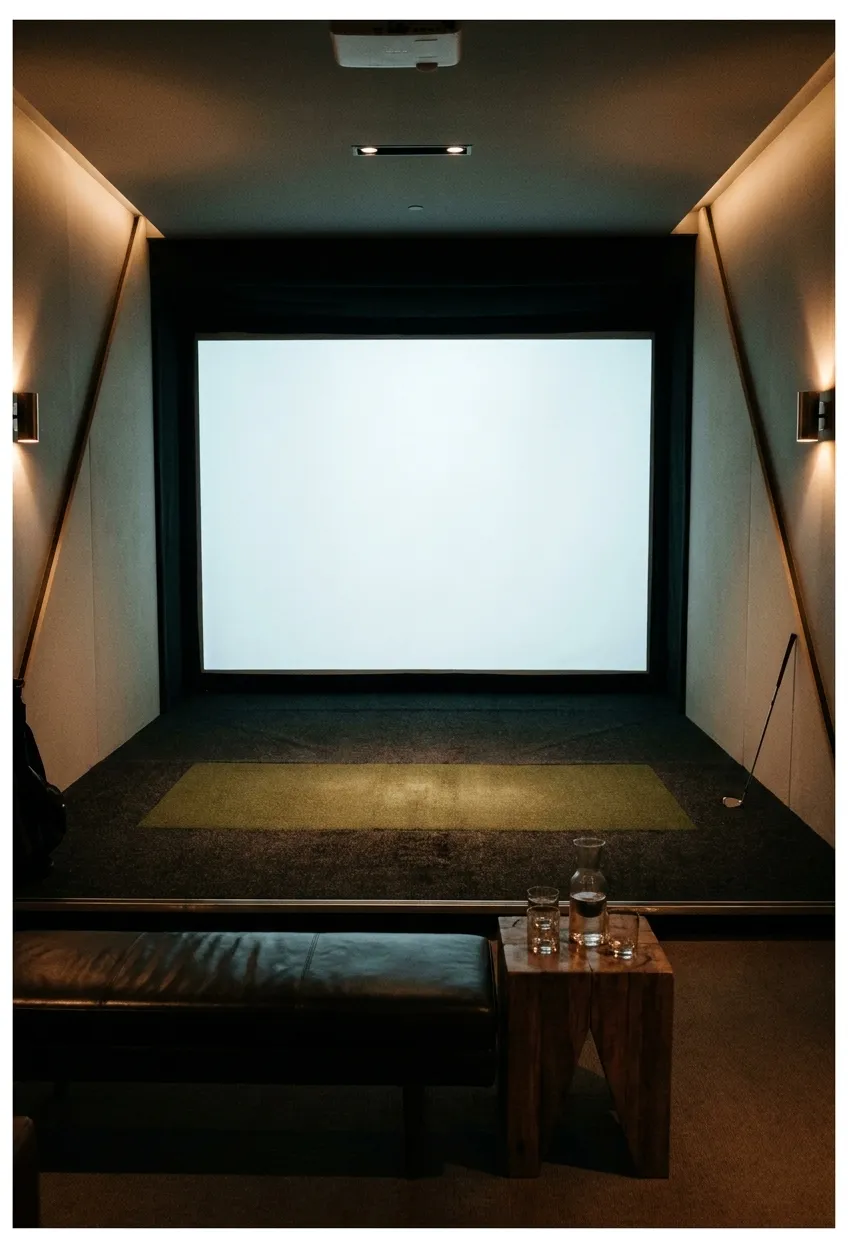
Five Iron Golf is the chain that made this format normal in New York and it has bays across Manhattan — Grand Central, Herald Square, Flatiron, the Upper East Side, the Financial District — plus Long Island City across the river. Each bay is a Trackman setup with swing cameras and a library of courses, sitting inside what is otherwise a bar with a kitchen. That combination is the point. You are not booking a driving range; you are booking a private room in a bar that happens to have a projector you can hit a ball into.
Clubs are included at every location worth going to, which matters for a first date: neither person needs to own anything or carry anything across town.
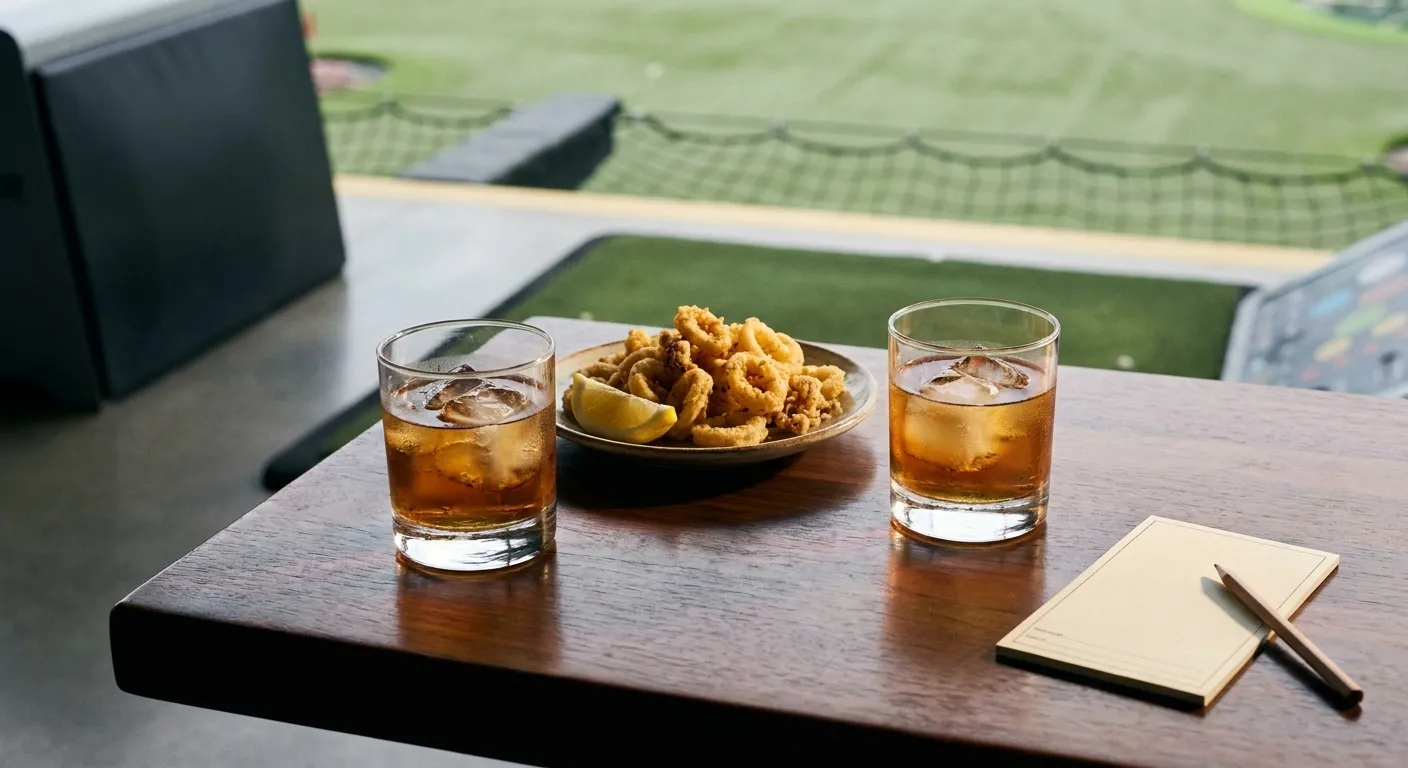
The hour you book decides the price
Bay rates move with demand in a way restaurant tables do not, and the pattern is consistent across operators. Weekday afternoons and late evenings are the cheap windows. The expensive window is Thursday and Friday between six and nine, when the after-work corporate trade is competing with you for the same rooms. A pair with any flexibility should be looking at a Sunday evening or a Tuesday, when the same two hours can cost meaningfully less and the room is quieter.
Two hours is the right length, and here is why
An hour is enough to hit balls and not enough to play anything, which leaves the evening feeling like a warm-up. Two hours lets two people play nine holes at a relaxed pace with drinks and a break, which is the actual shape of a good night. Beyond two hours, one of you is bored — that is not a criticism of anyone's attention span, it is what happens when a novelty becomes a routine inside a small dark room.
The food question separates the locations
These venues run chef-led menus rather than bar snacks, and the quality is genuinely uneven between locations. If the plan is bay-then-dinner, the location matters less. If the plan is dinner inside the bay, ask what the kitchen does well and whether food can be served in the bay itself or only at the bar, because some rooms are laid out for one and not the other. Eating standing up next to a hitting mat is a worse experience than it sounds.
Booking, cancellation and the etiquette nobody mentions
Weekend prime slots go a week or more out and the good weekday windows go a day or two out. Cancellation policies are stricter than restaurants — you are holding a room, not a table. And the one piece of etiquette that makes or breaks the evening: agree at the start whether you are playing a course or hitting for fun. A competent golfer quietly playing a full round while a beginner waits with a drink is the most common way this night goes flat, and it takes one sentence at the beginning to avoid.
If neither of you has played before
Simulators are much friendlier to beginners than a driving range, because nobody else can see you and the software will happily measure a shot that travels forty yards sideways. Two habits make a first session better. Ask for the shortest, most forgiving course in the library rather than a famous championship layout, which is designed to punish exactly the mistakes beginners make. And switch the settings to a scramble format, where you both hit and then play the better ball — it halves the number of bad shots anyone has to watch and it turns the evening into something cooperative rather than a slow demonstration that one of you has played before.
Practical notes
Book two hours, not one. Sunday evenings and weekday afternoons are the cheap windows; Thursday and Friday after work are the expensive ones. Clubs are provided, so bring nothing. Ask whether food is served in the bay before you plan dinner around it, check the cancellation terms because you are holding a room, and settle the play-a-course-or-just-hit question in the first five minutes.
Tags: #GolfSimulator #IndoorGolf #DateNight #NYCBars #Manhattan #NYCNightlife #FiveIron #NYCWeekend #ThingsToDoNYC #BarsAndNights #NewYorkCity #Trackman #NYCGuide
Please drink responsibly. Must be of legal drinking age.
All trademarks are the property of their respective owners.
Ask Karpo first
Want to know what a two-hour bay costs on the night you are considering, which Manhattan location has the kitchen worth staying for, and how far ahead it books out? Ask Karpo for live pricing by hour and a nearby place to go afterwards.