
Search interest around “garmin cirqa” is rising just as Garmin’s official pages now show the CIRQA Smart Band as a screenless health and fitness tracker with Garmin Connect support and no subscription required for core use. For NYC commuters, the question is not whether a wristband can count steps on Broadway or log sleep after a delayed train; it is whether a no-display band actually fits the way New Yorkers move. Garmin’s owner’s manual confirms activity tracking, sleep tracking, phone-GPS settings for activities, LiveTrack limitations, 5 ATM water rating, and up to 10 days of battery life. This guide sticks to verified details and translates them into practical city use.
Text Karpo if you want a neighborhood-specific walking loop or commute routine that makes sense for testing a new tracker in NYC. Ask Karpo for a practical comparison between CIRQA, a Garmin watch, and a phone-only setup before you buy.
What Garmin Officially Confirms About CIRQA
Garmin’s product page presents CIRQA as a screenless smart band designed to track all day and be checked later in the Garmin Connect app. The company’s support navigation identifies it as a health and fitness tracking product, and the owner’s manual is dated July 2026. That matters because pre-launch rumors circulated for months; buyers should separate those from confirmed documentation. The safest verified summary is this: CIRQA is a band-style tracker, not a smartwatch, and the device experience is app-centered rather than screen-centered.
Garmin’s manual confirms daily step count, distance traveled, intensity minutes, calories burned, and sleep statistics for recorded days. It also says wheelchair mode records different metrics, such as pushes instead of steps. The manual points readers to Garmin’s accuracy page for fitness metric accuracy, which is a useful reminder for buyers: wearables estimate patterns; they do not create a clinical record of your body or your commute.
Why Screenless May Make Sense on the Subway
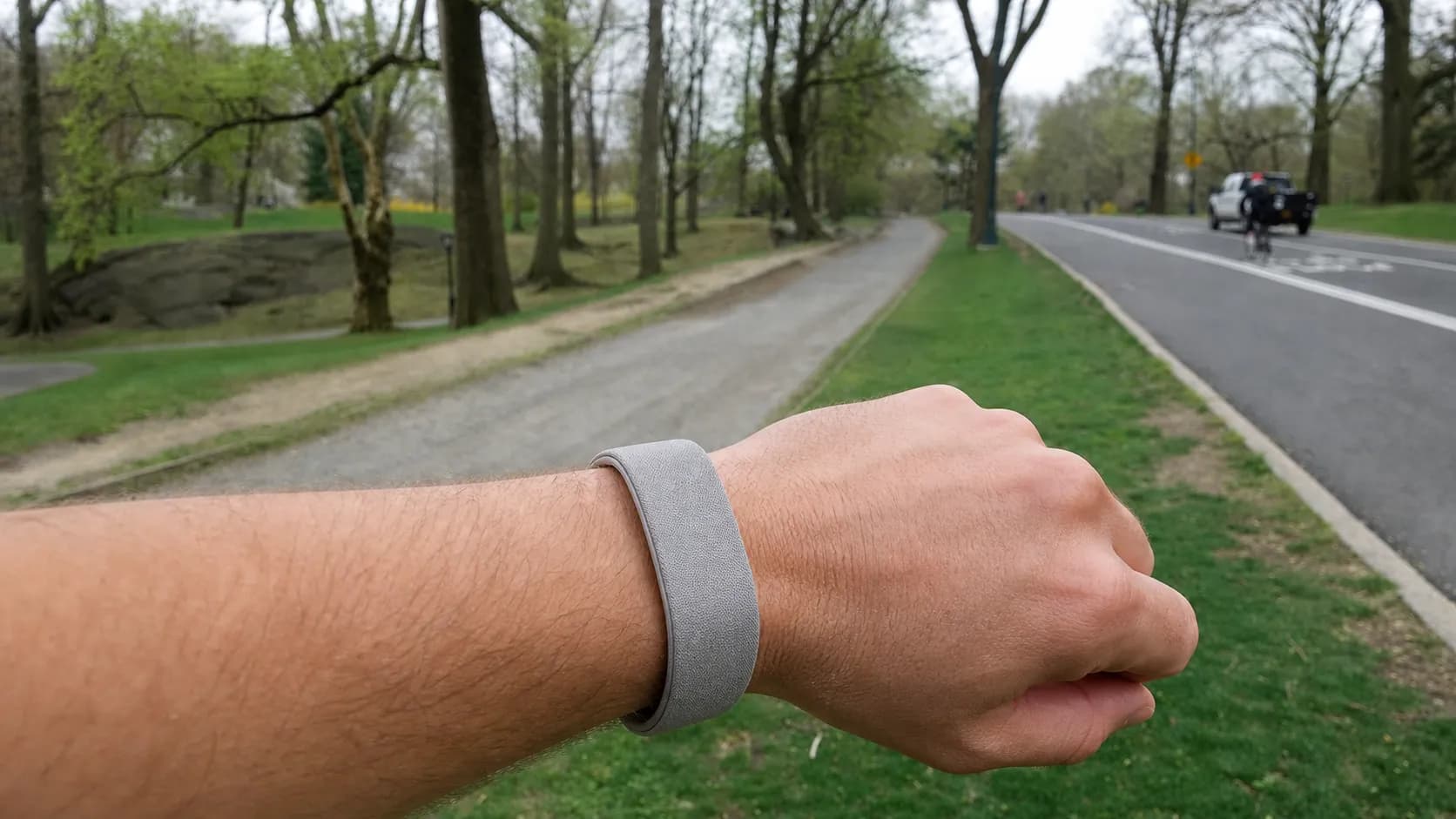
A screenless tracker has an obvious NYC advantage: fewer reasons to stare at your wrist while moving through a crowded station, crossing an avenue, or standing at the edge of a platform. CIRQA starts and stops a favorite activity with its button, according to the manual, then syncs the activity to Garmin Connect. The band uses vibration and LED flashes to confirm recording, so you are not navigating a tiny display while balancing a coffee, tote, umbrella, or Citi Bike helmet.
There is also a tradeoff. If you want turn-by-turn cues, live pace, maps, or a visible clock during your ride, CIRQA is not built like a GPS watch. The MTA fare system supports tapping with a smartphone, wearable device, contactless card, or OMNY card, but Garmin’s CIRQA documentation does not make it a transit-payment device. Treat it as a tracker that can disappear into your routine, not as a replacement for your phone, watch, or OMNY card.
Walking, Errands, and the New York Step Count Reality
New Yorkers routinely stack activity without calling it a workout: ten blocks to the subway, stairs at a transfer, a grocery loop, then a walk home because the bus is bunched. CIRQA’s daily tracking is well matched to that kind of incidental movement because the manual confirms steps, distance, intensity minutes, calories, and periodic step updates in Garmin Connect. For walkers who do not want another notification surface, the no-screen design could be the point.
For outdoor activity tracking, the manual’s activity settings include a Phone GPS toggle, which means buyers should expect location-based route recording to depend on a paired phone rather than an onboard display-and-map experience. That is fine for most neighborhood walks, waterfront loops, and run-walk commutes, but it is a distinction worth knowing before purchase. If you leave your phone at home, do not assume CIRQA will map your route like a dedicated GPS watch.
Fitness Use: Gyms, Runs, Bikes, and City Sports
Garmin’s manual lists a broad set of activities across gym, outdoor, running, cycling, swimming, racket sports, team sports, winter sports, water sports, and other categories. The list includes practical NYC options such as Walk, Walk Indoor, Run, Treadmill, Strength, Yoga, Bike Commute, Bike Indoor, Basketball, Tennis, Pickleball, Row Indoor, Pilates, and Swim. That makes CIRQA more flexible than a simple step band, especially for people who split activity between parks, apartment gyms, boutique studios, and rec centers.
There are caveats. The same manual notes that some activities may require a Garmin Connect+ subscription, and starting a guided workout from the Garmin Connect app is listed as requiring Garmin Connect+. That does not negate Garmin’s no-subscription positioning for the band’s core tracking, but it does mean buyers should check which app features they actually expect to use. If your main goal is advanced guided workout flow on your phone, verify the subscription status before ordering.
Sleep Tracking for Small Apartments and Shifted Schedules
CIRQA may be most compelling for New Yorkers who dislike sleeping with a bulky smartwatch. Garmin’s sleep section says the device automatically detects sleep during normal sleep hours set in Garmin Connect, then reports total sleep time, sleep stages, sleep movement, and sleep score. The manual also says Sleep Coach recommendations use sleep and activity history, circadian rhythm, and HRV status. For late diners, hospital staff, hospitality workers, and parents with interrupted nights, the ability to set normal sleep hours in the app is important.
Do not overread the numbers. A sleep score can be helpful for noticing patterns after several nights, especially after alcohol, late workouts, room heat, or noisy street conditions. It is not a medical diagnosis. If your sleep is chronically poor, if you suspect sleep apnea, or if fatigue affects work or safety, use wearable data as a conversation starter with a qualified clinician rather than as a substitute for care.
Battery, Water Rating, and Summer Wear in NYC
Garmin’s specifications page confirms a rechargeable built-in lithium-ion battery and battery life of up to 10 days. For commuters, that is the difference between charging every night and charging roughly once or twice a week depending on actual use. The same specs list an operating temperature range from -4°F to 140°F and a charging range from 32°F to 113°F. In plain city terms: wearing it through a hot platform wait is different from charging it in a window-baked apartment.
The water rating is 5 ATM, which Garmin defines in the manual note as pressure equivalent to a depth of 50 meters. That is useful for sweat, rain, handwashing, and swim activity support, but buyers should still follow Garmin’s care instructions and avoid treating any fabric band as maintenance-free. NYC summer brings sunscreen, grime, subway dust, and humidity; if you wear a tracker 24/7, band hygiene matters as much as battery life.
Safety Features Are Helpful, Not Emergency Services
Garmin’s Safety and Tracking page for CIRQA includes LiveTrack, which allows invited friends and family to follow races and training activities in real time on a web page. That could be useful for a solo run in Riverside Park, a late walk from the train, or a long bike commute. But Garmin’s own caution is clear: safety and tracking features are supplemental and should not be relied on as the primary way to obtain emergency help.
The manual also says CIRQA must be connected to Garmin Connect by Bluetooth, and the paired phone needs a data plan and network coverage for safety and tracking features. That is especially relevant underground, inside stations, and in pockets of weak service. NYC DOT and New York State pedestrian safety pages still point to basic habits: stay visible, scan before crossing, and do not depend on a device to solve street awareness.
Who Should Buy It, Wait, or Skip It
CIRQA looks most sensible for the New Yorker who wants Garmin health and activity data without wearing a visible smartwatch all day. It may fit people who wear a mechanical watch, work in settings where smartwatches feel distracting, train casually across several activities, or mainly want sleep and recovery trends. The up-to-10-day battery life and app-first design also suit commuters who already carry a phone and do not want one more screen competing for attention.
Wait if launch availability, retailer pricing, band color, or accessory sizing matters to you; Garmin’s U.S. product page indicated ordering beginning July 24, 2026, while third-party retail listings may vary. Skip it if you need onboard GPS, a display, music controls, transit payment, smartwatch notifications on the device itself, or medical-grade monitoring. CIRQA is best understood as a discreet Garmin data collector, not a city smartwatch.
Practical notes
Practical notes: Before buying in NYC, measure your wrist and compare it with Garmin’s listed S/M and L/XL fit information, then decide whether wrist or upper-arm wear makes more sense for your commute, gym, and sleep. Confirm the final checkout price, color availability, return window, and whether any desired Garmin Connect+ features are separate from the band. If you plan to track outdoor walks or runs, carry your phone for Phone GPS and LiveTrack. For subway use, keep your OMNY payment method separate unless Garmin explicitly adds payment support later. Wearable metrics are estimates, so use trends rather than single-day scores, and consult a professional for health concerns.
Tags: #GarminCirqa #CIRQASmartBand #NYCCommuter #NYCWalking #SubwayCommute #GarminConnect #FitnessTracker #SleepTracking #UrbanFitness #NYCRunning #TransitLife #WearableTech #NeighborhoodGuides #KarpoNYC
Sources consulted: Garmin CIRQA Smart Band product page · Garmin CIRQA owner’s manual · Garmin CIRQA specifications · Garmin CIRQA activity tracking manual page · Garmin CIRQA sleep tracking manual page · Garmin CIRQA safety and tracking manual page · MTA OMNY fare payment information · NYC DOT pedestrians information · New York State pedestrian safety tips
All trademarks are the property of their respective owners.
Ask Karpo first
Ask Karpo to turn your normal NYC week into a simple tracker test plan: one commute day, one gym or studio session, one outdoor walk, and two sleep nights, with notes on battery, comfort, app usefulness, and whether the band actually changes your habits.