 Distillery Tour Near Me in Bushwick: New York Distilling Company
Weekend Plans
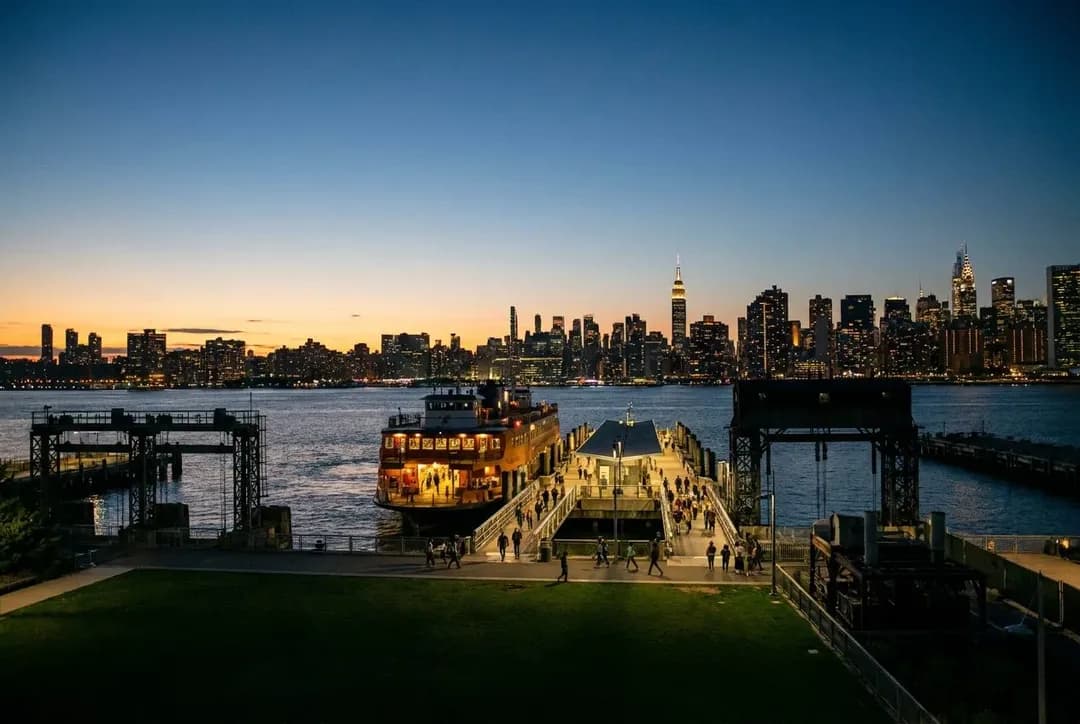
gantry plaza state park when the ferry commuters stream off the dock
Each weekday evening, the 6:15 and 6:45 p.m. NYC Ferry arrivals transform Gantry Plaza State Park into a transit threshold—a twenty-minute convergence where purposeful commuters, lingering tourists, and the glowing Manhattan skyline share the same stretch of Long Island City wate
The ferry slides into the dock at Gantry Plaza State Park with a practiced ease, its horn announcing arrival as the city across the water begins its nightly transition from daylight to incandescence. Within seconds, the gangway is down and passengers stream onto the pier—briefcases, backpacks, rolled yoga mats, the occasional stroller—dispersing across the waterfront with the unmistakable gait of people who know exactly where they're going. For twenty minutes, maybe thirty, the park becomes something else entirely: not quite a commuter hub, not quite a leisure destination, but a threshold space where the rhythms of work and home briefly overlap against one of the city's most dramatic backdrops.
The Evening Ferry Pulse
The NYC Ferry East River route’s weekday evening arrivals bring the largest weekday evening crowds to the park, a twice-hourly surge that reshapes the entire waterfront for a few compressed minutes. The first boat catches the tail end of the early-exit crowd—people who've managed to slip out ahead of the rush, their relief palpable as they step onto Queens pavement. The second arrival is fuller, denser, a tide of end-of-day fatigue and Friday-adjacent energy that varies by season but never quite disappears.
Watch from the lawn and the choreography becomes clear: the crowd doesn't spread evenly but follows invisible channels carved by habit and destination. Some passengers pause at the rail immediately after disembarking, stealing a moment to watch the light shift across the East River before the commute truly ends. Others barely break stride, angling directly toward Center Boulevard and the promise of the 7 train. By late summer 2026, the rhythm feels as embedded in the park's identity as the gantries themselves.
Where the Crowd Thins
Not every corner of Gantry Plaza absorbs the ferry surge equally. The northern pier near the gantries remains quieter than the southern dock area immediately after ferry arrivals, a quirk of geography and foot traffic that creates a kind of acoustic relief valve. While the main dock swells with bodies and voices—the scrape of wheeled luggage on concrete, overlapping phone conversations, the occasional reunion hug—the northern stretch holds its calm. Couples sit on benches facing the Midtown skyline. A handful of regulars claim their usual rail spots, unbothered by the temporary chaos a hundred yards south.
The disparity is most pronounced in that first five-minute window after the gangway drops, when the southern end of the park feels almost congested and the north remains a different afternoon entirely. It's a useful thing to know if you're timing a visit—or if you're simply trying to hold onto a bit of contemplative space while the commuter wave crests and recedes. The park's long rectangular layout, a legacy of its industrial past, creates these microclimates of density and solitude.
The Five-Minute Exodus
Most commuters exit toward the 7 train within five minutes, leaving the waterfront rail open again by 7:00 p.m. It's a surprisingly efficient clearing, driven by subway schedules and the gravitational pull of home. The ones who linger are either waiting for someone, genuinely pausing to decompress, or—more often in summer—stretching the daylight as far as it will go before surrendering to the evening's second act. By seven, the demographic has shifted: fewer messenger bags, more weekend plans taking shape over texts and FaceTime calls, tourists consulting phones to figure out where dinner should happen.
The speed of the turnover reveals something about the park's dual identity. It's not a destination for the ferry commuters; it's a passageway, a brief interlude between work and home that happens to offer one of the best views in the outer boroughs. But that transience is part of the appeal. The park absorbs the crowd without complaint and releases it just as easily, returning to a quieter state that feels earned rather than default.

Convergence at the Rail
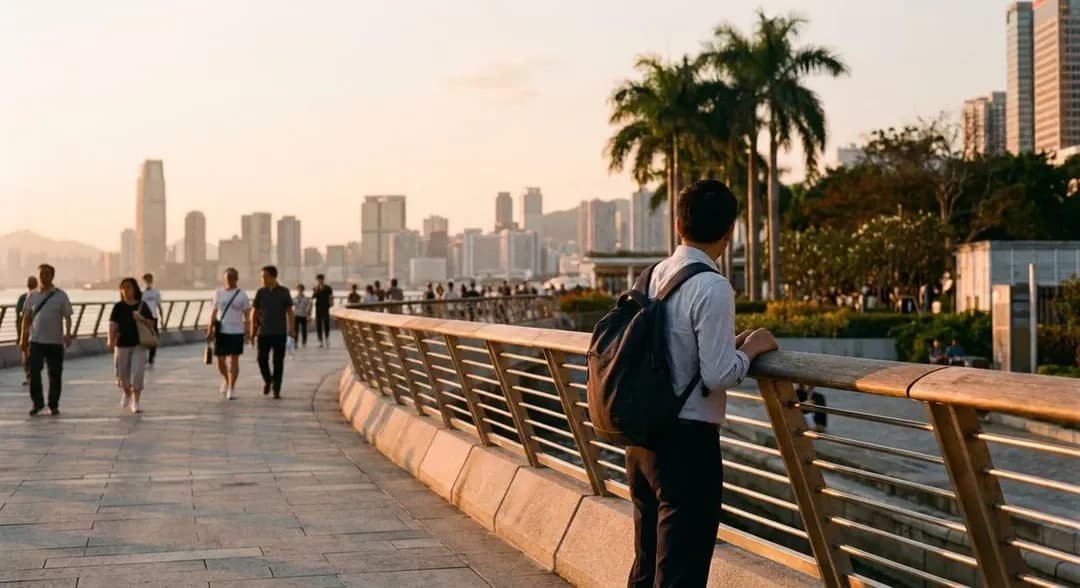
For those twenty or thirty minutes when the ferry crowd and the park's leisure visitors occupy the same space, the waterfront rail becomes a study in contrasts. Commuters lean against it with the posture of people stealing a moment, their stance temporary, weight already shifting toward the exit. Tourists linger longer, taking photos, marveling at the proximity of the skyline, occasionally asking a local which building is which. The interactions are glancing, polite, marked by the mutual recognition that everyone's here for different reasons but drawn to the same view.
There's a particular quality to the light during this window, especially in late spring and summer when the sun hangs low over New Jersey and gilds the western faces of Midtown towers. The park's eastern vantage point makes it feel like you're watching the city dress for the evening—windows beginning to glow, the Chrysler Building catching the last direct rays, the river itself turning from steel to something warmer. It's theater, and the ferry arrivals provide the intermission crowd.
Why It Matters
The evening ferry ritual at Gantry Plaza reveals something essential about how New Yorkers actually use their waterfronts. This isn't the High Line's choreographed leisure or Brooklyn Bridge Park's weekend-festival energy. It's functional beauty—a park that works for a living, accommodating transit and tourism and the occasional marriage proposal without losing its footing. The fact that the space can absorb a rush-hour crowd and return to calm within half an hour speaks to thoughtful design and the simple luxury of an elongated layout.
For visitors, timing a visit around the ferry arrivals offers a glimpse of the park's full range. Come earlier and you'll find joggers, reader, the post-work picnic crowd. Arrive at 6:15 or 6:45 and you'll see the waterfront at its most alive, a cross-section of the city in motion. Stay past seven and the park is yours again, the skyline lighting up in earnest, the evening fully begun.
Practical notes
Gantry Plaza State Park stretches along the East River waterfront in Long Island City, Queens, accessible via the 7 train at Vernon Boulevard–Jackson Avenue and the NYC Ferry East River route The park’s hours and seasonal access should be verified directly with NYC Parks Street parking along Center Boulevard and nearby blocks is metered; the Hunters Point Avenue municipal lot offers hourly rates. The waterfront promenade and piers are wheelchair accessible. Bring layers—the waterfront catches wind year-round—and consider timing your visit around the 6:15 or 6:45 p.m. weekday ferry arrivals to witness the park's transit-threshold identity in full effect.
Tags: #GantryPlazaStatePark #LongIslandCity #NYCFerry #QueensWaterfront #EastRiver #RightOnTime #NYCParks #SkylineViews #CommuterCulture #TransitLife #QueensLife #LICWaterfront #EveningRitual #NYCHiddenGems #SummerInTheCity
All trademarks are the property of their respective owners.
Ask Karpo for more information.
Keep reading
- Distillery Tour Near Me in Bushwick: New York Distilling Company
 Distillery Tour Near Me in Industry City: Fort Hamilton Whiskey Tasting
 Distillery Tour Near Me in Red Hook: Widow Jane Whiskey Tasting