Fresh Kills Park occupies what was once the world's largest landfill, a 2,200-acre expanse on Staten Island that closed in 2001 and has been slowly transforming into something else entirely. The West Mound trail loop is not a manicured urban green space. It's prairie-like, windswept, and vast—a place where the horizon feels wider than it should this close to the city. The two-mile loop climbs gradually to an overlook platform, and the walk itself is an exercise in patience. There are no shortcuts, no benches every hundred feet, no food trucks idling at the trailhead. The landscape unfolds at its own pace, and you adjust yours accordingly.
Planning your visit
Fresh Kills is not a park you can drop by on a whim. Interior access is currently only available during scheduled park programs and some park areas are open regularly; check NYC Parks/Freshkills Park for current access. The NYC Parks event calendar is the authoritative source—check it before firming up your weekend plans, because the gates remain closed otherwise. This phased-access approach is by design; the park is still undergoing active restoration, and controlled visitation protects both the fragile ecosystems taking root and the visitors who come to see them.
The limited schedule adds a certain intentionality to the experience. You don't stumble into Fresh Kills; you plan for it. That framing shifts the visit from casual stroll to something more deliberate, a commitment to witness a landscape in transition. Reservations aren't required for most open days, but arriving early ensures parking and allows you to experience the trail before afternoon crowds arrive—though even on busy weekends, the sheer scale of the landscape absorbs visitors into its expanse.
Getting there
The park is reachable via Staten Island transit, but verify the exact bus stop and walking time before visiting. to reach the park entrance from there. The walk is straightforward—wide sidewalks, light traffic—but it's longer than the map suggests. If you're driving, there's parking at the Muldoon Avenue access point, though spaces fill quickly on open weekends when the weather cooperates. The lot accommodates roughly forty vehicles, and once full, street parking becomes the only alternative, adding another five to ten minutes of walking.
The ferry ride itself, free and reliably scenic, becomes part of the journey. By the time you board the bus and walk the final stretch, you've already invested close to an hour. It's a reminder that some places require a threshold crossing, a leaving-behind of the grid.
The mound ascent
West Mound rises gently, a long incline rather than a climb. The trail is crushed gravel, compacted and even underfoot. Native grasses line both sides, tall enough in late spring and summer to brush your elbows. The air smells faintly mineral, a mix of tidal marsh and sun-warmed soil. Birdsong—meadowlarks, red-winged blackbirds—punctuates the quiet. You notice the absence of the usual park soundtrack: no sirens, no construction hum, no overhead conversations bleeding together.
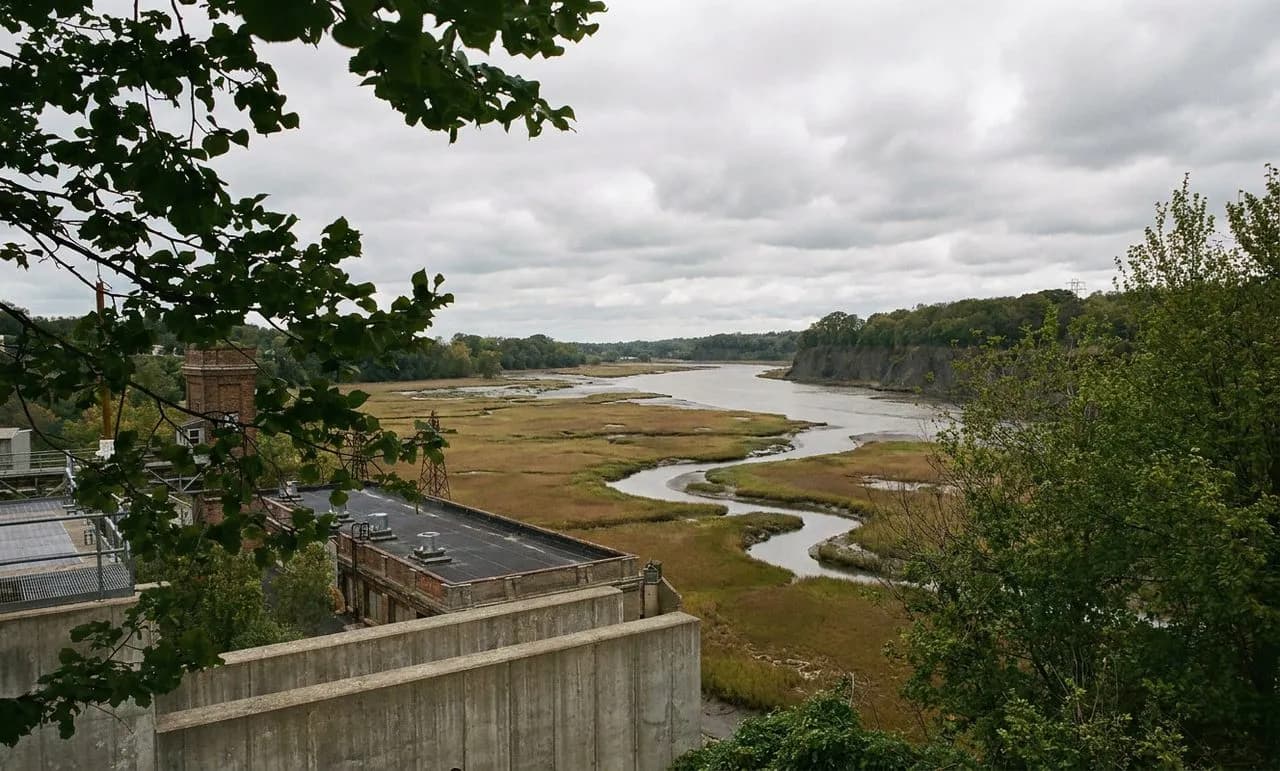
The mound's elevation is modest, but the openness amplifies the sense of height. As you ascend, the Arthur Kill comes into view in fragments—first a glint of water, then a wider band of blue-gray threading between Staten Island and New Jersey. Container ships inch along the channel, toy-scale from this distance. The climb takes roughly twenty minutes at an unhurried pace, and the grade is forgiving enough that conversations continue without labored breathing. Interpretive signs appear at intervals, offering context about the restoration process and the species that have colonized the reclaimed terrain.
The overlook platform
The platform itself is a simple steel structure, cantilevered over the mound's western slope. If you want the best Arthur Kill views, head to the southern corner; the northern side faces inland toward the Muldoon Avenue approach and offers a different perspective—one of grassland rolling toward the park's interior, dotted with saplings and wetland edges. Both angles matter, but the southern corner is where the transformation announces itself most clearly. The waterway stretches wide, flanked by industrial shoreline and marsh. It's not picturesque in the postcard sense. It's something stranger: beautiful because it shouldn't be, given what lies beneath.
You stand above forty years of compacted waste, now capped and seeded, methane vents disguised as sculptural features. The cognitive dissonance is part of the experience. This is reclamation on a geologic timescale, visible in real time if you're patient enough to return across seasons.
What the senses register
The sensory profile of Fresh Kills shifts with the seasons and the hour. Morning visits in spring bring mist rising from the tidal creeks, softening the mound's edges and muting the industrial views across the Arthur Kill. By midday, the sun presses down without interruption—there's no canopy here, no relief except what you carry. The wind is constant, a low rush that picks up as you crest the mound, carrying salt from the tidal flats and the faint diesel trace of ships navigating the Kill.
Summer afternoons smell of warmed grass and dry soil, the dusty sweetness of wildflowers mixed with the sharper, organic scent of low tide. Butterflies—monarchs, swallowtails—drift through the meadow sections. In autumn, the grasses turn amber and russet, rattling in the breeze, and the platform offers unobstructed views of raptor migration. Hawks circle the thermals above the mound, using the elevation as a waypoint. Winter visits are rare—the park opens less frequently in cold months—but when accessible, the landscape takes on a stark beauty, all bones and structure, the Arthur Kill a band of steel under low gray skies.
The descent and loop completion
The return leg traces the mound's eastern slope, dipping toward a tidal creek that feeds into the larger wetland network. Wooden bridges cross the narrowest channels, their planks sun-bleached and slightly warped. In spring, the creeks run high; by late summer, they slow to a murmur. Herons stalk the shallows, unbothered by the occasional walker passing overhead.
The loop closes near the entrance, and the flatness resumes. You might pass a park ranger leading a small group, explaining phytoremediation or the bird species that have returned. The scale of the project becomes clearer in these moments—how much coordination, how much waiting, how much faith in processes that won't fully mature for decades.
Why walk the long way
Fresh Kills rewards slowness not because the trail is especially challenging, but because the landscape itself is subtle. The drama is in the aggregate: the expanse of reclaimed land, the patience required to let a landfill become habitat, the decision to open it incrementally rather than all at once. It's a park that asks you to meet it halfway, to accept that access is limited and amenities are sparse and the payoff is largely conceptual.
But on a clear day in late 2026, standing on that platform with the Arthur Kill reflecting the afternoon light, the long way feels appropriate. Some transformations can't be rushed, and some places are worth the extra hour it takes to reach them.
Practical notes
Freshkills Park, Staten Island. The S78 bus from the ferry terminal stops at Muldoon Avenue and Arthur Kill Road; allow ten minutes to walk to the entrance. Driving: limited parking at the Muldoon Avenue access point. Open select weekends only—consult the NYC Parks event calendar before planning your visit. The trail is mostly level with one gradual incline; accessible for strollers and wheelchairs, though gravel surfaces may be uneven. Bring water, sun protection, and layers; there's no shade on the mound and little windbreak. Verify hours and access dates directly via NYC Parks.
Tags: #FreshKillsPark #TheLongWayHome #StatenIsland #NYC #ReclaimedLandscape #WeekendWalks #ArthurKill #UrbanTrails #ParkExploration #SlowTravel #NYCParks #HiddenNYC #Spring2026 #TidalCreeks #LandscapeRestoration
Sources consulted: Freshkills Park - Wikipedia · NYC Parks - Freshkills Park · Freshkills Park Alliance · Staten Island Advance · Arthur Kill - Wikipedia
All trademarks are the property of their respective owners.