 Sculpture Garden Near Me in Clinton Hill: Pratt Institute's Free Campus Sculpture Park
Free Things to Do
Fresh Kills Park North Mound Trail and Grassland Overlook: A Fresh Field Note
A 1.2-mile gravel loop atop Staten Island's reclaimed landfill mound delivers 360-degree harbor views, red-tailed hawks riding October thermals, and an unexpected hush over the Northeast's largest urban grassland restoration.
The North Mound Trail rises in slow, winding switchbacks above the Arthur Kill, and at the summit—standing on compacted clay that once held decades of the city's discarded things—you can see the Verrazano span to the northeast and the Outerbridge's low arch to the south. This is Fresh Kills Park in its quiet, unfinished glory: a landfill transformed into grassland, a reclamation project so vast it unfolds in phases through the next decade, and a landscape that offers one of the most surprising panoramas in the five boroughs. It's also among the finest free things to do on Staten Island, provided you don't mind gravel beneath your boots and wind in your ears.
The Loop and the Overlook
The perimeter trail runs just over a mile, tracing the mound's rounded shoulders in a gentle, accessible grade. The surface is packed gravel, firm enough for most footwear, and the path is wide—two people can walk side by side without crowding. At intervals, unmarked spurs branch off toward the edges; one worth taking drops briefly to the west, where a tidal creek inlet threads through cordgrass and the water gleams silver at high tide.
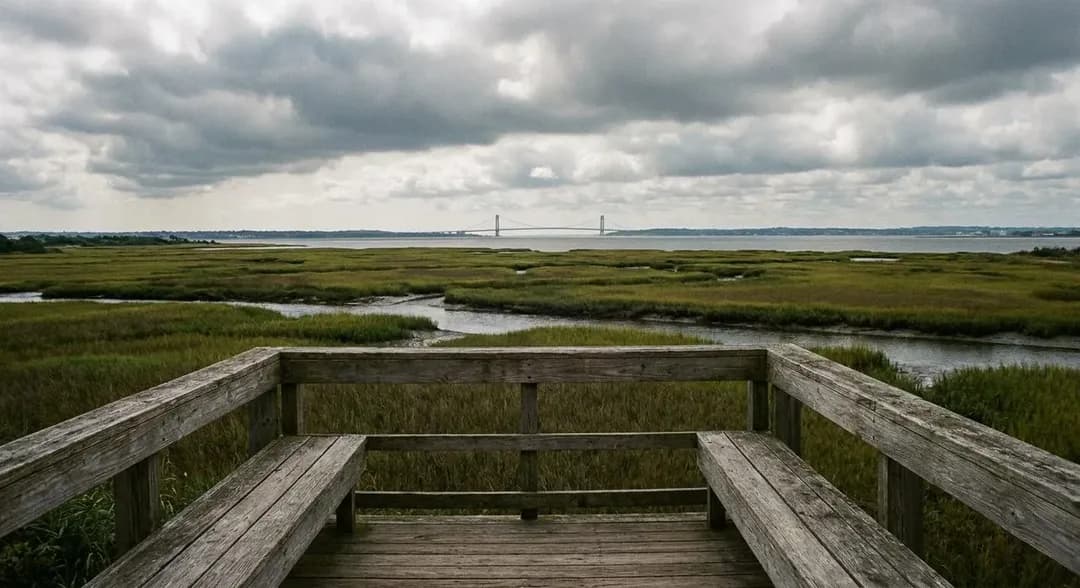
Near the summit, a wooden overlook platform juts out over the slope, its railings weathered to gray. From here the city arranges itself in miniature: container cranes along the Kill, the green spine of the Greenbelt to the east, Manhattan's spires hazy on clear days. The platform holds a dozen people comfortably, though you'll often have it to yourself on weekday afternoons. October light slants low across the scene, turning the phragmites gold and throwing long shadows down the hillside.

The Hawk Migration Window
In early autumn, Fresh Kills becomes a funnel for raptors moving south along the Atlantic flyway. Red-tailed hawks are the stars—dozens pass through in a good week, riding thermals that rise off the warming grassland. Bring binoculars if you have them. The hawks spiral upward in lazy gyres, then peel off toward New Jersey, dark silhouettes against flat sky.
The migration runs roughly from mid-September into early November, with peak activity in October when northwest winds push the birds along the coast. Sharp-shinned hawks, Cooper's hawks, and the occasional peregrine join the procession. It's worth timing your visit for late morning, when thermals begin to build. You'll see birders scattered along the trail, necks craned, scopes on tripods, trading sightings in low voices.
The Silence and the Acoustic Trick
What surprises most first-time visitors is the quiet. Traffic hum from the West Shore Expressway fades to a distant drone, and for long stretches the only sounds are wind scraping through dry grass and the occasional chip note of a sparrow. The mound's compacted clay cap—part of the engineered closure system that seals the landfill—creates an unexpected acoustic phenomenon: conversations at the summit carry with startling clarity down the slope. Stand two hundred feet below the overlook and you'll hear laughter, snippets of dialogue, the scrape of boot soles on wood. It's a natural amphitheater, unintended and oddly intimate.
The effect works best on still days, when wind doesn't scatter the sound. It lends the place a peculiar quality, as if the landscape itself were eavesdropping. You become conscious of your voice, aware that your words might drift farther than you'd think across the open grassland.
Summer Relief and Microclimates
The north face of the mound enjoys a microclimate advantage: prevailing winds off the Arthur Kill make it fifteen degrees cooler in summer than the south-facing slope. Locals know this. During heat waves, you'll find Staten Islanders sprawled on the grass there, seeking relief in the breeze that pours steadily inland. It's not shaded—there are few trees on the mound by design, to preserve the grassland habitat—but the moving air makes all the difference when the city bakes.
The thermal gradient is most pronounced on July and August afternoons. If you're visiting in high summer, aim for the northern arc of the loop and settle in for a while. The view over the water is unobstructed, and the air feels borrowed from somewhere farther north.
Rangers and the Monthly Walk
Park rangers lead a monthly program called Landfill to Landscape, a guided walk that traces the mound's history from active dump to ecological experiment. The walk runs at ten in the morning on the second Saturday of each month, and it's limited to twenty participants on a first-come basis—no reservation required. Show up fifteen minutes early at the North Mound trailhead if you want a spot; the program is popular with engineers, landscape architects, and anyone curious about large-scale land reclamation.
Rangers cover the mechanics of methane venting, the six-layer cap system, the seeding strategy for native grasses. It's a technical narrative, but the guides are practiced storytellers, weaving in anecdotes about the site's past life and the species now returning. The walk lasts ninety minutes and adds context that shifts how you see the place—makes you notice the vent pipes disguised as bollards, the drainage swales designed to funnel runoff, the careful choreography of restoration.
Afternoon Light and the Long View
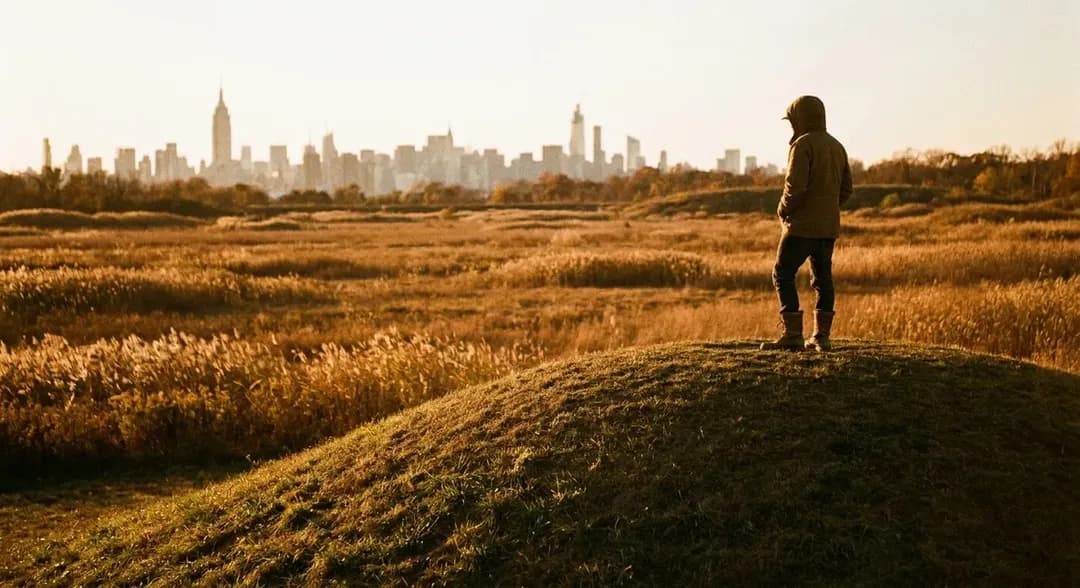
Late afternoon is the mound's best hour. The light drops to a honey slant, backlighting the seed heads of switchgrass and big bluestem, and the grassland takes on a burnished glow. Shadows lengthen across the trail. The city softens into silhouette. This is when the place feels least like a municipal park project and most like open country, a pocket of prairie improbably perched above tidal water.
You can walk the loop in thirty minutes at a steady pace, but there's no reason to hurry. Bring water, a hat if it's sunny, and a willingness to let the place set its own tempo. The mound rewards patience—the longer you stay, the more it reveals. A kestrel hovering over the western slope. The rustle of a meadow vole in the grass. The way the wind patterns shift as the sun drops, cool currents sliding down from the summit to pool in the low spots.
Practical notes
Freshkills Park North Park is accessed at 350 Wild Avenue, Staten Island. By car, take the West Shore Expressway to the Victory Boulevard exit; street parking is available near the trailhead. Public transit options are limited—the S46 and S96 buses stop within a half-mile walk. For the open areas of North Park, visitors can currently enter from 6 a.m. to 10 p.m.; confirm any seasonal changes before visiting. The gravel path is accessible for most mobility devices; the overlook platform has a ramp. Bring sun protection, water, and layers—the mound is exposed and wind can be brisk. Check the NYC Parks website for any seasonal closures. Verify current conditions before visiting.
Tags: #FreshKillsPark #StatenIsland #NorthMoundTrail #UrbanGrassland #NYCParks #FreeThingsToDo #HawkMigration #LandfillReclamation #ArthurKill #NYCHiking #FallInNYC #GrasslandRestoration #FreeAndFine #HiddenNYC #NYCOutdoors
All trademarks are the property of their respective owners.
Ask Karpo for more information.
Keep reading
- Sculpture Garden Near Me in Clinton Hill: Pratt Institute's Free Campus Sculpture Park
 Sculpture Garden Near Me in Nolita: Elizabeth Street Garden, Saved for Good
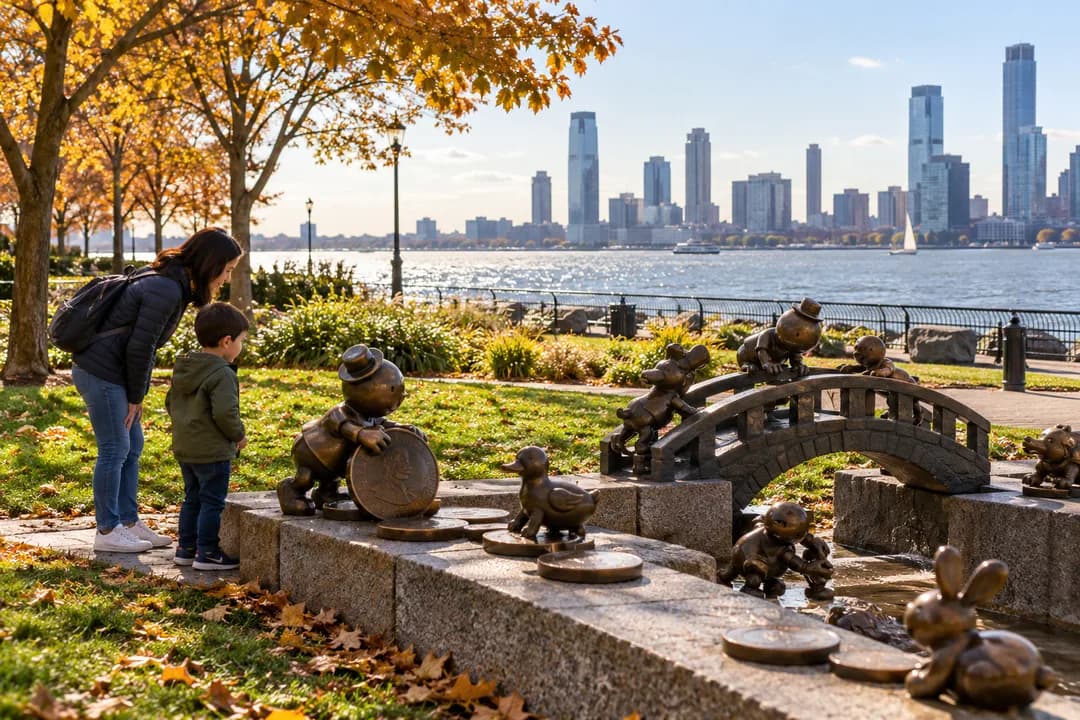 Sculpture Garden Near Me Downtown: Tom Otterness's Real World in Rockefeller Park