Waterfalls near me from New York is a search that ends in disappointment more often than it should, because the best-known options have quietly become managed sites: timed parking permits in the Catskills, entrance fees at the Finger Lakes gorges, shuttle systems in the high season. There are still real waterfalls within a day of the city that cost nothing, require no booking, and take no more planning than checking the weather. Five of them are below, in order of how easy they are to reach.
Karpo can check whether the water is actually running before you drive two hours, and tell you which of these is reachable on the train you were already going to take.
The fee-and-permit problem, briefly
The change over the last decade is that popularity has been managed rather than accommodated. The most photographed falls within three hours of New York now use some combination of paid parking, reserved permits and shuttle buses, particularly at weekends between May and October. None of that is unreasonable — the sites were being damaged — but it does mean the spontaneous version of this trip has moved elsewhere. What follows is elsewhere: sites where you park on a road or in a free lot, walk in, and leave when you want. All five are also small enough that an hour on site is usually enough, which makes pairing two of them the better shape of a day.
Paterson Great Falls, New Jersey
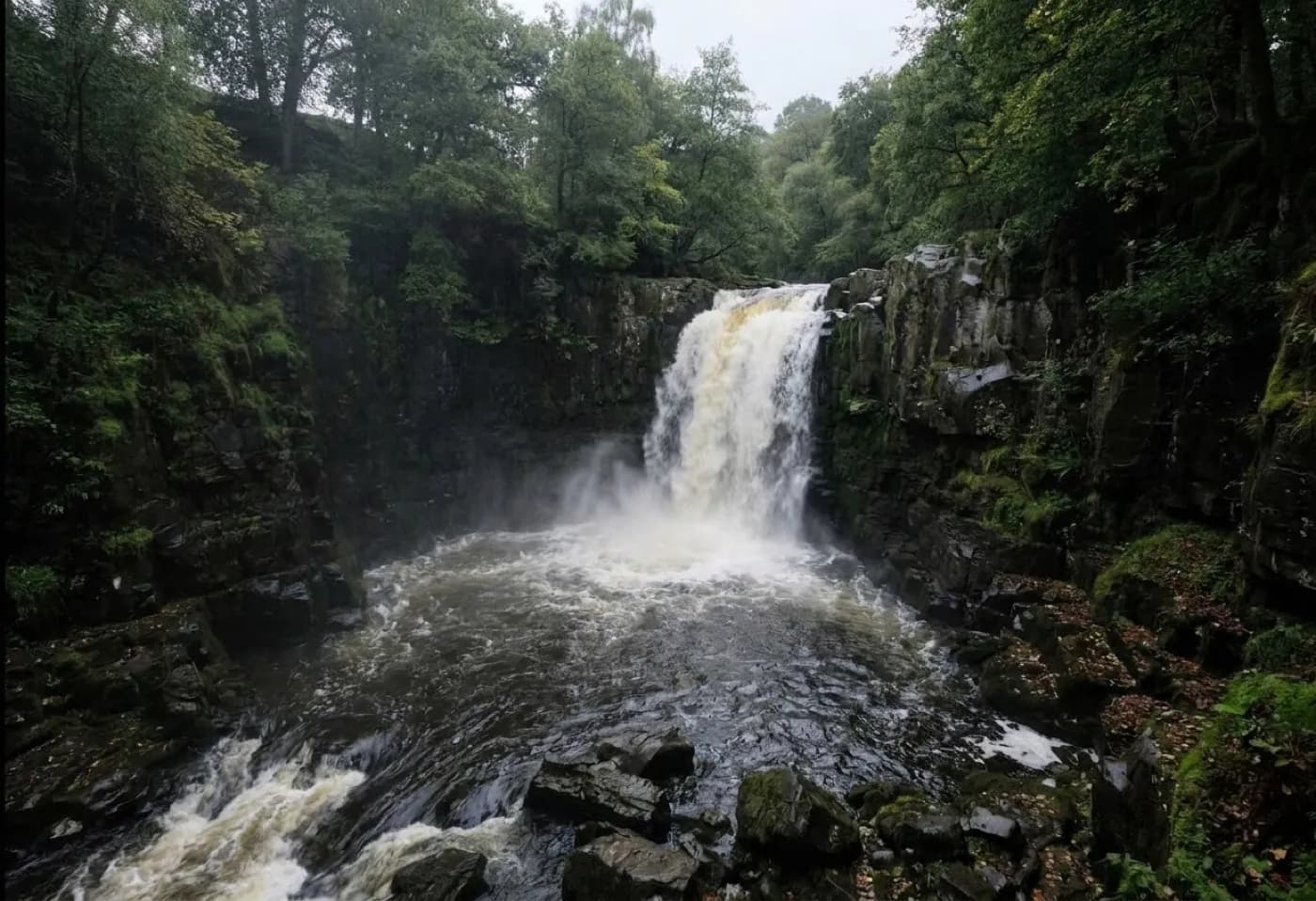
The easiest and the strangest. A seventy-seven foot waterfall on the Passaic River in the middle of a New Jersey city, roughly twenty miles from Manhattan, protected as a national historical park because the falls powered America's first planned industrial district. There is no entrance fee, there is a pedestrian bridge directly across the gorge, and it is reachable by bus or train from the Port Authority and Hoboken in well under an hour. After heavy rain the volume is genuinely startling. In a dry August it can be a trickle, which is the one thing to check before going. The park has a visitor centre and a set of interpretive walks through the old mill district, which turns a twenty-minute stop into a half day if you want it to.
Indian Brook Falls, Cold Spring, New York
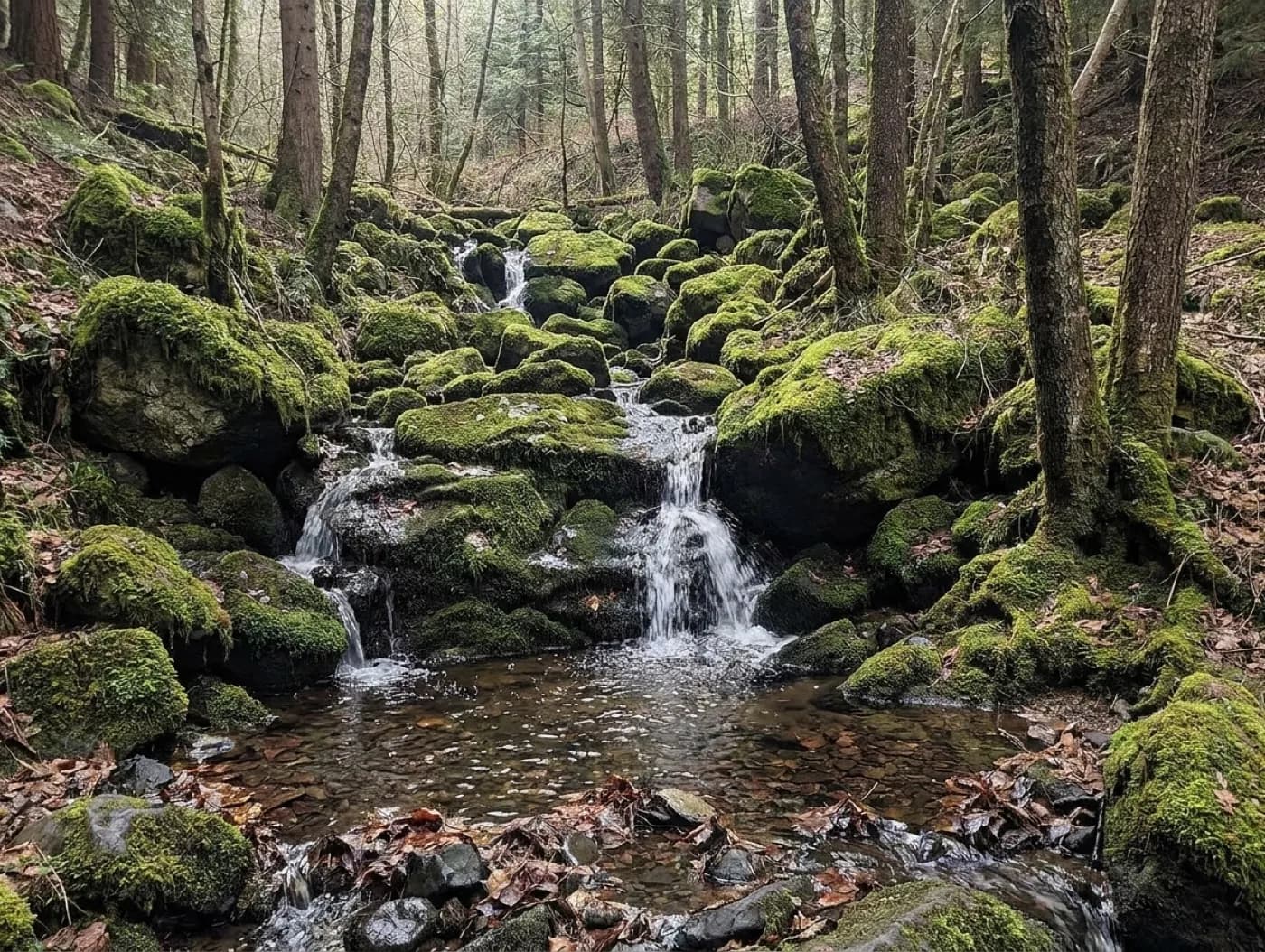
The best option for anyone without a car. Take Metro-North up the Hudson Line to Cold Spring, walk south and east for roughly half an hour through the village and along the road, and a short woodland trail leads to a twenty-five foot fall dropping into a clear pool. There is no fee and no permit. Parking at the trailhead is extremely limited, which is precisely why arriving by train is the better plan. Combine it with the village, the riverfront and, if you have the legs, the Breakneck Ridge or Bull Hill trails nearby. The falls themselves are on private land held for public access, so stay on the marked path and take everything out with you.
Buttermilk Falls, Layton, New Jersey
New Jersey's tallest waterfall, a multi-tier drop of around eighty-five feet inside the Delaware Water Gap national recreation area, with a viewing platform at the base and a steep staircase climbing alongside it. There is no fee. The catch is the approach: the last stretch is an unpaved road that is rough in places and closed in winter, so check conditions before setting off. It is roughly two hours from the city and best combined with the rest of the Water Gap rather than done as a single destination. Swimming at the base is prohibited and enforced, which surprises people who have seen older photographs of the site.
Raymondskill Falls and Bash Bish, for a longer day
Raymondskill Falls, on the Pennsylvania side of the Delaware Water Gap, is the tallest in that state at around a hundred and fifty feet across its tiers, free to visit, with a short steep trail to two viewing platforms. Bash Bish Falls, on the Massachusetts–New York border, is a striking twin cascade split by a boulder, also free, reachable from either state with the New York approach being the gentler walk. Both are two and a half to three hours out, and both are best as the anchor of a full day rather than a stop on one.
Checking the water before you go
The single most useful habit for waterfall trips in this region is checking recent rainfall rather than the forecast. All five of these are rain-fed and their volume varies enormously — a fall that is thunderous in April can be a damp rock face in late August. Two or three days after a significant rain is the sweet spot: enough water, trails no longer flooded. Spring snowmelt is the reliable season and late autumn is the prettiest. And go early: these sites are free precisely because they are small, and the parking at several of them is a dozen cars rather than a hundred.
Practical notes
All five have no entrance fee and require no permit, but parking at several is very limited — arrive early or use transit where possible. Paterson Great Falls and Indian Brook Falls are both reachable without a car; the rest require driving. Volume depends on recent rainfall, so check the last few days rather than the forecast. The unpaved approach to Buttermilk Falls in New Jersey is seasonal and can be closed in winter. Rocks near all of these are slippery and climbing on the falls themselves is dangerous and frequently prohibited. Access rules change, so confirm the site is open before travelling.
Tags: #WaterfallsNearMe #NYC #DayTrip #PatersonGreatFalls #ColdSpringNY #HudsonValley #DelawareWaterGap #BashBish #NewJersey #FreeThingsToDo #Hiking #MetroNorth #Outdoors #NYCEscape
All trademarks are the property of their respective owners.
Ask Karpo first
Want to know whether the water is actually running before you commit a day to it? Ask Karpo for recent rainfall on each of these, which are reachable without a car today, and how full the small car parks usually get at the hour you would arrive.