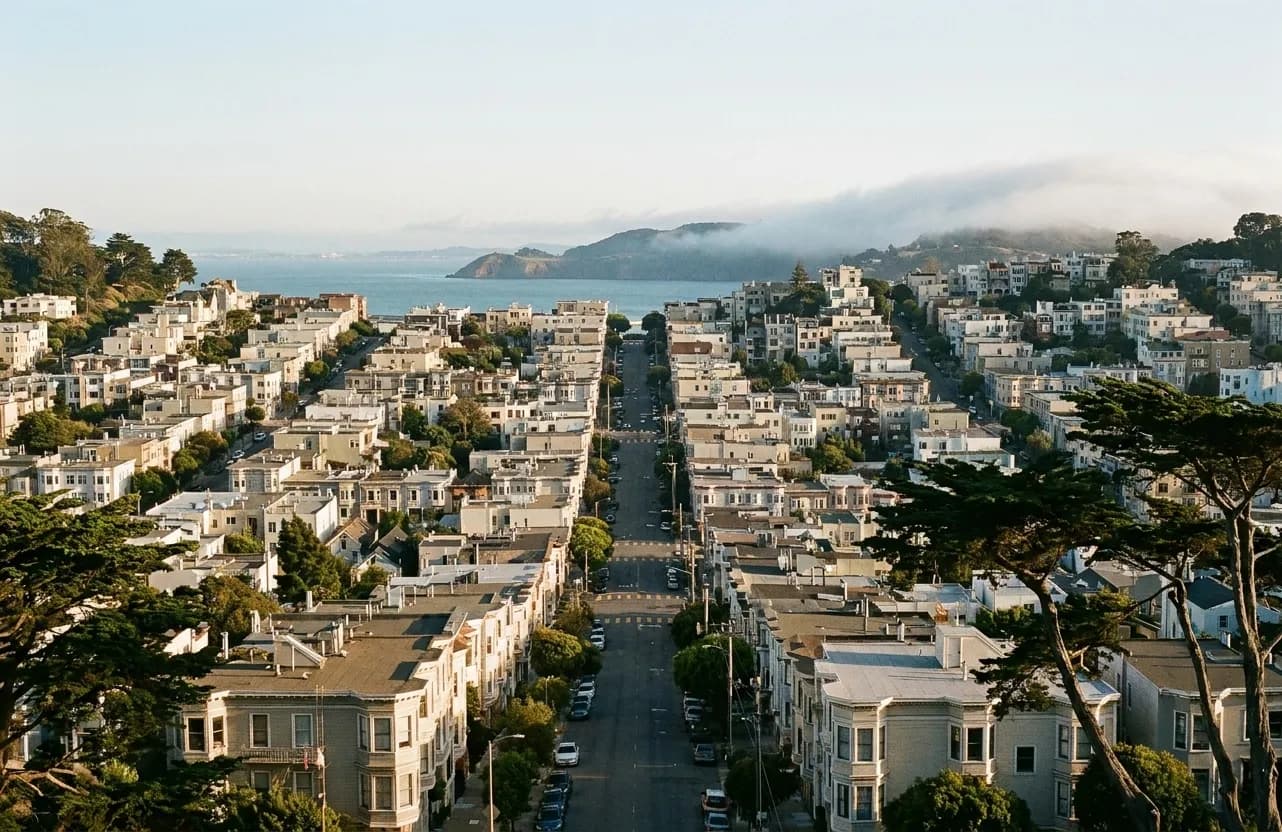
The reason a free day in San Francisco can feel like a genuine outing rather than a budget compromise is that the best things here are not admissions at all. They are terrain — a seven-by-seven-mile city built over more than forty hills, wrapped in water on three sides, with weather that changes completely over a distance you can walk. None of that is ticketed. Searching things to do near me for free in this city works much better if you stop looking for attractions and start looking at the map.
The free things in this city that feel like an event are mostly about terrain and timing rather than about admission. Tell Karpo the weather and how far you will walk and it will build the afternoon around it.
The public stairways
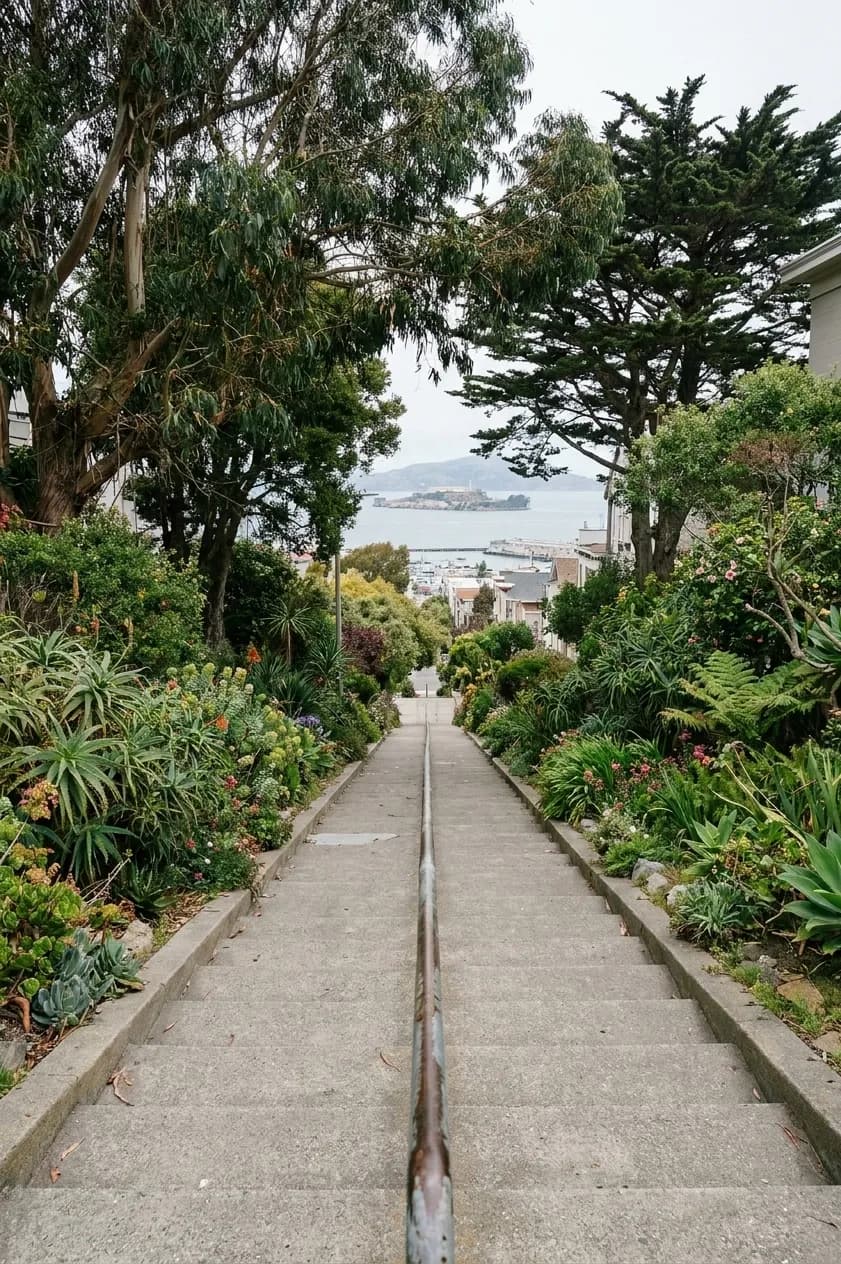
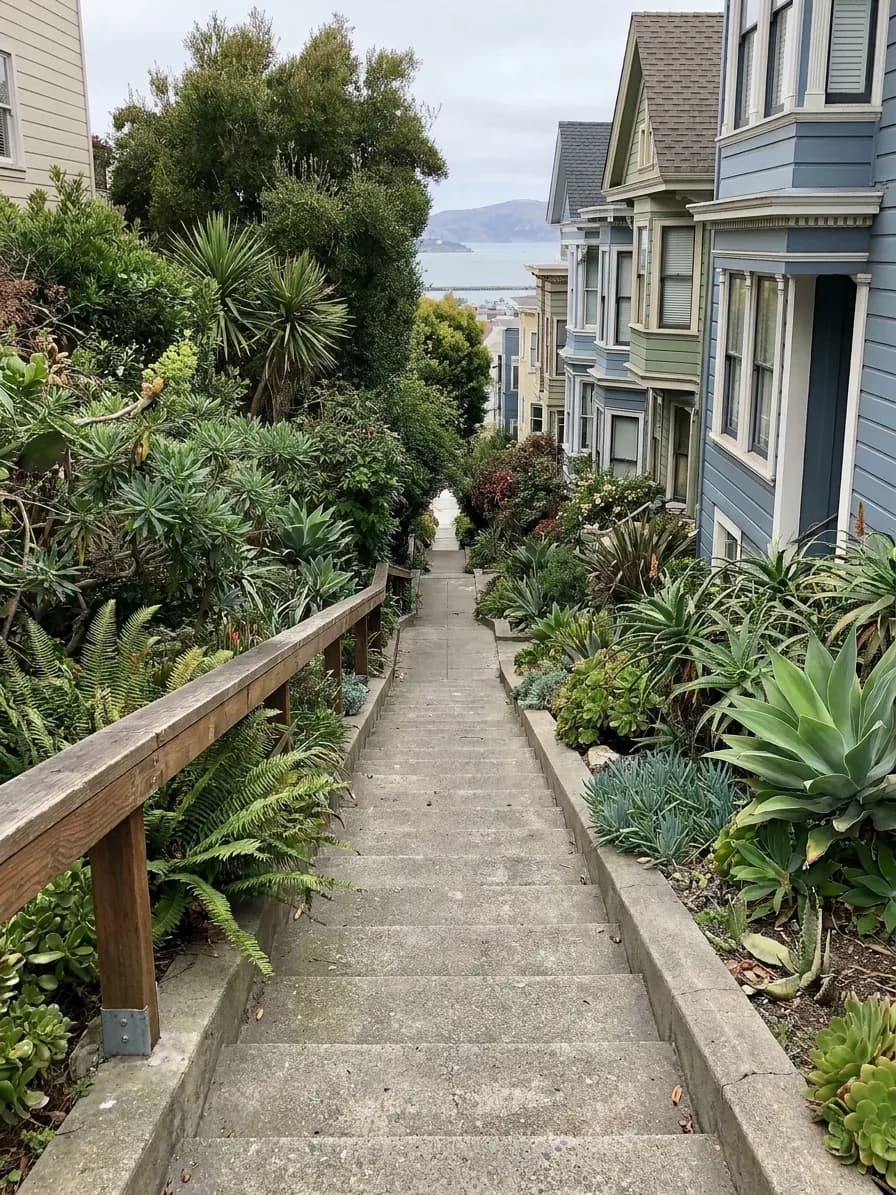
San Francisco has hundreds of public stairways connecting streets that are too steep to join any other way, and a good number of them are extraordinary — mosaic-tiled, planted and maintained by the neighbours, opening onto views nobody sees from a car. They are fully public rights of way, they appear on maps as streets, and linking four or five of them into a route makes a two-hour walk that is genuinely one of the best things you can do in this city at any price.
Go up rather than down where you can choose, because the views open behind you as you climb. And treat them as residential — people live at the top of these steps and the stairways are their front paths.
The fog, used deliberately
The summer fog is a free weather event and most visitors experience it as a disappointment because they are on the wrong side of the city. The pattern is reliable: the western half sits under it while the eastern and southern neighbourhoods are in sun, and the line between them is sharp enough to walk across in twenty minutes. Watching the fog pour over a ridge from a hilltop on the sunny side is the single most characteristic free spectacle here, and it happens most afternoons in summer.
The shoreline and the headlands
The coastal and bay edges of the city are almost entirely public parkland, with paths running along cliffs, past old military batteries and out to the headlands. This is national park land inside a city, free to enter, and it holds the best views of the bridge and the ocean that exist. It is also reliably cold and windy, which is the only thing you need to plan for.
The free museum days, which are real
Most of the city's major museums run free days — typically one per month, sometimes weekly for residents, often with free entry for young people year-round. They are properly free rather than discounted, they are busy, and they are almost never advertised loudly. Checking a museum's free-day schedule before you plan a weekend is the highest-return two minutes available in this category.
Parks that are events in themselves
The city's large parks contain botanical collections, windmills, lakes with boats you can watch rather than rent, bison, free concerts in summer and a road closed to cars at weekends. You can spend an entire day inside one without paying for anything, and the smaller neighbourhood parks on hilltops are where you get the views without the crowds.
Building the day
The best free day here is one long walk with a shape: start at a stairway climb, cross a hill, drop into a park, end at the water for sunset. Buy one cheap thing on the way — a bakery bun, a coffee, a bag of dumplings — and the whole day costs less than a cinema ticket. Bring layers, because you will pass through three microclimates, and wear shoes you can climb in.
Free days, park programmes and access to some coastal paths change seasonally, so check current information before you set out.
Three routes that work
A hill route: climb a stairway from the flat side of a neighbourhood, cross the top of the hill, and descend a different set of steps into a different neighbourhood. Two hours, no money, and the best views in the city are all on it. A water route: pick a point on the northern or western shoreline and walk the coastal path until you are cold, then turn inland for something hot. A park route: enter one of the large parks at one end and cross it slowly, which takes most of an afternoon.
All three work better in reverse of what people expect — start in the late afternoon rather than the morning. The light is better, the fog behaves more interestingly, and you finish near dinner rather than needing to fill the rest of the day.
Tags: #SanFrancisco #SF #BayArea #LiveMusic #ThingsToDoTonight #GoingOut #CheapEats #SFEats #SFGuide #ExploreSF #SFLocal #SFWeekend #SFNights #SFFood
Sources consulted: sfrecpark.org · nps.gov · sftravel.com
All trademarks are the property of their respective owners.
Ask Karpo first
Karpo is a proactive AI assistant that lives in iMessage. Tell it the weather and it will route the walk.