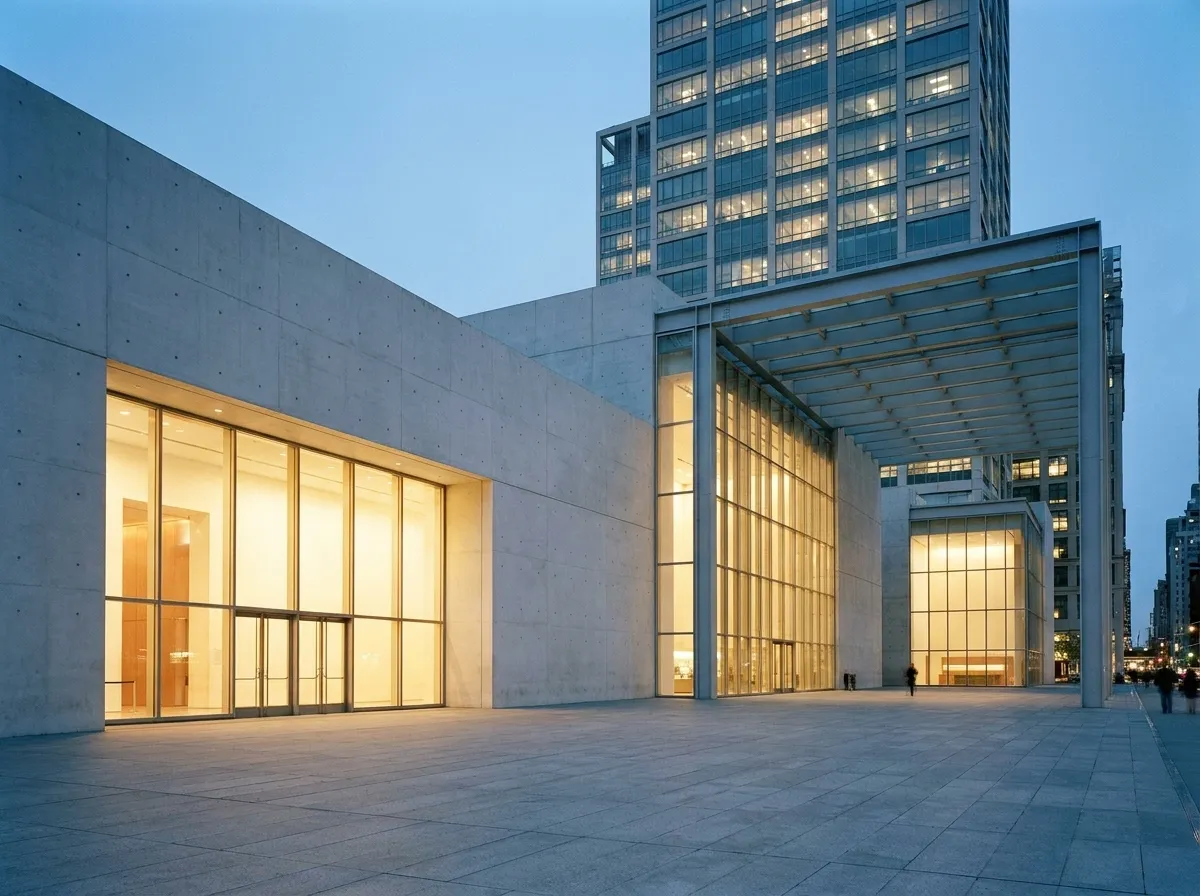
Free in New York carries a specific technical meaning that has almost nothing to do with spontaneity. The city's reputation as a place where you can walk into world-class programming without paying is accurate in aggregate and misleading in practice. Most of the good free events—film screenings at major museums, author talks at independent bookstores, concerts in landmark venues, panel discussions at cultural centers—operate on reservation systems with release windows, enforce standby protocols with implicit cutoff times, or fill to capacity thirty to ninety minutes before the advertised start. The entire skill is knowing which of the three you are dealing with before you leave the house.
The Karpo app tracks which free events are releasing tickets this week, which venues run standby, and what time the line forms for tonight's screening or reading.
The Reservation Release Pattern
The majority of free museum programming, including film series, gallery talks and performances in institutional spaces, distributes tickets through a timed release. The release happens online, typically one to two weeks before the event, and the window opens at a specific hour—usually 10 a.m. or noon on a weekday. These tickets disappear in minutes for high-demand screenings and within a few hours for most other programs. The release date is published on the venue's event page, often buried in the fine print below the event description.
If you miss the release window, the next opportunity is the standby line, which operates under separate rules. Some venues release a second batch of tickets forty-eight hours before the event. Others hold no tickets back and run standby only. The distinction matters because a venue that releases all tickets in the initial window will have a short, fast-moving standby line, while a venue that holds back half its capacity for standby will have a longer line that forms earlier.
The release calendar is seasonal. September through November and January through April are the densest months for ticketed free programming. December is lighter due to holiday closures. May and June thin out as outdoor events ramp up, and July and August are the slowest months for indoor programs. Knowing the rhythm prevents wasted trips during the summer, when the assumption that something interesting is always happening indoors stops being reliable.
How Standby Lines Actually Behave
Standby functions as a queue with an unpublished capacity. Venues admit standby ticket holders after reserved ticket holders have entered, and the number of standby seats available depends on how many reserved ticket holders actually show up. No-show rates vary by venue and program type. A Friday evening film screening in winter has a no-show rate near five percent. A Tuesday evening author talk in March can run closer to twenty percent.
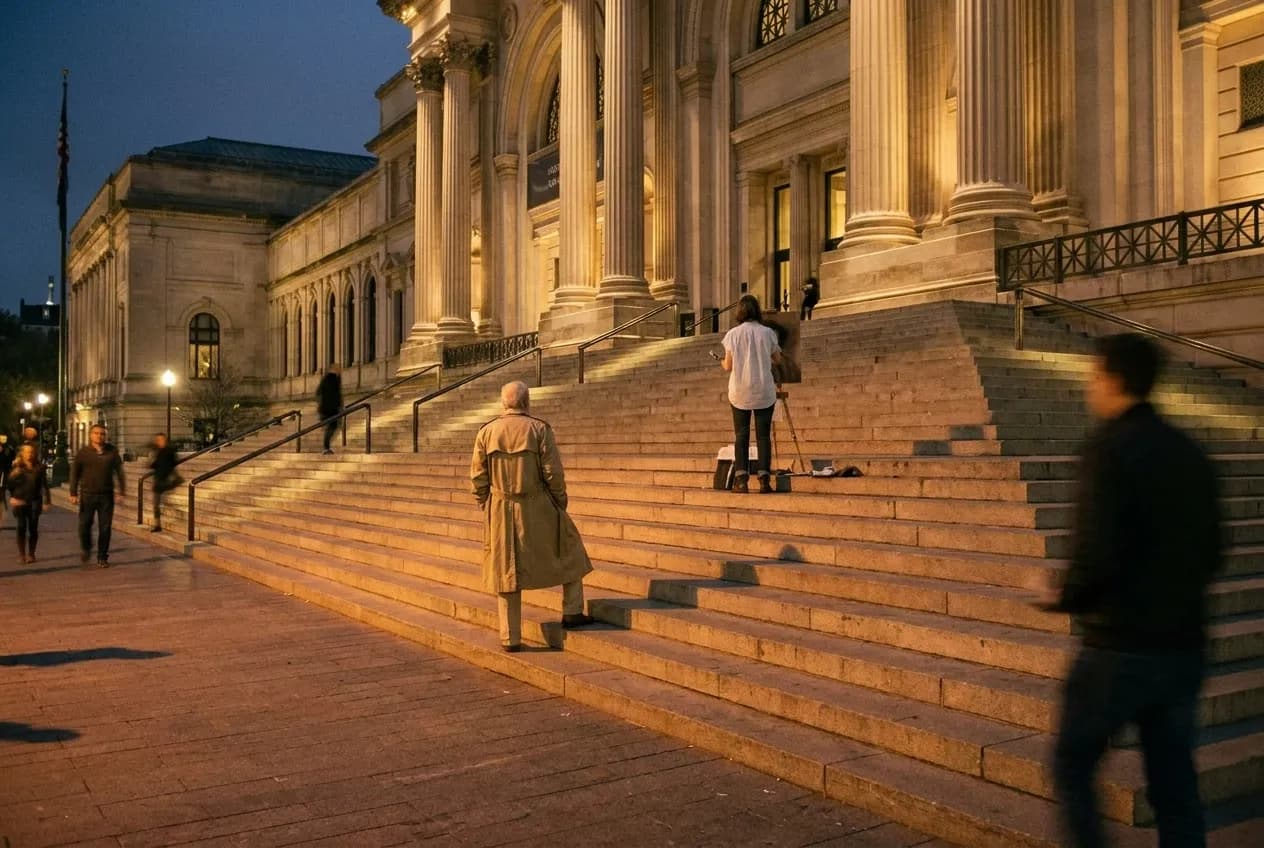
The line forms anywhere from two hours to twenty minutes before doors open, depending on the venue's reputation and the specific program. For a well-known film series at a museum in Midtown or the Upper East Side, people start lining up ninety minutes early. For a reading at a bookstore in Brooklyn or the Lower East Side, forty-five minutes is usually sufficient unless the author has a new release that week or a significant following. The line does not move until the venue has admitted all reserved ticket holders, which happens fifteen to twenty minutes after the published door time.
Standby is first-come, first-served, but venues cut the line at an arbitrary point once it becomes clear that the remaining people will not get in. This cutoff happens before doors open, sometimes thirty minutes before. If you arrive and the line is capped, asking whether more people will be admitted is usually pointless—the answer is no, and the decision has already been made. The skill is recognizing a capped line from a block away and pivoting immediately.
Weather changes behavior. A cold night or steady rain shortens the effective standby window because fewer people are willing to wait outside. A mild evening in October extends it. Venues with indoor waiting areas—lobbies, atriums, ground-floor galleries—have longer and less predictable lines because the discomfort factor is removed.
What Genuinely Never Fills
A smaller category of free events operates on true walk-up access and almost never reaches capacity. These include most weekday lunchtime programming, morning weekend events before 11 a.m., and anything scheduled during standard work hours on weekdays. Gallery talks at 2 p.m. on a Wednesday, panel discussions at 10 a.m. on a Saturday, and daytime film screenings aimed at older audiences rarely require advance planning.
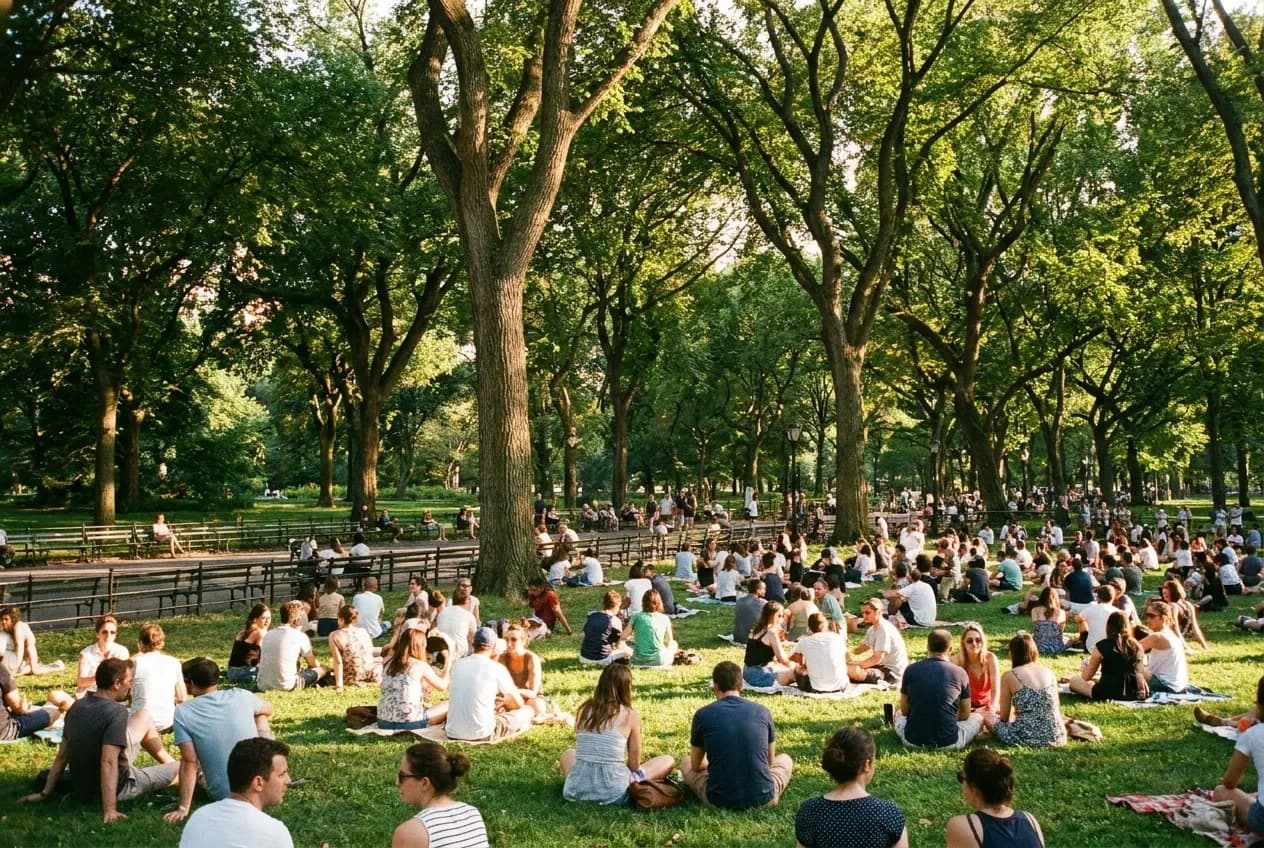
Outdoor free events in the warm months—concerts in parks, film screenings on piers, performances in plazas—also tend to operate on walk-up access, but capacity is less predictable. A concert series in a large park can absorb thousands of people without crowding. A screening on a small pier or in a neighborhood park reaches effective capacity when all the seating is taken and the standing-room perimeter is three people deep, which can happen thirty minutes after start time for popular programming.
Free events in outer neighborhoods—anything requiring a subway transfer or a bus connection from Manhattan—are consistently less crowded than equivalent programming in Manhattan below 96th Street. A reading series in Astoria or Sunset Park will have open seats at door time on the same night that a comparable series in the West Village or Fort Greene is turning away standby. The trade-off is transit time, but the guarantee of entry is real.
Recurring weekly or monthly programs are easier to get into than one-time events or short-run series. A film screening that happens every Monday has lower demand per screening than a four-week series that will not repeat. The same logic applies to open studios, community board meetings, and any event that is part of a regular schedule rather than a special occasion.
The Seasonal Outdoor Calendar
Outdoor free programming in New York concentrates in a window that runs from late May through early September, with the peak in July and August. This includes concert series in parks across all five boroughs, film screenings on waterfronts and in public plazas, and performances in outdoor amphitheaters. Most of these events require no reservation and operate on open access until the space is full, but the timing of arrival determines the quality of the experience.
For evening concerts that start at 7 or 7:30 p.m., people begin claiming space on the lawn or in the seating area by 5:30 or 6 p.m. Arriving at 6:45 means standing in the back or sitting on the perimeter. For film screenings that start at dusk, the equivalent arrival window is sixty to ninety minutes before the listed start time. The listed start time for outdoor film screenings is always approximate because it depends on when the sun actually sets, which varies by several minutes week to week.
Weekend outdoor events are more crowded than weeknight events, but the gap is smaller than it is for indoor programming. A Tuesday night concert in Prospect Park will draw a substantial crowd in good weather. A Sunday afternoon event draws families and fills faster, but the overall capacity is high enough that late arrivals can still find space.
The outdoor season has a sharp start and a sharp end. Memorial Day weekend is the unofficial opening, and Labor Day weekend is the unofficial close. A few series extend into September, but most wrap by the first week of the month. Planning around this calendar prevents the mistake of expecting outdoor options in early May or mid-September when almost nothing is scheduled yet or anymore.
When the obvious choice is sold out, fully reserved, or capped at standby, the immediate move is to check what else is happening in the same neighborhood that night. Most areas with significant cultural programming have multiple venues within a ten-minute walk, and if one event is full, another is often underattended. The Karpo app surfaces those overlapping options in real time, so you are not guessing which direction to walk or which venue might still have room.
Tags: #FreeLocalEventsNYC #NYCFreeEvents #FreeThingsNYC #NYCOnABudget #FreeNYC #NewYorkEvents #NYCCulture #FreeMuseumNYC #NYCFilmScreenings #FreeOutdoorEvents #BudgetNYC #NYCEventTips #ManhattanFreeEvents #BrooklynFreeEvents #NYCNeighborhoods
All trademarks are the property of their respective owners.
Ask Karpo first
The Karpo app tracks which museums and venues are releasing free tickets this week, where the standby line is forming right now, and which outdoor events are running tonight. Open the app to see what is actually available within the next two hours and how to get there.