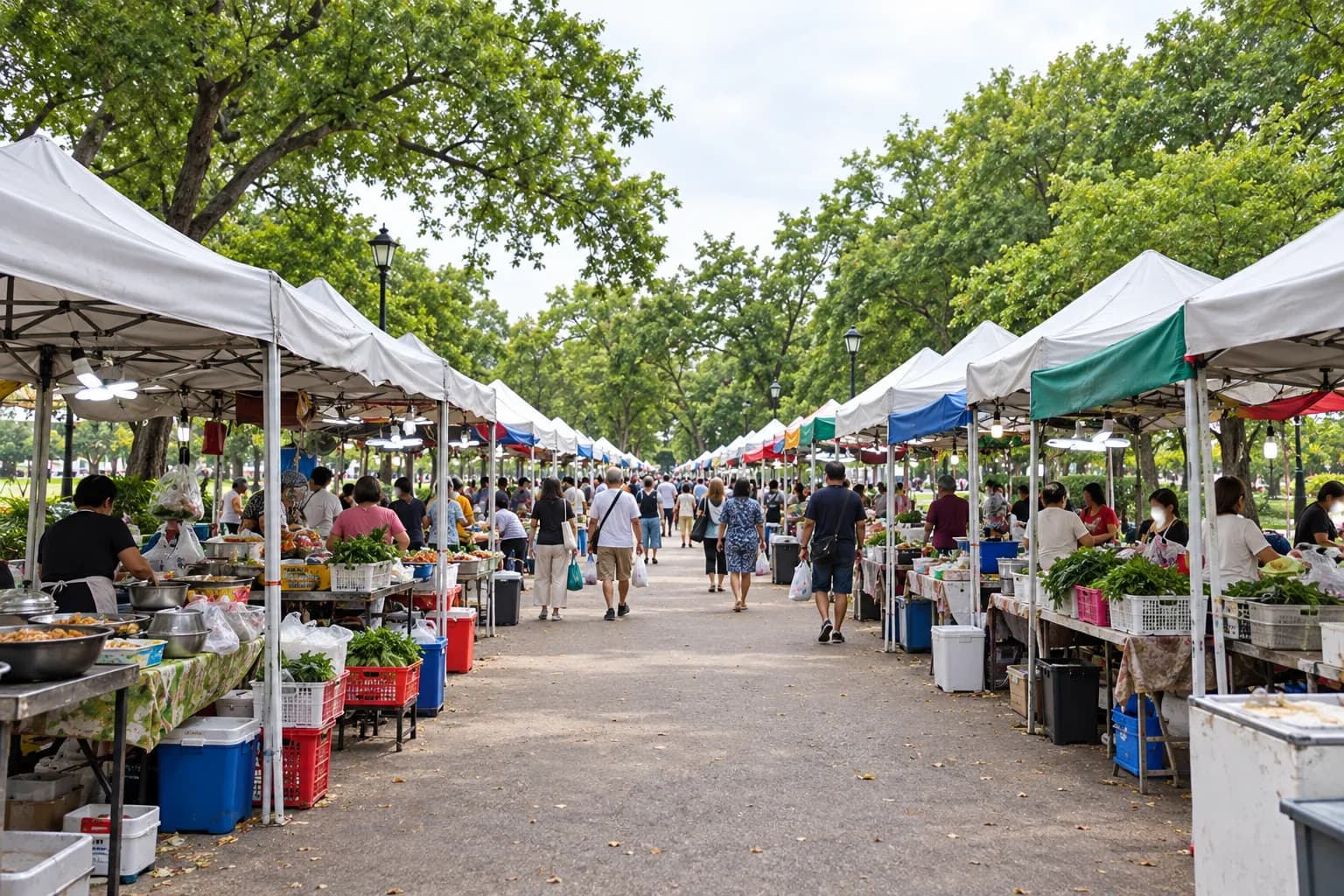
New York has more free live music than any listing captures, and almost all of it operates on an understanding rather than a rule. There is no door charge, nobody checks a ticket, and the musicians are being paid — by the bar, by a grant, by a transit authority programme, or by the bucket at the front of the stage. Whichever it is, the audience has a part to play, and the people who do not know what it is are the ones who make these nights harder to sustain. Free live music near me in NYC is a real and abundant category. It is just not free in the sense of costing nothing.
Karpo can find no-cover live music near you tonight, tell you what time the band actually starts, and what the room expects you to buy.
The bar residency is the backbone
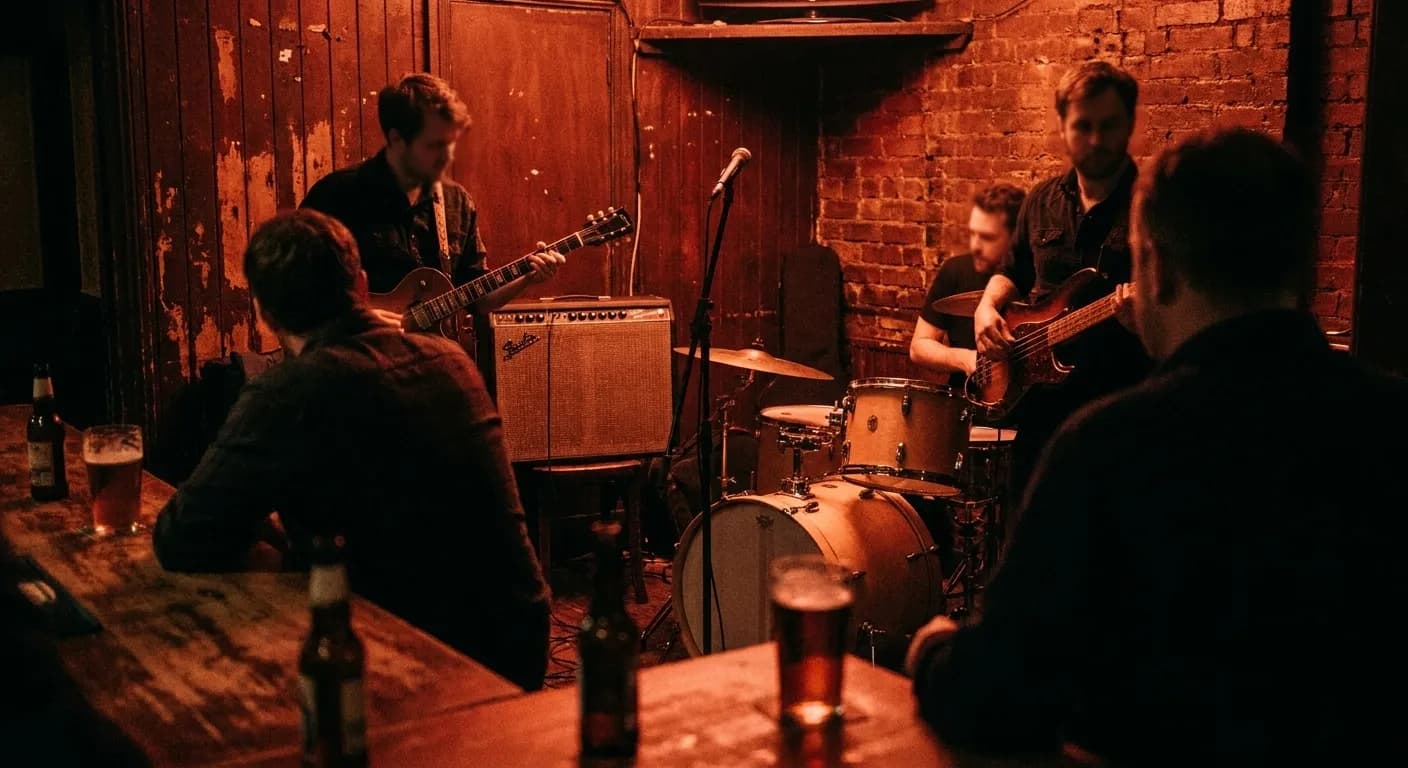
The most common form of free live music in New York is the residency: the same band or the same programme, in the same bar, on the same night of the week, often for years. There is no cover because the bar is paying the musicians out of the bar take, which tells you exactly what your part of the arrangement is.
Buy drinks. Not as a favour, but because that is the entire funding mechanism — a room full of people nursing tap water on a Tuesday is a residency that ends. If you are not drinking alcohol, buy something else; the point is the tab, not the contents. This is the single most important thing to understand about the category.
The tip bucket is not optional in the way it looks
Many no-cover nights supplement the bar's payment with a bucket, a hat or a card reader passed at the end. This is not busking and it is not a suggestion — for a lot of working New York musicians it is a meaningful share of what a gig pays.
The convention is a few dollars per person for a set you enjoyed, more if you stayed for two. If the band mentions it from the stage, they are not being pushy; they are doing the awkward part of a job that has no other mechanism. Put something in before you leave rather than intending to and forgetting.
Transit, parks and the programmed layer
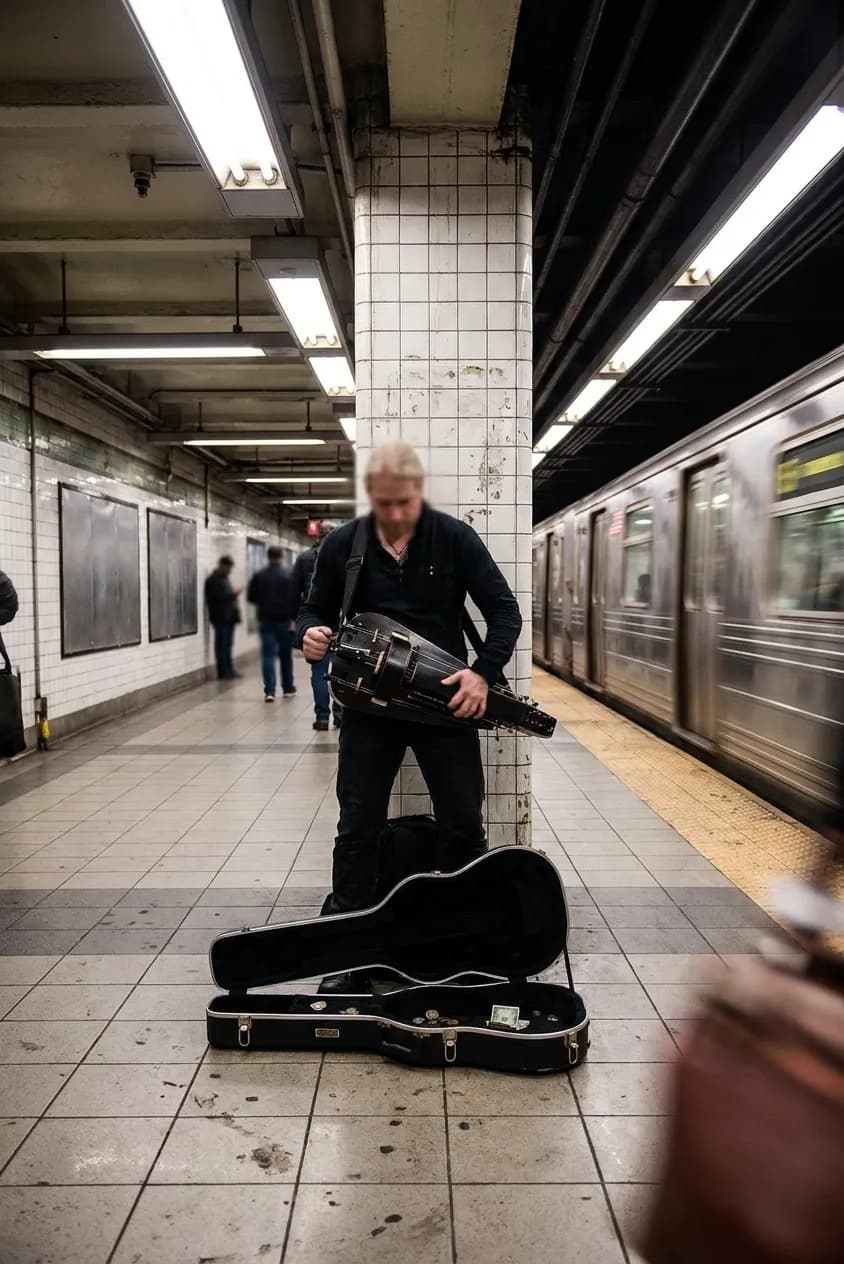
New York runs a formal programme of performances in the transit system, with auditioned musicians playing scheduled slots at stations across the network. It is genuinely free, genuinely good, and completely incidental to whatever journey you are on. Tipping is welcomed and not expected.
Above ground, the parks carry a very large volume of free programming through the warmer months — concerts, band shells, neighbourhood series — funded publicly and by donation. Libraries run free concerts year-round and are the most underused venue category in the city, with the added advantage that they are indoors, quiet and unaffected by weather.
It is worth knowing that no-cover does not mean no minimum. Some bars with regular music quietly operate a one-drink-per-set expectation, and a few state it. Neither is unreasonable, and neither is usually enforced aggressively, but it is the kind of thing worth asking about at the bar rather than discovering through an awkward exchange at the end of the night.
What time anything actually starts
The most common failure with free music is timing. A bar residency advertised for nine will frequently begin closer to ten, and a three-set night may run until one. Nobody publishes set times for a no-cover gig because there is no ticket to attach them to.
Two habits solve it. Ask the bar directly when you arrive, or when you call. And go with the expectation of a long, loose evening rather than a scheduled event — the pleasure of this category is that it is not a performance you attend, it is a room you sit in while music happens. Arriving at nine and having a drink until the band starts is the correct way to use it.
Where the good rooms are
The concentrations shift, but the reliable districts are consistent: the East Village and the Lower East Side for small bar gigs, Greenwich Village for the older folk and jazz rooms, Bushwick and Ridgewood for the newer and louder end, Harlem for jazz and gospel traditions with deep roots, and Astoria and Jackson Heights for the Latin American and South Asian music scenes that get almost no coverage outside their own communities.
That last point is worth emphasising. The most interesting free live music in New York is frequently in a neighbourhood bar serving a specific community, played by musicians with serious reputations within it, and it is open to anyone who walks in respectfully and buys a drink.
Being a good audience
The etiquette is simple and it is what keeps these rooms alive. Face the band at least some of the time. Do not hold a loud conversation directly in front of a performer in a small room. Applaud. Buy from the bar. Tip the bucket. Tell the bartender you came for the music, which is information the bar genuinely uses when deciding whether to keep paying for it.
Free live music in New York exists because a fragile economy of small bars, working musicians and modest public funding keeps holding together. Almost none of it is guaranteed to be there next year. Turning up on a wet Tuesday and buying two drinks is, unglamorously, the mechanism by which it survives.
A closing practical note: no-cover nights are the most volatile listings in the city. Residencies end, bands move rooms, and a bar that had music on Wednesdays for three years stops without announcement. Check the bar's own account the same day rather than relying on anything older, and if you arrive and the music has moved, ask where it went. Somebody behind the bar always knows, and that is usually how people find the next room.
Tags: #FreeMusicNYC #LiveMusicNearMe #NYCNightlife #NoCover #EastVillage #Harlem #Bushwick #NewYorkCity #FreeThingsToDo #MusicScene #Residency #NYCGuide #ThingsToDo #Astoria
Please drink responsibly. Must be of legal drinking age.
All trademarks are the property of their respective owners.
Ask Karpo first
Want to know which New York rooms have no-cover music tonight, when the band really starts, and what the room expects? Ask Karpo before you head out.