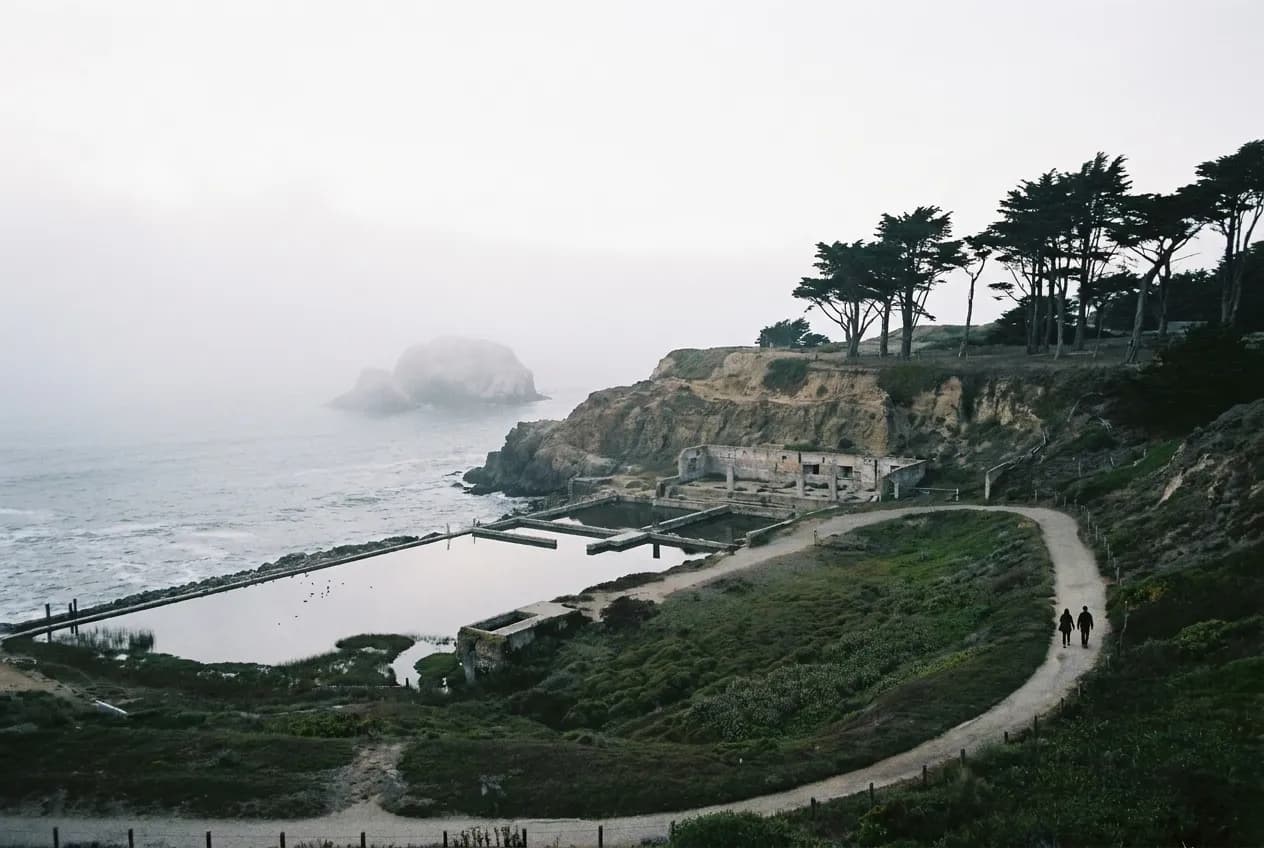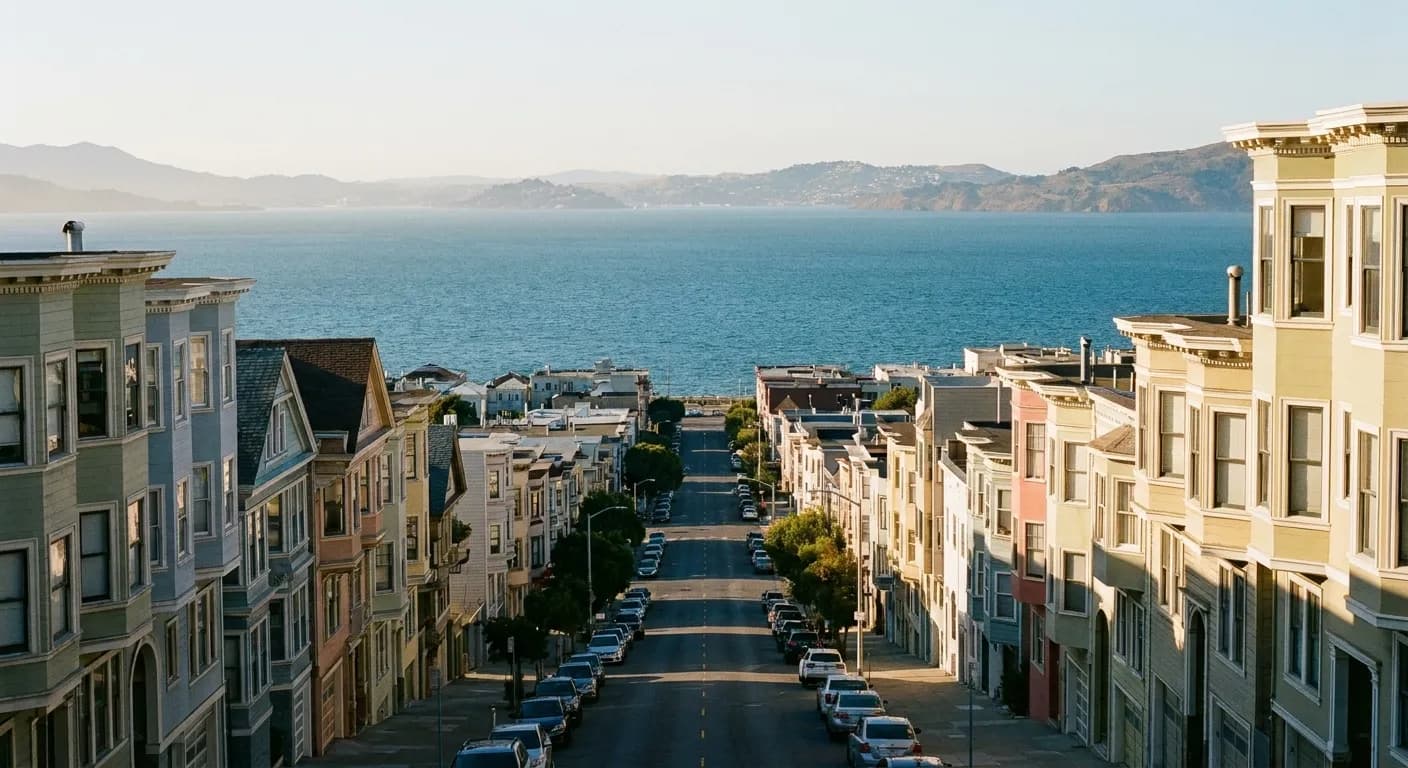
San Francisco charges handsomely for most of its best experiences, but Lands End remains gloriously free. The coastal trail wraps around the city's northwest corner, offering cypress-shaded paths, windswept overlooks, and the haunting concrete skeletons of the old Sutro Baths. On a clear afternoon in late 2026, you can walk from forest to beach to ruin without spending a dollar, watching container ships glide under the Golden Gate Bridge while the Pacific churns below. It's the rare urban hike that feels genuinely wild, and it costs exactly nothing. The entire experience—from parking to tide pools to panoramic bridge views—remains accessible without reservation fees, entrance charges, or the typical San Francisco premium pricing that makes so many attractions prohibitively expensive.
Choosing your trailhead
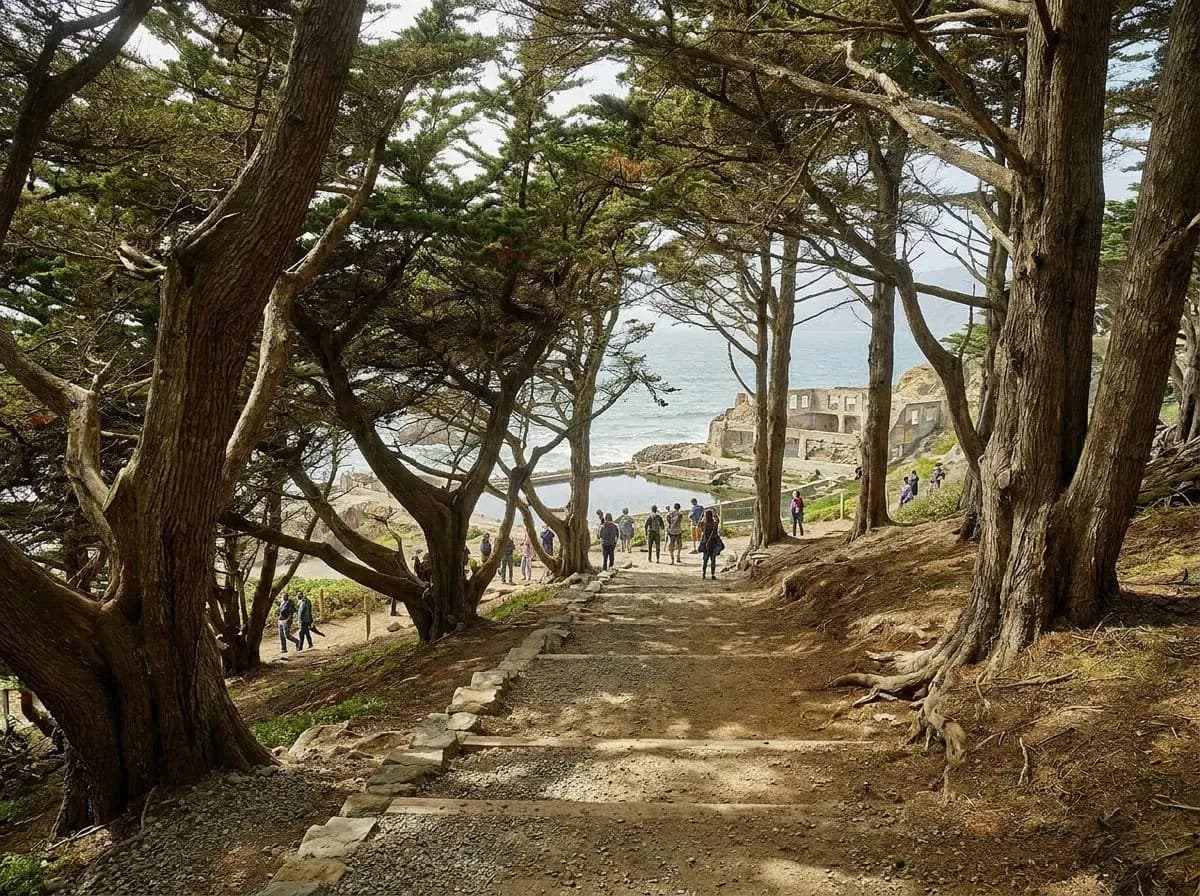
Most first-timers aim for the Merrie Way parking lot near the Cliff House, but locals know better. That lot fills by 10 a.m. on weekends, leaving latecomers circling like gulls. The 48th Avenue trailhead offers overflow parking and a shorter, more direct walk to the Sutro Baths ruins—regulars prefer it for exactly these reasons. You'll descend a flight of wooden stairs and hit the ruins within two minutes, skipping the gift-shop gauntlet entirely.
Either entry works. Merrie Way gives you the full trail experience from west to east, while 48th Avenue drops you straight into the drama of tide pools and broken foundations. Both are free; neither requires a permit. Choose based on whether you want the slow reveal or the immediate payoff. If you're arriving via public transit, the 38 Geary bus delivers you closest to the Merrie Way entrance, though it's a slightly longer walk from the nearest stop. On fog-heavy mornings, starting at 48th Avenue means you'll encounter the ruins when visibility is still reasonable, before the marine layer thickens mid-morning.
The Sutro Baths ruins
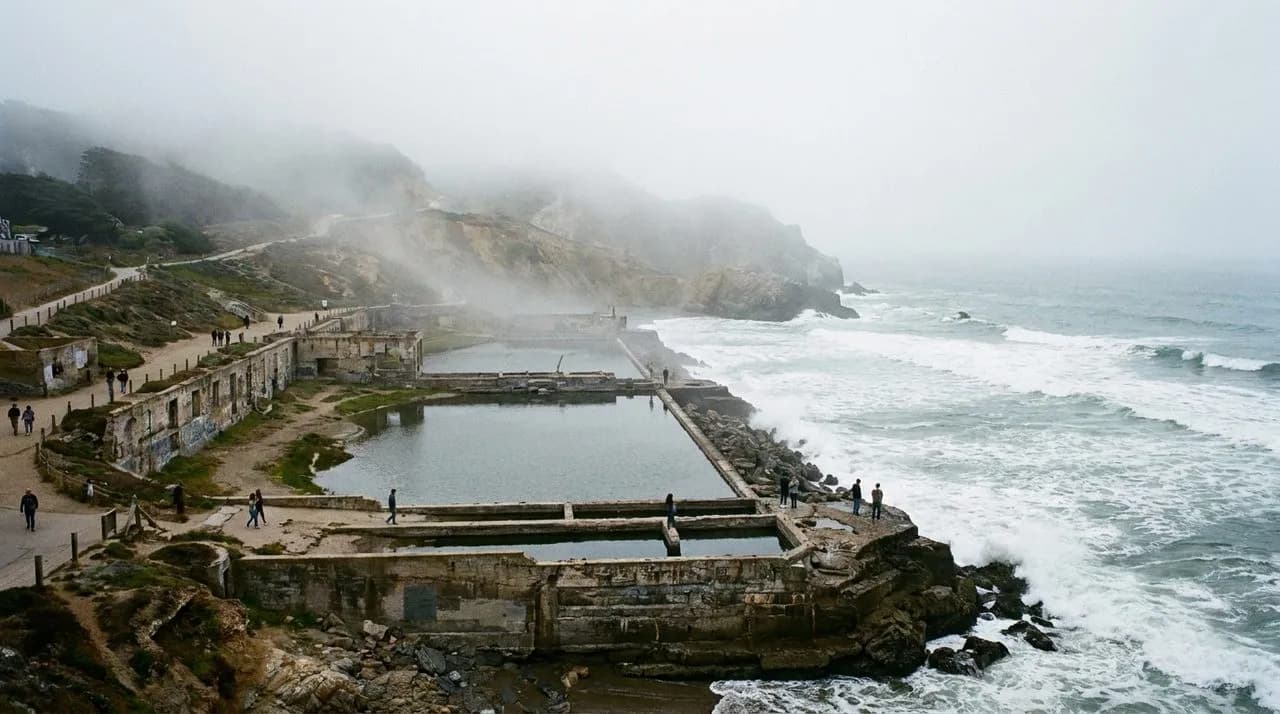
What remains of Adolph Sutro's 1896 bathhouse complex is a study in elegant decay. Concrete walls jut from the surf at improbable angles, rebar rusting in the salt air, pools now filled by the tide rather than steam pipes. At low tide, you can explore the largest chamber and peer into smaller basins where anemones cling to algae-slicked stone. The structure burned in 1966; the National Park Service stabilized what was left but didn't restore it. The effect is more romantic for the neglect. In its heyday, the baths could accommodate 10,000 visitors and featured seven swimming pools of varying temperatures, but what fire and time have left behind is arguably more compelling than the original Victorian grandeur.
Tide pool access is best two hours either side of low tide. Check the tables before you go. The water here is cold and the rocks slippery—wear shoes with grip, not flip-flops. Families cluster near the main viewing platform; if you want solitude, scramble down to the southern edge where the foundations dissolve into raw cliff. Photographers work the ruins hardest during golden hour, when low sun throws long shadows across the concrete and the wet rocks glow amber. Bring a wide-angle lens if you're shooting; the drama is in the scale and the contrast between geometric ruins and organic surf.
Mile Rock labyrinth and beach descent
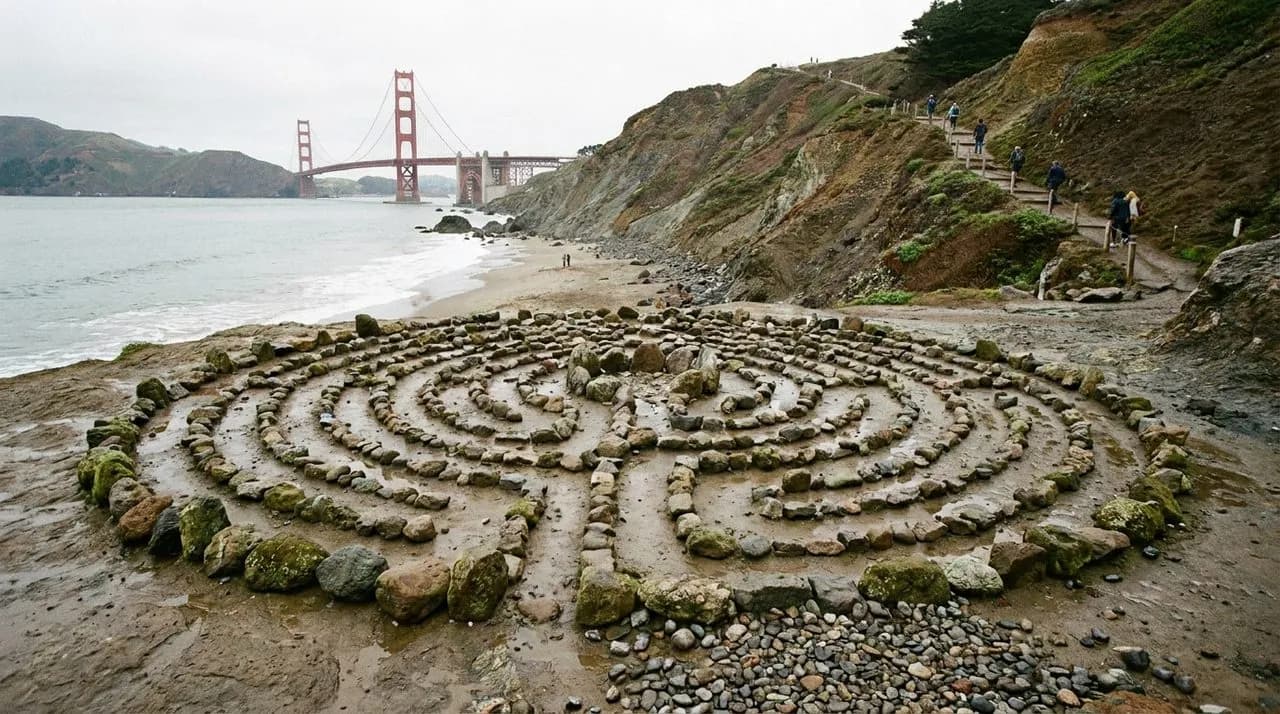
Halfway along the main trail, a spur drops steeply toward Mile Rock Beach. The descent is rough—loose gravel, exposed roots, a rope handrail—but at the bottom you'll find a stone labyrinth arranged on a flat rock outcrop. The labyrinth is rebuilt by visitors after winter storms wash it away; the arrangement is clearest in late spring, when locals add rocks as a quiet ritual. There's no sign, no plaque. Just a spiral of beach stones reset season after season.
The beach itself is narrow and often fogged in, but on clear days it offers an unusual perspective on the Golden Gate Bridge, framed low between cliffs. Few tourists make the scramble, so if you're plotting weekend plans that involve solitude and the sound of waves on stone, this is your detour.
Eagle's Point and the golden bench
Further east, the trail climbs to Eagle's Point, a cypress-sheltered overlook with a single wooden bench. That bench faces northwest and offers the best Golden Gate views anywhere on the trail—photographers call it 'the golden bench' because around 5 p.m., when the afternoon fog clears, the light turns the bridge towers amber and the whole scene goes soft and cinematic. Arrive earlier and you might catch only gray; arrive later and the sun drops behind the Marin Headlands. Timing matters.
The cypress grove around Eagle's Point provides serious wind protection, a mercy on blustery fall afternoons. You can sit on that bench for twenty minutes without your hair turning into a salt-crusted tangle, which is more than you can say for most of the overlooks along this stretch. Bring a thermos. Stay a while.
The forested middle section
Between the drama of the ruins and the postcard views at Eagle's Point, the Coastal Trail tunnels through a dense stand of Monterey cypress. The temperature drops five degrees; the light goes dappled and green. You can hear the ocean but not always see it, which gives the walk a strange doubled quality—half forest hike, half coastal scramble. The path is wide and well-maintained here, suitable for jogging or pushing a sturdy stroller, though the trail's other sections are rougher. Bird-watchers favor this stretch in early morning when warblers and finches work the canopy, and the occasional red-tailed hawk cruises the thermals above the trees.
In late 2026, the Park Service has been working on erosion control along the blufftop segments. You may encounter short detours or temporary fencing, but the core route remains open and free. The work is unobtrusive—mostly native plantings and low wooden barriers—and the trail still feels wild rather than manicured.
The surrounding neighborhood: Sea Cliff and beyond
The Lands End Trail borders one of San Francisco's most exclusive residential enclaves, the Sea Cliff neighborhood, where Mediterranean Revival mansions cling to cliff edges with million-dollar Pacific views. Walking east toward the Legion of Honor, you'll catch glimpses of these estates through the cypress—tile roofs, terraced gardens, the occasional architectural landmark. The contrast between the wild coastal trail and the manicured wealth just uphill adds an interesting layer to the hike, a reminder that San Francisco's geography packs extremes into tight quarters. El Camino del Mar, the winding street that parallels parts of the trail, was once a coastal toll road and still retains its curving, scenic character. If you park at the 48th Avenue trailhead, you're standing at the edge of this rarified district, though the trail itself remains public land, open to everyone regardless of zip code or tax bracket.
What to skip
The USS San Francisco Memorial, perched above the trail near the Legion of Honor, is worth a glance if you're already passing, but it's not a destination in itself. The Cliff House closed in 2020 and remains closed; do not plan your hike around it. The real draw here is the trail itself—the ruins, the overlooks, the cypress forest—not the built attractions that come and go with economic tides.
Practical notes
Lands End Coastal Trail is about 3.5 miles if you include the full loop from the parking areas to the far end and back; the segment from Sutro Baths to Eagle's Point is shorter than 1.5 miles. The 48th Avenue trailhead is at 48th Avenue and El Camino del Mar; Merrie Way parking is near 680 Point Lobos Ave. Muni 38 Geary stops nearby. The trail is open sunrise to sunset, free year-round. Accessibility is limited—steep stairs, uneven terrain, no paved paths. Bring water, sun protection, and a windbreaker. Tide tables matter if you're exploring the ruins. Dogs on leash are welcome. Verify current trail conditions via the Golden Gate National Recreation Area website before you go.
Tags: #LandsEnd #SutroBaths #CoastalTrail #SanFrancisco #FreeAndFine #GoldenGateBridge #HikingSF #WeekendPlans #TidePools #MileRock #EaglesPoint #SF2026 #BayAreaHiking #FreeInSF #CoastalViews
Please drink responsibly. Must be of legal drinking age.
Sources consulted: Lands End - Wikipedia · Sutro Baths - Wikipedia · Lands End Trail - National Park Service · San Francisco Recreation & Parks
All trademarks are the property of their respective owners.