Van Cortlandt Park works best as a free birding morning when you treat it like a route decision, not a vague park stroll. The Bronx park is large, hilly in places, and split by roads, but official and birding sources point to a useful mix: lake edges, freshwater wetlands, the John Muir Trail, Croton Woods, the Northwest Forest, and the paved Putnam Trail. For July 22, 2026, the smart version is early, shaded, and flexible after rain. Bring water, insect protection, and footwear that can handle mud. Skip the pressure to see rare birds. The win is a quiet, low-cost reset before the city gets loud.
Want a calmer Bronx morning without guessing which trail fits the weather? Text Karpo for a free Van Cortlandt birding route matched to shade, transit, and walking tolerance.
Start Van Cortlandt Park Birding at the Lake Edge
The easiest first move is Van Cortlandt Lake, especially if you are with an older parent or someone who wants birds without committing to a deeper trail. NYC Bird Alliance describes the lake and Tibbetts Brook area as prime birdwatching habitat, with swallows, cormorants, herons, egrets, turtles, and seasonal waterfowl all possible depending on timing. In summer, go slowly along the shore and let movement reveal itself before pushing north.
The tradeoff is that the lake is also the part of the park most likely to overlap with walkers, golfers, and general morning traffic. That is not a reason to skip it; it is a reason to start early and keep expectations modest. If paths are slick after rain, stay on firmer edges and avoid stepping into wet vegetation. A beginner’s failure mode is rushing past the water because nothing appears immediately. Wait five minutes.
Use Tibbetts Brook as the Quiet Morning Test
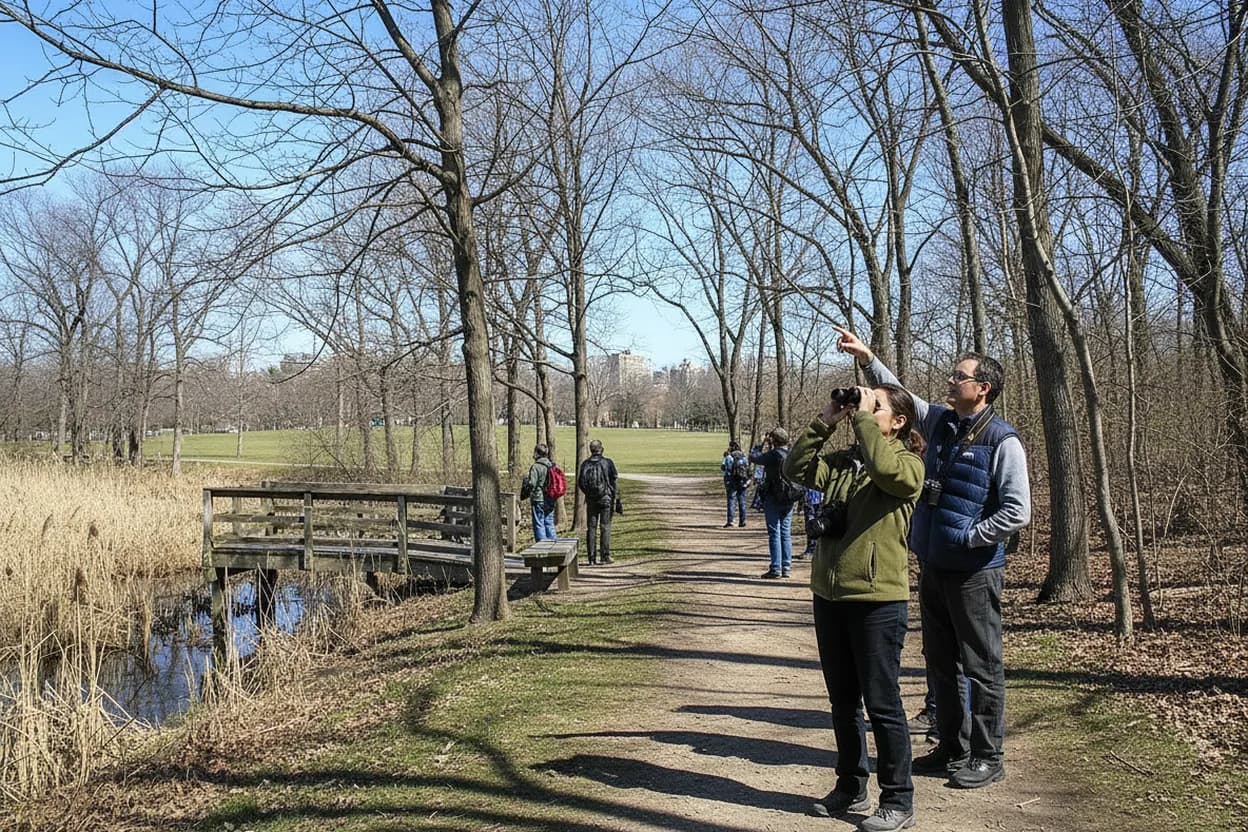
Tibbetts Brook is the better test of whether this should become a full birding morning. NYC Bird Alliance highlights the wetlands north of the lake, including a wooden footbridge area, as strong habitat in any season. After summer rain, that also means mosquitoes, soft ground, and more slipping risk. If the air is cool and the trail feels passable, this is where the plan becomes calmer and more bird-focused than a simple lake loop.
For a solo walker, keep the Tibbetts Brook portion deliberate rather than adventurous. Stay on established paths, give other park users room, and resist cutting toward sounds through reeds or brush. Birding ethics and basic comfort line up here: observe from the trail, use binoculars if you have them, and do not chase birds deeper into habitat. If the wetland path feels muddy or isolated, turn back toward the lake or the paved Putnam Trail.
Choose the John Muir Trail Only With Proper Shoes
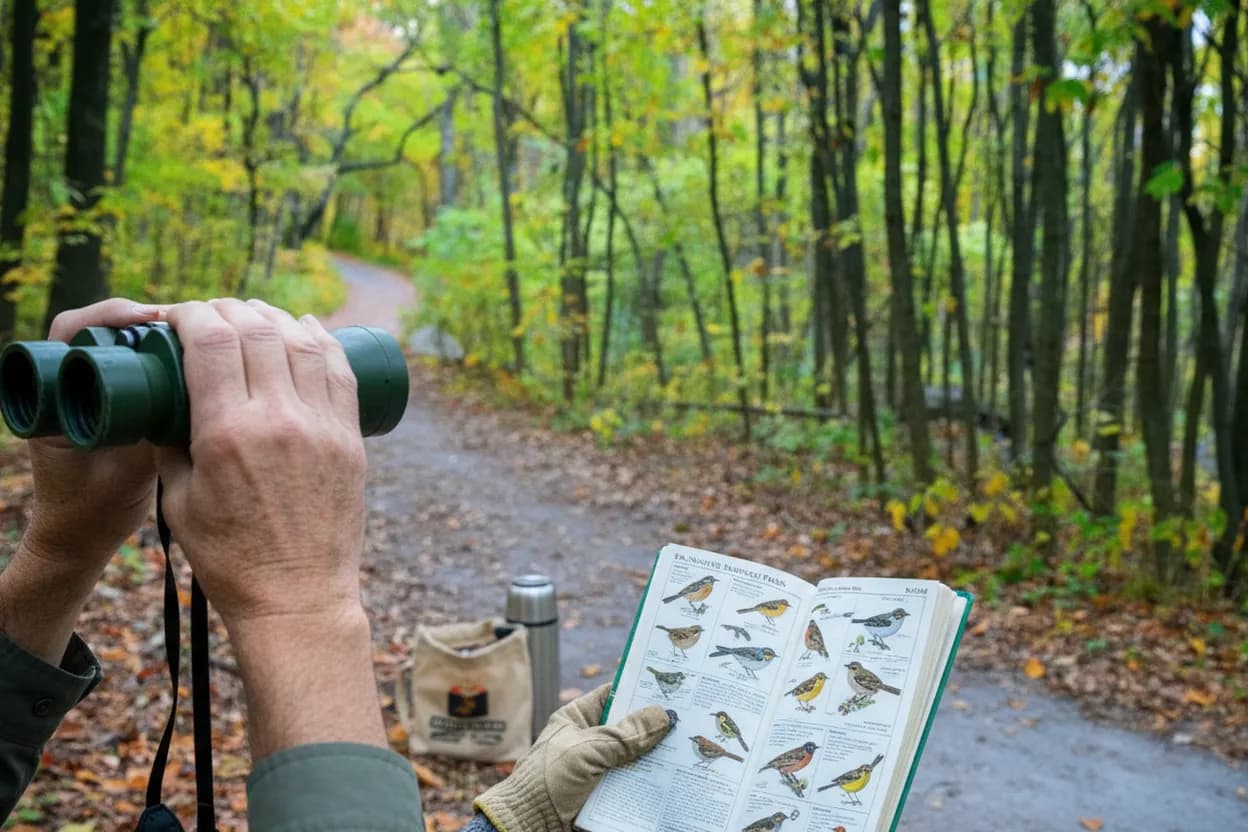
The John Muir Trail is the nature-first upgrade, not the default for every morning. NYC Parks describes Van Cortlandt’s hiking options as varied, with forests, freshwater wetlands, lake areas, and scenic trail connections. NYC Bird Alliance identifies the John Muir route through the Northeast Forest, Croton Woods, and Northwest Forest as productive birding terrain. That is appealing after rain because the woods may be cooler, but it also raises the footwear requirement.
Choose this section if both people can handle uneven surfaces, damp leaves, roots, steps, and a slower pace. The article’s target mood is quiet before a busy day, not proving endurance, so set a turnaround time before entering the woods. Fifteen to twenty minutes in one direction can be enough. If your older parent is watching footing more than birds, the route has already stopped serving the morning. Exit toward paved or wider paths.
Keep Croton Woods Calm Around Owls and Nesting Birds
Croton Woods is one of Van Cortlandt Park’s stronger birding zones, but it asks for restraint. NYC Bird Alliance notes the area’s mature forest habitat and specifically cautions birders to be quiet near roosting or nesting owls, stay far away, and keep visits short. That guidance matters even if you are not looking for owls. The point of this morning is low impact: listen, scan, and leave wildlife unpressured.
The practical failure mode is treating a bird sighting like a photo assignment. Do not play calls, crowd a perch, step off trail for a better angle, or linger if a bird is staring or agitated. In dense woods, voices also carry differently than expected. For caregivers, Croton Woods can be a good shared quiet space if everyone agrees on a gentle pace. If either person needs bathrooms, seating, or predictable surfaces, shorten this segment.
Save the Putnam Trail for Accessibility Backup
The paved Putnam Trail is the best backup when rain, knees, strollers, or uncertainty make woodland routes too much. NYC Parks describes it as a paved pathway running from the southern to northern end of Van Cortlandt Park and connecting onward to the South County Trailway. It will not feel as hidden as the smaller forest trails, but it gives you a more stable surface and a clearer exit plan.
Use the Putnam Trail when the morning’s priority is quiet movement rather than maximum species variety. It can still produce bird activity along wooded edges, especially if you pause at transitions instead of marching through. The drawback is shared use; expect cyclists and runners, and keep to one side. For a beginner birder, this is also a good place to practice listening for calls without balancing on wet dirt or blocking narrow trail traffic.
Enter From Broadway or Woodlawn Based on Energy
Transit access should shape the route before enthusiasm does. Van Cortlandt Park Alliance lists the 1 train’s W. 242nd Street terminus near the Parade Ground and the 4 train’s Woodlawn terminal serving the southeastern area. It also lists Bx9 service along Broadway, Bx16, Bx31, and Bx34 on the east side, plus Westchester bus routes. That gives Bronx walkers several practical ways to choose an easier start or exit.
For a quieter morning with lower navigation stress, Broadway near W. 242nd Street works well if you want the Parade Ground, Nature Center area, lake access, or Putnam Trail. Woodlawn makes more sense for southeastern approaches, but it may not match a lake-and-wetlands plan as cleanly. Check MTA status before leaving, because a free activity becomes frustrating when the first train problem forces a rushed walk through a very large park.
Verify Van Cortlandt Conditions Before Leaving Home
The final check is not optional on July 22, 2026, because summer rain can change the quality of a trail morning. Van Cortlandt Park Alliance posts park closing information and notes that the park closes at 10:00 p.m., while playgrounds and some lots close earlier. For this plan, the more relevant same-day questions are trail condition, weather, transit status, and whether any organized walk requires separate registration rather than casual drop-in attendance.
Make the go-or-skip call simple. Go if the forecast leaves a dry early window, your shoes can handle mud, and your route has a paved fallback. Switch to a shorter lake-and-Putnam plan if rain is recent or humidity is heavy. Skip deeper woods if thunder is possible, visibility is poor, or either person feels uneasy about footing. Before leaving, verify official park alerts, Van Cortlandt Park Alliance updates, and MTA service.
Tags: #VanCortlandtPark #Bronx #NYCBirding #FreeNYC #FreeThingsToDo #BronxNature #BirdingNYC #NYCParks #QuietMorning #NatureWalk #TransitFriendly #AskKarpo #BeforeYouGo #KarpoNYC
Sources consulted: Source 1: nycbirdalliance.org · Source 2: vancortlandt.org · Source 3: php1-84.nycgovparks.org · Source 4: vancortlandt.org · Source 5: dec.ny.gov
All trademarks are the property of their respective owners.
Ask Karpo first
Tell Karpo your date, group size, budget, and starting neighborhood. We’ll check current access, timing, transit, and the cleanest plan for Van Cortlandt Park birding areas before you head out.