 Dog Costume Parade Near Me in East Village: Boris and Horton
Free Things to Do

Fort Tryon Park's Heather Garden in Peak Autumn Color
Above the Hudson River, this terraced garden in Upper Manhattan offers spectacular fall foliage, winding stone paths, and sweeping views of the Palisades—without the Central Park crowds.
Most visitors to Fort Tryon Park come for The Cloisters, that improbable medieval outpost perched high above the Hudson. Few realize that just down the slope, carved into sixty-six terraced acres, lies the Heather Garden—a quiet, formal landscape that turns incandescent each autumn. Stone pathways wind through bands of asters, chrysanthemums, and witch hazel; benches face west toward the Palisades. It's one of the city's least-crowded fall destinations, despite offering some of its most arresting views. No admission, no lines, no influencer scrum. Just light slanting through sugar maples and the occasional dog-walker who's made the pilgrimage north.
The terraces unfold downhill
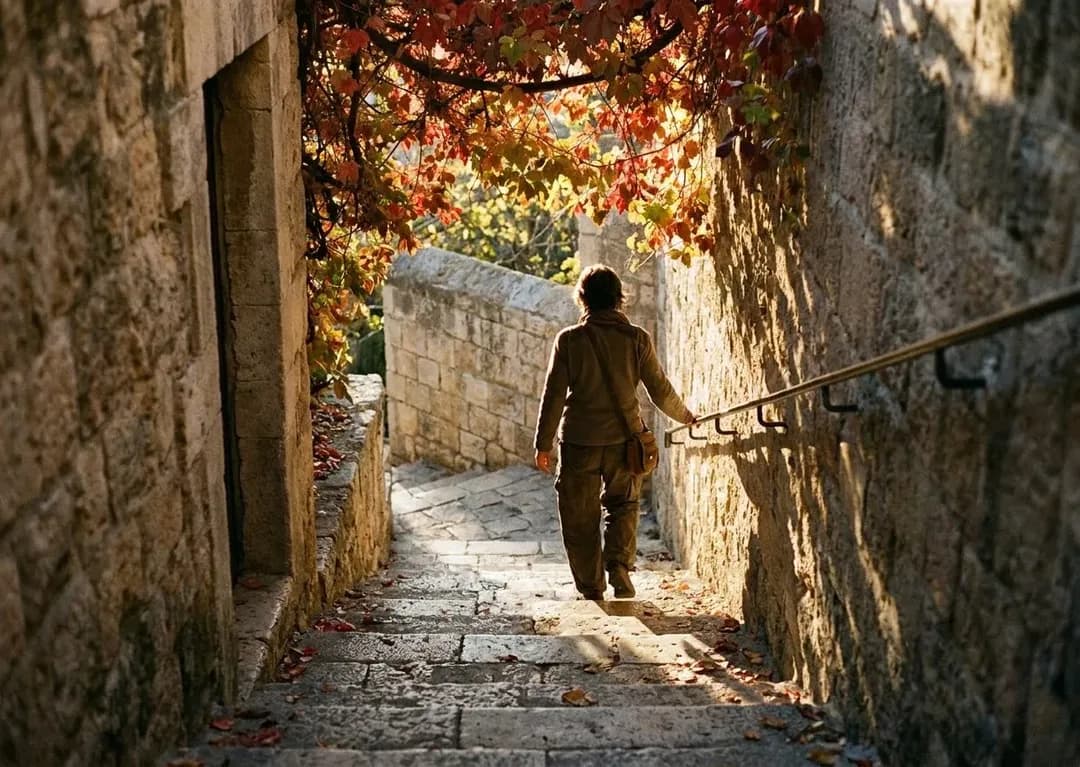
The Heather Garden cascades down a steep hillside in a series of stone-edged terraces, each level revealing a different mood. The upper reaches open to full sun and wide Hudson panoramas; farther down, the plantings thicken and the paths grow shadier, punctuated by pergolas and columnar evergreens. In late October, the garden's architecture becomes legible in a way summer obscures—the bones of the design, all those retaining walls and staircases, emerge as the perennials die back.
Mornings are particularly atmospheric. The lower terrace near the pergola remains in shade until approximately 10:30 a.m. in October, keeping morning dew on the benches—so if you're settling in with coffee and a book, bring a towel or plan to arrive closer to midday. The damp stone and lingering mist lend the space a Scottish-garden melancholy that burns off by noon, when the light turns crisp and golden.

Peak color arrives on its own schedule
Timing a fall foliage visit is always a gamble, but the Heather Garden offers a slight advantage: peak color typically occurs in the third week of October, about one week later than Central Park due to the elevated position. The garden sits at roughly 250 feet above sea level, high enough that cooler nights arrive earlier and the growing season stretches a beat longer. By the time Central Park's maples have shed, Fort Tryon's are just hitting their stride.
The palette skews warmer than you might expect from a garden named for heather. Yes, there are swaths of purple aster and the occasional late-blooming erica, but autumn here means burnt orange, rust, deep maroon—the colors of turning oak and dogwood, underplanted with ornamental grasses that catch the afternoon light like spun copper. It's a layered, painterly scene, and the lack of crowds means you can actually stand still long enough to notice.
The journey north is half the charm
Getting to Fort Tryon feels like leaving the city, which is part of the appeal. The A train to 190th Street involves a long elevator ride—one of the deepest subway stations in the system—but deposits visitors at the park's southern entrance, a five-minute walk to the garden. That elevator ascent, rising through bedrock toward daylight, sets the tone: you're climbing out of the grid, up into something older and quieter.
The walk from the station threads through residential Washington Heights, past bakeries and bodegas, before the park swallows you whole. There's a pleasant cognitive dissonance in stepping from the subway into this kind of verticality and green. It makes weekend plans feel more adventurous than they actually are—a quality in short supply in a city where every decent park gets geotagged into oblivion.
Views that justify the climb
The Heather Garden's western edge opens onto one of the finest Hudson River views in the five boroughs. The Palisades rise across the water, a dark cliff face that changes color with the hour. In late afternoon, when the sun drops behind New Jersey, the rock glows amber and the river turns pewter. It's a view that rewards lingering—and because so few people make it this far uptown, you'll often have a bench to yourself.
The combination of formal garden and wild river valley creates a strange doubling effect. You're standing in a designed landscape, all clipped hedges and deliberate sight lines, but the backdrop is pure geological drama. The George Washington Bridge floats in the distance to the south, a delicate span of steel that somehow doesn't intrude. It's a composition that feels almost European in scale, which makes sense—this was, after all, the vision of the Rockefeller family, who donated the land in the 1930s.
What grows here, and why it matters
Despite its name, the Heather Garden is less a heather monoculture than a carefully orchestrated perennial border with strong bones. The original plantings leaned heavily on European heath and heather—hence the name—but decades of replanting have introduced a more eclectic palette. Today you'll find Japanese maples, ornamental kale, sedum, Russian sage, and great drifts of late-blooming perennials that carry the garden through the first frost.
What unites the plantings is texture and structure. Even as things fade and dry in autumn, the garden retains its form. Seed heads stand tall; grasses arch and sway; evergreen shrubs hold the edges. It's a horticultural lesson in what happens when you design for four seasons instead of just one Instagram-friendly moment in May. The result is a garden that earns repeat visits, that changes week to week as light and weather shift.
The broader Fort Tryon context
The Heather Garden is reason enough to visit, but Fort Tryon Park offers other diversions if you're making a day of it. The Cloisters—the Met's medieval branch—sits at the park's northern tip, worth a visit if only for the Unicorn Tapestries and the Gothic-chapel acoustics. The park itself has miles of wooded trails, a café near the main entrance, and enough elevation change to make a walk feel like genuine exercise.
Washington Heights and Inwood, the neighborhoods bracketing the park, are worth exploring for food alone. Dominican bakeries, old-school diners, and a growing crop of wine bars and cafés make the area feel refreshingly off-the-beaten-path. It's the kind of neighborhood where you can still stumble onto something good without a reservation or a two-hour wait. That's rarer in New York than terraced gardens.
Practical notes
Fort Tryon Park, Riverside Drive to Broadway, between West 192nd and Dyckman Streets. Nearest subway: A train to 190th Street (elevator to street level, then five-minute walk). Limited street parking on surrounding blocks. The park is open dawn to dusk year-round; the Heather Garden is unstaffed and always accessible. Paved paths make most of the garden wheelchair-friendly, though some upper terraces involve steps. Bring layers—it's windier and cooler than Midtown—and a camera if you care about that sort of thing. No food vendors inside the garden itself; pack snacks or plan to eat in the neighborhood before or after.
Tags: #FortTryonPark #HeatherGarden #NYCParks #FallFoliage #UpperManhattan #WashingtonHeights #HudsonRiver #FreeAndFine #AutumnInNYC #HiddenGems #NYCNature #FallColors #PalisadesViews #OffTheBeatenPath #WeekendPlans
Please drink responsibly. Must be of legal drinking age.
All trademarks are the property of their respective owners.
Ask Karpo for more information.
Keep reading
- Dog Costume Parade Near Me in East Village: Boris and Horton
 Dog Costume Parade Near Me in Astoria: Château le Woof
 Dog Costume Parade Near Me on Upper West Side: Black Lab Cafe