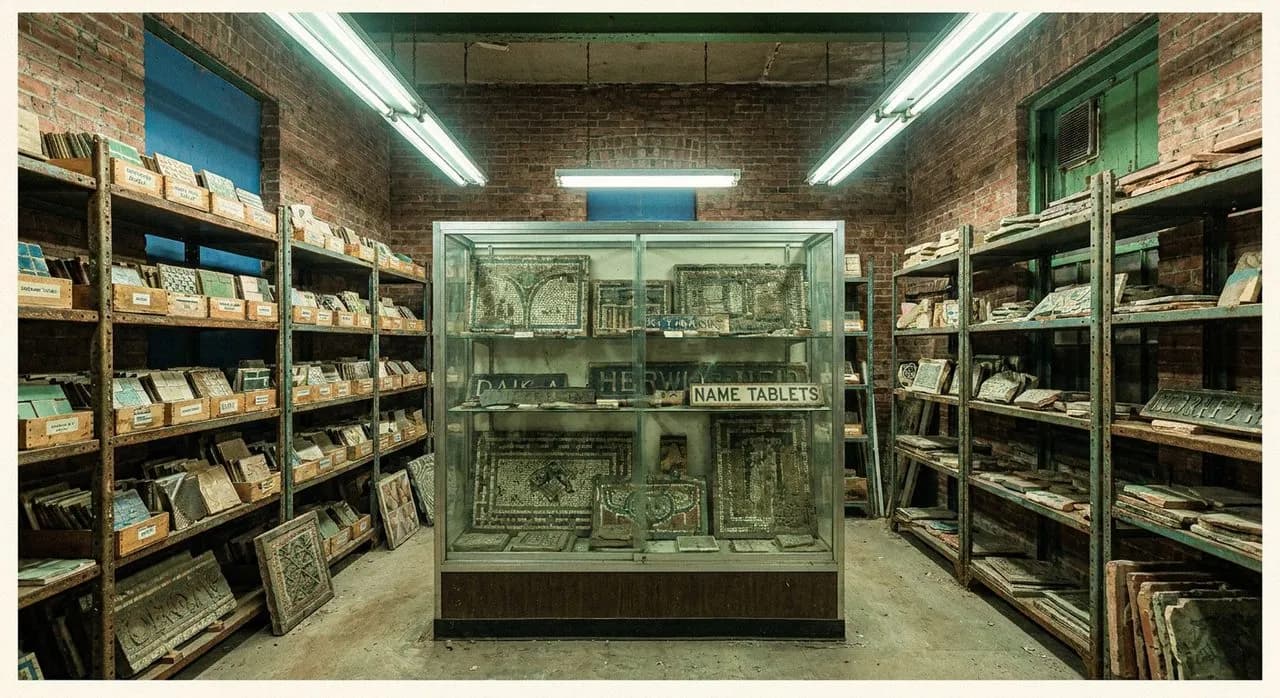
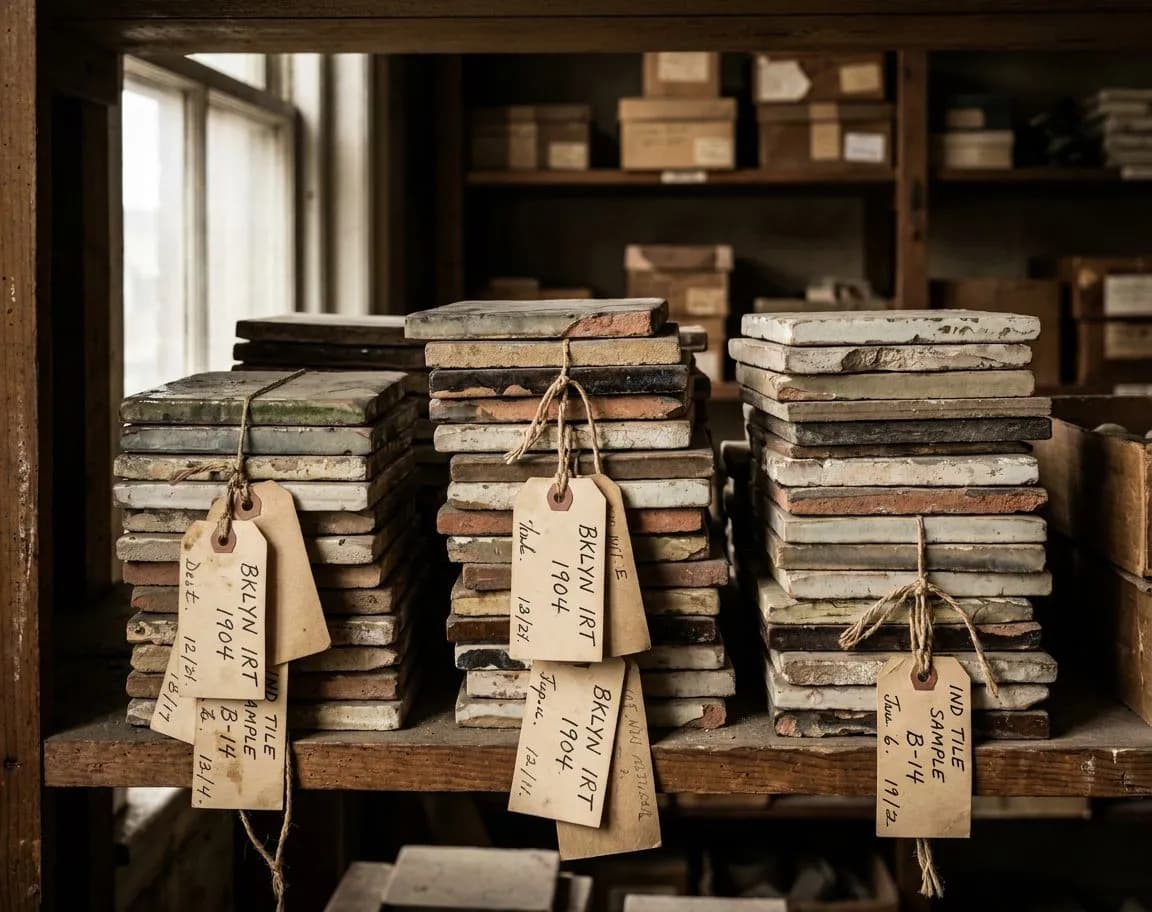
Most city guides steer you toward the obvious: the Transit Museum's polished vintage cars at Court Street, the carefully lit dioramas, the gift-shop nostalgia. But a few blocks north, inside a transit-related space near downtown Brooklyn, an unofficial archive holds what the official museum cannot: the raw, unrestored detritus of a century's worth of platform demolitions. Numbered tile samples rest on industrial shelving. A card catalog, its brass pulls tarnished to dull gold, cross-references glaze formulas to the contractors who mixed them in 1904. The air smells faintly of wet clay and old plaster, and the curator—a retired civil engineer whose email replies arrive weeks late, terse and grammatically spare—opens the door only by appointment.
The Tower Itself
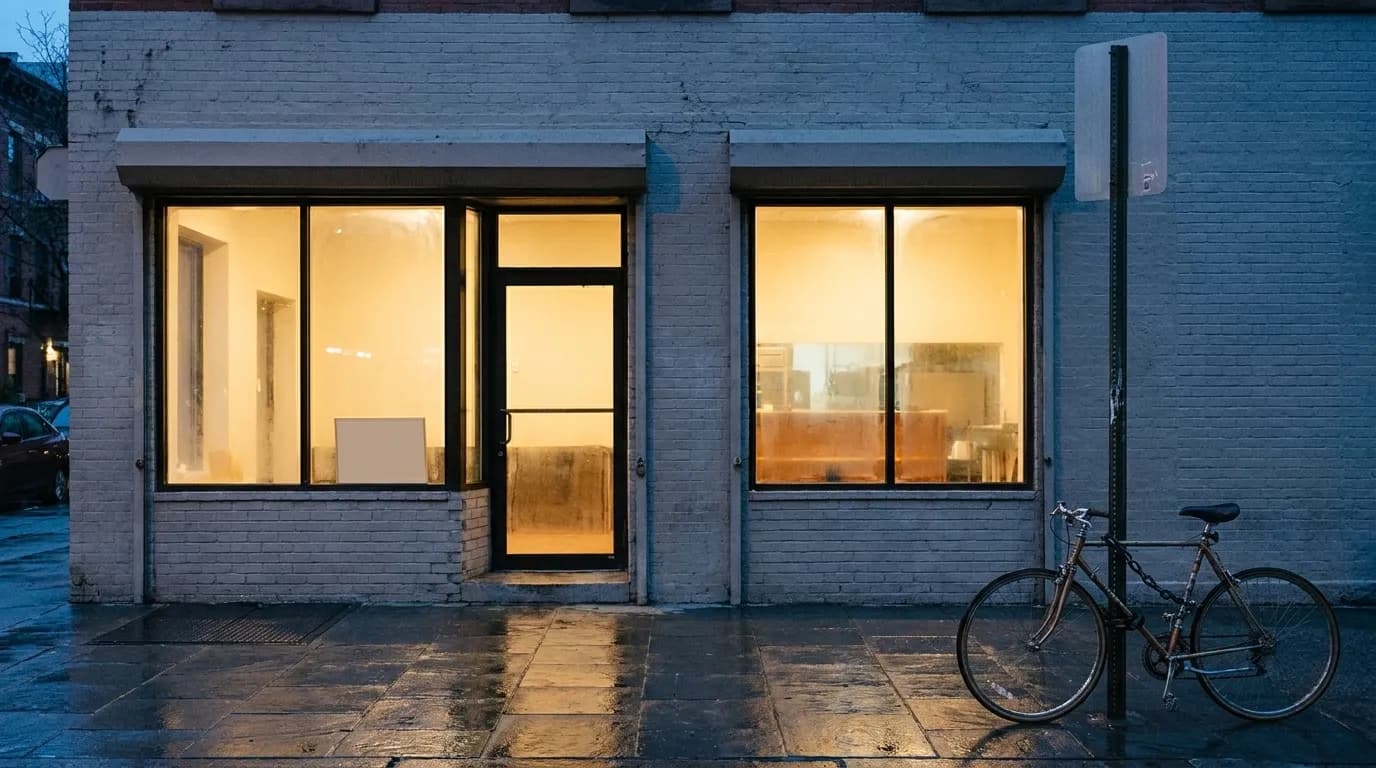
The signal tower is easy to miss. Its façade, soot-darkened red brick with narrow windows set high, blends into the post-industrial streetscape where Hoyt meets Schermerhorn. No plaque marks the entrance. A single buzzer, unlabeled, waits beside a heavy steel door that was once painted green and is now mostly rust and primer. Inside, a steep wooden staircase climbs three floors, each landing lit by a single bulb behind wire mesh. The ground floor holds newer acquisitions—recent demolitions from platform renovations, still caked with adhesive and concrete dust. By the second floor, the collection grows older and more deliberate. Here are the glazed terra-cotta corner pieces from express stations, their beveled edges catching the weak winter light. The third floor is reserved for the rarest specimens, the ones he will not discuss over email and barely mentions in person.
The City Hall Loop Tiles
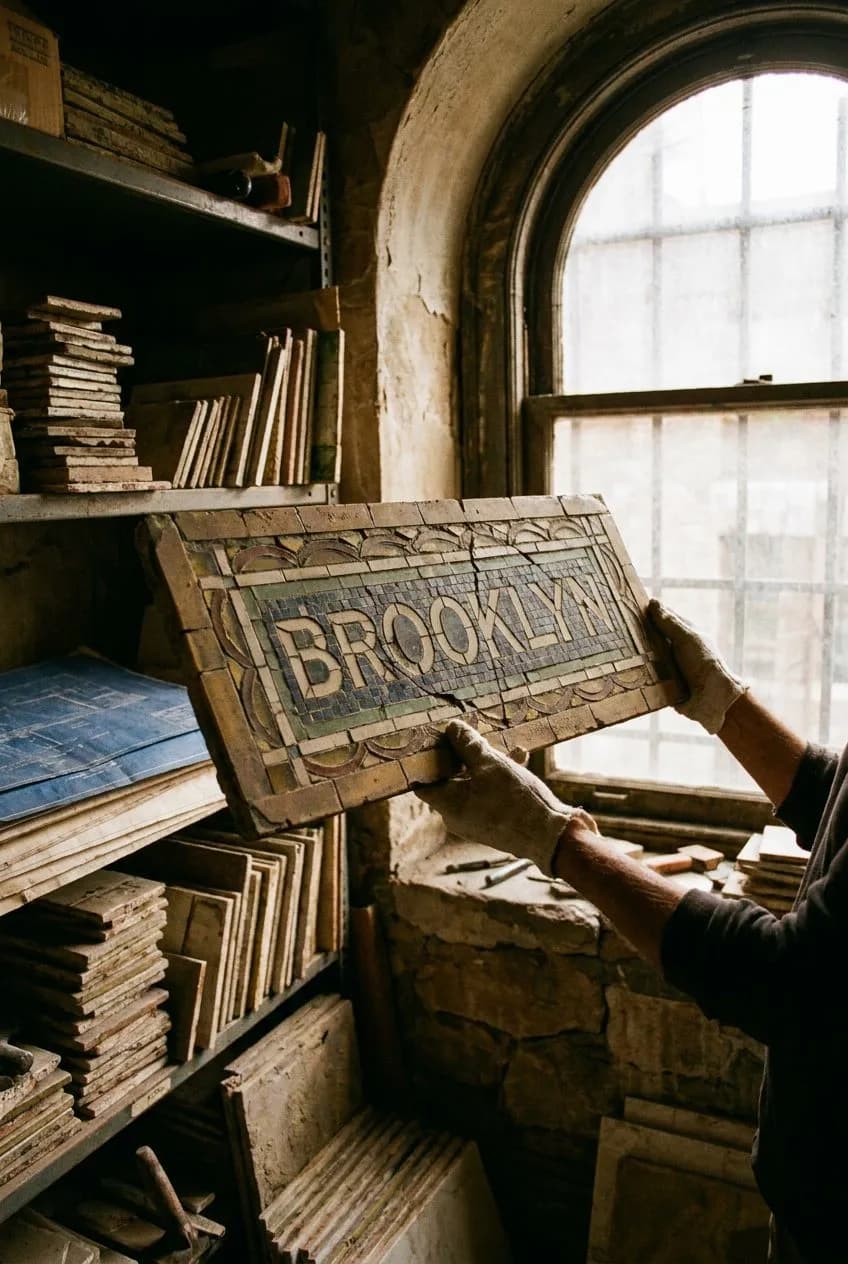
On the top shelf of the third-floor archive, wrapped in acid-free tissue and stacked in numbered wooden crates, lies a complete set of original City Hall station loop tiles that were never installed. The curator acquired them at an MTA warehouse auction in the 1970s, back when such artifacts were considered surplus rather than heritage. Each tile is hand-glazed, its surface a particular shade of celadon that the Contract One specifications called for but that the actual installed loop never received—a bureaucratic substitution lost to time and paperwork. He unwraps one piece per visit, no more. The glaze has crazed in fine geometric patterns, a slow chemical conversation between clay and air that has been unfolding for half a century in the dark.
These tiles represent not what was, but what almost was—a parallel subway, a ghost decision tree of municipal aesthetics. The curator speaks about them in the cadence of someone reciting a familiar liturgy, his voice flat but his hands careful as he rewraps each specimen and returns it to the crate.
The Appointment Protocol
Appointments are confirmed via email three to five days in advance, though the initial outreach may languish in his inbox for a month. Visits are capped at forty-five minutes, a constraint he enforces with a kitchen timer that ticks audibly from the second-floor work table. Photography requires prior approval, which he grants sparingly and never for the third-floor collection. He prefers visitors who arrive with specific questions—about a particular station, a glaze color, a contractor's mark—and grows visibly impatient with those who simply want to "see everything." There is too much to see, and he knows the catalog better than anyone will ever know the collection itself.
The forty-five-minute limit feels generous at first, then claustrophobic as you realize how much remains on the shelves. He does not offer to extend the visit. When the timer chimes, he walks you to the door with the same terse courtesy that marked your arrival, and you step back into the Brooklyn afternoon with the sense of having glimpsed only a fragment of a much larger, more obsessive whole.
What You Will See
The collection skews heavily toward the IRT Contract One stations and the early BMT lines—the original subway, before postwar expansions and the homogenizing renovations of later decades. Hand-painted station name tablets lean against the walls, their serif lettering ghosted by decades of platform grime. Mosaic fragments, some no larger than a fist, preserve the color palettes of demolished stops: the deep blues of Worth Street, the terra-cotta warmth of stations whose names survive only in this archive. Corner pieces and border tiles reveal the geometric ambition of the original designers, who treated each station as a discrete aesthetic problem.
Occasionally, he will pull a piece from the shelves and offer a brief monologue on its provenance—the kiln that fired it, the platform it once adorned, the demolition that freed it from the wall. These moments are the closest he comes to warmth. Then the monologue ends, the piece returns to the shelf, and the ticking timer reasserts itself.
Late 2026 and the Archive's Uncertain Future
As late 2026 settles into its rhythm, the archive faces the question all obsessive personal collections eventually confront: what happens next? The curator is aging, and he has no succession plan he is willing to discuss. The signal tower itself exists in a bureaucratic gray zone—neither landmarked nor condemned, neither officially sanctioned nor actively opposed by the MTA. It persists because it has been forgotten, a fitting fate for a repository of forgotten things.
For now, the archive remains accessible to those patient enough to navigate the curator's idiosyncratic communication style and flexible enough to accommodate his limited availability. Whether it will outlast him is an open question, one he deflects with the same terse silence he applies to most inquiries. In the meantime, the tiles wait on their shelves, their glazes slowly crazing, their colors deepening in the dim light of the signal tower that has become their unintended monument.
Practical notes
The archive is reported to be near downtown Brooklyn; the exact address is provided upon appointment confirmation. Nearest subway: A/C/G to Hoyt-Schermerhorn. Street parking is limited; the area is better accessed by transit. Appointments must be requested via email—expect delayed responses and terse confirmations. Visits last forty-five minutes; photography requires advance approval. The building is not wheelchair accessible, and the staircases are steep. Bring specific questions; aimless browsing is discouraged. Appointment availability is by request and should be verified directly Verify all details directly before visiting.
Tags: #ForgottenSpaces #NYCHistory #SubwayArchive #DowntownBrooklyn #TheOddEdit #TransitEphemera #IndustrialArchitecture #CeramicArt #IRTHistory #BMTLines #SignalTower #HiddenNYC #UrbanArchaeology #CityGuide #BrooklynSecrets
Sources consulted: NYC Subway Tiles - Wikipedia · New York Transit Museum · MTA Arts & Design · Hoyt-Schermerhorn Station - Wikipedia · Time Out New York Museums
All trademarks are the property of their respective owners.