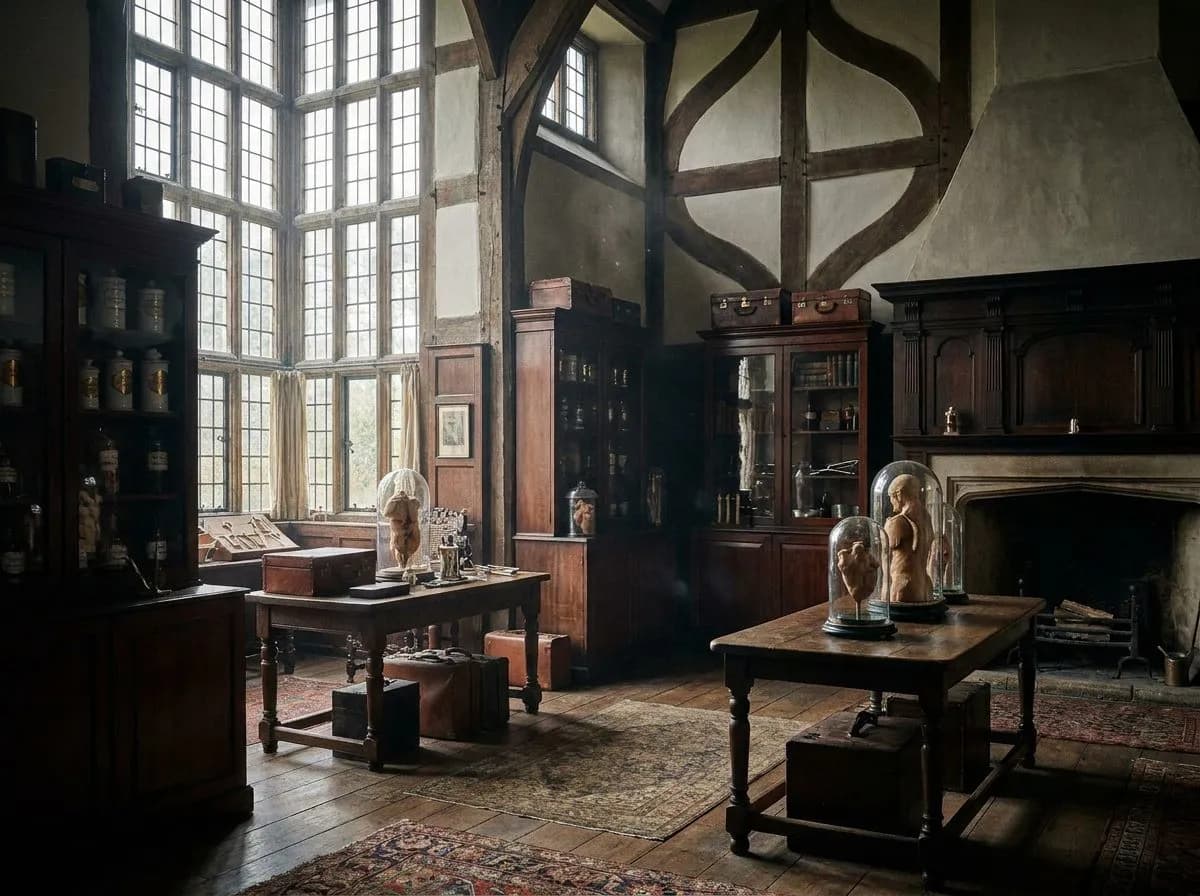
The brass plaque beside the door is small enough to miss: a surname, no museum signage, nothing to suggest that behind the black-painted Georgian facade sits one of London's most peculiar private collections. Ring the bell on a weekday afternoon and a private medical collection in a London townhouse and old leather. Mahogany cabinets line the walls from floor to ceiling, each shelf crowded with glass-stoppered apothecary jars, ivory-handled amputation saws, and brass syringes that gleam under the dim overhead lights. This is not a city guide staple, not a place you stumble upon. It exists for those who seek it out.
The house and its keeper
The four-story townhouse sits a few minutes' walk from Russell Square, tucked into a terrace that survived the Blitz and the subsequent decades of Bloomsbury redevelopment. The curator acquired the property in the early 1990s after retiring from a London teaching hospital, intending it as both residence and repository for a collection begun decades earlier. He speaks about trepanning drills and obstetric forceps with the same clinical detachment he once brought to post-mortem reports, narrating each instrument's function and historical context without sentiment or squeamishness.
Visits are by appointment only, by appointment only; contact details and visit length not publicly verified—enough time to tour all four floors without rushing, but not so long that attention flags. He requests no flash photography, partly to preserve the wax models and partly, one suspects, because the sharp burst of light would feel intrusive in rooms this hushed and particular.
The parlor and dispensary
The ground-floor parlor functions as a kind of apothecary shrine. Shelves hold rows of glass jars labeled in faded copperplate: mercury compounds, bismuth salts, tincture of opium, arsenic trioxide. Some still contain desiccated powders or crystalline residues; others are empty save for the staining on the glass. A long wooden counter, salvaged from a Clerkenwell pharmacy that closed in the 1950s, displays brass scales, pestles worn smooth by decades of grinding, and ceramic drug jars decorated with Latin inscriptions.
Light filters through lace curtains, casting a honeyed glow across the floorboards. The curator explains that many of the jars came from estate sales and auction houses across the southeast; he has spent years piecing together provenances, matching maker's marks to long-defunct suppliers, cross-referencing ledgers with hospital records. It is detective work as much as curation, an exercise in forensic patience.
Surgical instruments and their histories
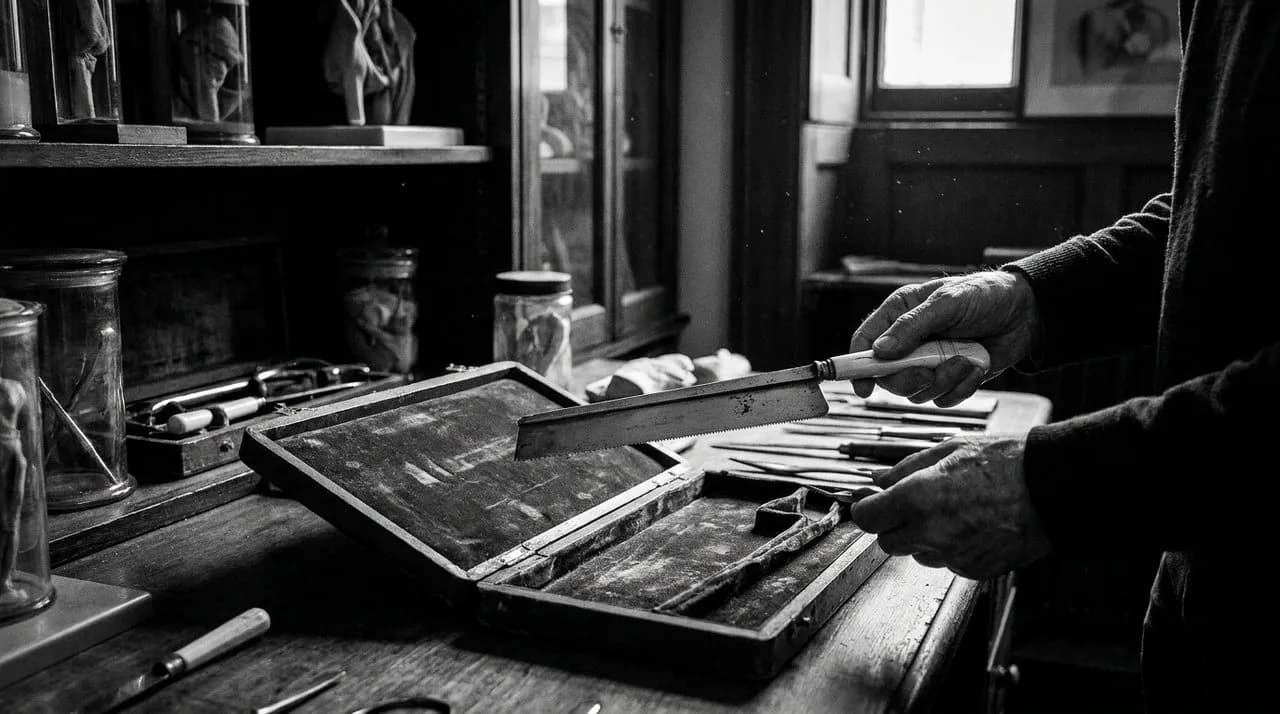
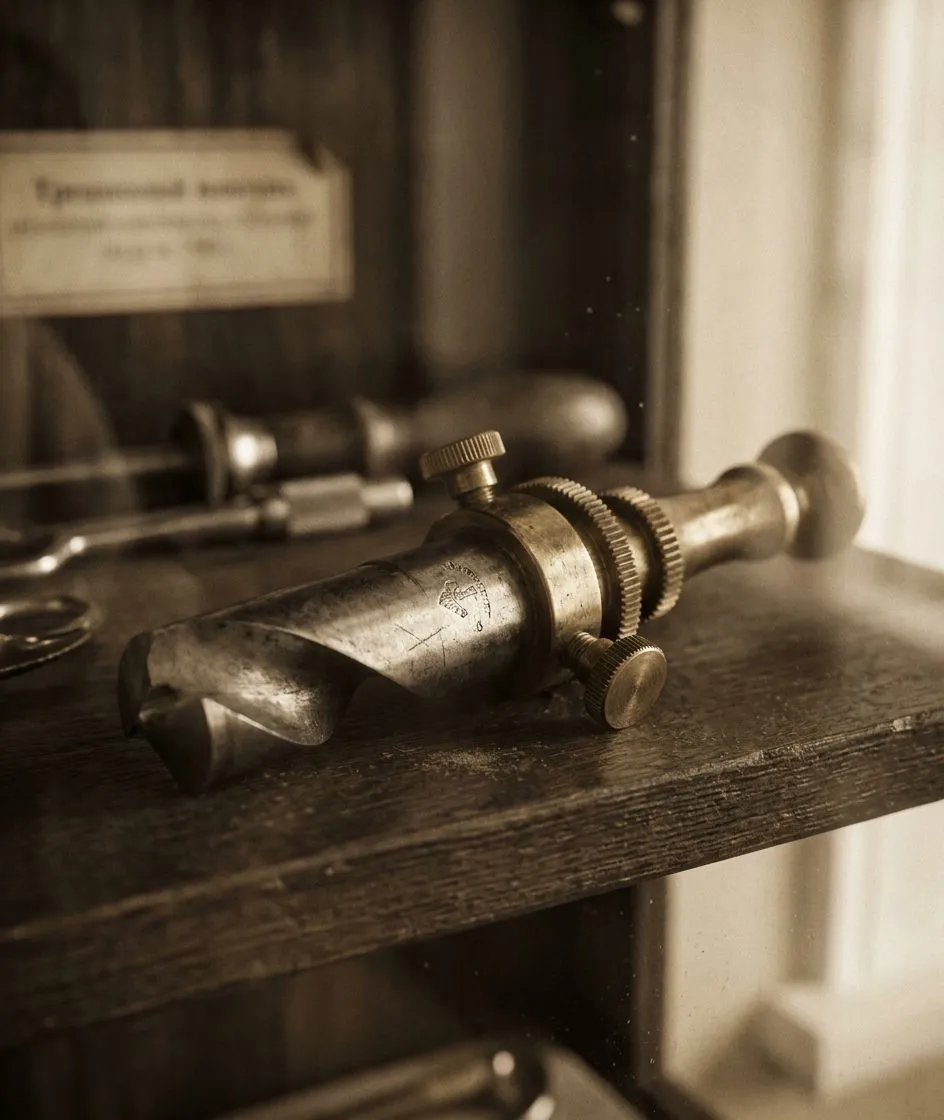
The second floor is dedicated to surgical tools, arranged chronologically in glass-fronted cabinets. Here are amputation saws with ivory handles, scalpels in velvet-lined cases, bone drills that resemble carpenter's tools more than medical instruments. The obstetric forceps displayed in the central cabinet belonged to a Harley Street physician and are accompanied by the original leather instrument case and a handwritten patient log that records dozens of deliveries between 1847 and 1863. The curator does not open the log during visits—it is too fragile—but he recounts selected entries from memory, noting complications, outcomes, the terse annotations that reveal the physician's evolving technique.
Each cabinet tells a story about pain and its management, about the incremental march from barbarism to something approaching precision. Anesthesia arrived partway through the collection's chronological span, and the instruments reflect that shift: earlier tools are blunt, built for speed; later ones are finer, more specialized. The curator does not romanticize the past. He speaks matter-of-factly about mortality rates, about the surgeon's need for physical strength before chloroform, about the smells and sounds that would have filled an operating theater.
Anatomical wax models under glass
The third floor houses the anatomical models: wax reproductions of dissected limbs, cross-sections of organs, a flayed torso that reveals musculature in startling detail. They rest under bell jars or in shallow wooden trays, their colors still vivid—reds and pinks and yellows that catch the afternoon light. These were teaching aids, created in the 18th and 19th centuries when cadavers were scarce and preservation techniques unreliable. The craftsmanship is extraordinary: individual blood vessels rendered in fine wax threads, tendons modeled with anatomical accuracy.
Some visitors find this floor unsettling. The curator is unsurprised. He notes that our squeamishness is a luxury, a sign of how far removed most of us are from the mechanics of the body. In an earlier era, these models would have been marvels, tools that allowed students to study anatomy without the stench of decay or the risk of disease. They were practical objects, though they have become curiosities in an age of MRI scans and digital imaging.
The study and recent acquisitions
The top floor serves as the curator's private study, though he occasionally allows visitors a glimpse if time permits. Shelves sag under the weight of medical texts and auction catalogs; a desk is piled with correspondence and condition reports. Weekday afternoons between two and four o'clock are his preferred appointment windows, because mornings are reserved for cataloging recent auction acquisitions—items that arrive in cardboard boxes, wrapped in newspaper, often mislabeled or misunderstood by the sellers.
He works methodically, researching each piece, documenting its origin and condition before deciding where it belongs in the collection. Some items never make it to the cabinets; they are too damaged, too common, or too uncertain in provenance. Others fill gaps he has been trying to close for years. The process is slow, obsessive, and entirely self-funded. There are no grants, no institutional backing, just one man's determination to preserve a slice of medical history that might otherwise be scattered or lost.
Why it matters in late 2026
In an era when medicine feels increasingly algorithmic—diagnoses suggested by software, surgeries performed by robots—the collection offers a tactile reminder of how recently the field was improvised, experimental, and profoundly human. These instruments were wielded by practitioners who learned through trial and catastrophic error, who operated without the safety nets of antibiotics or blood transfusions. The townhouse preserves not just objects but the texture of that uncertainty.
It is not a comfortable collection. It does not offer the polished narratives of a major museum or the interactive flourishes visitors have come to expect. What it does offer is specificity: the weight of an amputation saw in your hand, the curator's stories about individual instruments and the lives they touched, the quiet of a Georgian parlor where history feels近 and immediate. For those willing to make the appointment and spend an hour among these relics, it is a singular experience.
Practical notes
The collection is housed in a private townhouse near Russell Square, Bloomsbury. The nearest Underground station is Russell Square (Piccadilly line); limited street parking is available but not recommended. Appointments must be arranged seven to ten days in advance via email or post; contact details are not widely published, so inquire through specialist medical history networks or academic contacts. Visits are limited to sixty minutes, weekday afternoons preferred. The townhouse has narrow staircases and is not wheelchair accessible. Bring curiosity and a tolerance for the macabre; leave flash cameras and expectations of institutional polish at the door.
Tags: #ForgottenLondon #BloomsburySecrets #MedicalHistory #TheOddEdit #PrivateCollections #GeorgianLondon #RussellSquare #AnatomicalCuriosities #SurgicalInstruments #LondonByAppointment #HiddenMuseums #VictorianMedicine #CuratorsLife #Late2026 #CitySecrets
Sources consulted: History of Medicine · Russell Square · London Museums · Time Out London Museums · Georgian Architecture
All trademarks are the property of their respective owners.