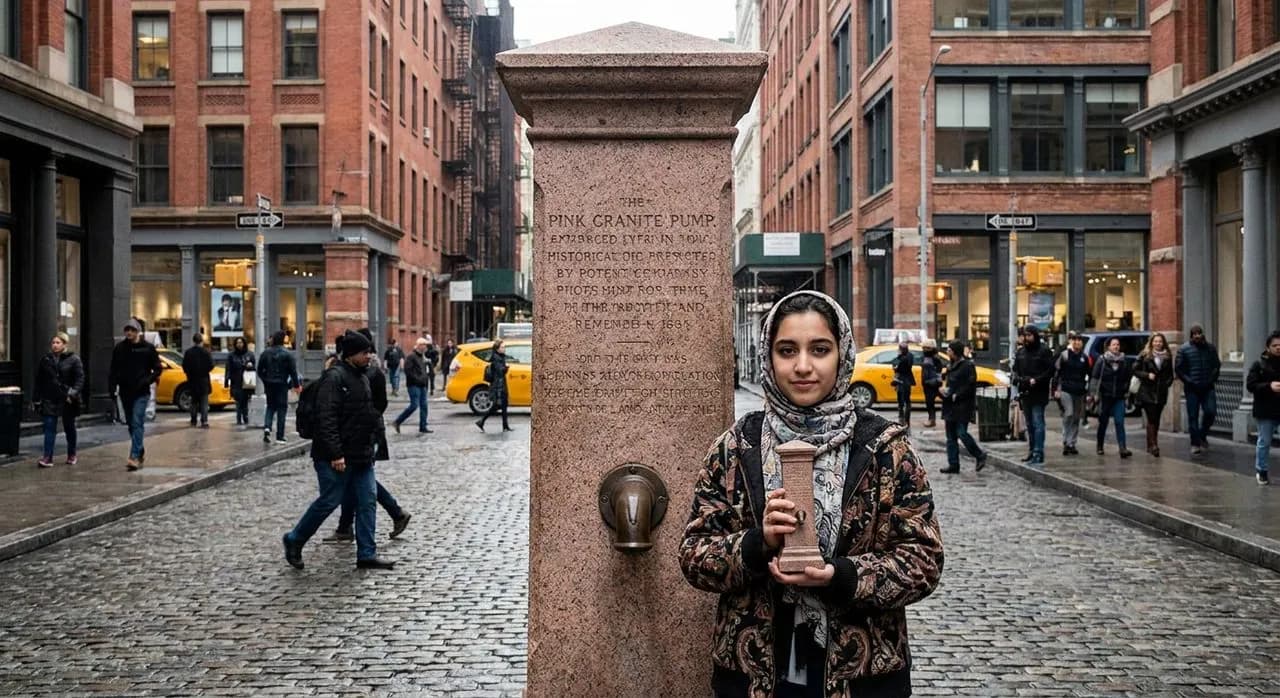
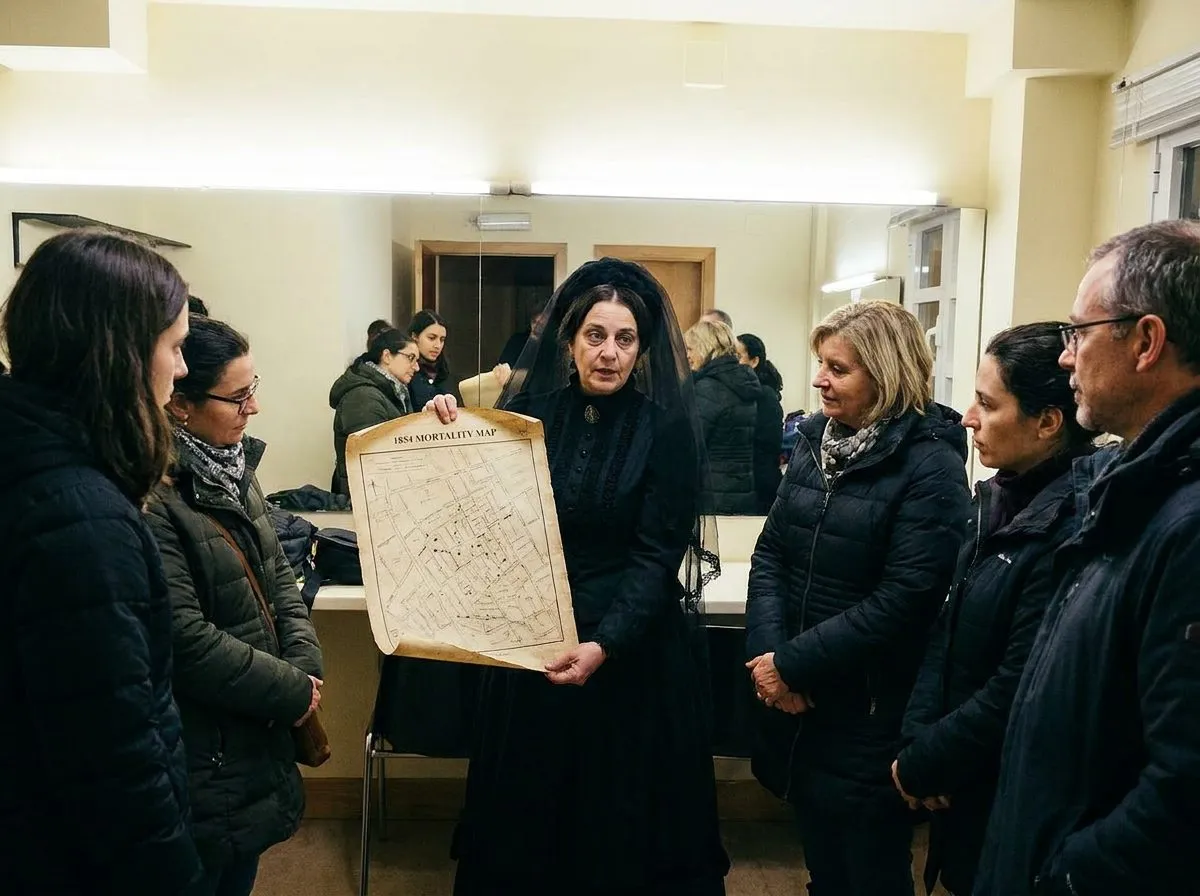
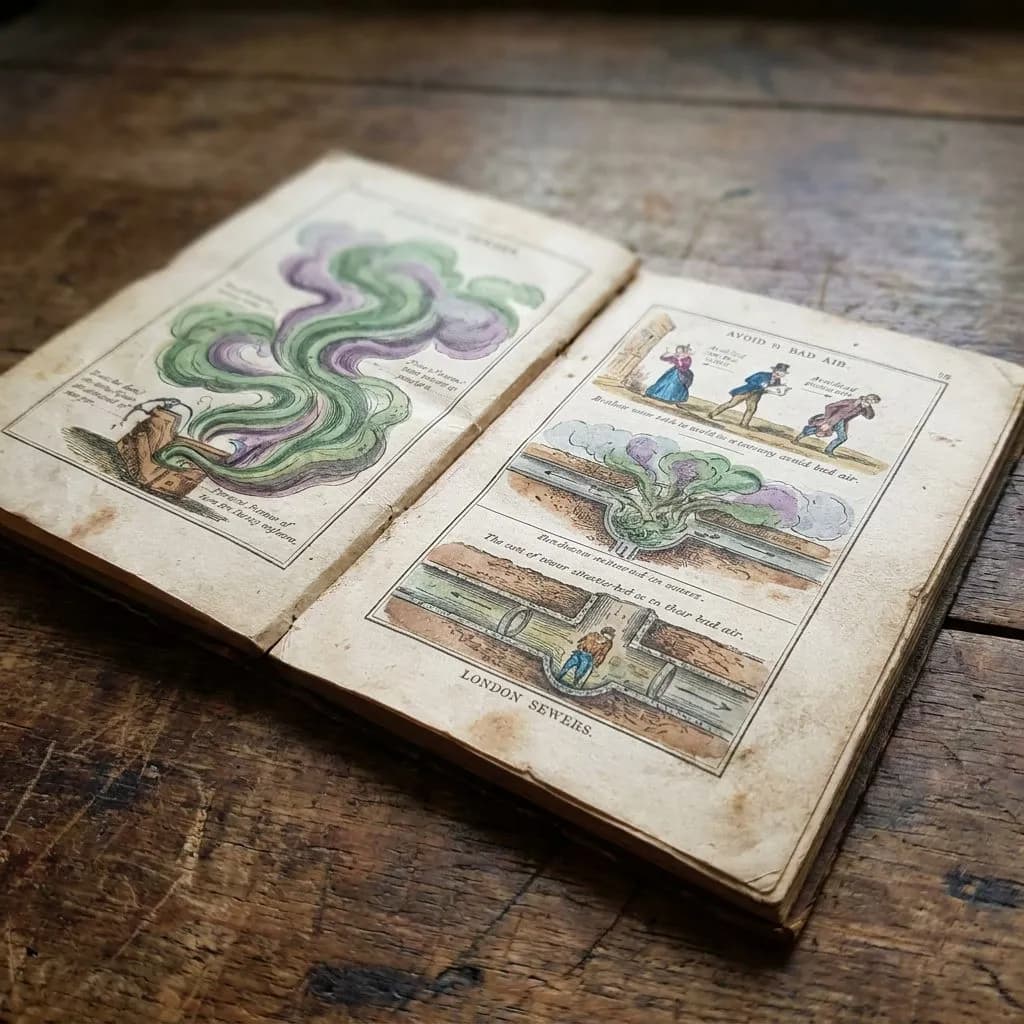
The memorial on Broadwick Street marks the site of the Broad Street pump that killed 616 people in ten days during August 1854. Most tourists walk past without noticing. But on Thursday evenings, a small group gathers here—never more than twelve—to follow a public health historian in Victorian mourning dress through Clerkenwell and Soho, retracing the cholera outbreak that changed epidemiology forever. The historian carries rolled Victorian mortality maps, water company ledgers, and yellowed miasma theory pamphlets. This is not a ghost tour. It is something quieter and stranger: a field trip through invisible graveyards.
The Pump That Stopped an Epidemic
The tour begins at the Broad Street pump replica, installed in the 1990s near its original location on what is now Broadwick Street. The historian times the Thursday evening departure to reach this stop at precisely 7:15pm, when the day's last light catches the pink granite at an angle that makes the stone glow faintly against the darkening shopfronts. It is a small theatrical choice, but effective. The guide explains how Dr. John Snow traced the outbreak to this single contaminated source, disproving the prevailing miasma theory by mapping death clusters around the pump.
The pump handle was removed on September 8, 1854, and the outbreak subsided within days. What remains unspoken in most histories: the hundreds already buried, many in unmarked pits that now lie beneath office buildings, luxury flats, and Crossrail tunnels. The historian sets this context carefully, then unfurls the first map. Participants lean in, breath misting in the autumn air. The guide often notes that the pump's contamination came from a single source—a leaking cesspit at number 40 Broad Street, where a baby's soiled nappies had been washed just days before the outbreak began. The intimacy of that detail—domestic laundry becoming mass death—silences even the most talkative groups.
Mapping the Dead Beneath Crossrail
The guide maintains a meticulously cross-referenced database of more than 400 cholera victims, their names paired with burial locations gleaned from parish records, water company archives, and surveyors' notes. Many of these graves lie directly beneath current Crossrail construction corridors. At each stop, the historian pulls up the database on a battered tablet, scrolling through names: Sarah Lewis, age 29, buried near what is now Tottenham Court Road station. William Eley, infant, interred beneath the Farringdon platforms.
The data is sobering, specific. It transforms the walk from historical curiosity into something closer to pilgrimage. Participants photograph the screen, scribble notes. One regular attendee, an architect, has started overlaying the burial map onto her firm's infrastructure proposals. The historian does not editorialize. The numbers speak clearly enough. During particularly cold evenings, the guide will mention how cholera deaths peaked in late summer heat, when contaminated water sources festered—a grim counterpoint to the crisp air now surrounding the group.
The John Snow and the Dot Map Overlay
Midway through the route, the group stops at The John Snow pub on Broadwick Street, named for the physician who cracked the case. Inside, framed on the wall, hangs an 1854 dot map showing the density of deaths radiating from the pump. Each black mark represents a life. The clusters are unmistakable. Here, the historian produces a transparency overlay showing current street alignments, Crossrail routes, and modern water mains. Laid atop Snow's original map, the overlay reveals how little—and how much—has changed.
The pub itself is warmly lit, worn wood and brass taps, the kind of place that fits weekend plans without trying too hard. Regulars nurse pints at the bar, barely glancing at the tour group huddled around the map. The historian points out discrepancies: streets renamed, alleyways filled in, courtyards paved over. The transparency flutters slightly as someone opens the door. A gust of cold air, the faint smell of hops and rain-damp wool. The guide allows several minutes here for participants to study the overlay in silence, tracing their own streets, their own commutes, checking whether their office or flat sits atop the epidemic's footprint.
Unmarked Plague Pits and Office Lobbies
Three stops on the route mark plague pits that never received memorials. The historian leads the group to a glassy office tower near Clerkenwell Road, gestures at the polished lobby. Beneath the marble floor: an estimated seventy-eight cholera victims, interred in a mass grave purchased by the parish when individual plots ran out. No plaque. No acknowledgment. Just security guards and potted ferns.
At the second site—a co-working space on Farringdon Road—the guide recounts how construction crews in 2018 uncovered bones during foundation work. The remains were quietly reinterred elsewhere. Records are vague. The third pit lies beneath a luxury residential building. The historian does not name it directly, but regulars on the tour know. It is a strange intimacy: walking over graves that no one else sees. The guide notes that Victorian burial practices during epidemic peaks often meant bodies were interred within hours of death, wrapped in lime-soaked shrouds, with minimal ceremony. Families received no map, no marker, only a verbal assurance of approximate location.
Clerkenwell's Hidden Water History
Between the Soho pump site and the Farringdon burial grounds, the route winds through Clerkenwell's narrow streets, where water tells a different story. The historian pauses at Clerkenwell Green to explain how this neighborhood took its name from the Clerk's Well—a natural spring that supplied clean water for centuries before being buried beneath Victorian development. Iron gratings in the pavement now mark where medieval Londoners once drew drinking water, a stark contrast to the contaminated wells that killed thousands just streets away in Soho.
The guide produces water company maps from the 1850s, showing the patchwork of private suppliers whose competing pipes created a deadly lottery: cholera-free water on one street, contaminated supply on the next. Clerkenwell straddled the boundary between the New River Company and the Southwark and Vauxhall Company, the latter drawing its water from sewage-polluted Thames reaches. The historian unfolds a large format map here, weighted at the corners with smooth river stones collected from the Thames foreshore. Participants crouch on the pavement, tracing pipe routes with gloved fingers as evening commuters navigate around them. The well itself, rediscovered in 1924, sits behind a small glass window in a building on Farringdon Lane—the tour passes it en route to the final stop, though the guide notes it is best viewed during daylight hours.
Victorian Sanitation and the Farringdon Finale
The tour concludes at a pub near Farringdon stationwhere the group discusses Victorian sanitation infrastructure over pints. The historian sheds the mourning coat, answers questions, and passes around laminated excerpts from parliamentary sanitation reports. The tone shifts from solemnity to curiosity. Someone asks about the Crossness Pumping Station archives, mentioned earlier. The guide explains that the full collection is viewable by appointment, though most of the cholera-era documents are fragile, handled only by archivists in gloves.
Conversations sprawl: modern waterborne disease, infrastructure decay, the politics of public health. The historian listens more than lectures at this stage, occasionally correcting a date or clarifying a mechanism. Outside, Farringdon Road hums with evening traffic. Inside, the group lingers over second rounds, reluctant to return to the ordinary city. The dead, for two hours, have been made visible.
Practical notes
Tours depart Thursday evenings from the Broad Street pump memorial on Broadwick Street, London W1F (nearest Tube: Oxford Circus or Tottenham Court Road). The two-hour route covers roughly two miles at a moderate pace; wear comfortable shoes and weatherproof layers. Booking is required and limited to twelve participants per tour; reserve through the guide's website. The walk is mostly accessible, though some stops involve narrow pavements. Bring a notebook if you like; the historian encourages questions. The final pub stop is optional. Tours run year-round; late 2026 dates open for booking in early autumn. Verify current schedule and accessibility details directly.
Tags: #ForgottenLondon #CholераHistory #ClerkenwellWalks #TheOddEdit #LondonHistory #PublicHealthHistory #VictorianLondon #WalkingTour #SohoHistory #JohnSnow #UrbanArchaeology #HiddenLondon #LondonWalks #HistoricalTours #Farringdon
Sources consulted: 1854 Broad Street Cholera Outbreak · Clerkenwell, London · City of London Official Site · The Guardian - London · Cholera Outbreaks and Pandemics
All trademarks are the property of their respective owners.