If you are coming to New York for the 2026 US Open, a Forest Hills detour can work best as a short, respectful history stop rather than a second venue day. The official 2026 tournament calendar runs August 23 through September 13, with singles main-draw play scheduled to begin August 30, so build any side trip around the session you actually hold or hope to attend at the modern US Open grounds. Forest Hills matters because the US Open’s official history connects the tournament to the West Side Tennis Club before the event moved to the USTA National Tennis Center in Flushing Meadows. Treat the neighborhood as living space, not a museum. Verify the US Open event schedule, transportation guidance, A-Z information, and prohibited-items list close to travel, then decide whether Forest Hills fits before your session, on a lighter qualifying day, or as a separate morning.
Text Karpo to add Forest Hills tennis history to your US Open day without overloading it.

Why Forest Hills Belongs in the Same Conversation
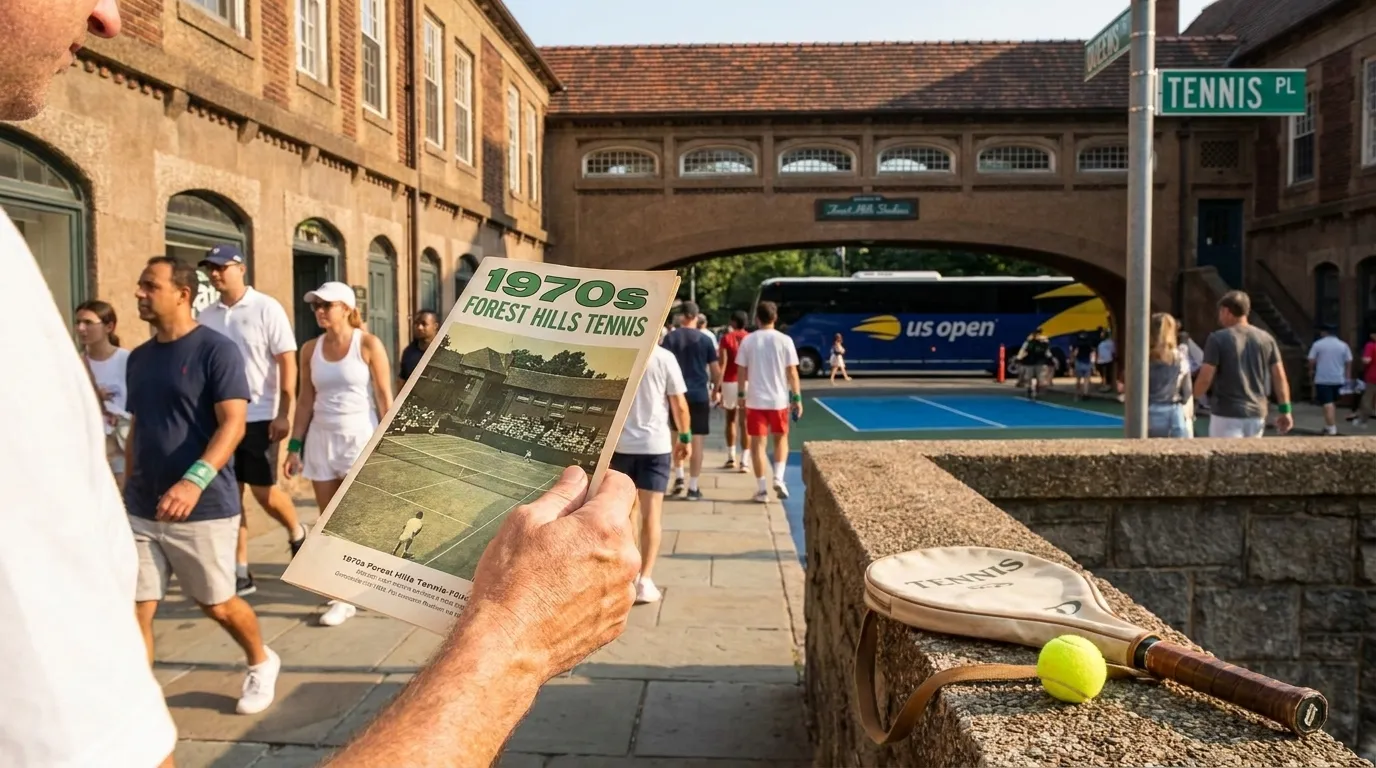
The modern US Open is inseparable from Flushing Meadows, but the tournament’s New York memory stretches beyond its current gates. The official US Open history records Forest Hills and the West Side Tennis Club as part of the championship’s earlier home, before the move to the USTA National Tennis Center. That makes the neighborhood a useful place to think about continuity: grass-court tradition, the rise of a larger public tournament environment, and the way a championship can outgrow one setting without erasing it.
Keep the distinction clean. Documented history is that Forest Hills was part of the tournament’s past and Flushing Meadows is the current US Open site. Interpretation is what you bring to the walk: the contrast between a residential tennis-club setting and today’s larger tournament campus; the shift from an older New York sporting geography to a modern event operation; the feeling of seeing a name from tennis history embedded in an ordinary neighborhood. That interpretation can be rewarding, but it should not become a claim about access, preservation, or what you will be able to see on a given day.

A Detour, Not a Trespass
The right mindset is simple: plan for a public-facing visit unless you have confirmed otherwise through an official channel. The West Side Tennis Club is not the same thing as the current US Open venue, and a tennis-history stop should not assume entry, tours, event access, restrooms, seating, or staff availability. For many fans, the respectful version is a brief neighborhood walk, a look at the exterior context from public areas where permitted, and a few minutes to connect the official history to the place.
This restraint is not a downgrade. It is what keeps the stop comfortable for residents, club users, and travelers. Forest Hills is not a theme park corridor built around tournament visitors. Keep voices low near homes, avoid photographing people closely, do not block sidewalks or driveways, and skip any doorway, gate, or path that is not clearly open to the public. If an official public event or access opportunity happens to be available when you travel, evaluate it separately and confirm details directly before you build the day around it.
Where It Fits Around the 2026 Tournament Calendar
The 2026 US Open calendar gives fans several possible rhythms, but the safest planning starts with the official schedule rather than a fixed fantasy day. The event calendar runs from August 23 through September 13, and singles main-draw play is listed to begin August 30. Before main-draw sessions, some travelers may have more flexibility; during the busiest days, every extra stop competes with security, transit time, weather, meals, and the possibility of long matches or schedule changes.
If you have a reserved session at the US Open, put that obligation first. A Forest Hills stop before a day session can be satisfying only if you leave a margin generous enough for transit changes, bag checks, walking time, and personal delays. Before a night session, the detour may feel easier, but do not let it crowd dinner, rest, or arrival planning. If you are traveling with children, older relatives, or anyone who needs a slower pace, consider placing Forest Hills on a non-session morning so the history stop remains calm rather than tactical.
- Best fit: a separate morning when you are not racing a ticketed session.
- Possible fit: before a night session, if your group is comfortable with extra transit and walking.
- Riskier fit: before an early day session, especially if you are carrying bags or relying on tight connections.
- Poor fit: any day when weather, fatigue, luggage, or mobility needs already make the US Open itself demanding.
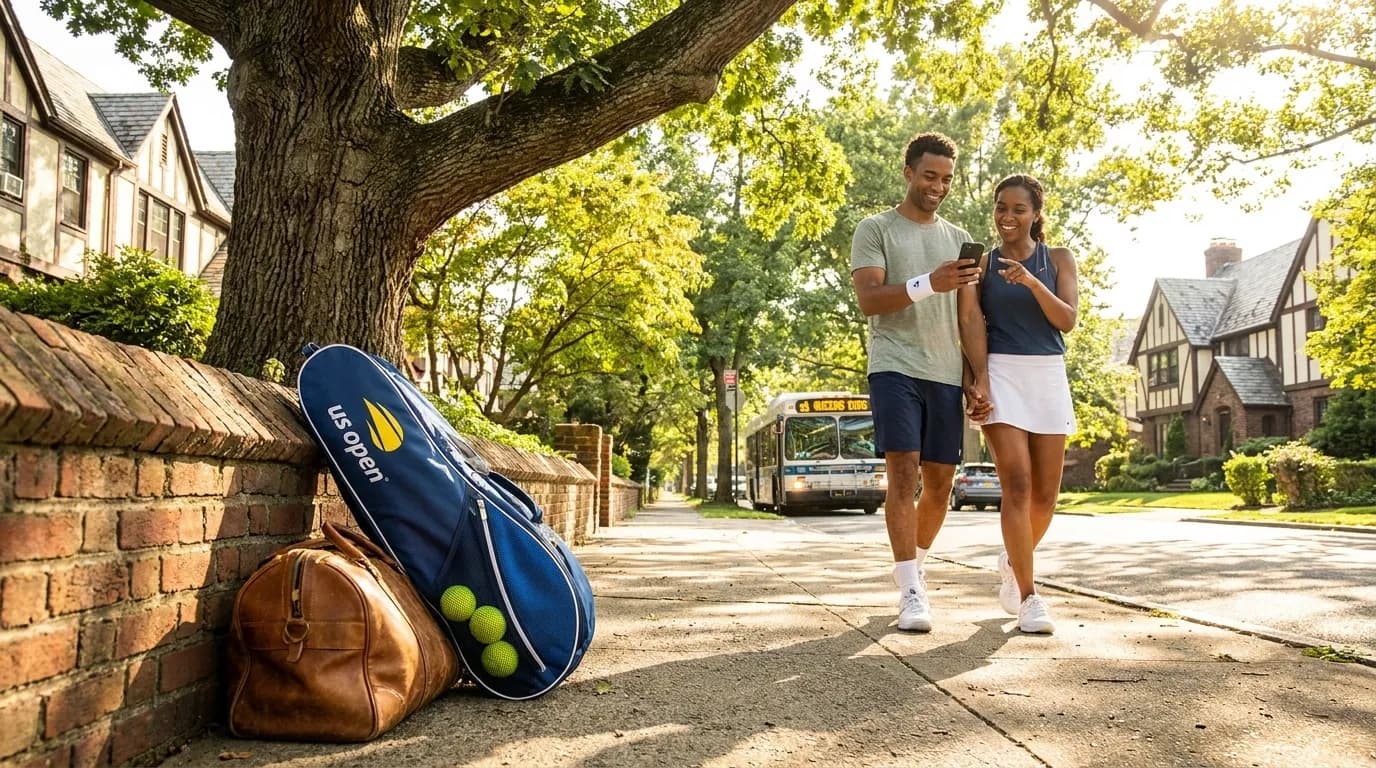
Linking Old and New Tennis New York
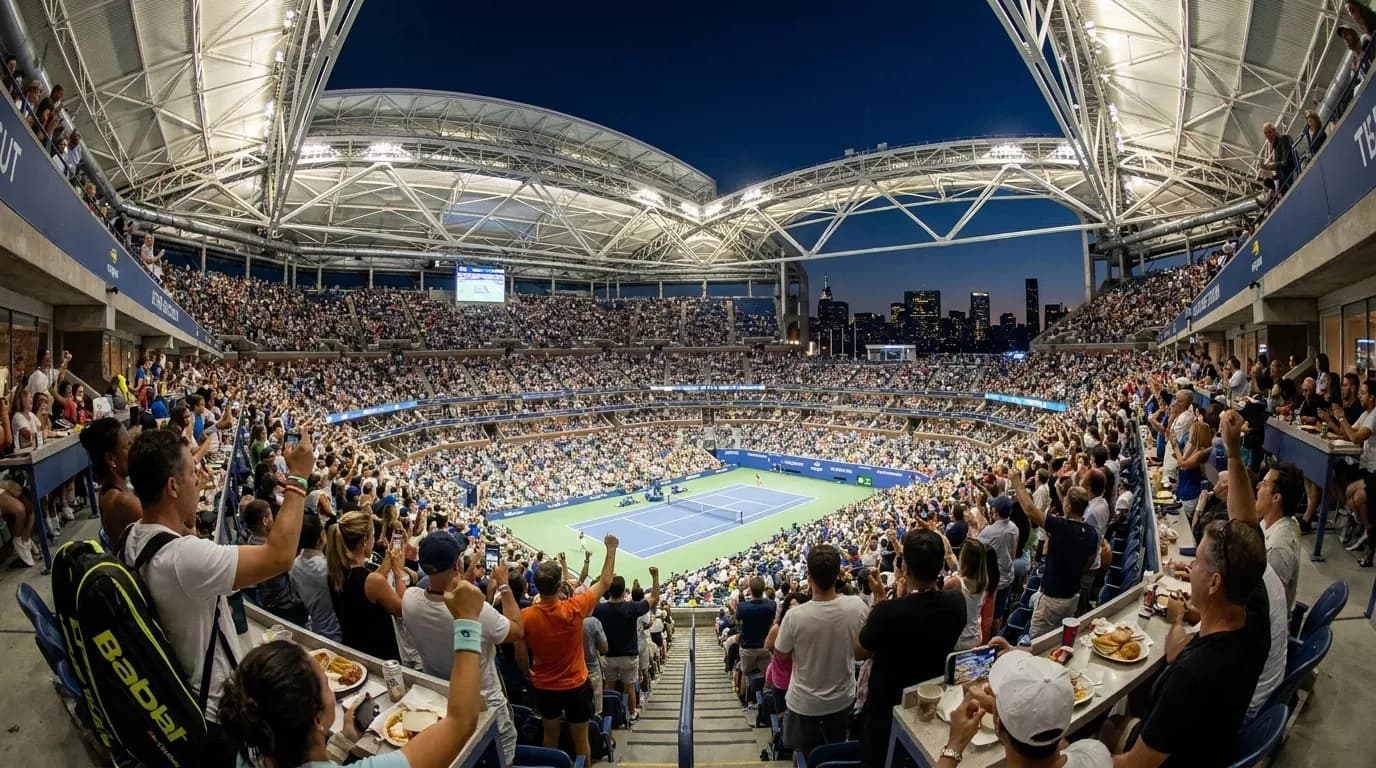
The most elegant way to use the detour is as a before-and-after story. In Forest Hills, you are thinking about an earlier championship setting associated with the West Side Tennis Club. At the modern US Open grounds, you are entering the current tournament operation at the USTA National Tennis Center in Flushing Meadows. The distance between the two is part of the lesson: the tournament did not merely change buildings; it changed scale, infrastructure, and the kind of visitor experience fans now expect.
Do not over-script the contrast. You do not need to rank one era above another or claim that a short visit reveals the whole past. Instead, give yourself a simple frame: Forest Hills for origin and atmosphere, Flushing Meadows for the living tournament. That frame helps when traveling with casual fans who may not know the chronology. It also prevents the day from becoming a scavenger hunt for restricted views. The point is to arrive at the US Open with a better sense that New York’s tennis geography has layers.
Travel Light, Because the Main Venue Has Rules
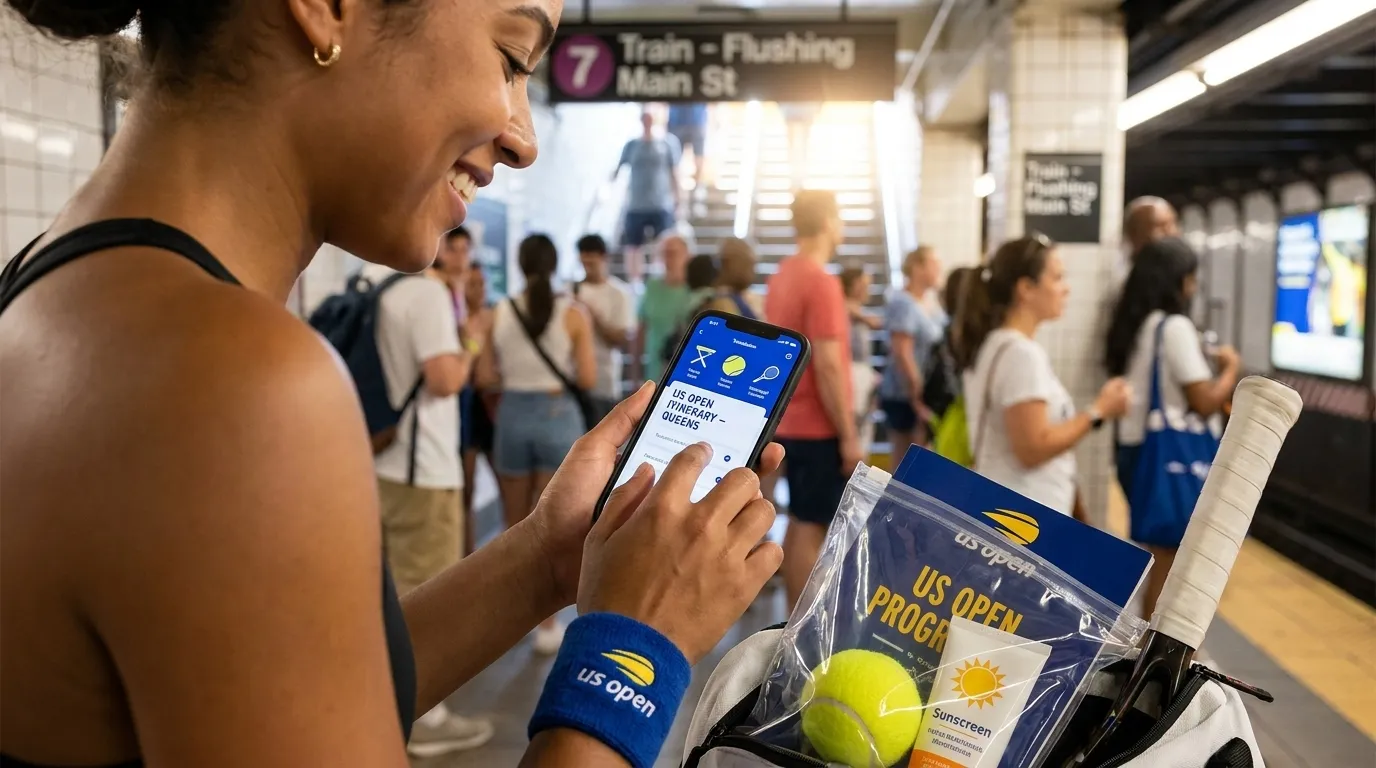
A Forest Hills stop becomes much easier when you are not managing excess belongings. The US Open publishes prohibited-items guidance and an A-Z visitor guide, and those pages should govern what you carry for the tournament portion of the day. Policies can change, and gate procedures are not something to guess from memory or from last year’s advice. Before you leave your hotel or apartment, compare your bag, camera gear, food, bottles, umbrellas, and any specialty items against the current official lists.
This matters because a history detour can tempt travelers to bring extra layers, purchases, or camera equipment that later complicates venue entry. If the Forest Hills portion is only a short walk, keep it lean. Comfortable shoes, weather-appropriate clothing, a charged phone, and the minimum items allowed for your US Open session are more useful than a full daypack. If you need luggage storage, medical accommodations, or other services, confirm those through current official or provider channels rather than assuming availability.
A Respectful Mini-Itinerary
Think in blocks rather than exact minutes. Start with the latest US Open schedule and transportation directions, then check current local transit or rideshare estimates for the Forest Hills portion. Build the detour around daylight, your group’s walking comfort, and the session you are attending. If the weather turns difficult, it is better to shorten the history stop than to arrive at the US Open tired, late, or carrying damp belongings.
- Before travel: read the official US Open history page so Forest Hills is more than a photo stop.
- Morning or early afternoon: visit Forest Hills as a quiet neighborhood detour, staying in public areas unless access is clearly confirmed.
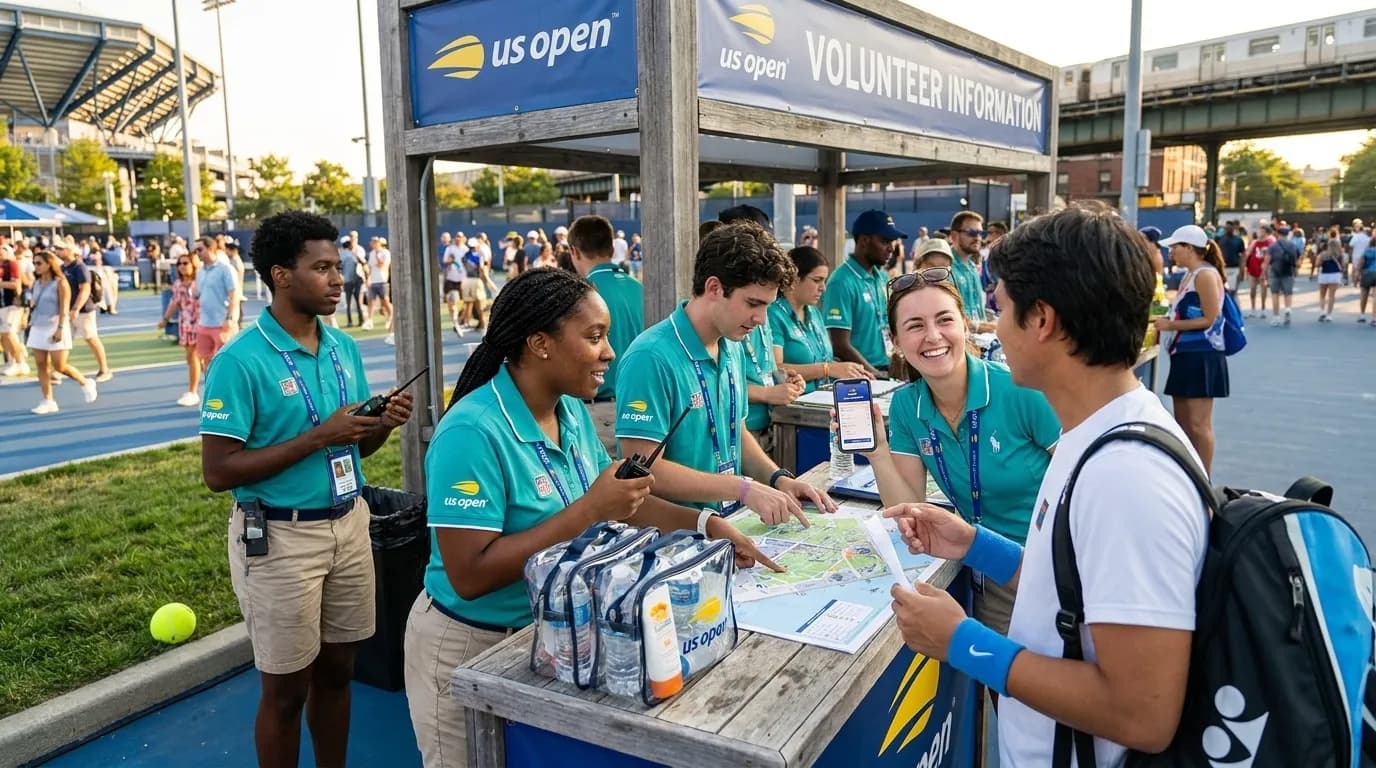
- Transition: check current directions to the USTA National Tennis Center and allow extra time for connections, walking, and entry procedures.
- Before the gate: review the US Open A-Z guide and prohibited-items page one more time, especially if you bought or picked up anything during the detour.
- At the tournament: let the older setting inform the modern one, but keep attention on the day’s official schedule and posted venue information.
Practical Notes
Use Forest Hills as context, not a guaranteed attraction. Recheck the official US Open event schedule for the date you plan to attend; confirm transportation and directions to the current venue; read the A-Z guide and prohibited-items list before packing; and verify any Forest Hills access, event, dining, or service details with the relevant current source before relying on them. If the detour starts to threaten your arrival window, skip it or move it to another day. The most satisfying version is unhurried: a brief, considerate look at a documented chapter of US Open history, followed by a well-prepared arrival at the tournament’s present home.
Tags: #USOpen2026 #Tennis #NewYork #Queens #FlushingMeadows #KarpoFinds #Karpo #ForestHillsTennis #USOpenHistory #QueensTennis
Sources consulted: usopen.org — Official reference · usopen.org — Official reference · usopen.org — Official reference · usopen.org — Official reference · usopen.org — Official reference
All trademarks are the property of their respective owners.
Ask Karpo first
Ask Karpo for a history-minded route that respects private spaces and keeps your match timing realistic.