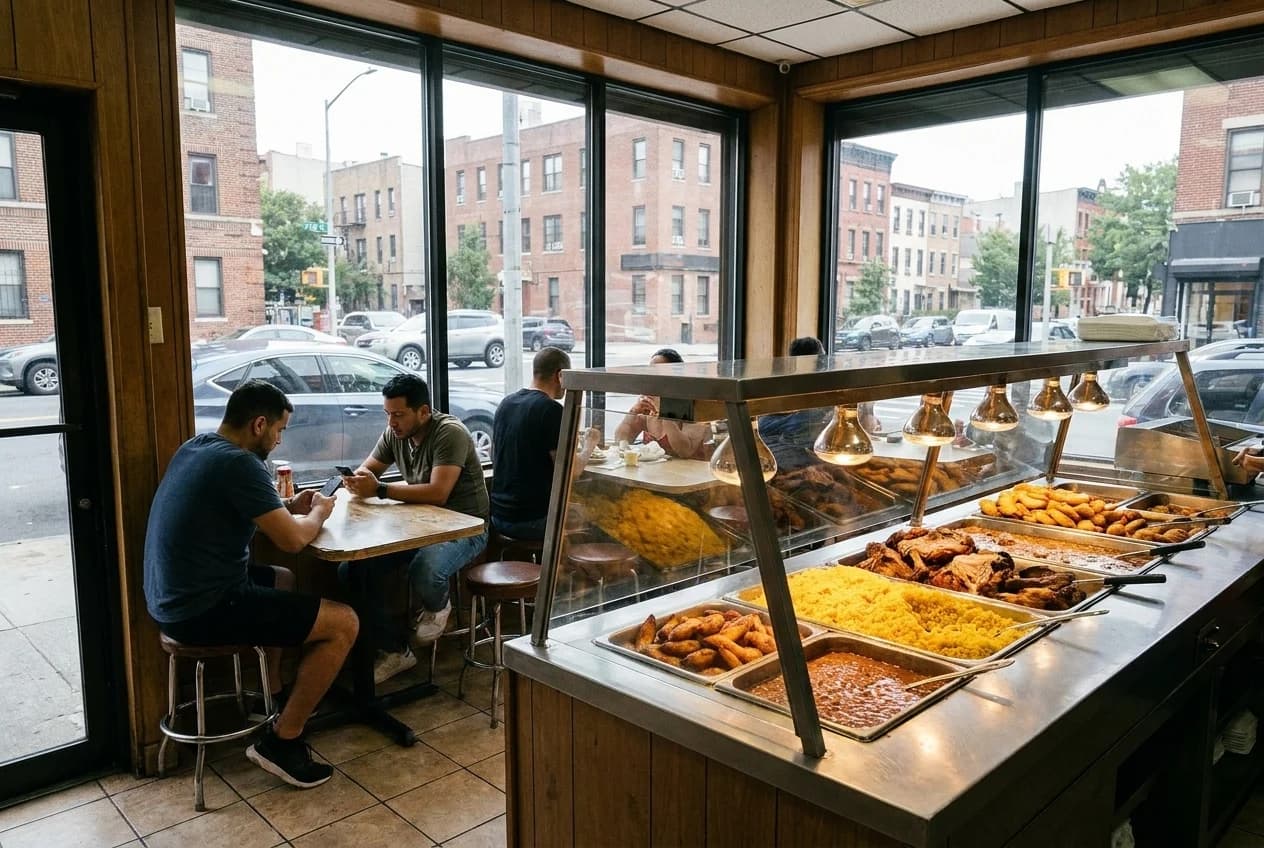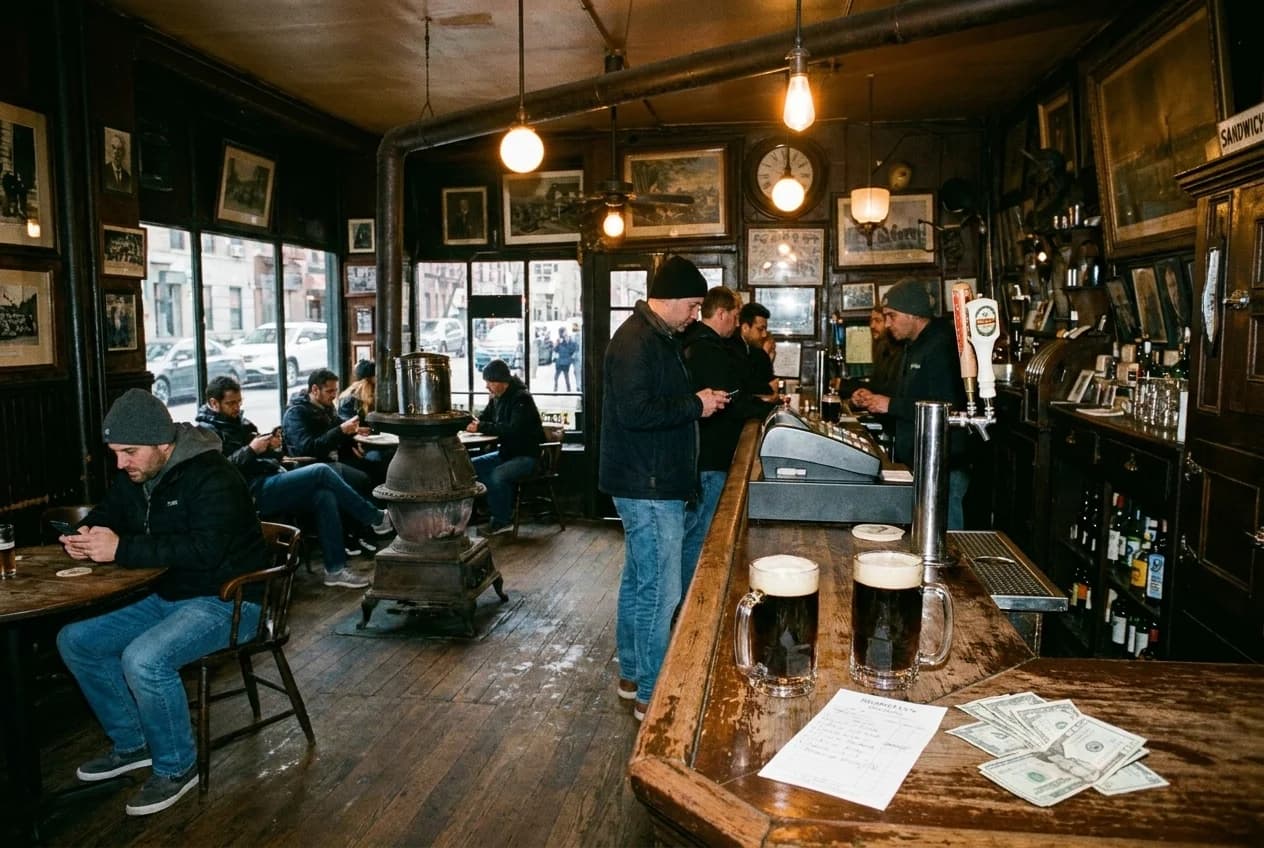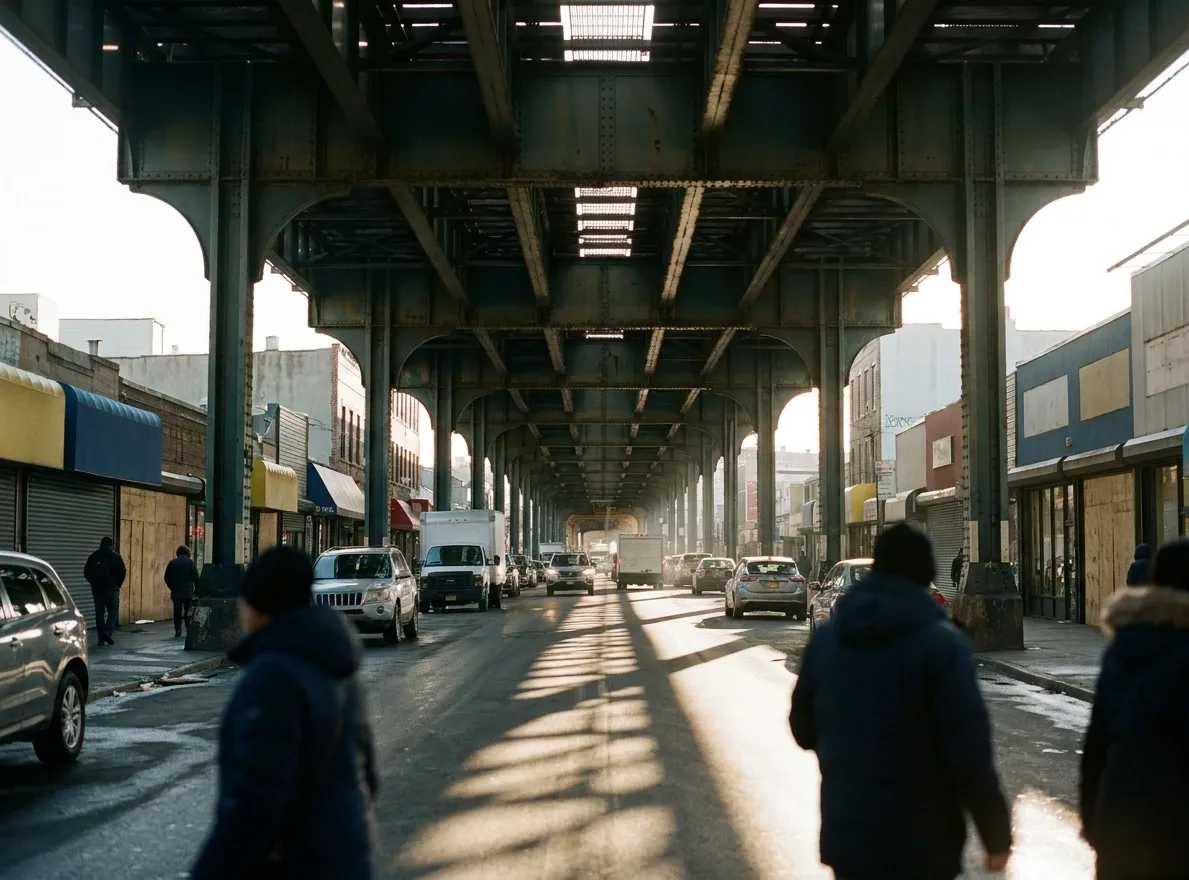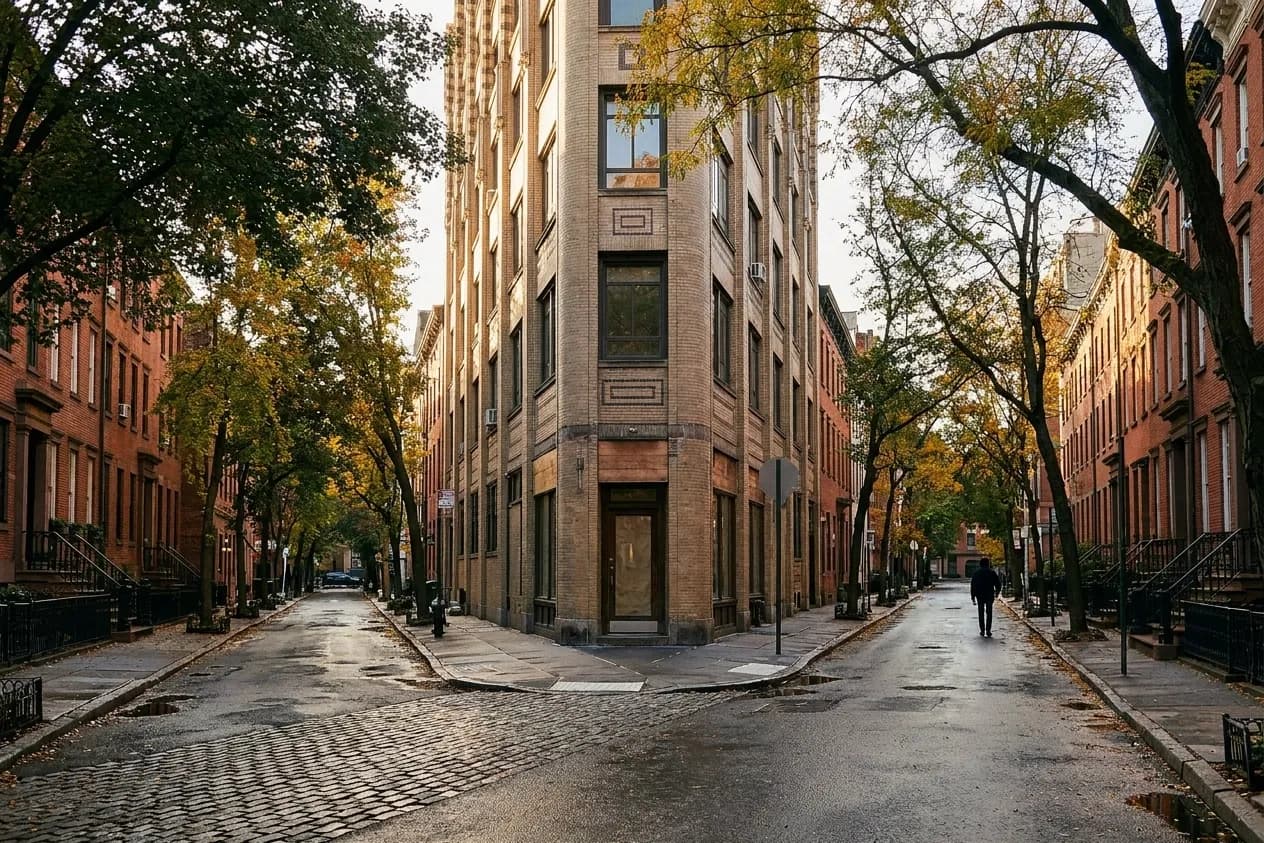
Manhattan's grid is famously easy: numbered streets run east to west, numbered avenues run north to south, and if you can count you can navigate. Then you walk into the West Village and the whole system quietly stops working. West 4th Street crosses West 10th, West 11th and West 12th. Waverly Place manages to intersect itself. Streets bend, change name mid-block, and occasionally end for no visible reason. This is not a quirk to be endured on the way to dinner - it is the single fact that explains why eating here feels different from eating twenty blocks north.
In a neighbourhood where the addresses do not help you, the useful question is not what is nearest but what is actually round the next corner, which is a thing maps are bad at describing. Tell Karpo roughly where you are and what you feel like, and let it deal with the fact that West 4th and West 11th are, absurdly, the same intersection.
Why the streets are like this
The short version is that this neighbourhood was already built when the grid was imposed on the rest of the island in 1811. Greenwich Village was a settled village with its own lanes, property lines and cow paths, and its landowners had enough standing to be exempted. So the grid stops at the edge of it and the older, organic layout survives underneath - which is why the streets follow the logic of a small eighteenth-century settlement rather than a nineteenth-century plan.
That history is now a commercial fact. Blocks here are short, irregular and frequently triangular, which produces an unusual number of corner plots and an unusual number of very small ground floors. Small ground floors are cheap to fit out and expensive to scale, so they attract single-room, owner-operated restaurants rather than groups. The neighbourhood's whole character as a place to eat comes out of a decision made about land in 1811.
What that means for finding dinner
Three practical consequences. First, distances are much shorter than they look on a phone - a route that appears to zig-zag is often a ninety-second walk, because the blocks are a fraction of the length of a Midtown block. Do not rule out a place because the map draws four turns to get there.
Second, walking is genuinely better than searching. The density of small restaurants per street metre here is among the highest in Manhattan, and a lot of them are single rooms with modest frontage that photograph badly and rank poorly. The classic West Village discovery - the room you walked past and doubled back to - is not a romantic idea, it is a direct product of the street layout.
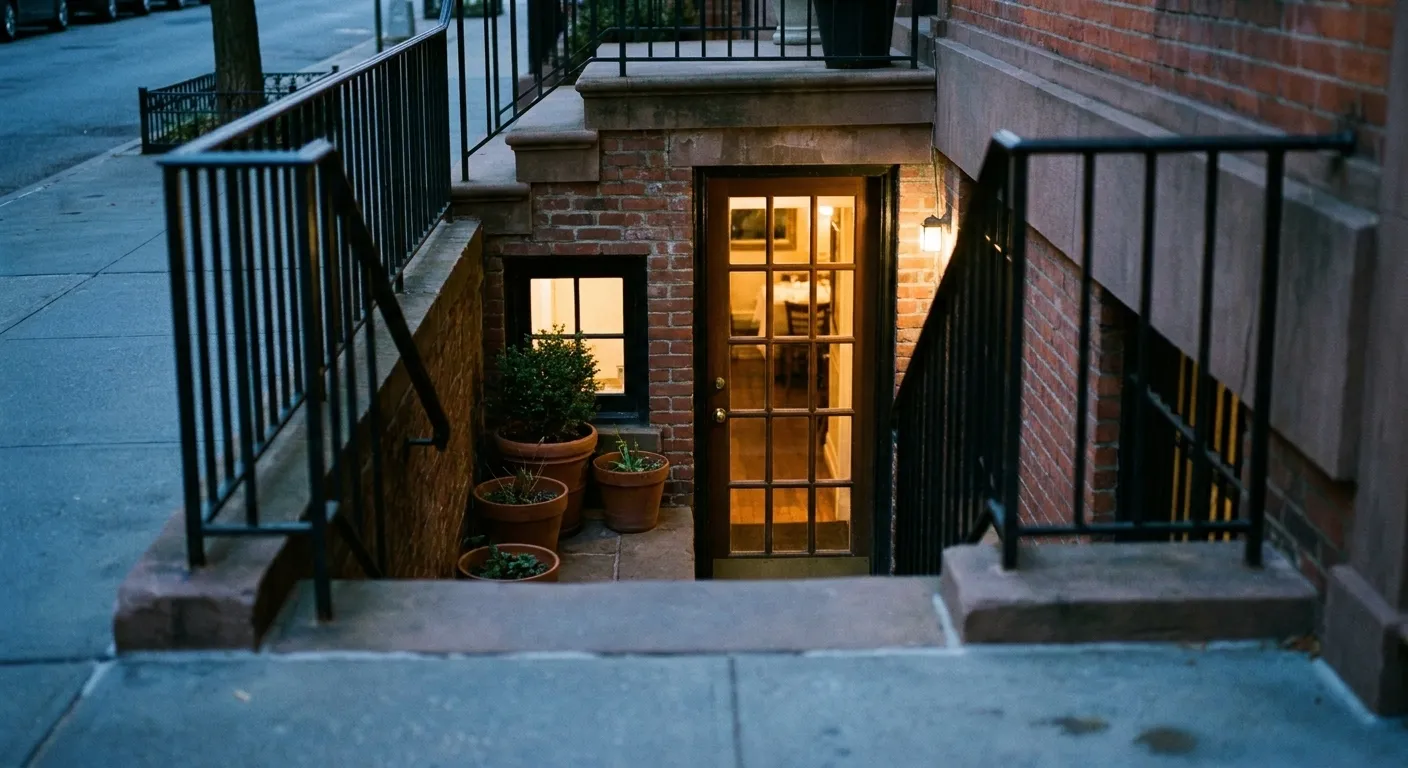
Third, look down. An unusual share of the eating here is below street level, in basement rooms reached by four or five steps from the pavement. Those rooms are systematically undersold online because there is nothing to photograph from outside, and they are frequently the best value on the block.
How to orient yourself anyway
A few anchors do the work of a grid. Seventh Avenue South and Sixth Avenue cut diagonally through the neighbourhood and are impossible to miss - if you are lost, walk until you hit one and you have re-established which way is north. Hudson Street runs the length of the western side. Bleecker curves through the middle and is the closest thing to a spine.
The rough rule that holds: the further west you go towards the river, the quieter and more residential it gets, and the eating shifts from busy and casual towards small and expensive. The blocks immediately around the Sixth Avenue and Seventh Avenue corridors are the loudest and the most touristed. The genuinely good middle ground is the two or three streets on either side of Hudson, which are quiet enough to hear the person opposite you and busy enough to support real restaurants.
The three streets that do most of the work
Bleecker Street is the one everyone arrives on and it is genuinely two different streets depending on which side of Sixth Avenue you are standing. East of Sixth it is busy, commercial and heavily trafficked. West of Sixth it narrows, curves, and turns into the neighbourhood's best continuous run of small food shops - bakeries, cheese counters, a butcher, a couple of long-standing Italian holdouts - most of which close by early evening. If you want to eat well here at four in the afternoon rather than at eight, that stretch is the answer.
Hudson Street is the working spine: wider, less pretty, and carrying most of the neighbourhood's actual dinner capacity. It is where you go when you have a group, or when you want something at ten at night. And Greenwich Avenue, which runs on the diagonal and confuses everyone, is the one to walk if you want the highest density of small rooms per minute of walking. Between those three you can reach almost anything worth reaching here without ever consulting a map.
A first-timer's sequence
If it is your first evening, resist the urge to book the one famous room and build everything around it. The neighbourhood does not reward that shape of evening. It rewards a slow loop: start somewhere on the eastern side around six, walk west, stop when something looks right, and keep going. The whole neighbourhood is about a twenty-five minute walk end to end, so a three-stop evening involves less walking than a single crosstown journey in Midtown.
Book only if you specifically want a particular room. Otherwise arrive between six and half past - the tables turn hard at seven-thirty here, and a walk-in at six is easy where a walk-in at eight is not. And accept in advance that you will get lost at least once. Everyone does. It is the point.
Practical notes
The West Village sits roughly between Sixth Avenue and the Hudson, and between Houston Street and 14th Street. West 4th Street crosses West 10th, 11th and 12th, which is not an error on your map. Blocks are short and often triangular; walking distances are typically half what they appear. Basement-level rooms are common and consistently under-represented online. Seventh Avenue South, Sixth Avenue and Hudson Street are the three reliable orientation lines.
Six to six-thirty is the walk-in window. After eight, book or expect to wait.
Tags: #FoodNearMe #WestVillage #GreenwichVillage #NYCFood #NewYorkCity #ManhattanGrid #NeighborhoodGuide #WhereToEatNYC #FirstTimeInNYC #BleeckerStreet #HudsonStreet
All trademarks are the property of their respective owners.
Ask Karpo first
The West Village is the one Manhattan neighbourhood where an address genuinely does not tell you where something is. Ask Karpo what is close in walking terms rather than map terms, which of the small rooms nearby are actually open tonight, and where the basement doors are that you would otherwise walk straight past.