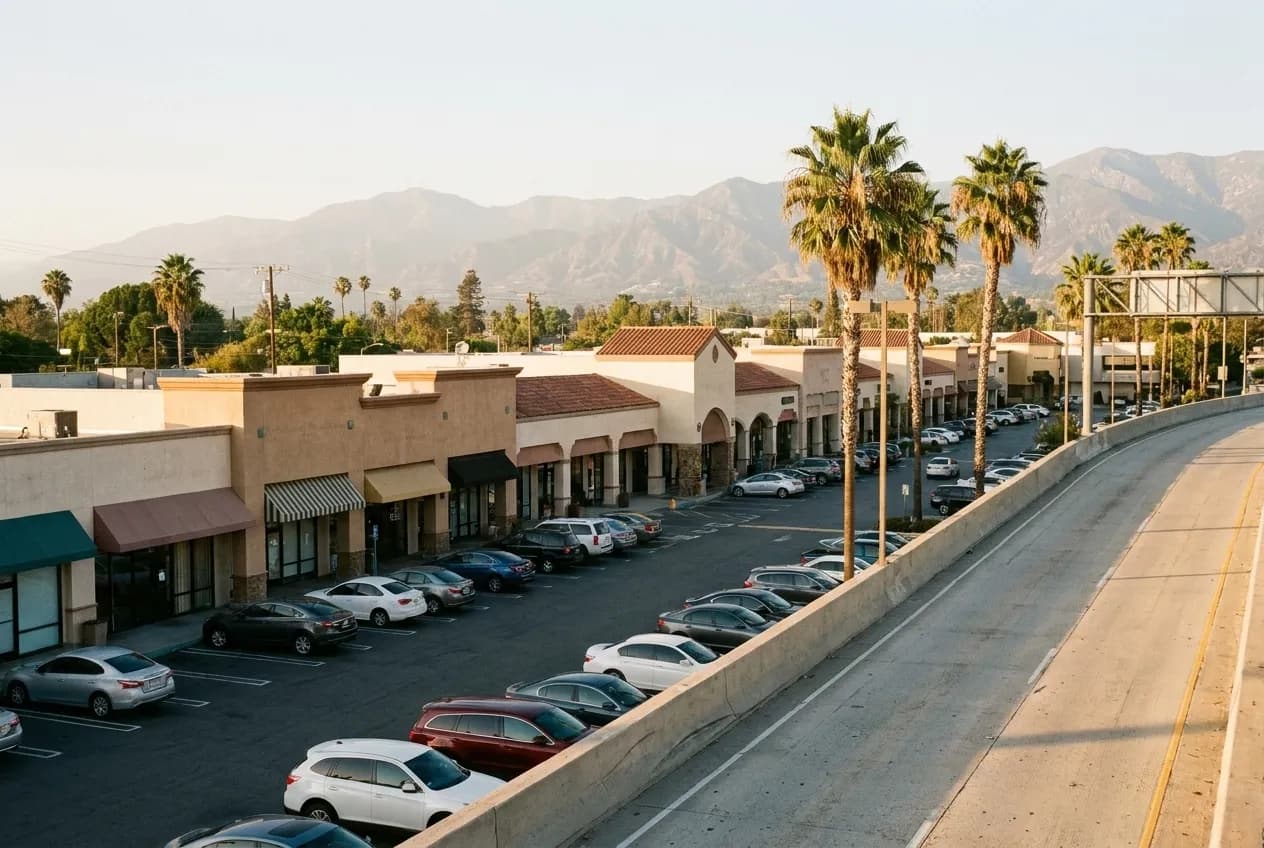
Distance in Los Angeles is not measured in miles. It is measured in minutes, and the minutes change by the hour. A restaurant two miles away can take forty minutes to reach at six-thirty on a Tuesday, while a place six miles out on the freeway can take twelve. The unit that actually works is the freeway exit: the cluster of strip malls, mini-plazas and corner lots that hang off a single off-ramp. This is where most of the city's serious cooking has always lived, because this is where the rent makes sense.
The Karpo app reads traffic and opening hours together, so you get the exit that works right now, not the one that would have worked an hour ago.
Strip-mall geography rewards you in ways that downtown pins do not. There is parking. There are usually four to seven solid options within two hundred yards of each other, so if your first choice is closed or full, you pivot without getting back in the car. The kitchens are built for volume and speed, because the rent model depends on turnover. And because these clusters serve neighborhood regulars rather than destination traffic, they stay open later and close less often than the places that rely on weekend crowds.
The hour rewrites the map. What works at noon does not work at seven. What works at seven on a Wednesday does not work at seven on a Friday. The question is not where the good food is—the good food is everywhere—but which exit puts you closest to open tables and moving lanes right now.
The San Gabriel Valley Exits
The 10 East between the 710 and the 605 is the densest stretch of Chinese regional cooking in North America. Every exit delivers. Atlantic Boulevard in Monterey Park is the classic anchoring cluster: Cantonese seafood, Sichuan hot pot, Hong Kong-style cafes, dim sum that runs until mid-afternoon. The strip malls on the north side of the freeway hold twenty-plus serious options within a quarter-mile radius. You park once and walk the row.
Garfield Avenue in Alhambra is denser and runs later. The Chinese options skew northern and western provinces—hand-pulled noodles, Xi'an lamb, Chongqing fish—and the Vietnamese and Taiwanese places stay open past ten on weeknights. This exit works better after seven, when the lunch crowds have cleared and the parking lots have space. On weekends, the wait times stack up by six, so you either go at five or go at nine.
Valley Boulevard through San Gabriel and Rosemead is the deepest bench. The cooking is more specialized—Shanghainese soup dumplings, Taiwanese beef noodle, Sichuanese dry pot, Cantonese roast meats—and the operations are smaller and more specific. The tradeoff is that each place does one thing and closes when the thing is gone. If you are hunting a particular dish, this is the zone. If you want flexibility, stay closer to Atlantic or Garfield.
The Koreatown and Mid-Wilshire Corridors
The 10 West exits between Crenshaw and Western drop you into the densest six square blocks of Korean cooking outside Seoul. The key is to ignore the freeway and think about the cross streets. Normandie and Vermont are the workhorses: all-night gamjatang, late-running KBBQ, tofu soup spots that open at eight in the morning. Western Avenue is bigger and louder, with the tablecloth places and the karaoke complexes, but the parking is worse and the waits are longer.
Olympic Boulevard between Vermont and Western is the strip that never closes. If you are looking past eleven at night, this is the corridor. The banchan is generous, the soups are fast, and the grills stay lit until two or three in the morning. The scene skews younger and later as the night goes on. If you want a table before nine, go north of Olympic into the residential blocks, where the cooking is just as serious but the rooms are quieter.
The La Brea exit off the 10 puts you in the Mid-Wilshire mix: Ethiopian on Fairfax south of Olympic, Oaxacan and Guatemalan along Pico, Jewish delis and Israeli grill near the museums. This cluster works best between noon and three, when the lunch operations are in full swing and the evening destinations have not yet opened. After seven, the map splits: the formal places fill up and require reservations, while the counter-service spots stay loose.
East LA and Boyle Heights
The 5 South exits between the 10 and the 60 put you in the center of the city's Mexican cooking. Cesar Chavez Avenue is the main spine: birria, carnitas, mariscos, tamales, tortas. The best operations are small—ten tables or a walk-up window—and they close when the prep runs out, which can be as early as six on a weekday or as late as midnight on a weekend. If you are aiming for a specific dish, go early. If you are browsing, go around one or two, when the lunch wave is clearing and you can see what is actually moving.
First Street and Soto Street are deeper and more specialized. You will find Oaxacan moles, Jalisco-style goat, Michoacán carnitas, Sinaloan aguachile. The cooking is regional and specific, and the menus do not translate. This is the zone for the second or third visit, when you know what you are looking for. The parking is easier than Cesar Chavez, and the pace is slower.
The Whittier Boulevard exit drops you into the heart of the Eastside taco ecosystem. The trucks and stands cluster near the transit stops and the big-box parking lots, and they run from late afternoon until two or three in the morning. The quality is high and the prices are low. If you are eating after ten, this is the corridor that delivers.
The South LA and Inglewood Zones
The 110 South exits between the 10 and the 105 anchor the soul food and Caribbean corridors. Crenshaw Boulevard is the central artery: fried fish, jerk chicken, oxtail, mac and cheese, peach cobbler. The operations are small and the hours are inconsistent, but the cooking is serious. Most places close by eight or nine, so this is a lunch and early-dinner zone. Weekends are busier and louder, with longer waits and shorter tempers.
The La Brea and La Cienega exits into Inglewood drop you near the Forum and the new stadium district, which has changed the food map in the last three years. The pre-game and post-game waves are real, and they clog the major streets between five and eight on event nights. If you are eating near the Forum, go two hours before or two hours after. The strip malls one exit south stay quieter and keep more consistent hours.
Vermont Avenue through South LA is the overlooked corridor. You will find Salvadoran pupuserias, Honduran baleadas, Guatemalan caldo de res, and a handful of very good loncheras. The cooking is straightforward and cheap, and the parking is easy. This is the zone for the weekday lunch when you want something fast and filling without the drive to Koreatown or the Eastside.
How to Work the Hour
The timing matters more than the distance. Between four and seven on a weekday, the surface streets lock up and the freeway becomes the only reliable route. An exit that takes eight minutes at two in the afternoon can take thirty-five minutes at five-thirty. During this window, you pick the exit that the freeway delivers, not the one that the map says is closest.
Lunch service in Los Angeles runs from eleven to three, and most of the serious operations are built around that window. If you are looking for the full menu and the fresh prep, go between eleven-thirty and one-thirty. After two, the kitchens start to wind down, and the popular dishes sell out. The late-lunch crowd—two to four—gets smaller menus and shorter waits, which can be exactly what you want if you are optimizing for speed.
Dinner is not one thing. The early wave—five to six-thirty—is families and older regulars. The rooms are quieter, the service is faster, and the parking is easier. The peak wave—seven to nine—is when the waits stack up and the kitchens slow down. If you are eating without a reservation during peak, you either go at five-thirty or you go at nine-thirty. The late wave—after ten—is smaller and younger, and it concentrates in Koreatown, the Eastside, and a handful of twenty-four-hour clusters.
Weekends rewrite the script. Saturday and Sunday brunch—nine to two—is when the whole city tries to eat at the same thirty places, and the waits spiral. The smart move is to skip the brunch pins entirely and go to the lunch spots that open at eleven. You get the same food, half the wait, and better parking. Sunday dinner is the opposite: most of the city stays home, the restaurants are quiet, and you can walk into places that require reservations on Friday.
The transferable habit is this: pick the exit first, then pick the restaurant. The cluster is more reliable than the pin, because the cluster gives you options when the first choice is closed or full. You park once, you walk two hundred yards, and you see what is actually open and moving. That is how the city works, and it is how you eat well here without spending half your evening in traffic.
Tags: #FoodNearMe #LosAngelesFood #LAEats #StripMallFood #SanGabrielValley #Koreatown #EastLA #SouthLA #FreewayFood #LosAngelesRestaurants #LAFoodie #NeighborhoodGuides #LocalEats #LosAngeles
All trademarks are the property of their respective owners.
Ask Karpo first
The Karpo app tracks which exits are running fast right now and which clusters have open tables, so you get the route that works at this hour, not the one that worked yesterday. Open the Karpo app before you get on the freeway, and you will know which off-ramp to take.


