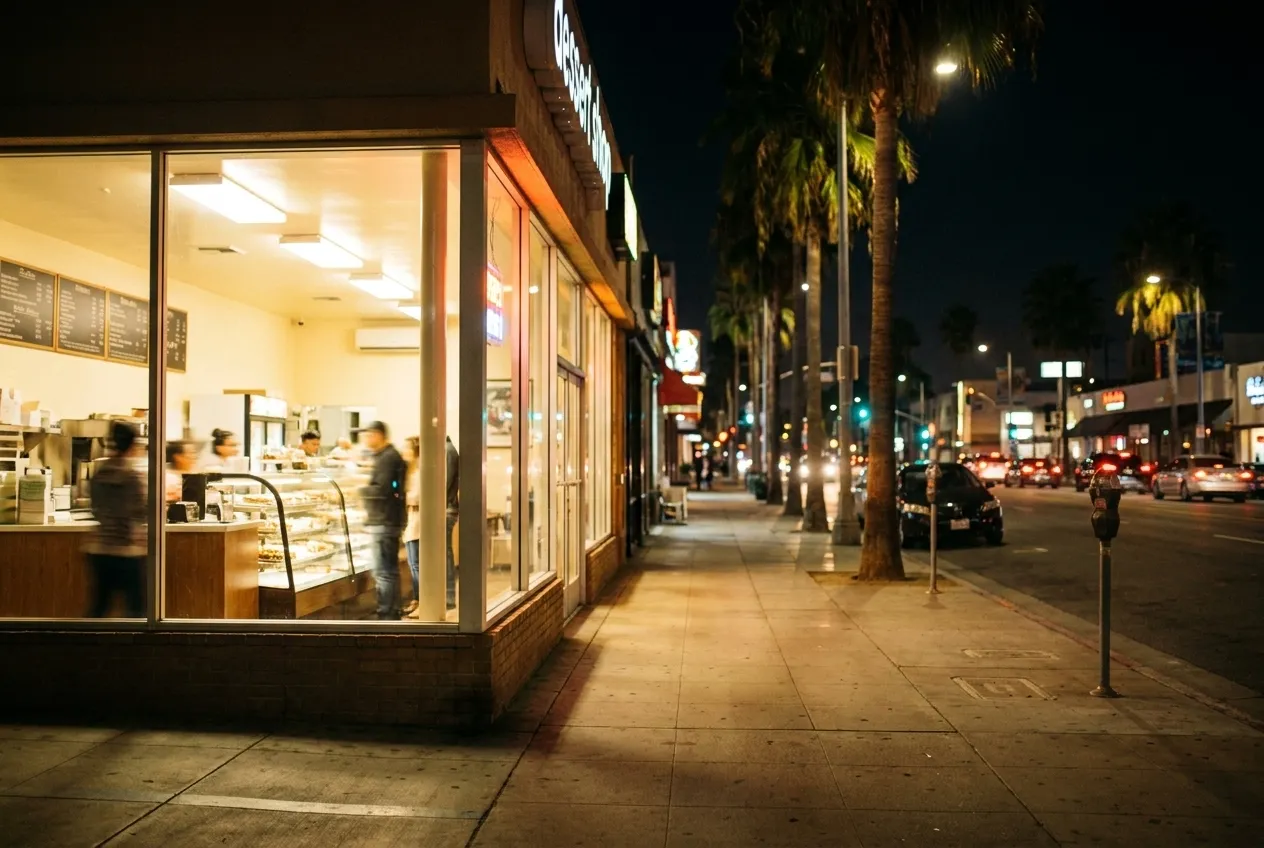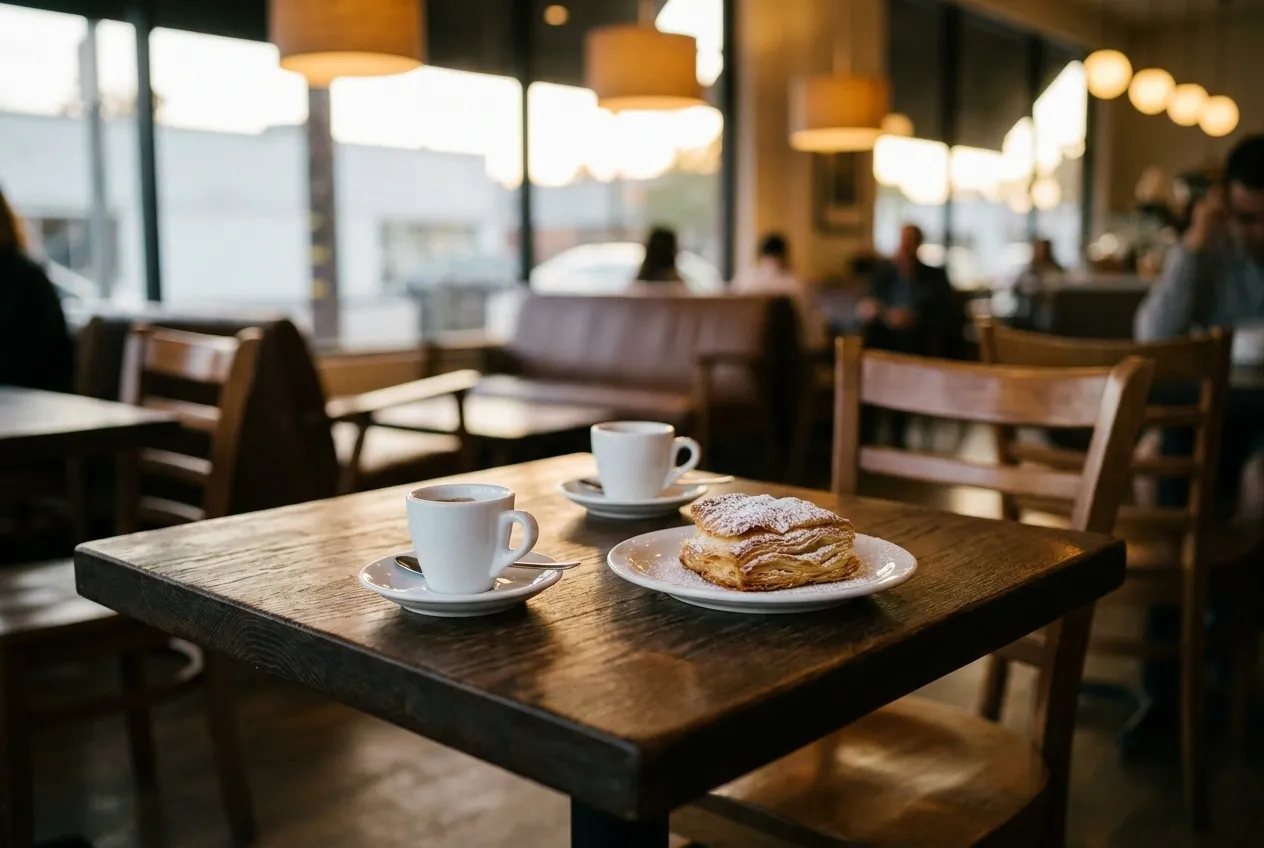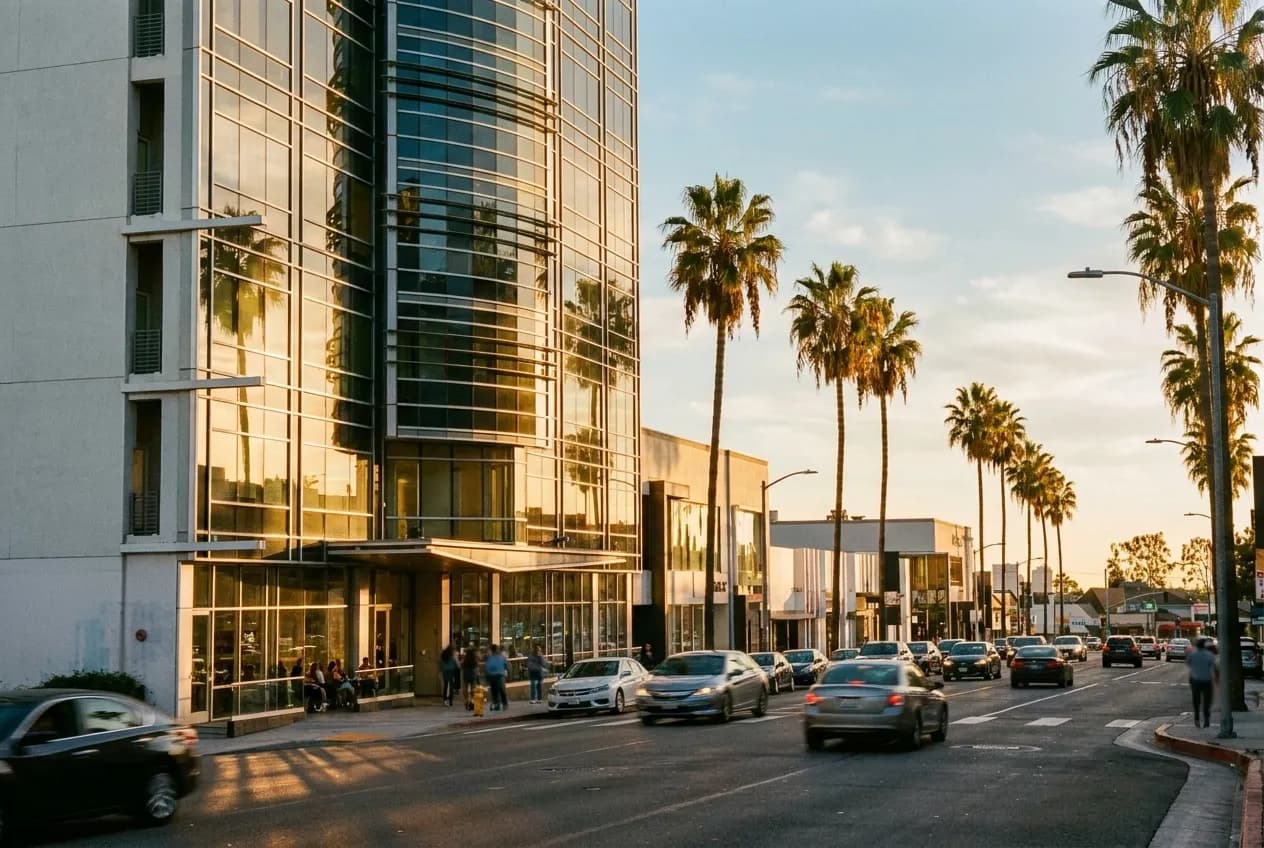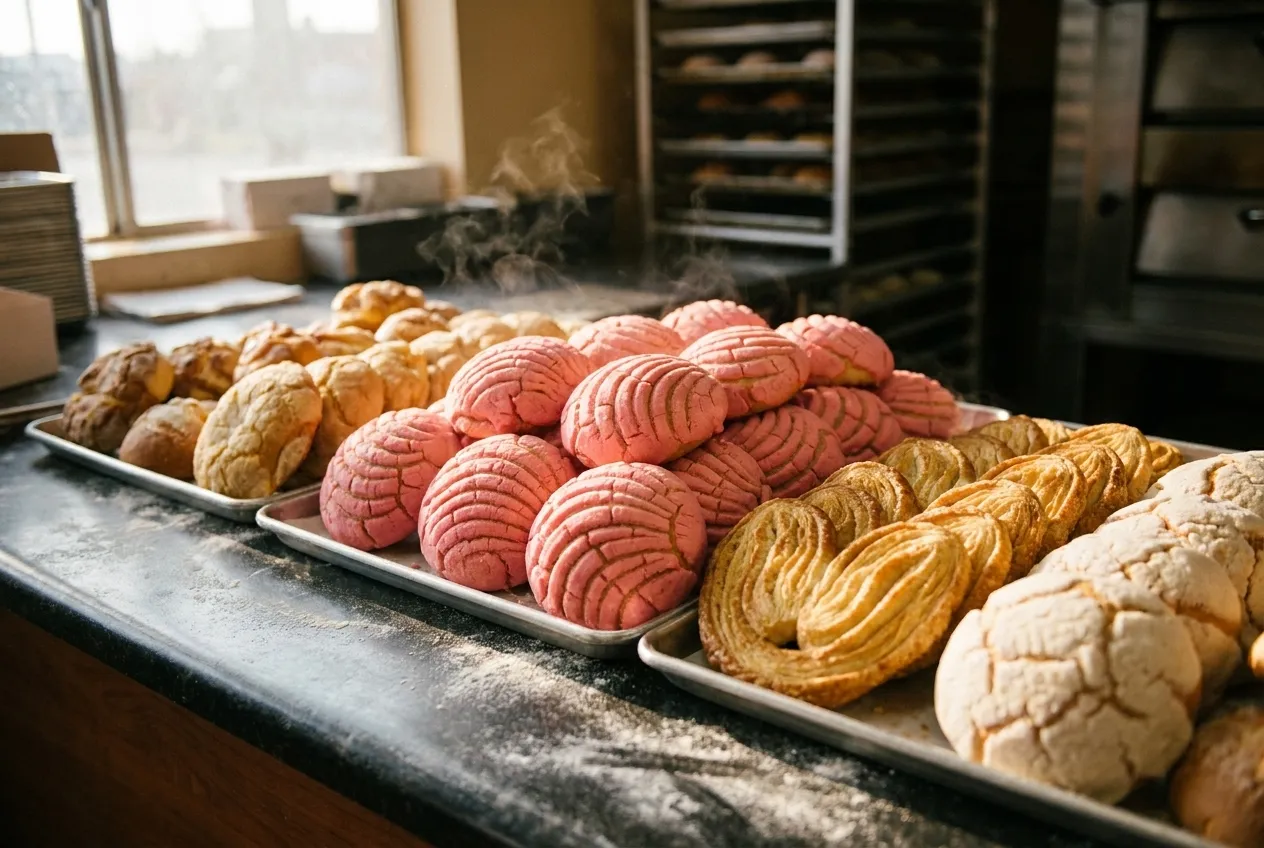
At seven-fifteen on a Tuesday morning in Los Angeles, the city runs on a different clock. The 10 moves at fifty miles an hour through Mid-City. Street parking sits open on Sunset east of Vermont. The panaderías in Pico-Union have been running ovens since five, and the conchas are still warm when you walk in. This is the window when bakery breakfast makes sense: not as a weekend ritual, but as a fifteen-minute detour on a drive you were already making, before the freeways lock and the good stuff sells out.
Open the Karpo app now to see which bakeries on your route have fresh stock this morning and which blocks to skip when the early window closes.
What a Full Case Looks Like
A bakery case at seven-thirty in the morning is a different piece of infrastructure than the same case at eleven. The trays are stacked. The croissants have structure. The cream-filled pastries have not been sitting under halogen for three hours. In a panadería, the conchas and orejas are still releasing steam. In an Armenian bakery, the cheese bouregs are coming out of the oven in waves, and the counter will sell you one on a square of wax paper while it is still too hot to hold comfortably.
By nine-thirty, the calculus changes. The morning bake is picked over. The second wave has not arrived, or it will not arrive at all. The parking lot is full. The line is eight people deep, and half of them are ordering complicated drinks. You are now competing with people who have time, and the thing you came for is gone.
The early window is not about leisure. It is about being present when the system is designed to serve you. A bakery at seven-fifteen is set up for people who are moving through the city, who know what they want, who can be in and out in under five minutes. The transaction is fast because the room is not yet crowded and because the people working the counter assume you are on your way somewhere.
Where the Bakery Clusters Sit
Mexican bakeries run densest in Pico-Union, Boyle Heights, and the eastern blocks of Hollywood. The corridors are Pico Boulevard from Alvarado to Crenshaw, Cesar Chavez east of Soto, and Sunset from Western to Normandie. These are neighborhoods where the panadería is daily infrastructure, not a destination, and the cases are built for volume and turnover. You are looking for the places with a steady line of people buying six items at a time, not the places with a chalkboard menu and table service.
Armenian and Middle Eastern bakeries cluster in Glendale, along the Glenoaks corridor and the blocks south of the 134 between Pacific and Central. The stock is different: cheese and spinach bouregs, flatbreads, sesame rings, baklava that is cut into small diamonds and sold by weight. These bakeries open early because they serve a breakfast trade that expects savory pastry and strong coffee, and the morning inventory is designed to clear by ten.
Japanese bakeries are fewer and more scattered. Sawtelle in West LA has the highest concentration, but the morning window is tighter because the neighborhood draws weekend traffic and the parking is worse. Gardena and Torrance have older, quieter bakeries that open at seven and operate on a neighborhood rhythm. The style is precise: milk bread, red bean buns, curry-filled pastries, melon pan. The cases are smaller, and when something sells out, it is gone until tomorrow.
Persian bakeries sit along Westwood Boulevard in West LA and on the Ventura Boulevard corridor in the Valley. The morning pastries are less sweet than the French model, often flavored with rosewater or cardamom, and the savory options include flatbreads and herb-filled pastries that function as portable breakfast. The bakeries open by seven, and the first hour is the one that delivers the best selection before the lunch prep starts.
How to Build the Stop Into a Drive You Are Already Making
The tactic is not to make a special trip. The tactic is to identify which bakery sits within three minutes of a route you already drive twice a week. If you are moving west on the 10 in the morning, the Pico-Union exits put you one block from half a dozen panaderías. If you are coming south through Glendale on the 2, the Glenoaks corridor is a straight shot with parking that turns over fast. If you are driving east through the Valley on Ventura, the Persian bakeries between Van Nuys and Sepulveda are on the right side of the street for a quick in-and-out.
The fifteen-minute stop works because you are not sitting down. You are parking in a red zone with your flashers on, walking in, pointing at three things, paying cash, and leaving. The bakeries that serve the early trade are set up for this. There is no table service. There are no menus on the wall that require decoding. The case is in front of you, and you point.
The timing matters more than the specific address. A panadería at seven-thirty on a weekday morning is a machine that moves people through. The same panadería at ten-thirty on a Saturday is a social space where transactions are slower and the case is half-empty. The Armenian bakery that has six varieties of boureg at eight in the morning will have two varieties at eleven, and one of them will be cold.
The cost is lower than stopping for coffee and a pastry at a cafe. A panadería transaction runs three to five dollars for more food than you can eat in the car. An Armenian bakery will sell you two bouregs and a coffee for under eight dollars. The Japanese bakeries are slightly more expensive, but the portion sizes are calibrated for a single person, and nothing is over four dollars. The value is not just in the price. It is in the fact that you are eating something that was made two hours ago, not reheated from yesterday.
How to Read the Street and Decide in Ten Seconds
When you pull up to a bakery you have not tried before, the decision is fast. Look at the parking lot. If there are more than five cars and no open spots near the door, the transaction will take longer than fifteen minutes, and you should keep driving. Look at the line inside. If it is more than four people deep and moving slowly, you are now in the late-morning window, and the case will be picked over.
Look at the case itself. If the trays are full and stacked in rows, you are early enough. If the trays have gaps and the pastries are spread out to make the case look fuller than it is, you are late. A bakery that is still in its morning rhythm will have backup trays visible behind the counter, and the person working the case will be moving fast. A bakery that is winding down will have one person working the counter and the register, and the backup trays will be gone.
The single best signal is the number of people walking out with large bags. If you see three people leave in the time it takes you to park, the bakery is turning over inventory, and the morning bake is still happening. If no one is leaving, or if the people leaving are carrying single items in wax paper, you are at the tail end of the window. Drive to the next block and try again, or accept that you are now shopping from what is left, not what is fresh.
Tags: #FoodNearMe #LosAngelesBakeries #LABreakfast #BakeryBreakfast #MorningLA #PanaderiasLA #ArmenianBakery #JapaneseBakery #PersianBakery #LAFoodTiming #EarlyMorningLA #LATrafficHacks #CoffeeAndDessert #LAEats #NeighborhoodBakeries
Please drink responsibly. Must be of legal drinking age.
All trademarks are the property of their respective owners.
Ask Karpo first
Open the Karpo app to see which bakeries on your route are open right now, what time the morning inventory usually sells through, and whether the parking lot is full. Karpo will give you a live route from wherever you are and tell you what to expect when you walk in.