Ask anyone who lives in San Francisco where to find good food near me and you will get a list of restaurants they go to on a Saturday. Ask what they ate on Tuesday and you get the real answer, which is a different and much shorter list: places within a few blocks of a Muni line, open at 6:15, cheap enough to repeat, fast enough that you are home by eight. This is a guide to that second list — the weeknight city rather than the weekend one, sorted by how much is left in you at the end of a working day.
Weeknight dinner is a logistics problem dressed up as a taste problem — you want good food between where you got off the train and where you sleep. Tell Karpo where you are standing and how long you are willing to wait, and it will sort the nearby options by what is actually open and seating.
When you have twenty minutes: counters and windows
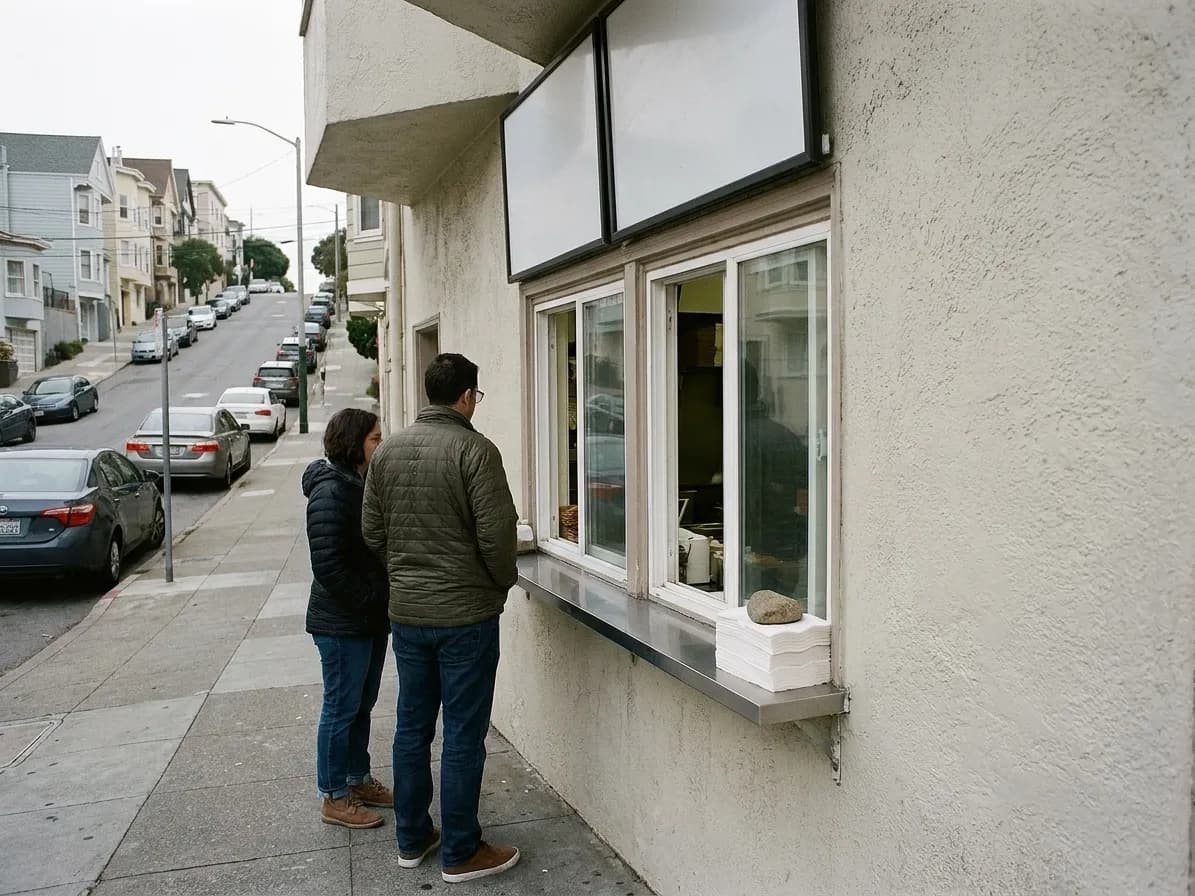
The lowest-effort tier in San Francisco is unusually good. Taquerias in the Mission along 24th and Mission Streets, the banh mi and rice-plate counters in the Tenderloin and along Larkin, dumpling and noodle windows in the Richmond and the Sunset, and the Chinatown roast-meat shops that sell by weight over the counter. All of these are designed for exactly this: order, wait a few minutes, eat standing or take it home.
The neighbourhood pattern is worth knowing rather than the individual shops. Clement Street and Irving Street in the west, Larkin and Hyde in Little Saigon, 24th and Mission in the east, Stockton and Powell in Chinatown, Ocean Avenue in the south — those five corridors will feed you well for the price of a sandwich on any weeknight, and they are the corridors locals actually use.
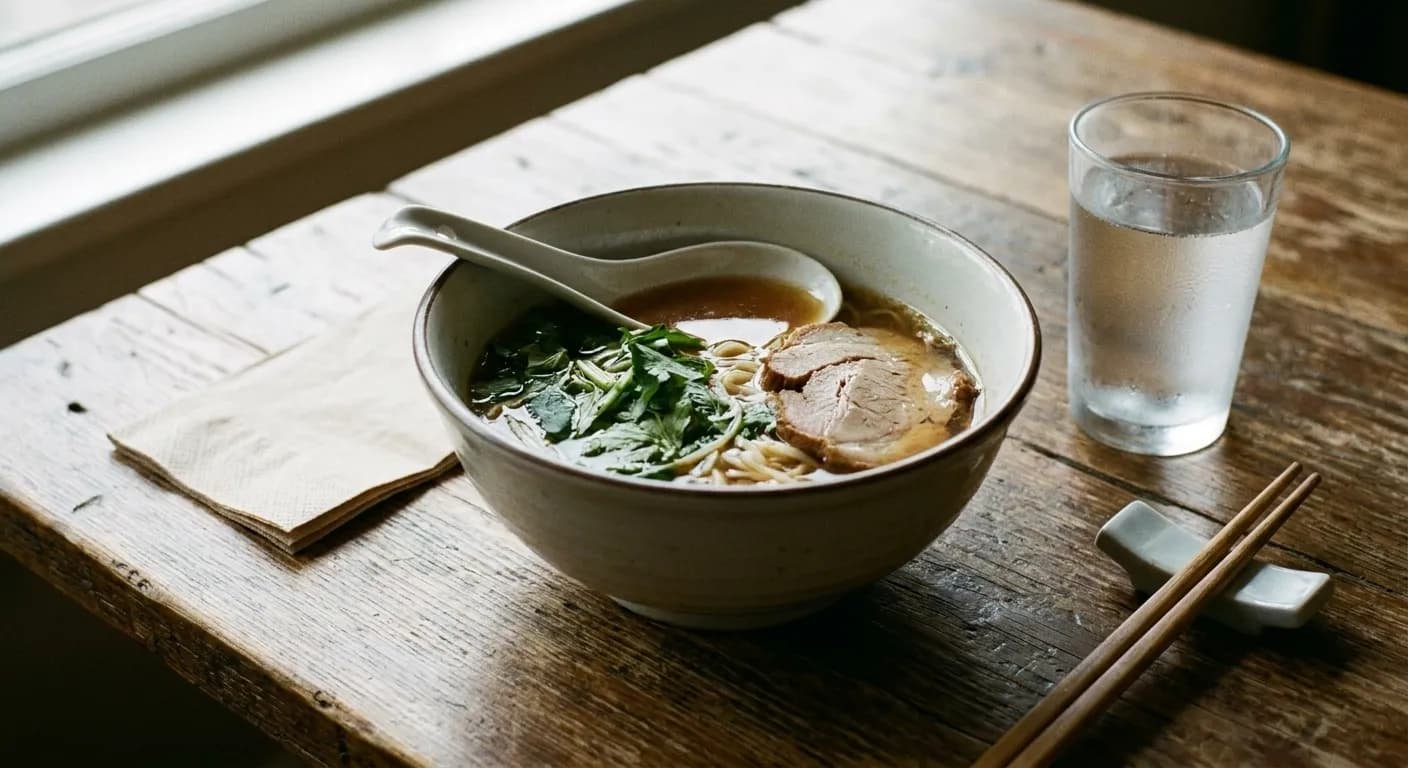
When you have an hour: the neighbourhood dining rooms
The next tier up is the small restaurant that treats the weeknight as its main business rather than an afterthought — Italian rooms in North Beach, Vietnamese and Burmese kitchens in the Richmond, Korean and Japanese places in the Inner Sunset, Mission Chinese-style cooking on Valencia, and the whole spine of Divisadero. What these have in common is that they seat you without a reservation between six and seven, and stop doing that entirely after eight on a Friday.
The specific San Francisco advantage here is the early hour. This is a city that eats early by American standards, driven partly by commute patterns and partly by fog and cold that push people indoors and then home. A 6:15 arrival gets you a table almost anywhere; the same restaurant at 7:45 has an hour wait.
When you have no energy at all
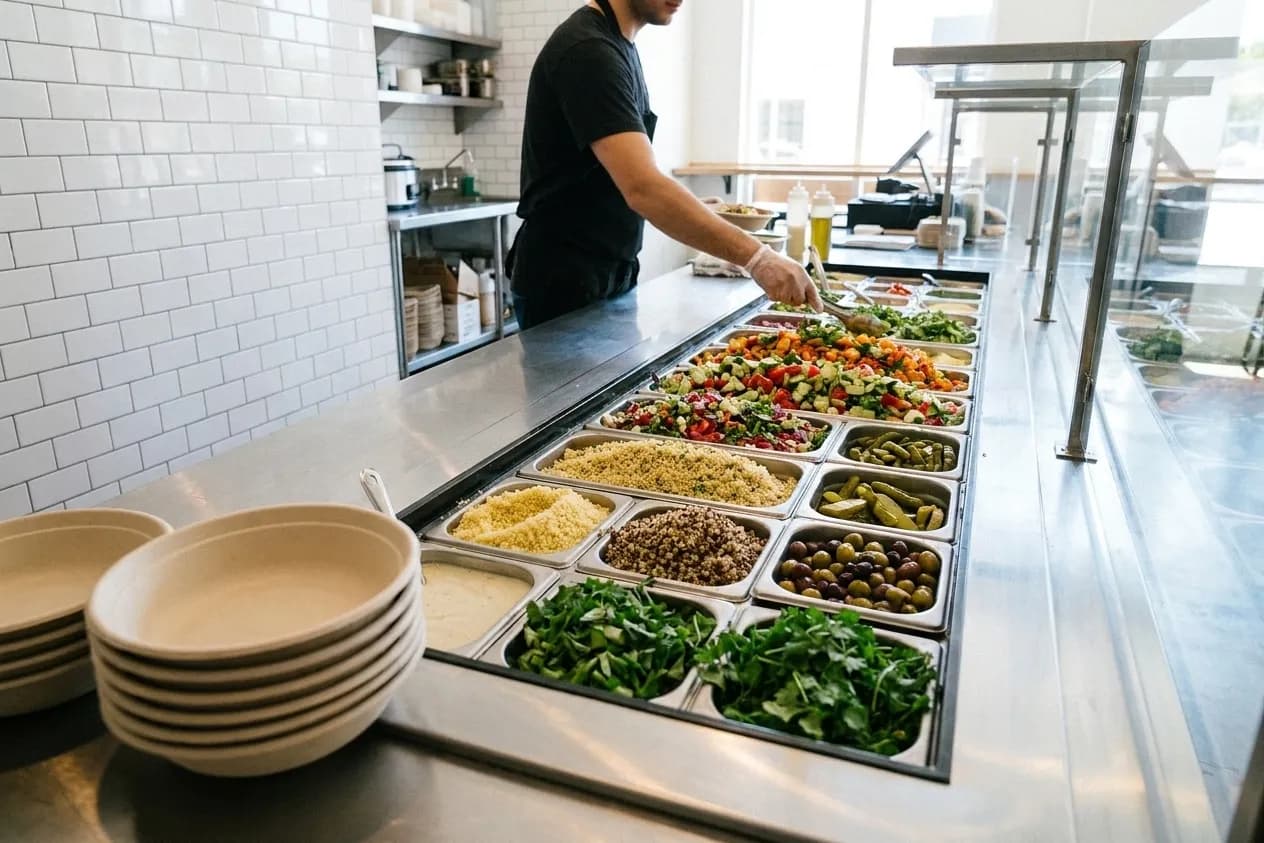
There is an honest fourth category that food writing ignores: the nights where the answer is a rotisserie chicken and a bag of greens. San Francisco is well set up for this. The city's grocery culture — the Mission's produce markets, the Chinatown grocers on Stockton, the Sunset's fish counters, the Ferry Building on the days it runs long — means the assembled dinner is often better than the delivered one, and it arrives faster.
If you do order in, order from somewhere within about a mile. San Francisco's hills and one-way grid punish long delivery routes badly, and the difference between food from six blocks away and food from across town is the difference between hot and sad.
Eating around the transit map
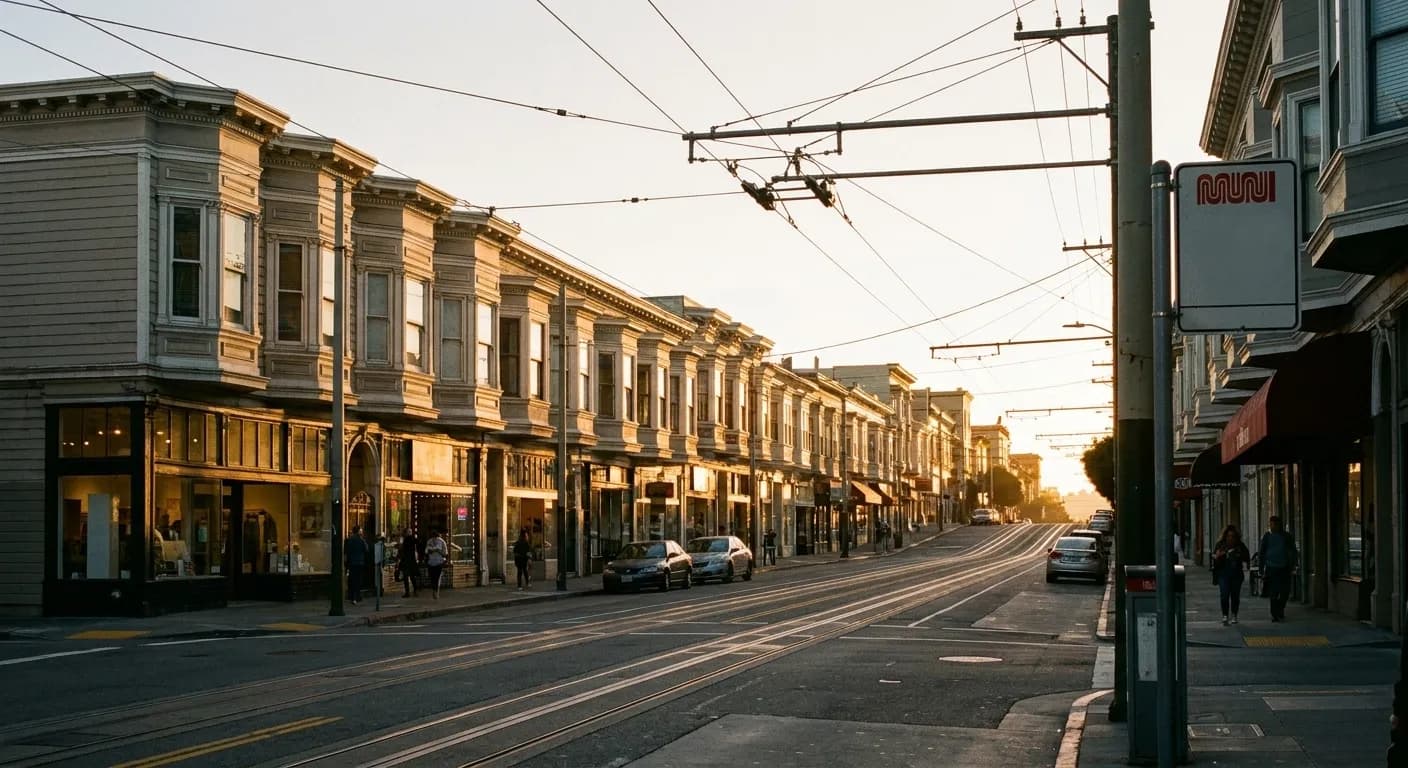
The most useful reframe for a weeknight is to think in lines rather than neighbourhoods. The N Judah puts the Inner Sunset and Cole Valley within a few minutes of downtown; the J Church drops you into Noe Valley; the 22 Fillmore crosses the Mission and the Western Addition; BART puts 16th and 24th Street within reach of anyone commuting from the East Bay. Pick the line you are already on and eat on it.
The practical corollary: check the last useful departure before you sit down, not after. Owl service exists but is sparse, and a dinner that runs long in the Outer Sunset on a weeknight can turn into a much more expensive ride home than the meal was.
What changes on a Monday
Monday is the weak night in San Francisco. A large share of the city's better small restaurants close Sunday and Monday, which compresses demand onto the ones that stay open and makes an unplanned Monday dinner surprisingly hard. The corridors that hold up are the ones with density — Chinatown, the Tenderloin, Clement, Irving and the Mission — because there is always something open on a block with thirty kitchens.
The same logic applies to holidays and the weeks around them, when small owner-run rooms close for a stretch without much announcement. On those nights, density beats any specific recommendation.
Tags: #SanFrancisco #SFEats #FoodNearMe #SFRestaurants #WeeknightDinner #MissionSF #RichmondDistrict #InnerSunset #Chinatown #SFFoodie #CheapEatsSF #MuniLife #WhereToEatSF #BayArea
Sources consulted: sfchronicle.com · sfmta.com · sftravel.com
All trademarks are the property of their respective owners.
Ask Karpo first
Weeknight hours are the first thing restaurants cut and the last thing they update online, so the listing you are reading is frequently wrong by a season. Ask Karpo what is actually open near you right now, which places seat walk-ins at this hour, and how long the wait is running — it answers in iMessage while you are still deciding whether to get off the train.