Floyd Bennett Field offers a distinct kind of urban exploration, a landscape where the scale of former airport hangars transforms a park walk into an encounter with monumental industrial history. Unlike typical city green spaces, this site in southeastern Brooklyn preserves a vast, open expanse dotted with structures that speak to New York's pioneering role in aviation. It's a destination for those seeking a tangible connection to the past, where the sheer size of the original eight hangars and a central runway system provides a unique backdrop for reflection and discovery. This guide helps you navigate this singular experience, offering practical advice for a visit that embraces the site's unique character.
Want a personalized itinerary that aligns with your interests and the latest site conditions? Text Karpo to plan your visit to Floyd Bennett Field's historic hangars.

Understanding the Unique Scale of Floyd Bennett Field
Floyd Bennett Field, situated in the Marine Park neighborhood of southeastern Brooklyn along Jamaica Bay, distinguishes itself through its immense scale. This former airfield, now part of the Jamaica Bay Unit of Gateway National Recreation Area and managed by the National Park Service, spans over 1,000 acres. This vastness means visitors encounter an unusually large open landscape within the city, where historic structures like the hangars appear as isolated, monumental landmarks rather than integrated park features. The sheer expanse offers a sense of solitude and a perspective on urban development rarely found elsewhere in New York.
The historic district at Floyd Bennett Field, constructed between 1928 and 1931, has maintained much of its original appearance. It encompasses the Administration Building, notable for its former control tower, eight original hangars, and the central runway system, along with several dependent buildings. This collection of structures, listed on the National Register of Historic Places in 1980, provides a unique opportunity to witness aviation infrastructure from a bygone era. The preserved layout allows visitors to appreciate the site's historical significance and the engineering feats involved in early 20th-century airport design.
Who This Visit Suits Best
This experience is ideal for history enthusiasts, urban explorers, and those who appreciate large, undeveloped landscapes within a dense urban environment. Visitors interested in aviation history will find the preserved hangars and former runway system particularly compelling. It also appeals to individuals seeking a contemplative outing, away from the typical crowded attractions, where the focus is on historical immersion and the unique atmosphere created by these colossal structures. The site's open nature also makes it suitable for those who enjoy walking or cycling in expansive, less-trafficked areas.
Conversely, this may not be the primary choice for visitors expecting highly interactive exhibits, extensive indoor displays, or a bustling commercial atmosphere. The appeal lies in the raw, preserved nature of the site and the opportunity to imagine its past life as a bustling airfield. Families with very young children might find the vast distances between points of interest challenging, though older children with an interest in history or large machinery could find it fascinating.

Pacing Your Exploration of the Hangars
Given the expansive nature of Floyd Bennett Field, a leisurely pace is recommended to fully appreciate its scale and historical elements. The National Park Service sources identify eight original hangars within the historic district, along with a central runway system. This means that exploring all the visible structures will involve significant walking. Consider allocating at least half a day for a comprehensive visit, allowing ample time to walk around the exterior of the hangars and absorb the environment. If your interest is focused on specific hangars, you might adjust your time accordingly, but be prepared for the distances involved.
A strategic approach to pacing could involve starting at the Ryan Visitor Center, which was the original Administration Building and control tower. This serves as an excellent on-site orientation point, offering context before you venture out to the hangars. From there, you can plan your route to various hangars, perhaps focusing on a cluster or selecting those most visually striking. Remember that this is a very large, open-air historic district, not a compact museum complex, so factor in travel time between points of interest.
Navigating to the Former Airfield
For those driving, the official National Park Service directions guide visitors to take Belt Parkway exit 11-S (Flatbush Avenue South). Continue on Flatbush Avenue South, and at the last traffic light before reaching the Marine Parkway Bridge toll plaza, turn left. This will lead you directly into the Floyd Bennett Field area. It is advisable to review these directions on the official NPS website prior to departure, as road conditions or signage can change. Parking availability within the field itself should also be verified.
While the provided sources offer clear driving instructions, they do not confirm current public transit options, specific shuttle services, or bike routes to access the site. Visitors relying on public transportation should consult current MTA schedules and local transportation authority websites for the most up-to-date information on bus routes that serve the Marine Park area and potential connections to Floyd Bennett Field. Planning your route in advance will ensure a smooth arrival to this somewhat secluded location.
The Current Status of Hangars 3 and 4
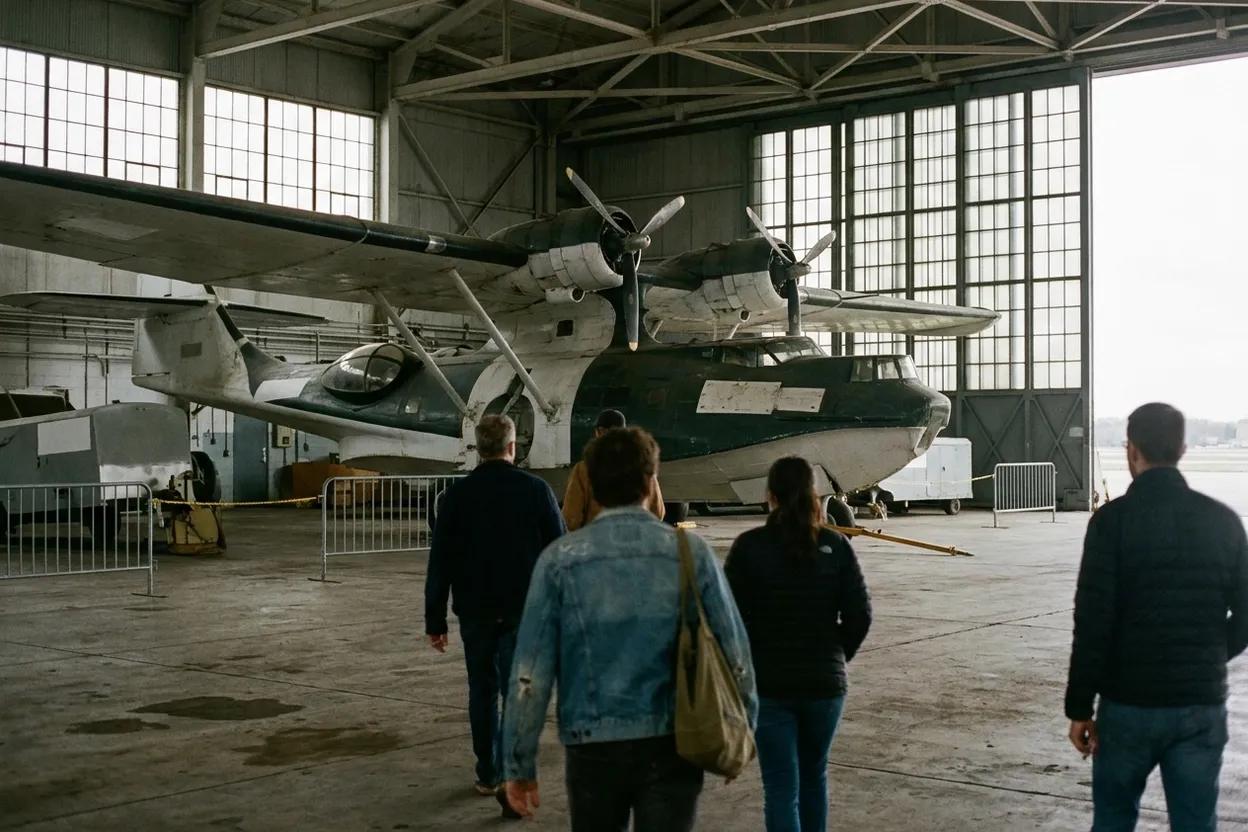
If Hangars 3 and 4 are of particular interest for your visit, it is important to note their current status. The most recent information indicates an active adaptive reuse project involving these hangars. LTL Architects, in collaboration with the Jamaica Bay-Rockaway Parks Conservancy and the National Park Service, is working on repurposing these structures. This suggests that the hangars may not be fully open for public exploration in a completed, programmed state. Visitors should anticipate that ongoing work might affect access or the visitor experience.
Because of this active project, direct public access to the interiors of Hangars 3 and 4 may be limited or require specific arrangements. It is advisable to check with the National Park Service or the Jamaica Bay-Rockaway Parks Conservancy for the latest updates on public tours, viewing opportunities, or any temporary closures related to the adaptive reuse efforts. This will help manage expectations and ensure that your visit aligns with the current operational status of these specific hangars.
Where a Floyd Bennett Field Hangars plan can go wrong
One common oversight for visitors to Floyd Bennett Field is underestimating the sheer size of the area and the distances between points of interest. The field covers over 1,000 acres, meaning what appears on a map as close proximity can translate into a significant walk. To avoid fatigue and ensure you see what you intend, wear comfortable walking shoes and consider bringing water and snacks, especially on warmer days. Planning your route and prioritizing which hangars or areas you wish to explore will also help manage your time and energy effectively.
Another potential pitfall is arriving without verifying current access to specific hangars or facilities. While the field itself is open daily from sunrise to sunset and the Ryan Visitor Center from 9:00 a.m. to 5:00 p.m. (except Thanksgiving and Christmas), this does not automatically imply that all hangars are accessible, or that their interiors can be entered. The provided sources do not confirm whether tours are available, require reservations, or if there are any admission fees for hangar visits. Always check the official National Park Service website for the latest operational updates, seasonal closures, or any special event schedules that might impact your visit.
Practical notes for Floyd Bennett Field Hangars
The Ryan Visitor Center, housed in the former Administration Building and control tower, serves as the primary on-site orientation point. This is an excellent starting place to gather information and gain historical context before venturing out to explore the hangars. Official sources state the field itself is open daily from sunrise to sunset, while the Ryan Visitor Center operates daily from 9:00 a.m. to 5:00 p.m., with exceptions only for Thanksgiving and Christmas. Verify these hours and any potential changes on the official National Park Service website before your visit.
Before departing for Floyd Bennett Field, it is crucial to verify current access details. The provided sources do not confirm which specific hangars are open to the public, whether any hangars can be entered, or if tours require advance reservations. They also do not specify current seasonal closures, event schedules, or any admission fees for hangar visits. Always check the official National Park Service Gateway website for the most up-to-date information regarding facility access, operational hours, and any special conditions that might affect your exploration of the historic hangars.
Tags: #AskKarpo #FloydBennettField #AviationHistory #NYCExploration #BrooklynHistory #GatewayNational #HistoricSites #UrbanExploration #ParkWalks #NYCAdventures #UniqueNYC #TravelNYC #BeforeYouGo #JamaicaBay
Sources consulted: Source 1: nps.gov · Source 2: nps.gov · Source 3: npshistory.com · Source 4: nps.gov · Source 5: ltlarchitects.com · Source 6: freshkillspark.org · Source 7: wildlifefree.org · Source 8: nytimes.com · Source 9: en.wikipedia.org · Source 10: npshistory.com · Source 11: nydailynews.com · Source 12: offmetro.com · Source 13: boweryboyshistory.com
All trademarks are the property of their respective owners.
Ask Karpo first
Tell Karpo your date, group size, budget, and starting neighborhood. We’ll check current access, timing, transit, and the cleanest plan for Floyd Bennett Field Hangars before you head out.