The 7 train is the most direct subway route to the US Open, but New York summers bring intense thunderstorms that can flood low-lying track sections and delay service. If you're planning to attend the 2026 tournament at the USTA Billie Jean King National Tennis Center in Flushing Meadows Corona Park, it's worth mapping out alternative routes before you leave home—especially if you're traveling during afternoon sessions when storms tend to build. This guide walks through practical backup transit options from Manhattan and western Queens neighborhoods, so you can pivot quickly when the 7 is running slow or suspended. Always check official MTA service status and National Weather Service alerts before you travel.
Text Karpo with your US Open session time and Queens starting point, and we’ll turn this subway alternatives idea into a practical local plan.

Why the 7 Train Floods and What That Means for Tournament Days
The 7 runs above ground through much of Queens, but several stations and track sections sit in areas prone to pooling water during heavy downpours. When the MTA issues service advisories due to flooding, trains may skip stations, turn back early, or stop running altogether between Manhattan and Flushing. The US Open runs from late August into early September, a period when the city sees some of its most intense summer storms. Checking the MTA service status page before you head out is essential, but having a backup plan ready means you won't be stuck at Grand Central or Queensboro Plaza trying to figure out your next move while thousands of other fans are doing the same.
The E, F, M, and R to Jackson Heights–Roosevelt Avenue
Jackson Heights–Roosevelt Avenue is a major transit hub where the E, F, M, and R trains converge, and it's one of the most reliable alternatives when the 7 is down. From this station, you can catch the Q48 bus, which runs north along 108th Street and stops near the tennis center. The advantage of this route is that the E, F, M, and R lines run through different parts of Queens and Manhattan, so if one line is delayed, you often have another option. Check the MTA app for real-time Q48 arrivals and current service conditions before you board.
The Q70 LaGuardia Link from Woodside or Jackson Heights
The Q70 Select Bus Service connects the 61st Street–Woodside station (where the 7 meets the Long Island Rail Road) and Jackson Heights–Roosevelt Avenue with LaGuardia Airport, and it also stops at the 111th Street station near the tennis center. This route is designed for airport travelers, so it has dedicated bus lanes and fewer stops, making it faster than local buses. If you're coming from Manhattan on the E, F, M, or R and the 7 is out of service, you can transfer at Jackson Heights and catch the Q70 eastbound. From the 111th Street stop, it's a short walk south into Flushing Meadows Corona Park and the tennis center grounds. Verify current Q70 schedules and stops on the MTA website or app.
Long Island Rail Road from Penn Station or Grand Central
The LIRR offers a direct option from Manhattan to the Mets–Willets Point station, which sits right next to the tennis center. Trains run from Penn Station and Grand Central on the Port Washington Branch. During the US Open, the LIRR often adds extra trains and stops to handle tournament crowds, but schedules vary by day and session time, so check the LIRR website or app before you travel. If you're traveling from western Queens neighborhoods like Astoria or Long Island City, you can take the N or W train to Queensboro Plaza, then transfer to the 7 for one stop to Woodside, where you can catch the LIRR. Alternatively, take the E or F to Woodside directly. Confirm current LIRR fares, schedules, and any tournament-specific service on the official LIRR site.
Express Buses from Manhattan
MTA Express Buses run from various Manhattan neighborhoods to Queens, and some routes stop near Flushing Meadows. The QM2, QM20, and QM21 are express routes that serve Midtown and connect to northern Queens. These buses use highways and make limited stops, so they're faster than local buses but slower than the subway on a good day. Express bus schedules are less frequent than subway service, so this option works best if you're starting from a neighborhood along the route and you've confirmed the bus will get you close to the park. Always verify the current route map, stops, and fares on the MTA website, as express bus service can change seasonally.
Rideshare and Taxi Drop-Off Points
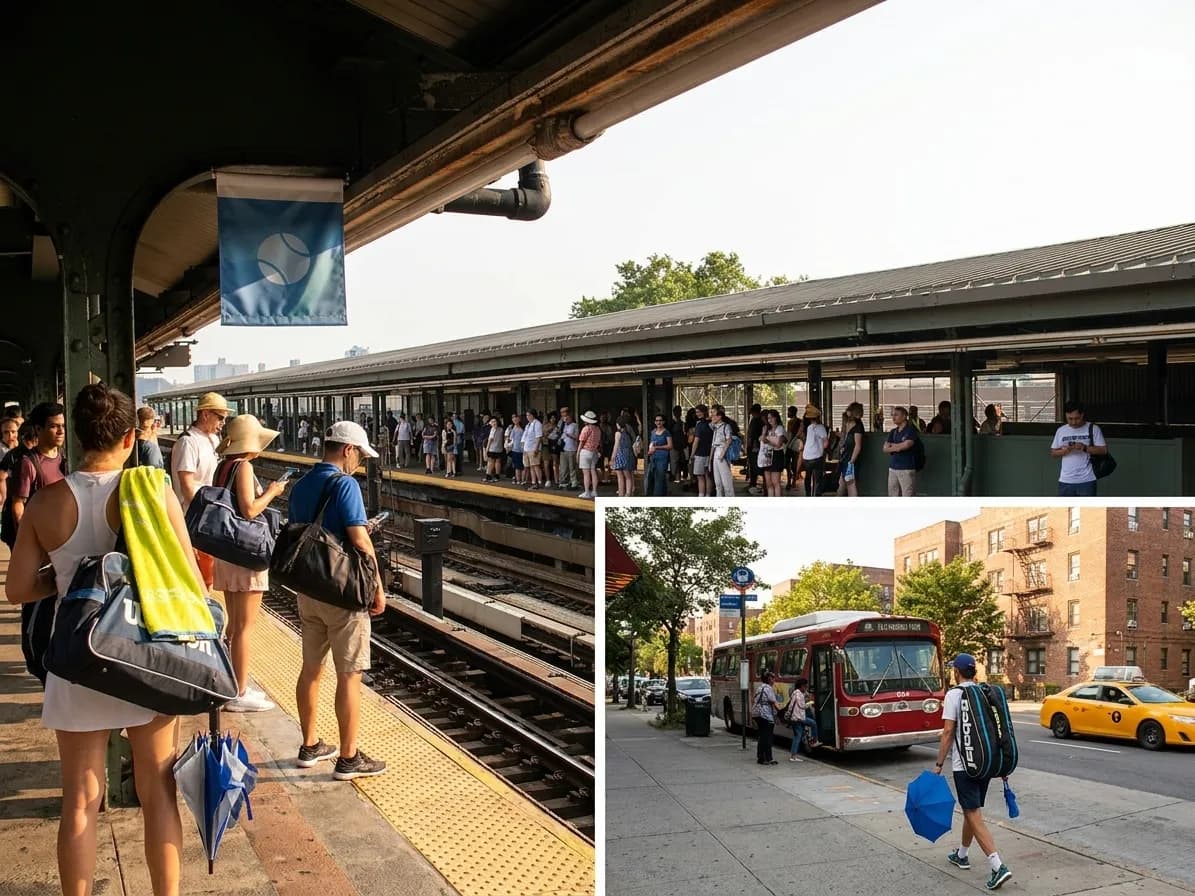
When subway service is severely disrupted and buses are packed, rideshare or taxis become practical backups. The tennis center has designated drop-off areas, and drivers familiar with the tournament know to use the entrances off the Grand Central Parkway or the service roads around the park. Traffic can be heavy during peak session times, especially in the late afternoon and early evening, so budget extra time. If you're coming from Manhattan, expect the ride to take longer during high-demand periods. Check the fare estimate in your rideshare app before you confirm the ride, as pricing can surge during peak tournament hours. Splitting a ride with friends or family can make this option more affordable.
Walking and Biking from Nearby Neighborhoods
If you're staying in Corona, Elmhurst, or nearby neighborhoods, walking or biking to the tennis center is a real option. Flushing Meadows Corona Park has bike paths and pedestrian routes that connect to surrounding streets, and the walk from Corona Plaza to the tennis center takes about twenty minutes. Citi Bike stations are scattered around western Queens, and you can look for stations near the park before walking the final stretch to the venue. Verify current Citi Bike station locations and bike availability through the Citi Bike app. The park itself is large and open, so navigating on foot is straightforward once you're inside. Just be prepared for crowds near the main entrances during popular matches.
Practical Notes for Backup Planning
- Download the MTA app and enable service alerts for the 7 train and any backup lines you plan to use, so you get real-time updates on delays and suspensions.
- Check the official US Open transportation page and the MTA US Open guide before your session to see if any special shuttle services or schedule changes are in effect.
- Build in extra travel time if National Weather Service forecasts predict heavy rain or thunderstorms during your travel window.
- Carry a portable charger so your phone stays powered for transit apps, ticket access, and communication if your trip takes longer than expected.
- Wear comfortable walking shoes, since backup routes often involve longer walks between stations, bus stops, and the tennis center entrances.
- If you're traveling with a group, agree on a meeting point inside the park in case you get separated during a transit disruption.
- Monitor official MTA service status and NYC emergency management alerts for real-time transit and weather updates.
- Consult the official US Open visitor guide to verify current transportation options, entrance locations, and any tournament-specific transit arrangements.
Tags: #USOpen2026 #Queens #FlushingMeadows #KarpoFinds #Karpo #floodwatch #NewYorkLocal #TennisTravel
Sources consulted: usopen.org — Official event schedule · usopen.org — Official visitor A-Z guide · usopen.org — Official transportation directions · usopen.org — Official prohibited-items guide · MTA — Official US Open transit guide · MTA — Official service status
All trademarks are the property of their respective owners.