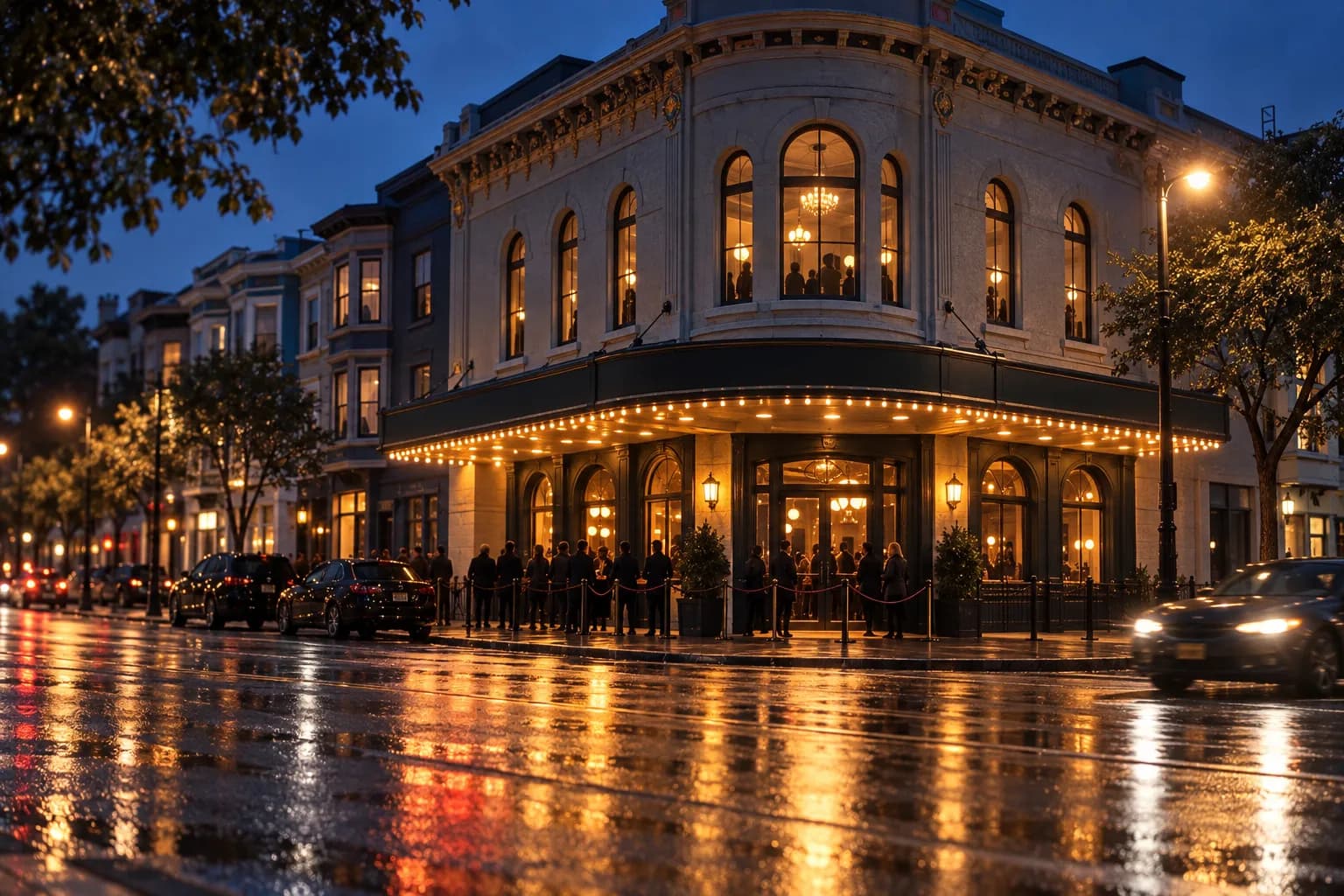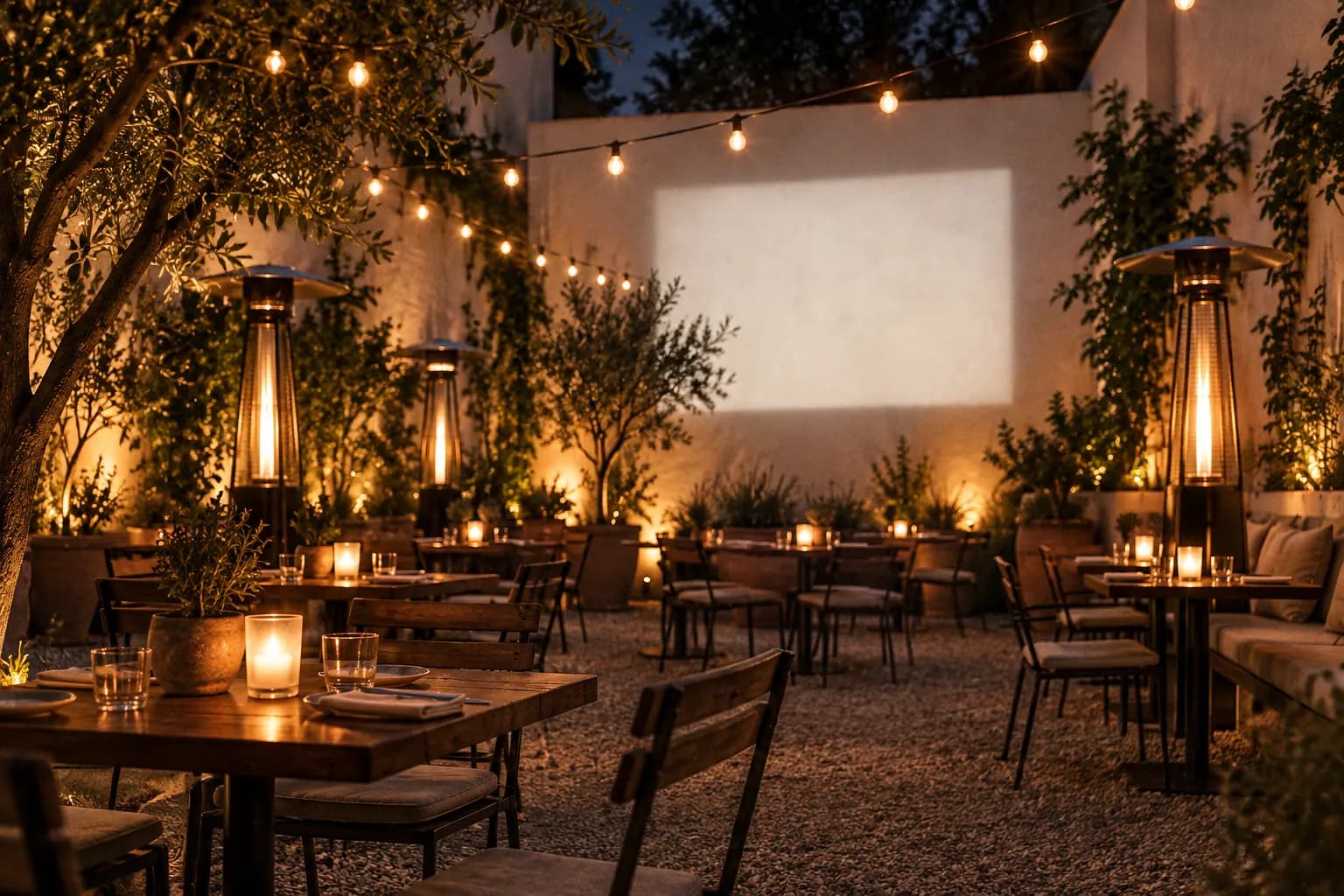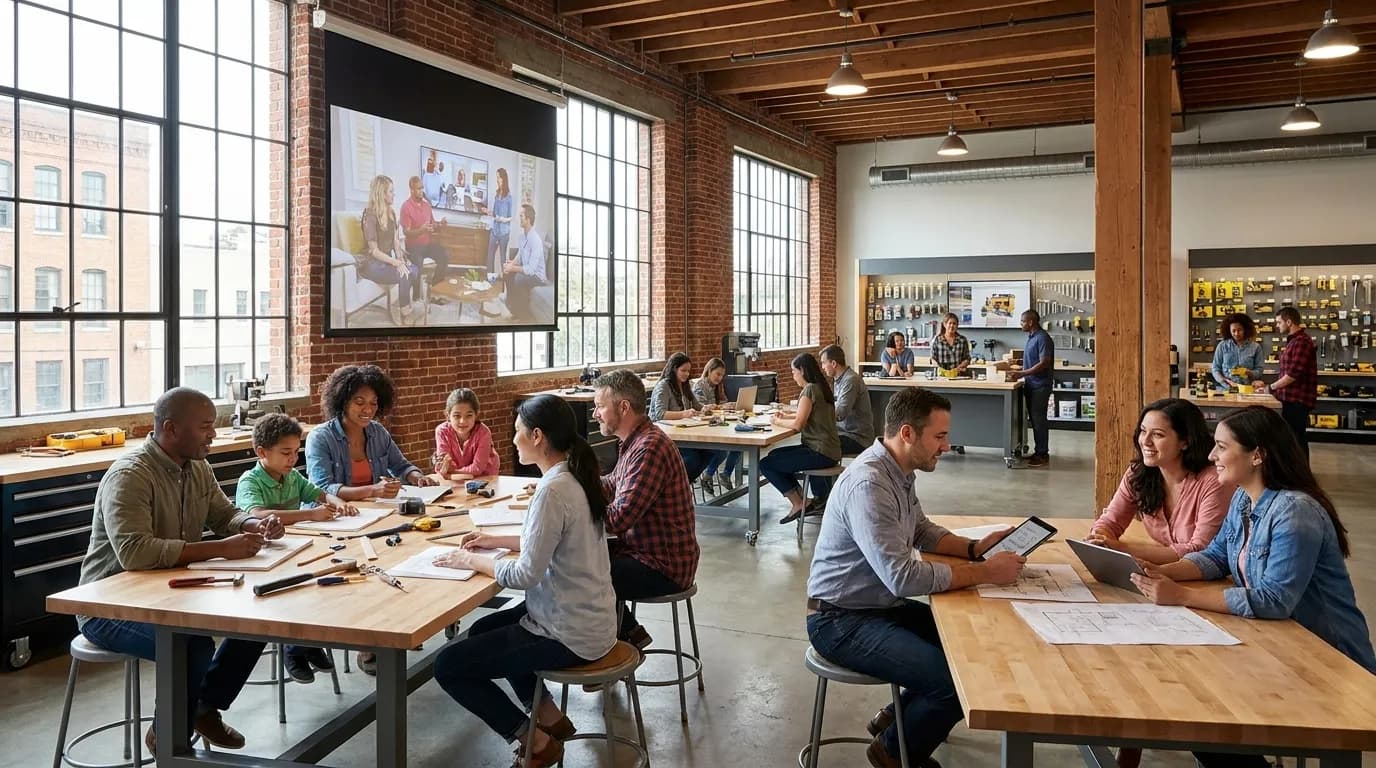
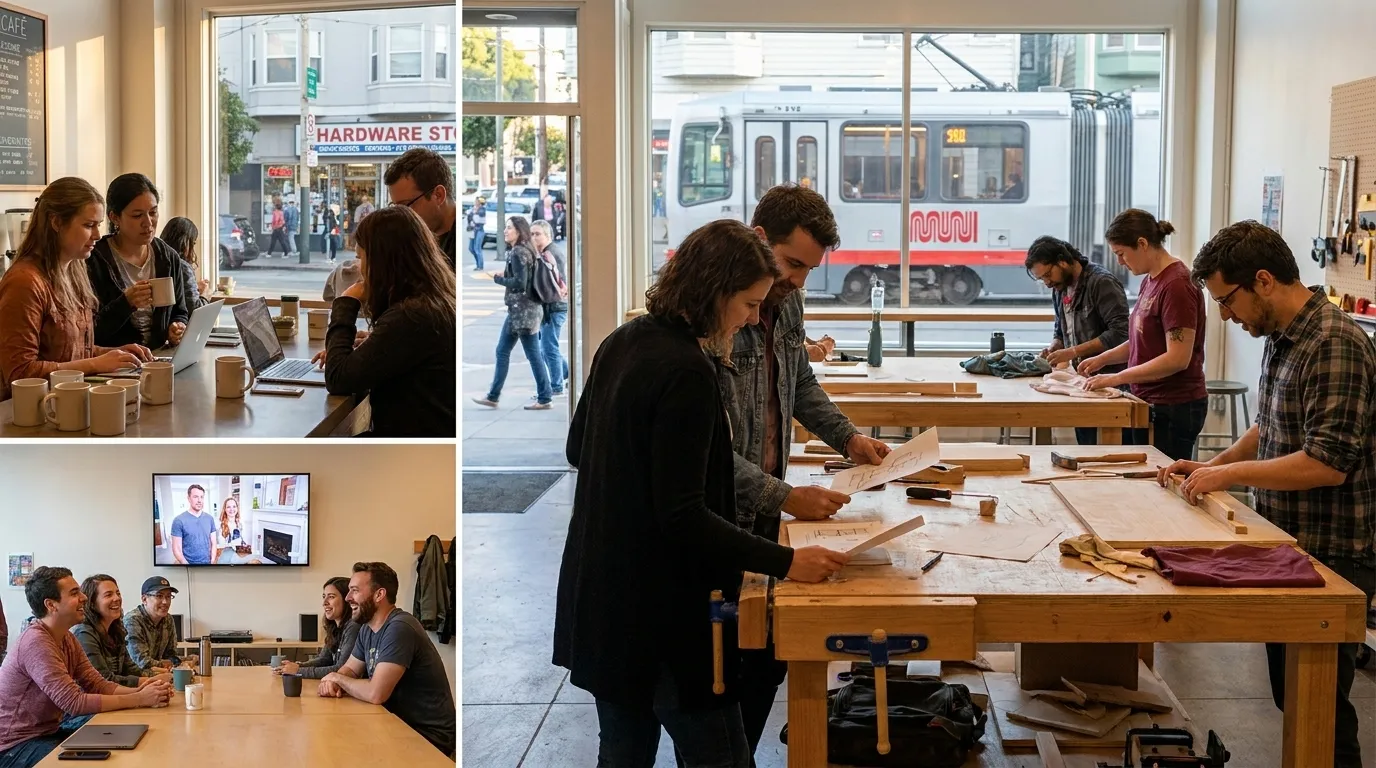
San Francisco's maker culture and home-renovation enthusiasm converge in a network of community workshops, tool-lending programs, and social viewing spaces where DIY fans gather to learn skills, share project ideas, and watch fixer upper design shows together. Across neighborhoods like the Mission, Dogpatch, and Outer Sunset, you'll find makerspaces offering hands-on instruction, hardware retailers hosting demonstration areas, and cafés that screen home-improvement television while patrons sketch floor plans and swap contractor recommendations. This scene thrives on weeknight evenings and Sunday afternoons when working professionals and weekend warriors can align their schedules with workshop sessions and informal watch parties. Accessible by Muni and typically requiring only modest material costs or a beverage purchase, these spaces foster a collaborative, hands-on mood where beginners and experienced renovators alike bring project sketches, questions, and a willingness to learn from peers tackling their own fixer-upper challenges.
Planning your first visit to a makerspace or wondering which hardware demo fits your skill level? Text Karpo to share which San Francisco neighborhood you're in, your preferred weeknight or weekend time slot, whether you're attending solo or with a partner, your comfort level with tools, and if you need spaces with childcare, material sales, or design-book libraries. Karpo will suggest a tailored route that matches your renovation goals and schedule.
Why Fixer-Upper Culture Thrives in San Francisco
San Francisco's housing stock—much of it Victorian, Edwardian, or mid-century—invites renovation, and the city's maker ethos encourages residents to tackle projects themselves rather than hire out every task. Community tool libraries, including the San Francisco Public Library's Tool Lending Library, democratize access to equipment that would otherwise require significant investment. Meanwhile, the popularity of home-design television, including shows in the fixer upper genre, has created a shared visual language and aspirational framework for DIYers. Watch parties blend entertainment with education, as attendees pause episodes to discuss techniques, debate design choices, and troubleshoot real-world challenges they're facing in their own homes.
Timing Your Workshop and Watch-Party Visits
Weeknight evenings—typically Tuesday through Thursday from 6:30 to 9:00 PM—are prime time for after-work workshops and casual screenings. Sunday afternoons, especially between 2:00 and 5:00 PM, attract couples and families who want to combine a social outing with project planning. Makerspaces often schedule introductory tool-safety sessions early in the evening, followed by open-shop hours where you can work on your own projects with staff supervision. Watch parties are more informal and may not follow a fixed calendar; check community boards, neighborhood social-media groups, or café bulletin boards for upcoming gatherings. Arriving early ensures you can grab a seat, introduce yourself, and review any handouts or design books the host has set out.
Getting Around by Muni
The Mission is well-served by the 14, 49, and BART (16th Street and 24th Street stations), making it easy to reach makerspaces and cafés along Mission Street and Valencia Street. Dogpatch connects via the T Third line and the 22 Fillmore, with stops near Third Street's mix of industrial spaces converted to workshops. The Outer Sunset relies on the N Judah, L Taraval, and several bus lines including the 29 and 18; Sunday service can be less frequent, so confirm schedules in advance. Carrying a small backpack for project sketches, a notebook, and any materials you purchase is practical, but avoid bringing large tools or lumber on Muni during peak hours.
Who These Spaces Suit Best
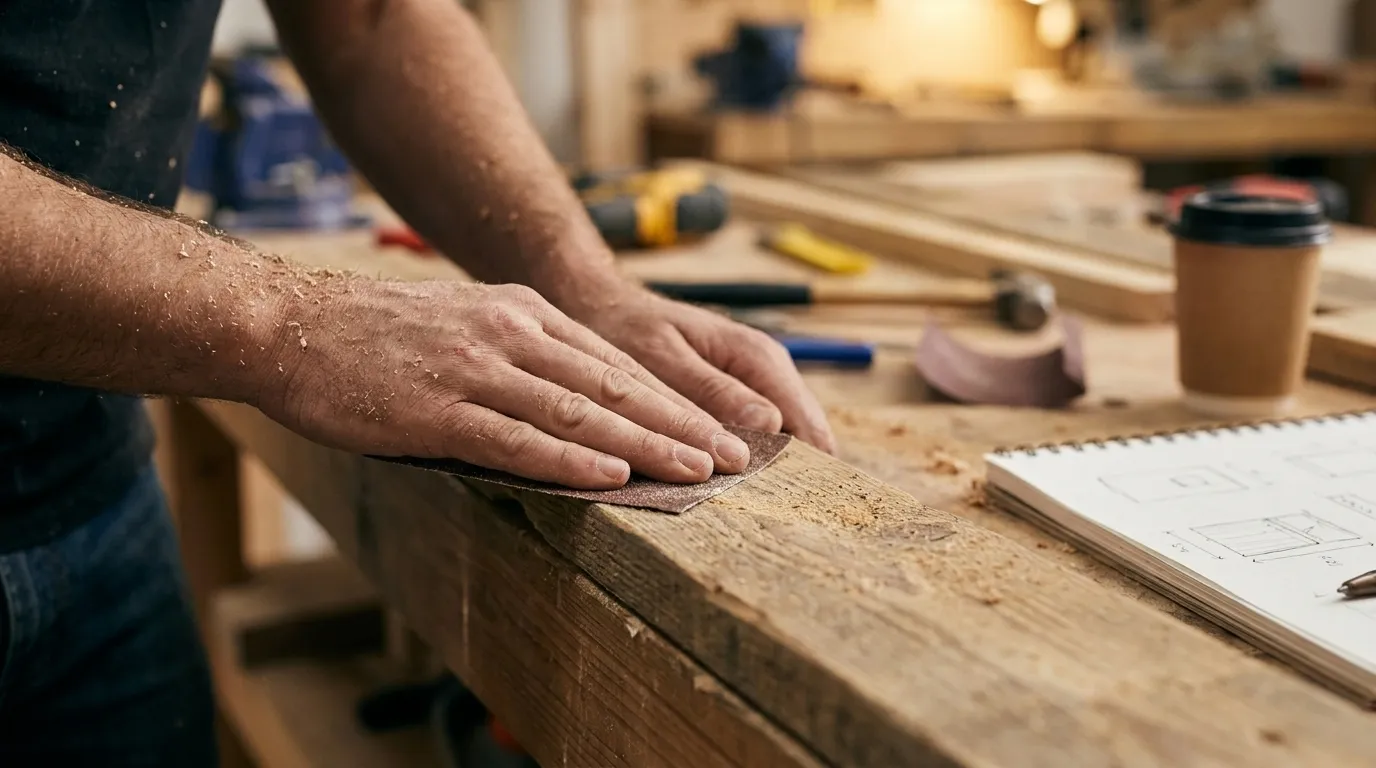
Solo DIYers appreciate the chance to ask questions without judgment and to learn from instructors who've seen every mistake. Couples planning joint renovation projects benefit from the collaborative atmosphere, where they can sketch ideas together and get immediate feedback from peers. Beginners will find introductory workshops on tool safety, basic carpentry, and painting techniques, while more experienced makers can access advanced equipment like laser cutters or CNC routers in certain makerspaces. If you're bringing children, confirm whether the space offers childcare or a separate kids' craft area; not all workshops are set up for young attendees. Watch parties tend to be informal and welcoming to all skill levels, with the shared screen serving as a conversation starter rather than a formal curriculum.
Budget Considerations and What to Expect
Many community makerspaces operate on a membership or drop-in fee model, with single-session rates that are modest—often covering material costs and equipment wear. Tool-lending libraries, including the San Francisco Public Library's program, typically lend tools for free with a library card, though you may need to reserve popular items in advance. Hardware stores with demo areas rarely charge for attendance, though they hope you'll purchase supplies on-site. Watch parties at cafés usually require only a beverage purchase, with coffee or tea in the $4–6 range. Bring cash or a card for incidental purchases, and budget a bit extra if you want to buy lumber, paint samples, or specialty fasteners to take home. If a workshop is fully booked, open-shop hours at the same makerspace or a nearby tool library can provide similar access without the structured instruction.
Accessibility, Uncertainty, and Backup Plans
Accessibility varies: some makerspaces occupy older industrial buildings with stairs and narrow aisles, while newer facilities prioritize ADA compliance with ramps, wide pathways, and adjustable-height workbenches. Call ahead to confirm accessibility features and to ask about accommodations for mobility devices or sensory sensitivities—power tools can be loud. Workshop schedules and watch-party dates are subject to change, especially if a space is volunteer-run or if a café shifts its programming. If your first-choice venue is closed or fully booked, the San Francisco Public Library's Tool Lending Library offers consistent open hours and a welcoming environment for project planning. Nearby hardware stores with demo areas can serve as a fallback, and many have staff who are happy to answer questions even outside scheduled events. Bringing your project sketches, a list of questions, and an open mind ensures you'll get value from any stop on your route.
What to Bring and How to Prepare
- Project sketches, photos of your space, or a list of specific questions for instructors and peers
- A notebook or tablet for taking notes during demonstrations or capturing ideas sparked by watch-party discussions
- Comfortable, closed-toe shoes and clothes you don't mind getting dusty or paint-spattered if you're participating in hands-on work
- A library card if you plan to borrow tools from the Tool Lending Library
- A small tape measure, pencil, and notepad for jotting down dimensions or material quantities
- An open, collaborative attitude—these spaces thrive on shared knowledge and mutual encouragement
Tags: San Francisco, fixer upper, home renovation, watch parties, DIY, makerspaces, tool libraries, Mission, Dogpatch, Outer Sunset, Muni, community workshops, hardware demos, design TV, collaborative learning, weekend projects, weeknight workshops
Sources consulted: hgtv.com · techshop.ws · sfpl.org
All trademarks are the property of their respective owners.
Ask Karpo first
Tell Karpo which San Francisco neighborhood you're in, your preferred weeknight or weekend time slot, whether you're attending solo or with a partner, your skill level with tools, and if you want spaces with childcare, material sales, or design-book libraries.