Here's the secret nobody tells you about wine tasting: the people pouring the wine want you to be a beginner. A first-timer asking honest questions is the best part of their shift — far better than the guy who swirls aggressively and says "hints of forest floor" to no one. You do not need to know what tannins are. You do not need to own a single piece of clothing with the word "sommelier" on it. You need about an hour, a mild sense of curiosity, and the walking directions to a tasting room.
And in San Francisco you don't even need a car or a Napa hotel budget, because the city has its own tasting rooms — walk-in friendly, casual, and used to first-timers. Here's exactly how it all works, so you can spend your attention on the wine instead of on wondering whether you're doing it wrong.
How a Tasting Actually Works
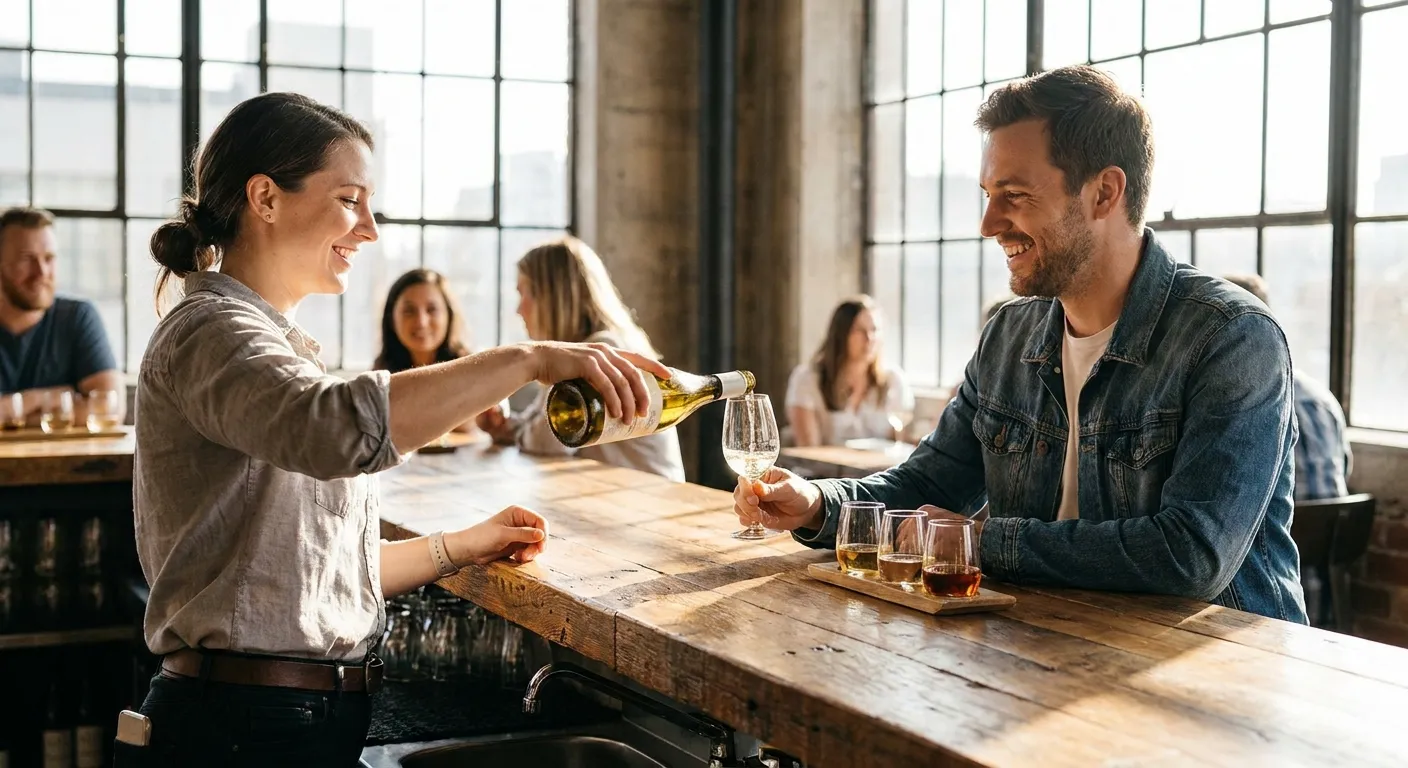
You walk in. Someone behind the bar greets you, hands you a glass, and shows you a short menu of tasting options. You pick one, and they pour you a series of small tastes — usually working from lighter wines to heavier ones, whites before reds — telling you a little about each as they go. Each pour is a couple of sips' worth, not a full glass; a whole tasting adds up to roughly one to two glasses of wine spread over an unhurried hour. That's the entire mechanic. There is no quiz at the end.
The one move worth stealing from the pros: look, smell, then sip. Tilt the glass and notice the color, stick your nose in and take an honest sniff, then taste. You'll catch more than you expect, and "this smells like grapefruit" is a completely legitimate tasting note. So is "I don't like this one," which brings us to the dump bucket — that vessel on the bar is there so you can pour out anything you're not finishing. Using it is standard practice, not an insult to the winemaker.
Flight vs. Glass: What to Order
A flight is a curated set of several small pours — the sampler platter of wine. A glass is a full pour of one wine you already know you want. For a first visit, take the flight every time: it's the fastest way to learn what you actually like, and comparing wines side by side is the whole point of tasting. Once a flight teaches you that you're a zinfandel person, order the glass of zinfandel on round two.
Tasting Fees, Decoded
Yes, tasting usually costs money — city tasting rooms often run in the ballpark of $15 to $30 for a flight, generally cheaper than the wine-country splurge experiences. The part beginners miss: many rooms waive or credit the fee if you buy a bottle. If something in your flight made you happy, buying that bottle often means the tasting effectively cost you little or nothing, and you go home with the evidence. Fees and policies shift, so treat any number as a rough guide and check the room's menu — no one will spring a surprise on you; it's all printed.
Do You Need a Reservation?
For a party of two on a random afternoon in the city: usually not. San Francisco's urban tasting rooms mostly welcome walk-ins, which is a big part of their charm over Napa, where the marquee estates want bookings. The exceptions are groups — around six to eight people, call ahead anywhere — and weekend prime time at small rooms. If you're building your whole afternoon around one specific spot, thirty seconds on their site to confirm hours is never wasted.
How Not to Feel Out of Place
Etiquette at a tasting room is mostly common sense plus a few insider habits:
- Eat first. A tasting on an empty stomach hits harder and faster than you'd think.
- Skip heavy perfume or cologne — smell is half of tasting, for you and everyone within ten feet.
- Hold the glass by the stem so the wine stays cool and the bowl stays smudge-free.
- Ask questions. "What should I try if I usually drink cheap pinot grigio?" is a great opener, not an embarrassing one.
- Pace yourself and drink water between rounds. The dump bucket is your friend.
- Wear whatever you want. City tasting rooms see everything from first dates to gym clothes.
Beginner-Friendly Rooms in San Francisco
Winery Collective at Fisherman's Wharf is the single best first-timer stop in the city: a multi-winery tasting room on Jefferson Street pouring from a rotating list of dozens of small California producers, no appointment needed, open daily into the evening. Because you're comparing wines from many different wineries at one counter, it's basically a self-guided crash course in what California makes.
Eco Terreno, near Jackson Square on Columbus Avenue, is the stylish option — a tasting room for a family farm in Sonoma's Alexander Valley that grows organically and biodynamically. Walk-ins are welcome, it currently pours Thursday through Sunday afternoons into the evening, and if you want your first tasting to come with a story about regenerative farming, this is the door. JAX Vineyards on Brannan Street in SoMa rounds out the trio: a Napa family winery's city outpost that runs evening hours Tuesday through Saturday and takes both walk-ins and reservations — the rare tasting room that works as an after-work stop.
When you're ready for the field-trip version, the wineries on Treasure Island pour on weekend afternoons with the downtown skyline across the water, a ten-minute ferry ride from the Ferry Building. Same low-pressure energy, better view.
First-Timer Wine Tasting FAQs
Do I have to spit the wine out?
No. Spitting is a working habit for professionals tasting forty wines before lunch. At a casual tasting you're welcome to drink your pours — just use the dump bucket for anything you don't want to finish, and nobody will blink either way. The only real rule is knowing your own limit, especially if you're stringing multiple rooms together.
Can I go wine tasting alone?
Absolutely, and it's underrated. Solo tasters get more attention from the person pouring, which means better stories and better recommendations. A bar seat, a flight, and a book is a legitimately great San Francisco afternoon. Walk-in rooms make it frictionless — no reservation negotiation, no group consensus on when to leave.
How is tasting in the city different from going to Napa or Sonoma?
City tasting rooms are cheaper to reach, easier to walk into, and far more casual — but you're tasting in a bar-like room rather than at the vineyard itself. Think of SF as the on-ramp: figure out what you like here for the price of a nice lunch, then spend the wine-country trip on wineries that pour what you already know you love. Ask Karpo when you're ready and it'll line up the rooms nearest you, hours checked.