Most people hunting for live basketball in San Francisco think their only option is blowing rent money on Warriors tickets at Chase Center. They're wrong. Every summer since 1979, Kezar Pavilion in the Haight has hosted the San Francisco Pro-Am Basketball League—elite college players, overseas pros, and occasional NBA stars playing for pride in a 1926 gym where admission is completely free. No ticket scan, no metal detector, no VIP section. You walk through the same door as the players, grab a wooden bleacher seat three feet from the baseline, and watch basketball that's faster and more physical than most people expect. The hardwood is sprung construction from nearly a century ago, and when the building is packed on a Tuesday night in August, you can feel the floor bounce under your feet. This is what basketball looked like before it became a luxury product, and it's still happening every week at 755 Stanyan Street.
Karpo tracks live game schedules at Kezar Pavilion and alerts you when NBA talent is confirmed to play, plus wait times and seating availability before you walk over.
A 1926 gym where the floor still bounces
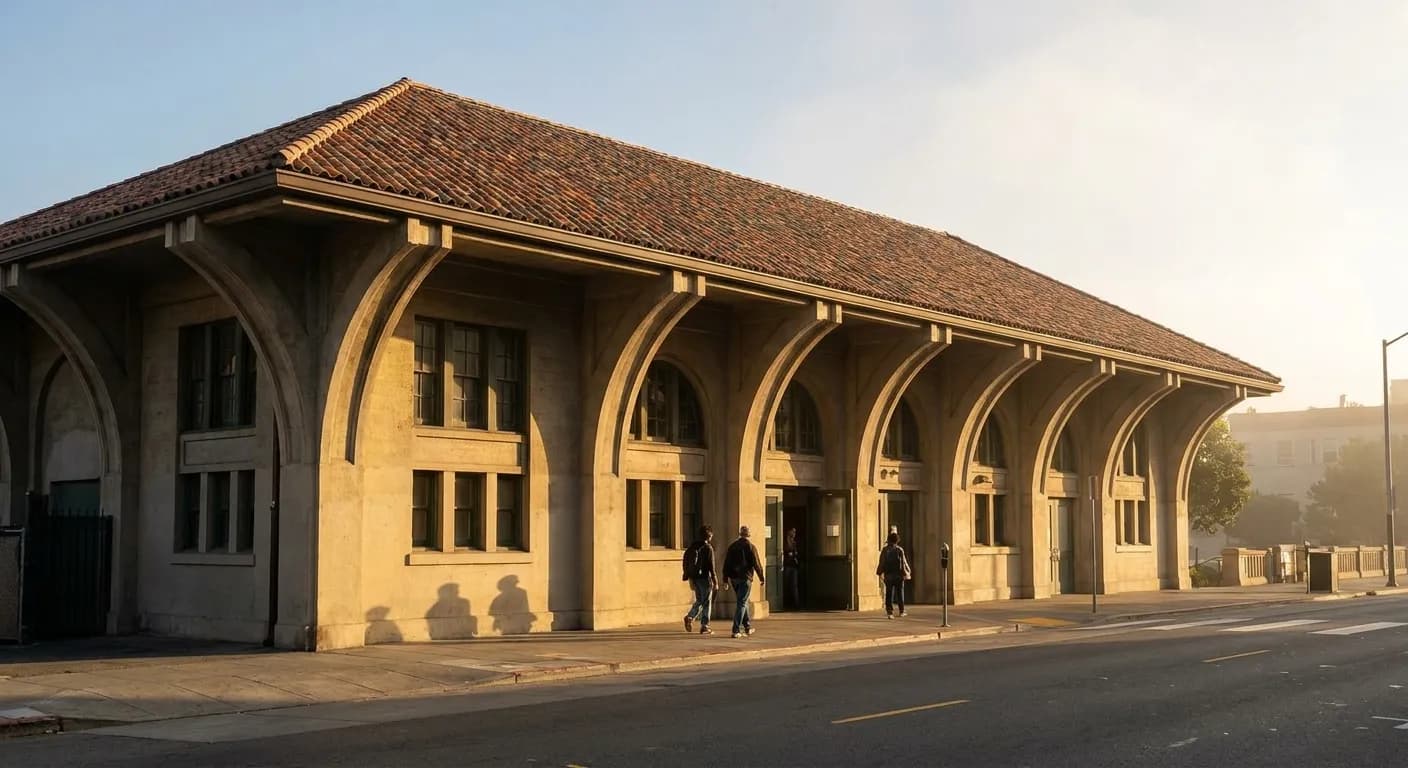
Kezar Pavilion doesn't announce itself. You walk up Stanyan Street past Kezar Stadium, and there it is—a cast-in-place concrete structure with deep arching roof corbels and clay tile in shades you don't see on new buildings. Willis Polk designed it in neo-Romanesque style to complement the original stadium, and though it wasn't finished until 1926 (a year late), the bones have held up. The sprung wood floor is the same technology from a century ago: it gives under weight, absorbs impact, and makes every step feel different than the dead bounce of modern courts.
Inside, the building seats fewer than its original 2,500 capacity because the balconies stay closed now. That just makes it more intimate. You're three feet from the baseline. When a player plants for a jump shot, you hear the squeak of rubber on hardwood before the ball leaves their hands. The air gets thick by halftime—gym floor wax, humidity from a packed house, and that specific smell of a building that's hosted basketball for nearly a hundred years without trying to be anything else.
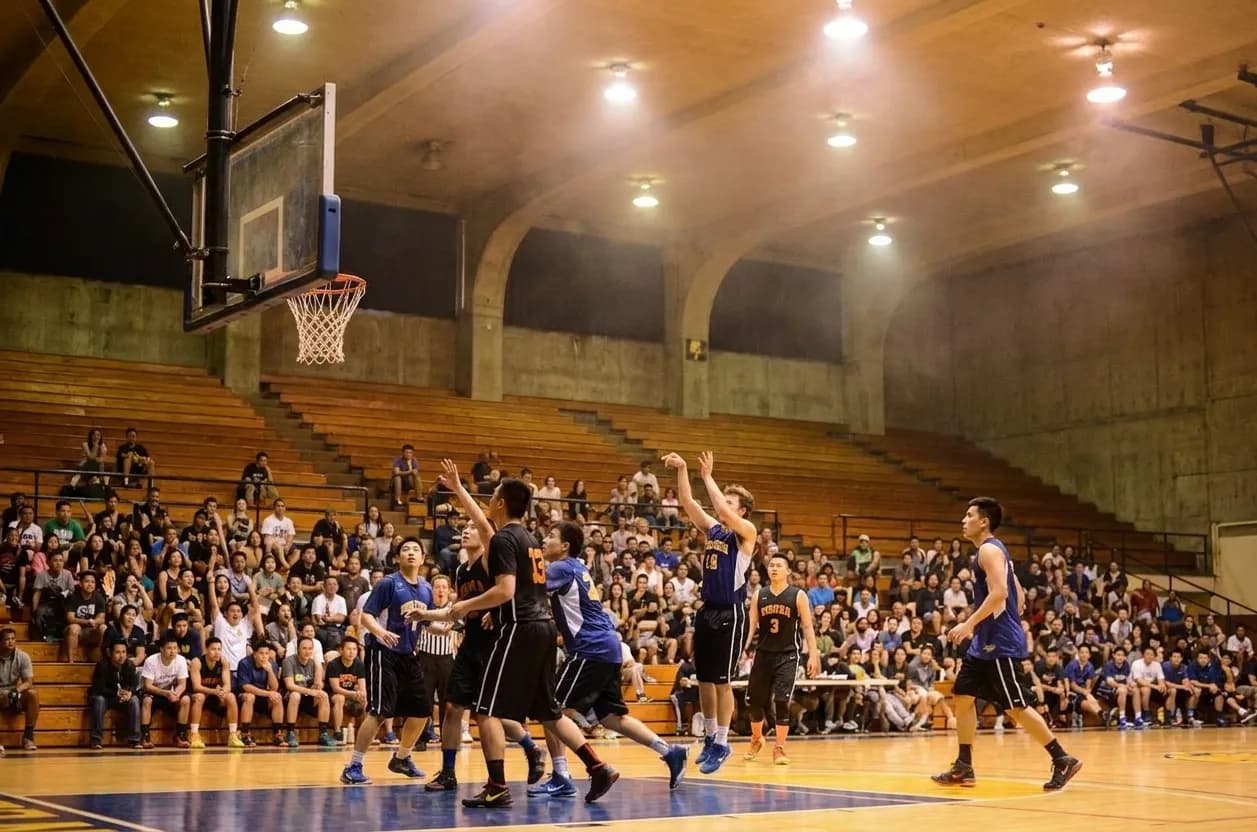
Pro-Am basketball with no tickets, no metal detectors
The San Francisco Bay Area Pro-Am Basketball League has run at Kezar since 1979, founded by Jon Greenberg as a summer proving ground for college players and pros keeping sharp between seasons. The format is simple: teams of local talent mixed with ringers—guys who just finished a season in Europe, college standouts from Cal or USF, and occasionally NBA players who show up because they grew up in the Bay and want to remind everyone they can still cook. Jason Kidd, Gary Payton, Aaron Gordon, and Steph Curry have all played here. No one charges admission. You walk through the door, grab a spot on the wooden bleachers, and watch basketball that's faster and more physical than most people expect.
Games run Monday through Thursday evenings from mid-June through August, typically starting at 6:30 PM. But the real move is arriving around 6:00 PM when players are warming up. That's when you realize the guy stretching ten feet away from you might have been guarding an All-Star last month. There's no VIP section, no roped-off warm-up area. Everyone uses the same entrance. If you're courtside early, you're in the mix.
The intensity varies. Some nights it's a showcase—teams trading highlight dunks, crowd going wild, Instagram clips uploaded before the game ends. Other nights it's two local squads like East Bay versus Dream Team grinding out a close game in the final two minutes, and those are often better. The pride is different when it's neighborhood versus neighborhood. Players who could have made the league but took another path still have something to prove here, and it shows in how they defend.
Why the women's games deserve equal attention
The Women's Pro Basketball Association summer league also plays at Kezar, usually on Friday and Saturday blocks. The level is equivalent—WNBA players, top-tier overseas pros, college stars preparing for the draft. The pace is just as fast, the shooting often cleaner, and the crowds smaller, which means better sightlines if you show up. In a summer when fever vs sky highlights dominate social feeds and the WNBA is finally getting its due in mainstream coverage, watching women's Pro-Am basketball at Kezar feels like seeing the future of the sport in a building that's been hosting it since before most fans' grandparents were born.
The women's schedule isn't as widely promoted, which is ridiculous given the talent. Check the official [San Francisco Recreation and Parks](https://sfrecpark.org) site for updated schedules—they post monthly calendars with game times. July and August typically feature the densest schedule, with some Saturday all-day events running from 10:00 AM to 9:00 PM. Those marathon days are when you see the full spectrum: rookies trying to make a name, vets working on new moves, and occasional guest appearances that don't get announced until game day.
The unspoken rules of the bleachers
Kezar's crowd has its own culture. There are older men who've sat in the same spot since the 1980s, yelling at refs about travel calls three possessions ago. There are kids with tucked-in jerseys realizing the game is faster in person than on their phones. The wealth gap that defines modern San Francisco doesn't matter here—for two hours everyone is just a basketball fan. That only works if people don't act like idiots. Don't try to get autographs while a guy is subbing back in. Don't block sightlines standing up to film your entire Instagram story. The beauty of Kezar is the lack of barriers, but that's a privilege that requires respect.
Seating is first-come courtside, and the northwest corner near the home bench is where regulars post up because it has the best angle on fast breaks. If a big name is rumored to be playing—check the Pro-Am's social media the day of—expect the place to fill up by 6:45 PM. Showing up at 8:00 PM hoping for a good seat is rookie behavior. The better strategy: grab food in the Inner Sunset beforehand, walk over by 6:00 PM, and settle in. [Foglinesf.com](https://www.foglinesf.com) noted that Parkview Market at Frederick and Stanyan is the pre-game move—grab drinks and snacks to bring in, since Kezar allows outside food and the concession options inside are minimal.
What makes August the real proving ground
Regular season Pro-Am is fun. August playoffs are when rotations shorten and the basketball gets serious. Teams that have been coasting suddenly tighten their defense. Players who were pacing themselves all summer start hunting mismatches. The building gets louder because everyone knows these games matter—not for money or trophies, but for pride and the kind of reputation that follows you around the Bay Area for years. If you get dunked on in an August playoff game at Kezar, the whole city hears about it by Wednesday morning.
The league's staying power comes from staying small. It never tried to become a televised spectacle or chase corporate sponsors. It stayed focused on basketball, coached by people who understood this was about development as much as entertainment. The late Ben Crouch, a legendary Bay Area coach, was one of many who kept the culture intact. Now the game has changed in how highlights spread—clips hit TikTok before the final buzzer—but the feeling of being there hasn't changed since the 1980s. The floor still squeaks the same way. The refs still take heat from the sidelines. The talent is still elite, and the door is still open to anyone who wants to walk through it.
Practical notes
Kezar Pavilion is at 755 Stanyan Street next to Kezar Stadium in the Haight. The N-Judah stops at Carl and Stanyan, a five-minute walk. Street parking is tight but possible on the residential blocks east of Stanyan. Games run Monday through Thursday at 6:30 PM through August 2026, with women's games typically Friday and Saturday. Check the [SF Recreation and Parks](https://sfrecpark.org) calendar for exact schedules—they update monthly and sometimes add playoff dates with short notice. Admission is free. The building allows outside food and drinks. Arrive by 6:00 PM if big names are rumored; check the Pro-Am's social media day-of for roster updates. No metal detectors, no ticket scanners—you just walk in. Please drink responsibly if you bring alcohol into the venue.
Tags: #KezarPavilion #SFProAm #HaightAshbury #FreeSFBasketball #BayAreaHoops #SummerBasketball #SanFranciscoSports #ProAmBasketball #KezarStadium #SFRecPark #InnerSunset #PickUpBasketball #LiveSportsFreeSF #HiddenSFGems #WNBAWatch
Please drink responsibly. Must be of legal drinking age.
All trademarks are the property of their respective owners.
Ask Karpo first
Planning a Haight evening around Kezar? Ask me to map pre-game spots for pinball at Free Gold Watch, then route you to Parkview Market for drinks to bring into the pavilion—plus real-time game updates and whether tonight's matchup is worth the walk from the N-Judah.