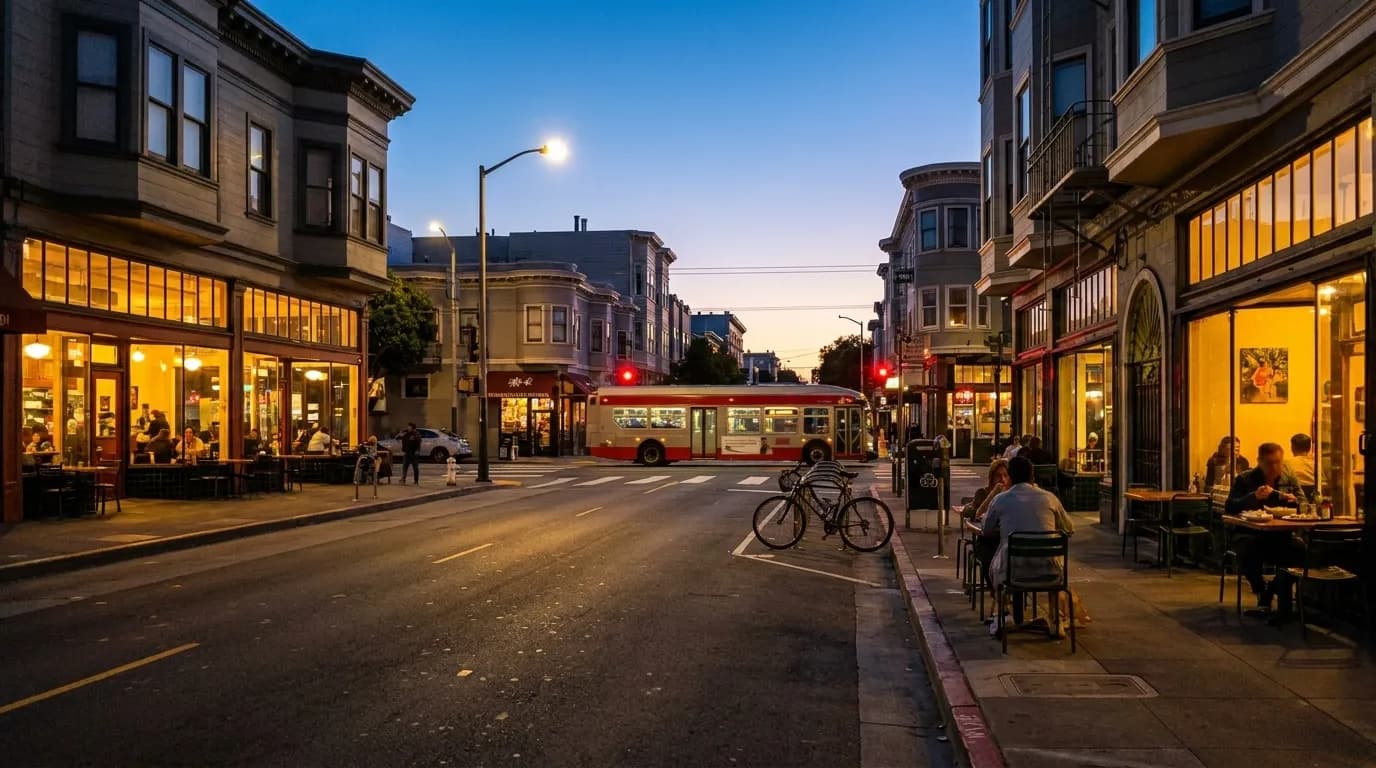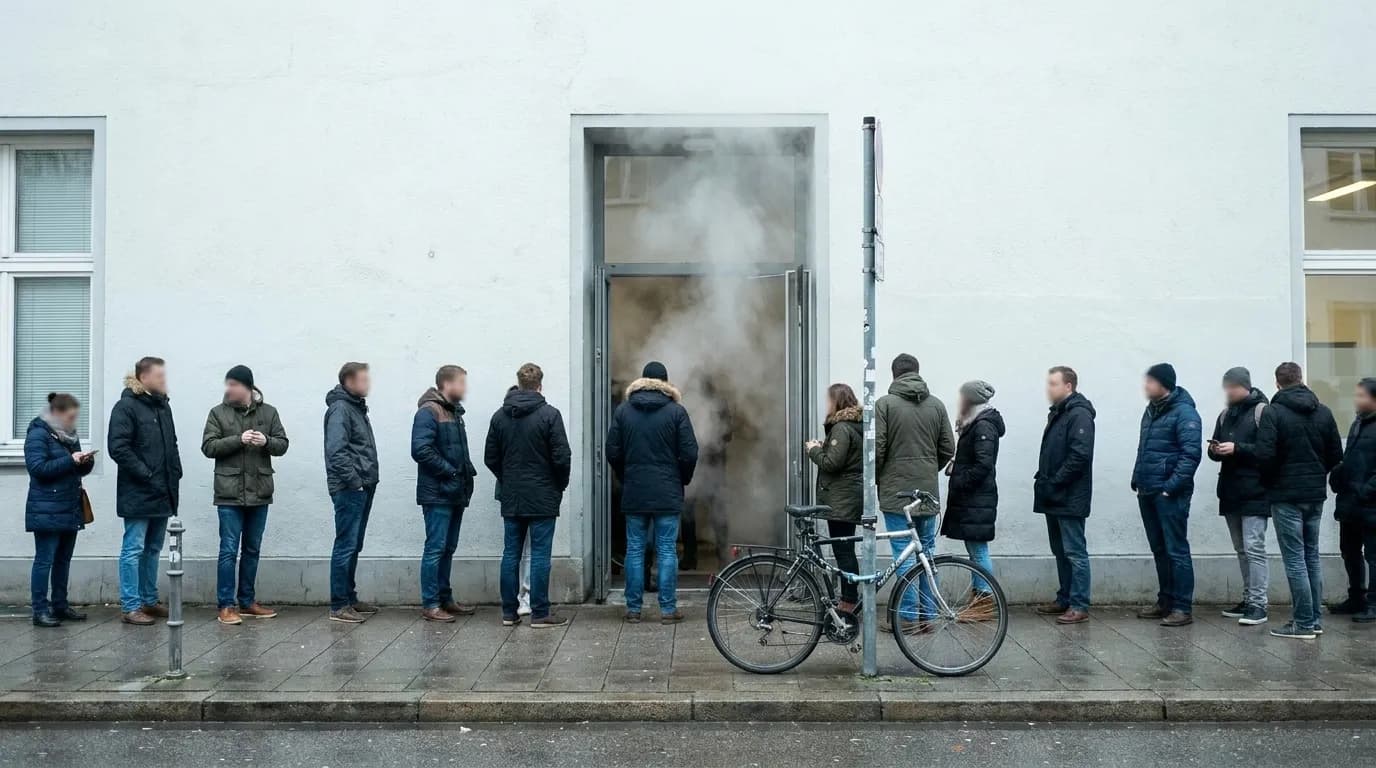
The constraint on a San Francisco lunch is rarely the food and almost always the queue. Between about twelve-fifteen and one, the same twenty thousand people in the Financial District, SoMa and Mission Bay want lunch simultaneously, and every counter within walking distance absorbs that in the only way a counter can, which is by making people wait. The fix is structural rather than a matter of finding a secret restaurant.
The difference between a ten-minute lunch and a forty-minute one is usually ten minutes of timing. Ask Karpo what is fast near you right now.
Formats that are structurally fast
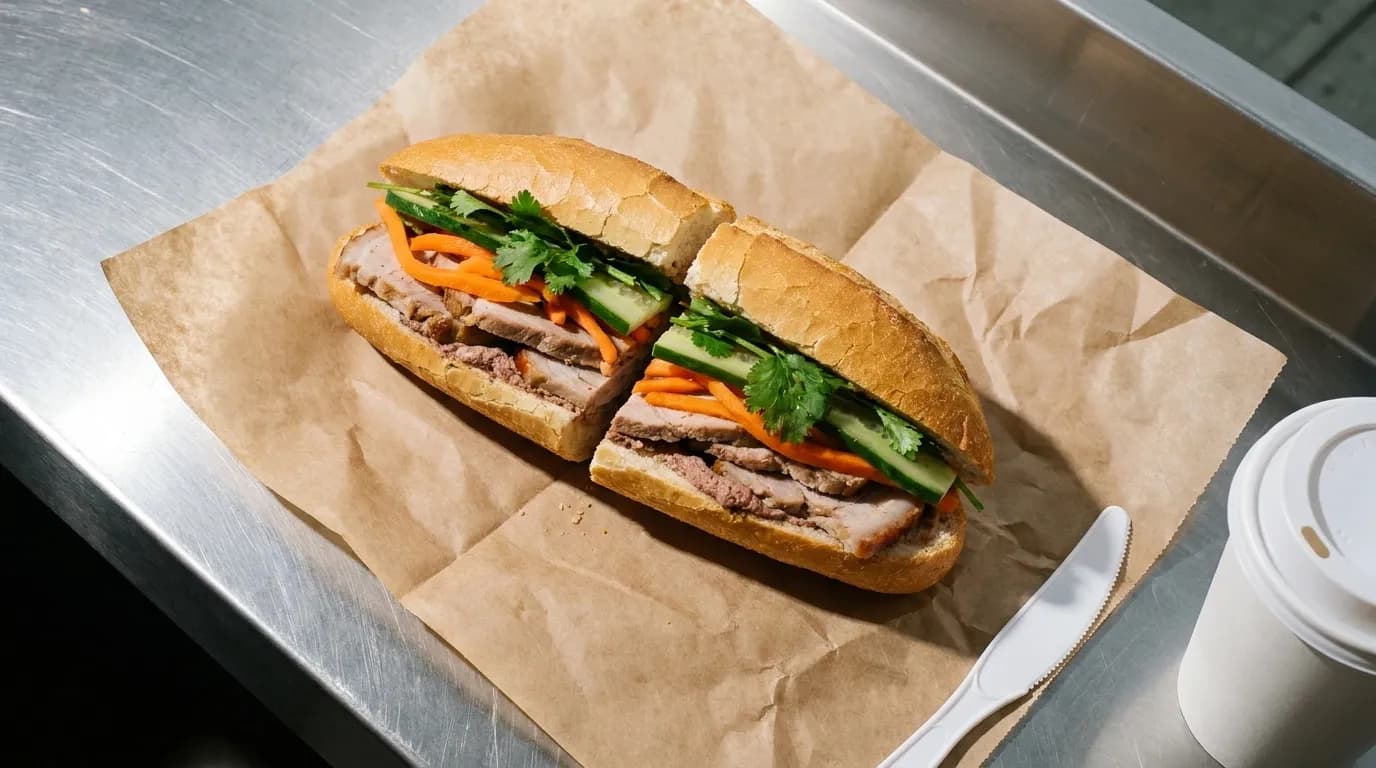
Some kinds of food are quick because of how they are made, not because the staff are hurrying. A taqueria assembly line, where a burrito is built by three people passing it along, produces one every twenty seconds regardless of queue length. A banh mi counter takes about two minutes per sandwich. A Chinese roast meat window is ninety seconds. A steam-table or by-weight counter is as fast as you can point.
Slow formats are the ones where each order is cooked individually to order: made-to-order salads and bowls with a dozen choices, anything from a fryer with limited capacity, and any place where a single person is both taking orders and cooking. The tell is whether the queue is moving at all, not how long it is. A twenty-person queue at a burrito counter is eight minutes; a six-person queue at a made-to-order bowl shop can be fifteen.
Timing, which is most of the answer
The San Francisco lunch peak is sharp and short: roughly twelve-fifteen to one o'clock. Arriving at eleven-forty-five or after one-fifteen changes the wait at almost any counter in the city by a factor of three or four. This is the single highest-leverage change available and it costs nothing but a small adjustment to the calendar.
There is a second, less obvious window. Many counters have a lull between about twelve-fifty and one-ten, when the first wave has been served and the second has not yet arrived. If you cannot leave early, leaving fifteen minutes later than everyone else is nearly as effective.
Mobile ordering, used properly
Ordering ahead for collection is the other structural fix and it is underused at independents. A large number of San Francisco counters now take orders through their own website or by phone, and a phoned order placed at eleven-fifty is ready at twelve-fifteen with no queue at all. This is more effective than any chain app, because you are skipping a line rather than a menu.
The caveat is that at the very busiest counters, mobile orders and the physical queue compete for the same kitchen, and a shop that is overwhelmed will be late on both. The rule of thumb is that ordering ahead works well at a busy counter and works brilliantly at a moderately busy one, which is another argument for the eleven-forty-five approach.
Where the hidden capacity is
Food halls and market buildings look busy and are usually faster than they appear, because a dozen counters share one crowd. The Ferry Building, the various SoMa and Mid-Market halls and the market spaces attached to the larger office developments all work this way, and the counter with the shortest queue is frequently the best one.
The other hidden capacity is one block off the main lunch drag. Financial District workers walk in a predictable radius and the counters just outside it — up towards Chinatown, east towards the Embarcadero, south into the quieter parts of SoMa — have the same food and a fraction of the queue. A three-minute walk regularly saves fifteen minutes of standing.
The seating problem
The other half of a fast lunch is having somewhere to eat it, and central San Francisco is unusually well supplied if you know where to look. The city requires many large downtown developments to provide publicly accessible open space, and the result is a network of privately owned public plazas, roof terraces and atriums scattered through the Financial District and SoMa — several of them on upper floors, almost all of them signposted only minimally, and most of them half empty at one o'clock. Taking food to one of those is faster than waiting for a table and considerably more pleasant.
Neighbourhood notes
The Financial District and SoMa have the sharpest peak and the longest queues, and also the highest density of options, so the walk-one-block rule works best there. Chinatown is fast almost everywhere because the formats are fast. The Tenderloin has short queues and excellent value at lunch. Mission Bay has fewer options relative to its population, so ordering ahead matters more. And the Mission itself is a lunchtime pleasure rather than a problem — the taquerias absorb any queue in minutes.
Weekends invert all of this: the Financial District is empty and the neighbourhood counters in the Mission, the Richmond and the Sunset carry the load, with queues at brunch-adjacent places that are far worse than anything on a weekday.
Practical notes
Watch how fast a queue moves rather than how long it is; format matters more than length. Shift your lunch fifteen minutes either side of the peak if you can. Call or order online at independents, not just at chains. Many counters close between three and five, so a late lunch has fewer options than it appears. Several San Francisco restaurants add a service or health surcharge to the bill that is printed at the bottom of the menu. And if you have a hard twenty minutes, a burrito, a banh mi or a roast meat plate is the reliable answer in almost any neighbourhood.
Tags: #SanFrancisco #SFFood #QuickLunch #FastFood #FinancialDistrict #SoMa #Chinatown #Tenderloin #MissionDistrict #FerryBuilding #FoodNearMe #SFEats #LunchNearMe #ShortWait
All trademarks are the property of their respective owners.
Ask Karpo first
Want to know which counters near you are moving fastest right now, which take orders ahead, and what is quiet one block off the main drag? Ask Karpo before you join the line.