Search for fast food near me in San Francisco and the results will confuse two things that have almost nothing to do with each other: food that is cheap, and food that is fast. In most American cities those overlap because the drive-thru does both at once. San Francisco has very few drive-thrus — the lots are too small, the streets too steep, the permitting too hostile — so speed here is a property of the counter, not the car. The practical way to sort the options is by the only number that matters when you are hungry and short on time: how long it takes from ordering to holding food.
The useful question is never which fast food is best — it is what you can get in the number of minutes you actually have before the next thing starts. Tell Karpo how long you have and where you are standing, and it will only suggest food that fits the gap.
Tier one: ninety seconds, because it is already made
The fastest food in this city was cooked before you arrived. Slices under a heat lamp, a steam table of Chinese-American plates, pastries and buns behind glass, a deli case of made-up sandwiches, rotisserie chicken already off the spit. You point, they wrap, you pay. Nothing in this tier will be the best version of itself, and that is the trade you are making — but a bakery bun or a counter slice at ninety seconds beats a superior meal you do not have time to wait for.
This tier is densest wherever there is foot traffic and thin rents at the same time: the commercial stretches of the Richmond and the Sunset, the blocks around Chinatown's produce markets, the older parts of the Mission. It is thinnest downtown, where the same grab-and-go format exists but at nearly double the price for the same execution.
Tier two: five minutes, because it is assembled to order
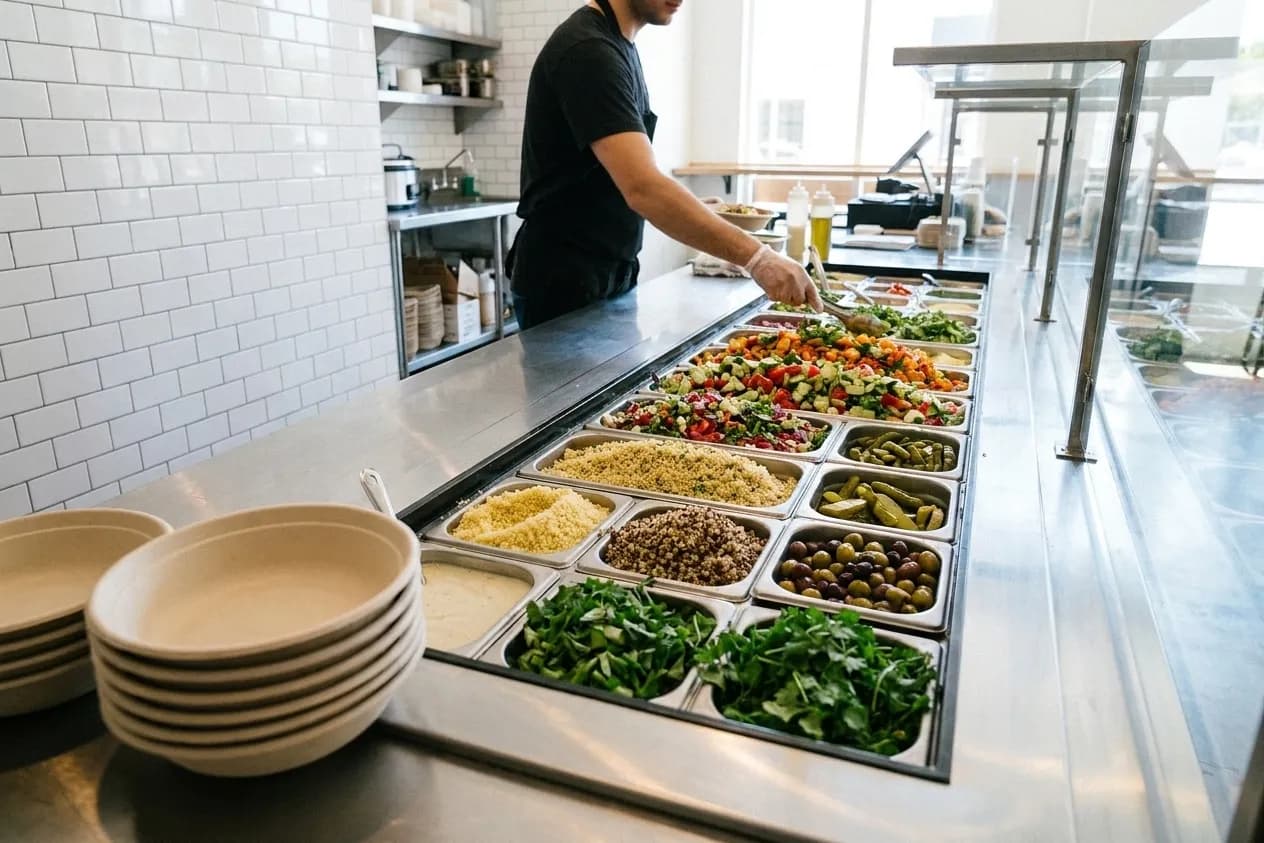
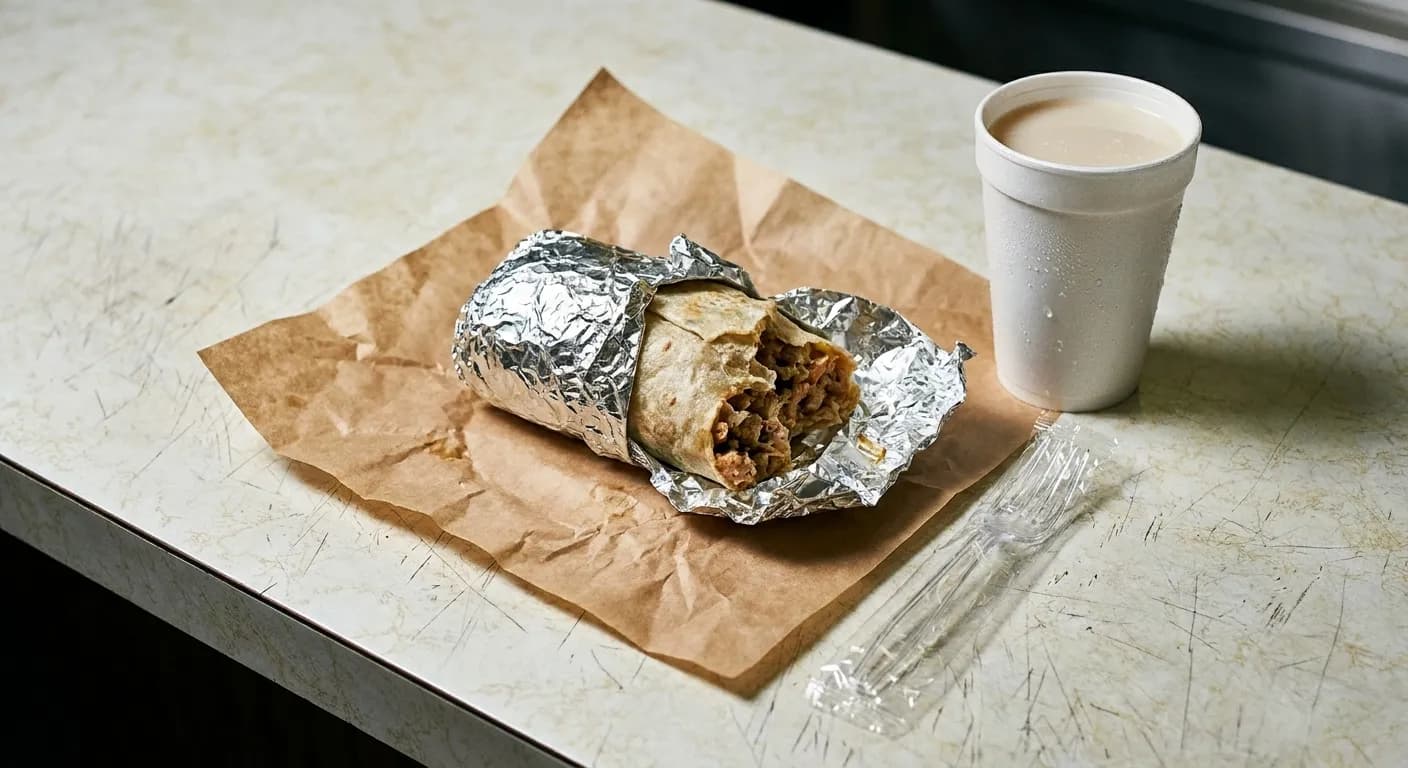
This is the burrito, the banh mi, the poke bowl, the halal plate, the sandwich built in front of you. Components are prepped, but the item is put together for you, which costs a few minutes and buys a very large jump in quality. This is the sweet spot of fast food in San Francisco and the reason the city's best-known cheap meal is a burrito rather than a burger — the format is designed around exactly this constraint.
Two things stretch this tier past its promise. One is a queue longer than four people, because assembly is serial and each person ahead of you costs the full build time. The other is ordering a protein that is not already resting on the line. If the meat has to come off the grill for you, you have quietly moved into tier three.
Tier three: twelve minutes, because something is cooking
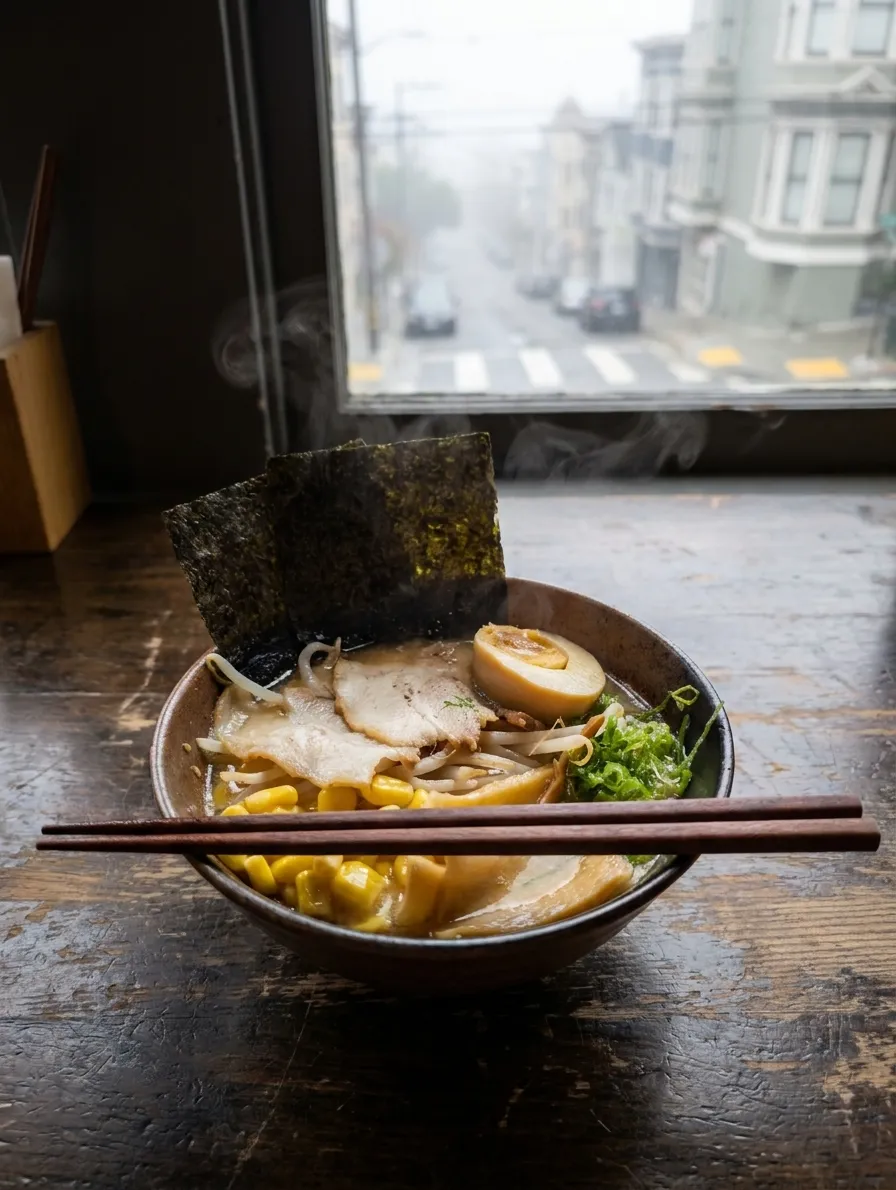
Fried chicken, a burger from a proper griddle, dumplings dropped fresh, fish and chips, anything from a fryer that was not already loaded. These are worth the wait often enough that plenty of people order them without realising a wait is coming. The mistake is not the order — it is ordering it at 12:40 when you are due back at one.
A reliable signal: if the counter takes your phone number or hands you a numbered stand, the kitchen expects you to wait longer than you think. That is not a complaint about the restaurant. It is information, and it should change what you order rather than where you go.
Where the chains still make sense
The national chains in San Francisco mostly survive at the edges of the city and around transit hubs, and their advantage here is not price — it is predictability of hours. A chain that is open at 11pm on a Sunday when everything else on the block closed at nine is genuinely useful, and there is no point being snobbish about it. Their disadvantage is that in this city the local counter version is usually cheaper, not more expensive, which inverts the logic that makes chains attractive elsewhere.
The one place the chains clearly lose is the morning. San Francisco's bakery culture is deep and cheap, and a bun or a pastry and coffee from a neighbourhood counter beats the chain breakfast on every axis including speed.
Two habits that save more time than choosing well
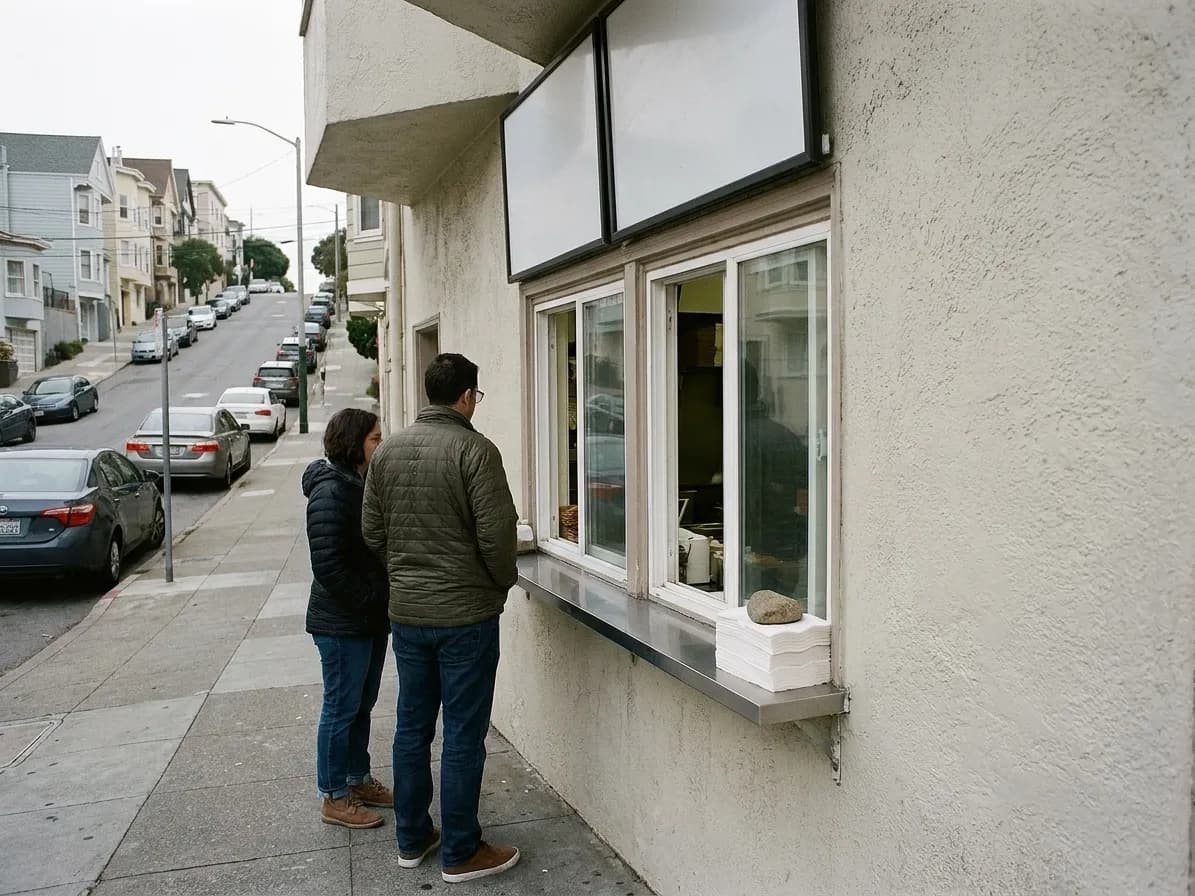
Order before you walk. Almost every counter in this city now takes an order ahead, and the ten minutes you spend walking is ten minutes of cooking you would otherwise spend standing. This single change moves most tier-three food into tier-one territory.
And avoid the local rush rather than the city's. Neighbourhood counters spike when the nearby offices, schools or hospitals break, not at a uniform noon. Arrive twenty minutes off that local peak and the same food arrives in half the time, at the same price, from a kitchen that is not underwater.
Hours, prices and even formats change frequently at the small end of this market, so check the day you go rather than trusting a listing. The tiers above are stable; the specific counters filling them are not.
Tags: #SanFrancisco #SF #BayArea #Restaurants #WhereToEat #Dining #FastFood #SFEats #SFGuide #ExploreSF #SFLocal #SFWeekend #SFNights #SFFood
Sources consulted: sfchronicle.com · sf.eater.com · sfgate.com
All trademarks are the property of their respective owners.
Ask Karpo first
Karpo is a proactive AI assistant that lives in iMessage. Tell it how many minutes you have and it will keep the suggestions inside that limit.