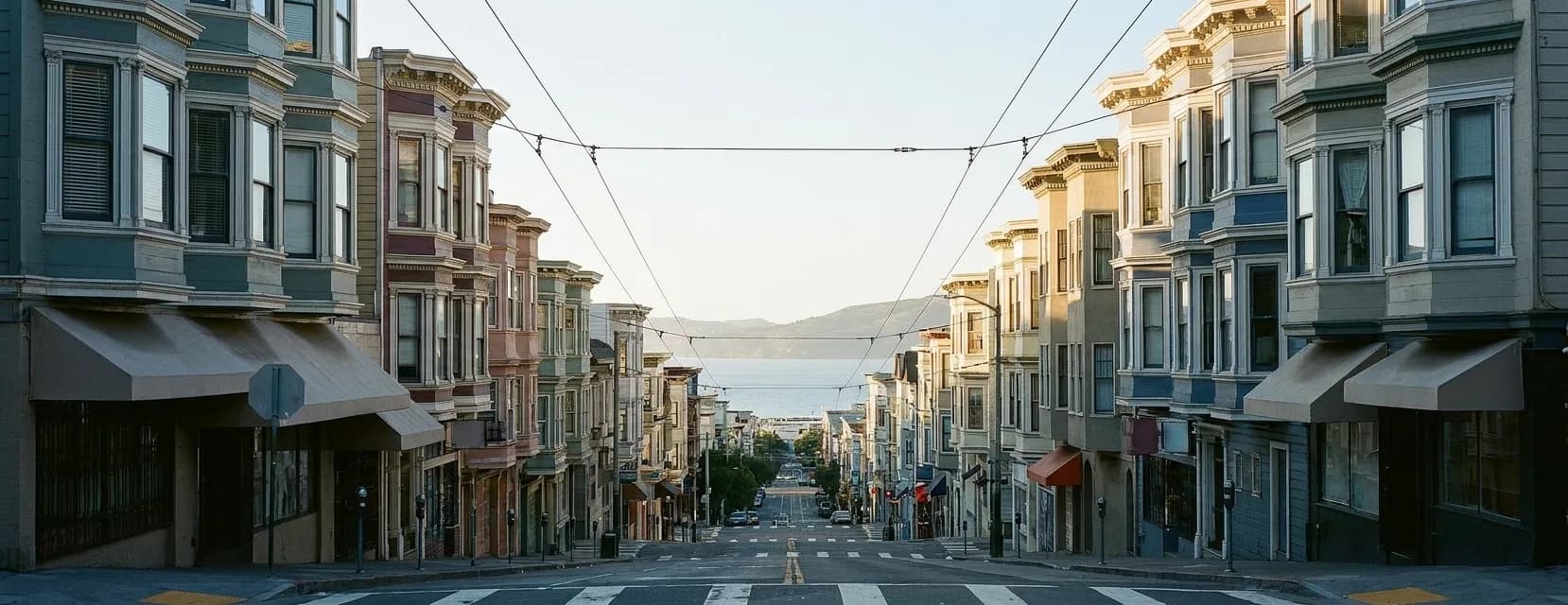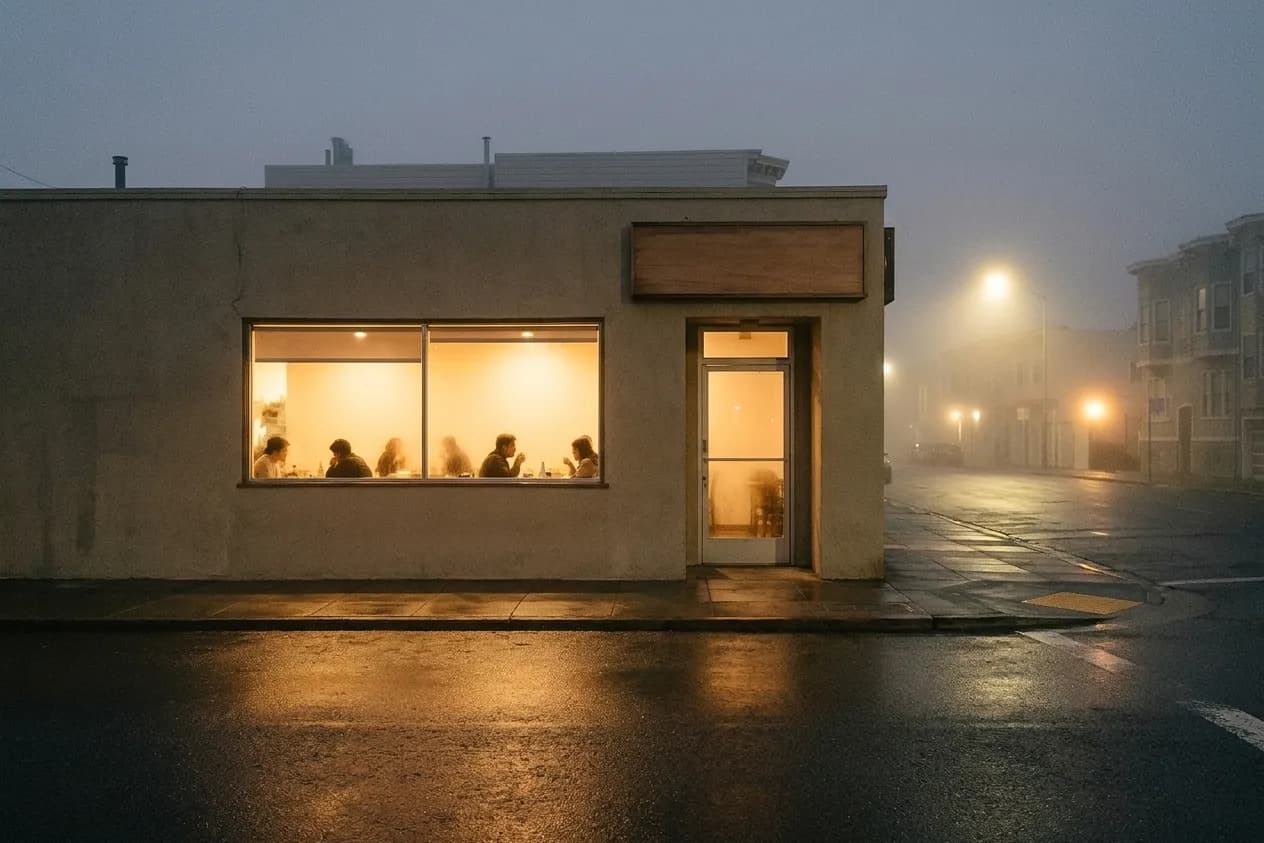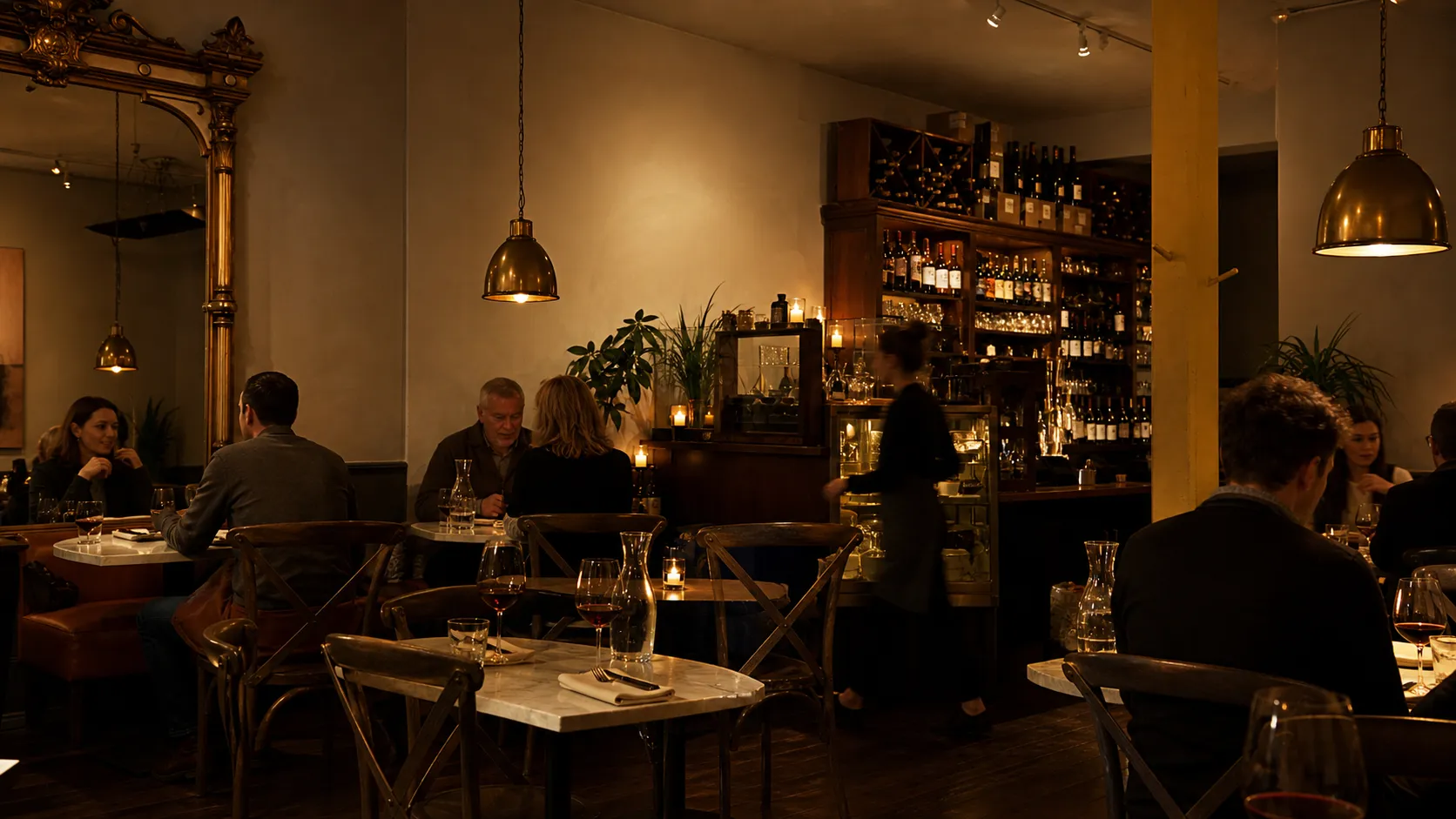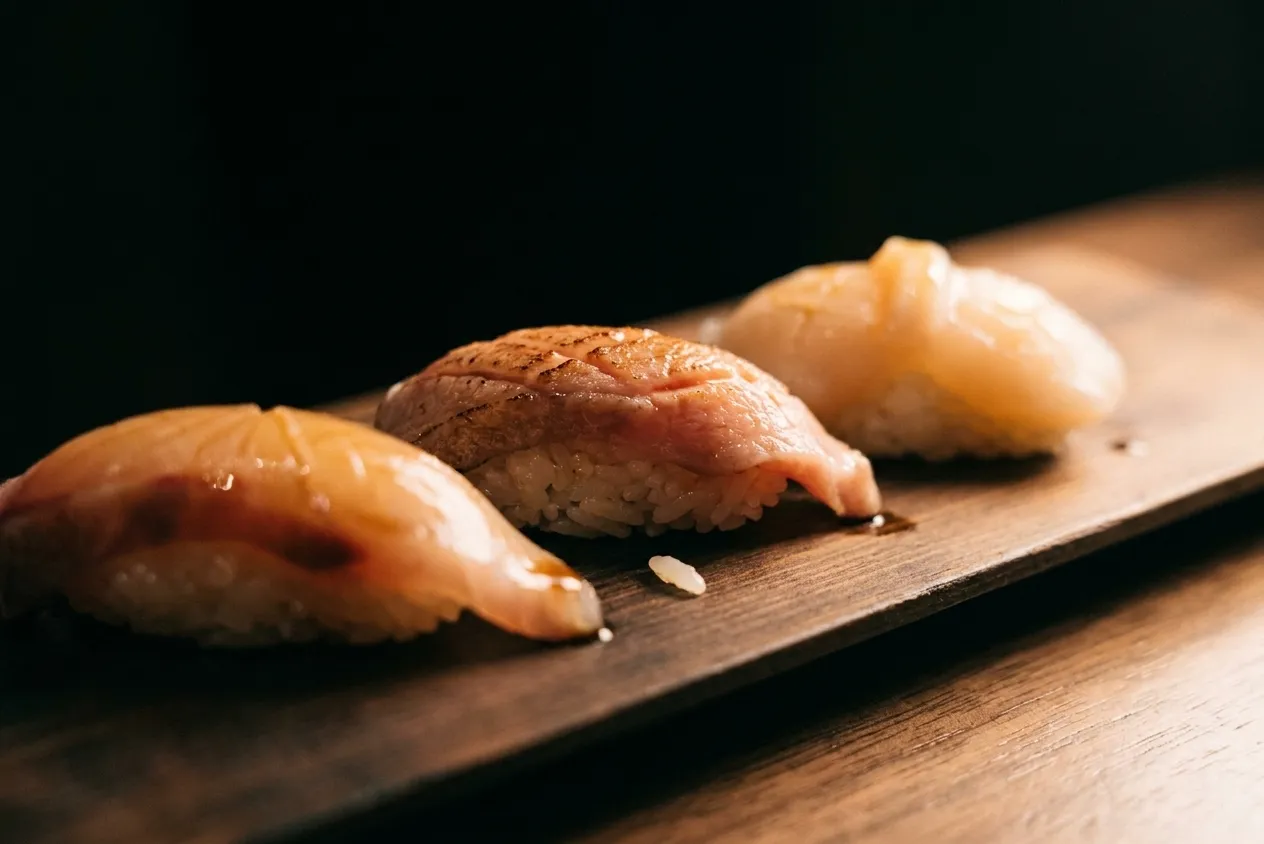
Searching sushi near me in San Francisco returns a flat list, which is exactly the wrong shape for this particular decision. Sushi is the one category in this city where the gap between the cheapest good meal and the most expensive good meal is roughly tenfold, and where the number on the menu is frequently not the number on your card. So instead of ranking these rooms against each other, here they are arranged as a price ladder — five counters, climbing from a neighborhood room that will not take your reservation to a fourteen-course seat that wants a deposit before you sit down. At each rung, the thing that matters is not just what it costs but what the house expects of you.
Tell Karpo what you actually want to spend tonight and which side of town you are on, and it will come back with the counters that fit — including which ones are dark on a Monday and which ones will not take a booking at all.
Rung One: Ebisu, and the Virtue of Refusing Reservations
Ebisu has been at 1283 9th Avenue in the Inner Sunset for over forty years, a family-run room a short walk from Golden Gate Park, and it is the least complicated meal on this list. It is also the one most likely to waste your evening if you do not read the schedule. Ebisu is closed Sunday and Monday. On the days it does open — Tuesday through Saturday — it runs a split service: lunch from 11:30am to 2pm, then it goes dark and reopens for dinner from 5pm to 9pm. That mid-afternoon gap catches out anyone drifting over from the park at three o'clock. And it does not take reservations at all; the house line is simply to drop in. Treat that as a feature. It means the queue is the whole booking system, and arriving at 5:05pm on a Tuesday is a strategy rather than a hope.
Rung Two: Akiko's — and Which Akiko's You Actually Mean
This is the single most common booking error in San Francisco sushi, and it is worth slowing down for. There are two unrelated restaurants trading under some version of the name. Akiko's Sushi Bar at 542 Mason Street, Unit A, near Union Square, opened in 1995 and is a straightforward, moderately priced neighborhood sushi bar. Its listed hours read as open daily 11am to 10pm, which is misleading — lunch service runs 11am to 2:45pm and dinner picks up at 4:15pm, so there is a ninety-minute dead zone in the middle of the afternoon. Separately, AKIKOS is the high-end omakase house founded by the same family in 1987 and now run by chef-owner Ray Lee, which moved out of its original 431 Bush Street home in January 2023 and reopened as a flagship on Folsom Street, where an eighteen-course tasting built on dry-aged fish from local purveyors and Tokyo's Toyosu market runs around $270 per person, with a shorter nigiri-led menu around $170. If you booked the wrong one, you will find out at the door. Check the street before you check the calendar.
Rung Three: Koo, the Quiet One in the Inner Sunset
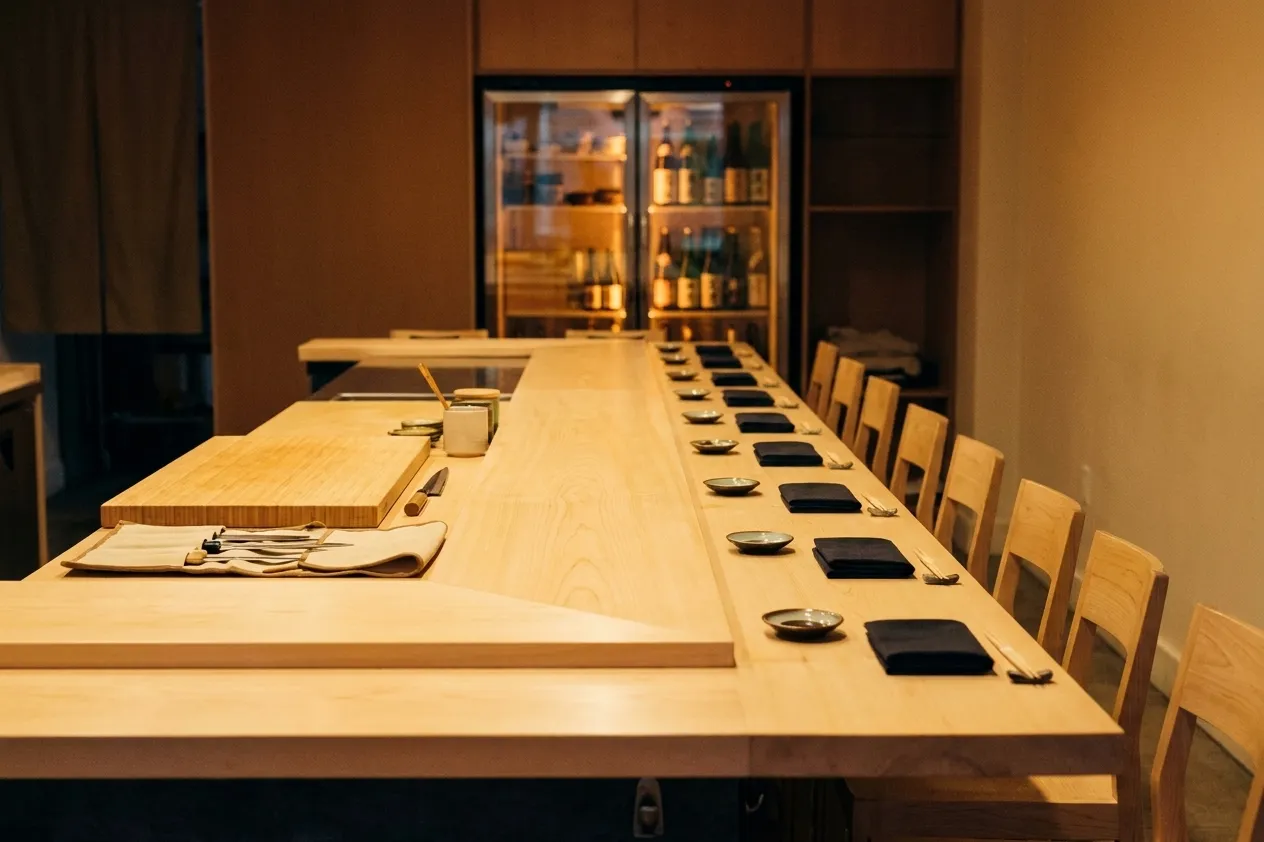
Koo has been at 408 Irving Street since 2004 and remains the most under-discussed serious sushi room in the city, partly because it does almost nothing to be discovered. It is dinner only, Monday through Saturday, 5pm to 9pm, closed Sunday — and, crucially, last call is 8:40pm, which means a nine o'clock listing is really an 8:40 kitchen. Reservations are handled through a Google Form rather than any booking platform, so it will never surface in the apps most people search through, and that is a large part of why it stays gettable. There are three omakase tiers to choose between: nigiri-only, nigiri and sashimi, and the full Koo omakase, which opens with the house's Spoonful of Happiness — uni and ankimo with sake. Prices are not published, which is a fair warning to ask when you submit the form rather than at the end.
Rung Four: Robin, Where You Name the Price
Robin at 620 Gough Street, opened in 2017 by chef Adam Tortosa, solved the omakase pricing problem in the most direct way available: it lets you set the ceiling. Sit down and a server asks you to pick a number between roughly $119 and $219, and the kitchen builds your menu to that figure. It is the only room on this list where the budget conversation happens at the start instead of as a surprise at the end, and it makes Robin unusually good for a table where two people want very different evenings. Expect the contemporary end of the spectrum — potato chips with caviar, foie gras snowed over A5 wagyu — rather than an austere Edomae sequence. Check the calendar first: Robin is closed Monday and Tuesday, and runs Wednesday through Sunday from 5pm to 9:30pm.
Rung Five: Jū-Ni, and the Number Behind the Number
Jū-Ni at 1335 Fulton Street is the full commitment: a fourteen-course omakase at a twelve-seat counter, currently listed at $238 per person. That is not what you will pay. A 20 percent service charge is included on every bill along with a 5 percent Healthy SF mandate, which puts the real pre-tax figure closer to $300 a head before any supplemental courses or drinks. Book through Tock, where every reservation requires a $150 per person credit card deposit against a 72-hour cancellation window — cancel inside that window and the $150 is charged. The detail almost nobody uses: reservations at Jū-Ni are fully transferable through your Tock profile, so if your Thursday collapses, hand the seat to someone else rather than eating the fee. Seatings are tight and specific — 5:30pm, 5:45pm, 8pm and 8:15pm — so the early slot and the late slot are genuinely different evenings.
Reading the Ladder
The useful pattern across all five is that the constraint changes as the price climbs. At the bottom, the constraint is time — Ebisu's closed days and its afternoon gap. In the middle, it is discovery: Koo hides behind a Google Form, and Akiko's hides behind its own name. At the top, the constraint is money you have already committed before you taste anything. Pick the rung that matches how much flexibility you want, not just how much you want to spend, and San Francisco sushi stops feeling like a gamble.
Tags: #SanFrancisco #SushiNearMe #SFSushi #Omakase #JuNi #RobinSF #EbisuSF #KooSF #AkikosSF #InnerSunset #HayesValley #UnionSquare #NoPaValley #SFDinner #SFRestaurants
Sources consulted: junisf.com · exploretock.com · robinomakase.com · sushikoo.com · akikossushibar.com
All trademarks are the property of their respective owners.
Ask Karpo first
Sushi pricing in this city is full of quiet arithmetic — service charges folded in, city mandates added on, deposits taken weeks ahead. Before you commit a card, tell Karpo your budget and your night, and let it check who is open, who is closed, and what the seat is really going to cost once everything is counted.