The common mistake is typing this phrase into a search bar and landing on a list of bar crawls, rooftop happy hours and ticketed mixers that all require spending forty dollars before anyone learns your name. That model works for some people. It filters out everyone who does not drink, everyone watching their budget, and everyone who finds it easier to talk while doing something with their hands. The alternative infrastructure has been here the whole time: weekly run clubs that end at a taco spot, climbing gyms with auto-belay lanes and bouldering circuits, chess tables in public parks, board game nights at cafés that sell coffee, language exchanges in community centers, and volunteer shifts that put you next to the same people every week. None of these require an alcohol budget. Most of them cost less than a single cocktail or nothing at all.
Before you default to another happy hour, ask Karpo which run clubs meet tonight in your borough, where the drop-in climbing sessions start, and which park has regulars who show up regardless of weather.
The Fear That Showing Up Alone Will Mark You as Desperate
Run clubs are built for people who show up alone. The format is a short introduction circle, a forty-minute run in pace groups, and an optional hang afterward at a taco truck or dumpling counter. You do not need to be fast. Most clubs in Brooklyn, Manhattan and Queens split into three or four pace groups, and the slowest one walks hills. The structure makes it easy: you show up at the meeting point ten minutes early, someone wearing a club shirt will ask if it is your first time, and they will point you toward the pace group that matches what you said. No one is checking whether you came with a friend. The entire point is that running makes small talk optional for the first half hour, and by the time you stop for water you have something to talk about that is not your job.
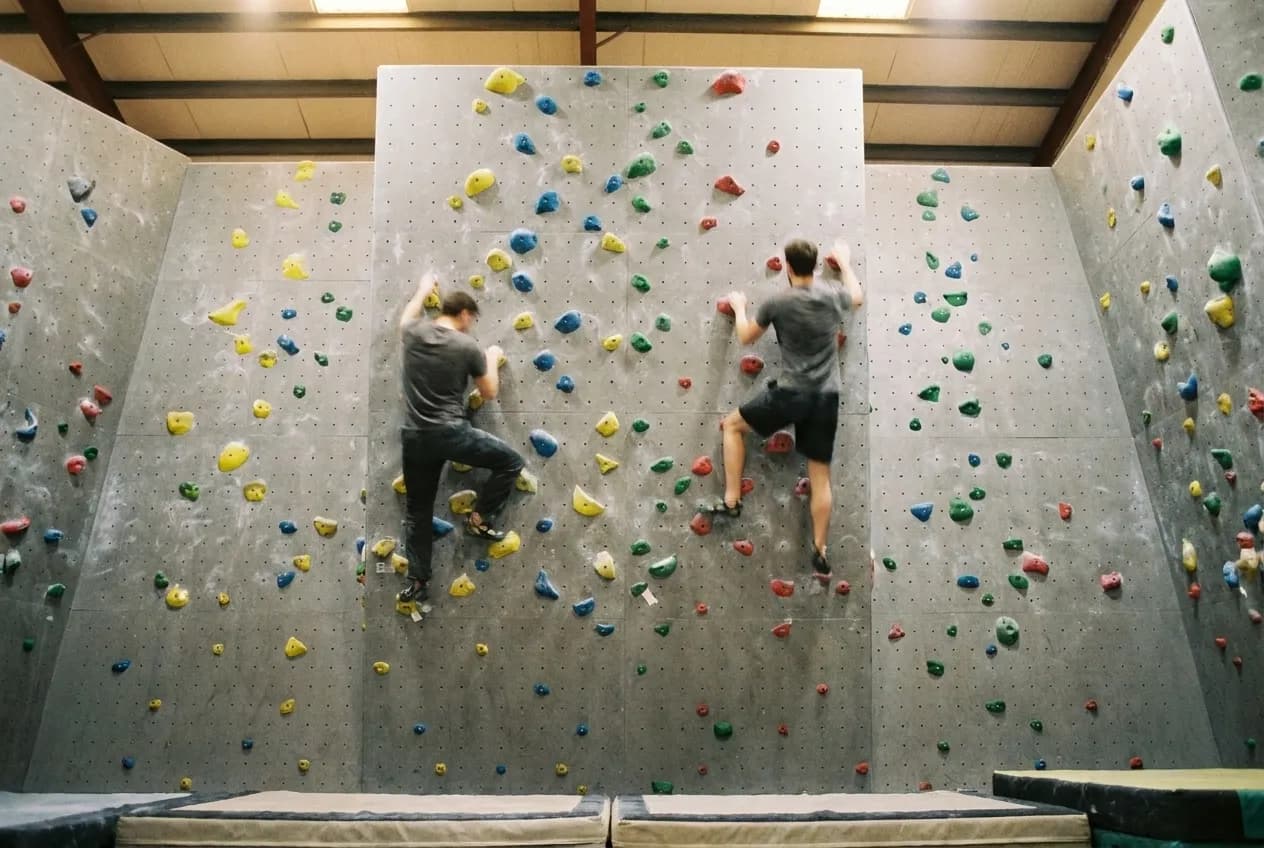
Climbing gyms handle newcomers differently but with the same assumptions. Bouldering does not require a partner. You rent shoes, get a thirty-second orientation on the color-coded routes, and start working problems on walls that are twelve feet tall with thick mats underneath. The social part happens while you are resting between attempts. Someone will ask what you are working on. You will watch someone else try a route and offer a foothold suggestion. The conversation builds around the thing you are both trying to solve, which removes the need to perform interest in a stranger's graduate program or startup. Drop-in rates run sixteen to thirty dollars depending on the gym and the borough. If you go twice a week the monthly membership pays for itself, and the same people will be there on the same nights, which is how acquaintance turns into the kind of friend who texts when they are about to leave for the gym.
Chess tables in parks are free and require no introduction. You sit down across from someone already playing, wait for their game to finish, and play the winner. Washington Square Park, Union Square, and several spots in Central Park and Prospect Park have tables with regular players who show up in the afternoon and stay until the light is gone. The format is blunt: you play, you lose or win, you play again or you watch. Conversation happens between games. No one asks what you do for work unless you have been showing up for three weeks. The people who play every day are better than you, and they will tell you what you missed after they beat you. It is not gentle, but it is reliable, and if you come back the following week someone will remember that you opened with the same mistake twice.
The Problem That Every Event Costs Money Before You Know If It Is Worth It
Board game nights at cafés and bars solve this by making the entry cost a coffee or a single beer. Several Brooklyn and Manhattan spots run weekly or twice-weekly open board game nights where the venue provides a library of games and someone who knows the rules. You buy a drink, you sit at a table that has space, and you play whatever that table is playing. The format works because the game is the reason you are there, and the social stakes are lower when you are trying to figure out how resource trading works in a game you have never seen before. If the table is not working for you, you finish the round and move. If it is working, you stay for another game. The cost is one drink, maybe two if you stay for three hours. That is eight dollars instead of forty.
Language exchange meetups cost nothing and happen in public libraries, community centers and the corners of coffee shops where people will tolerate an hour of multilingual conversation. The format is simple: you speak one language for fifteen minutes, then switch. No one is grading you. The people who show up are trying to practice a language they are learning, which means everyone is making mistakes and everyone knows it. The social contract is clear: you help them with English, they help you with Spanish or Mandarin or Portuguese, and if the conversation lands on weekend plans or where to get good dumplings, that is fine too. These meetups are listed on community boards, library websites and group-organizing platforms. They run weekly, the same night every week, and the same people come back because it is free and it works.
Volunteer shifts put you next to the same people every week doing something that is not about you. Food banks, community fridges, park clean-ups and mutual aid groups need regular help, and the work gives you something to do with your hands while you talk. A two-hour shift sorting donations or packing grocery bags does not require you to be interesting. It requires you to show up on time and do the task. The conversation happens while you work, and it builds over weeks because you see the same volunteers every time. You do not need to pitch yourself. You are there to do a thing that needs doing, and the social part happens because you are both doing it. No cost, no drink minimum, no performance.
The Risk That the Group Falls Apart After Two Weeks
The way to judge whether a group will still be there in a month is to look at how long it has already been running and whether it costs the organizer money to keep it going. Run clubs that have been meeting for two years will be there in six months because they are structured around people who want to run every week regardless of who shows up. The organizer is not paying for a venue. The route is public streets and parks. If three people show up instead of thirty, the run still happens. Climbing gyms are businesses that make money whether you are there or not, which means the bouldering wall will be open next week and the week after. Chess tables are public infrastructure. No one is organizing them, which means no one can cancel them.
Board game nights that happen at a bar or café are more fragile, but you can tell which ones will last by whether the venue is promoting them. If the spot lists the game night on its website and has a shelf of games behind the bar, the event is part of the business model, not a favor to one organizer. If it is just someone who asked to use a corner table, it might vanish when that person moves or loses interest. Language exchanges that happen in libraries are stable because the library is providing the space as a service, and the institution does not care if five people show up or fifteen. Volunteer groups that have been around for more than a year and have a rotation of regular organizers will keep going because the need they are addressing does not go away.
The simplest test is to show up twice. If the same people are there the second time, and they remember that you came last week, the group has a core. If it is all new faces and no one remembers the previous week, the group is either very new or barely holding together. You are looking for the thing that runs whether it is convenient or not, because that is the thing that will still be there when you need it to be.
What to Try Next Weekend
Pick one format and go twice before you decide it does not work. If you want to talk while moving, find a run club that meets within thirty minutes of where you live and has a pace group slower than you think you need. If you want to solve something with your hands, try bouldering on a weeknight when the gym is not crowded and you can watch what other people are working on without feeling in the way. If you want a structure that makes small talk optional, go to a chess table in a park on a weekend afternoon and play until you lose three times. If you want the cost to be zero, look for a language exchange or a volunteer shift that happens the same night every week.
The goal is not to find your people in one evening. The goal is to show up enough times that your face becomes familiar, and familiar is the beginning of the kind of friendship that does not require a drink in your hand or a cover charge at the door. The infrastructure is here. It costs less than you think, and it assumes you are coming alone.
Tags: #EventsNearMe #NYCEvents #MeetPeopleNYC #RunClubsNYC #ClimbingNYC #NYCSocial #FreeEventsNYC #BudgetFriendlyNYC #SoberSocializing #NYCRunClubs #BoulderingNYC #ChessNYC #VolunteerNYC #LanguageExchangeNYC #MakingFriendsNYC
Please drink responsibly. Must be of legal drinking age.
All trademarks are the property of their respective owners.
Ask Karpo first
Ask Karpo which run clubs meet tonight, what time the climbing gym opens for drop-in bouldering, and where the chess tables are in the park closest to you. The Karpo app knows what is happening right now and which subway line gets you there before the group leaves.