The last two years rewired how people meet strangers in Los Angeles. Organized recurring outdoor meetups replaced the bar introduction and the coworker happy hour as the default first move. Beach volleyball sessions, trail running clubs, weekend hikes and pickup soccer games now operate on every major greenspace in the basin, most of them free, most of them weekly, nearly all of them invisible unless you already know the organizer's Instagram handle or someone forwards you the group chat link. The shift is structural: people who moved here during or after the pandemic never developed the older networks, and the groups that survived are the ones that asked nothing up front and made the first session easy.
Before you drive to Griffith Park at dawn or commit to a beach slot you cannot verify, ask Karpo which groups are meeting today, what the real pace is, and where to park without losing an hour.
Start Time Determines Who Shows Up
A Saturday morning hike listed for seven means the group skews older, more serious, and expects you to arrive on time. An eight-thirty start pulls a younger crowd and tolerates late arrivals for the first ten minutes. Sunday afternoon beach volleyball at three attracts people who treated the morning as recovery time. Weekday evening sessions after six-thirty are the domain of people who left work on time and are testing whether they can build a routine.
The start time also governs parking. A seven AM Runyon Canyon meet means you park on the residential streets below without trouble. An eight-thirty start means you circle or pay. Beach meetups before nine secure the free lots; anything after ten sends you to meters or residential blocks a half-mile back. The groups that survive long-term pick times that make parking trivial, because the people who spend twenty minutes hunting a spot do not come back.
If the listing says "we start on time," believe it. Trail groups leave the trailhead at the posted minute, and beach volleyball rotates courts on a fixed schedule when multiple sessions overlap. The casual phrasing in the post does not mean the organizer will wait.
Stated Skill Level Is Negotiable Until It Is Not
Most recurring outdoor groups bill themselves as beginner-friendly or all-levels, and most of them mean it for the first month. After that, the regular attendees set the real pace, and the listing language stops mattering. A beach volleyball game advertised as casual will still run competitive if the same eight people have been playing together since April. A hiking group that calls itself social will move faster than the description suggests once the regulars know the route.
The tell is whether the group splits. Good organizers divide the pack when the skill range gets too wide: fast and slow hikers, competitive and recreational volleyball rotations, A and B soccer sides. Groups that refuse to split lose the slower or less experienced half within three sessions, and the listing language becomes a fossil. If you see no mention of splits or pace groups in a post from a meetup that has been running for six months, assume the listing describes the group as it was, not as it is.
The other signal is attendance numbers. A group that pulls forty people can absorb newcomers at any level because the crowd self-sorts. A tight twelve-person session has already decided what it is, and your first appearance will be obvious. Neither is better, but the small group requires more honesty about whether you match the unwritten standard.
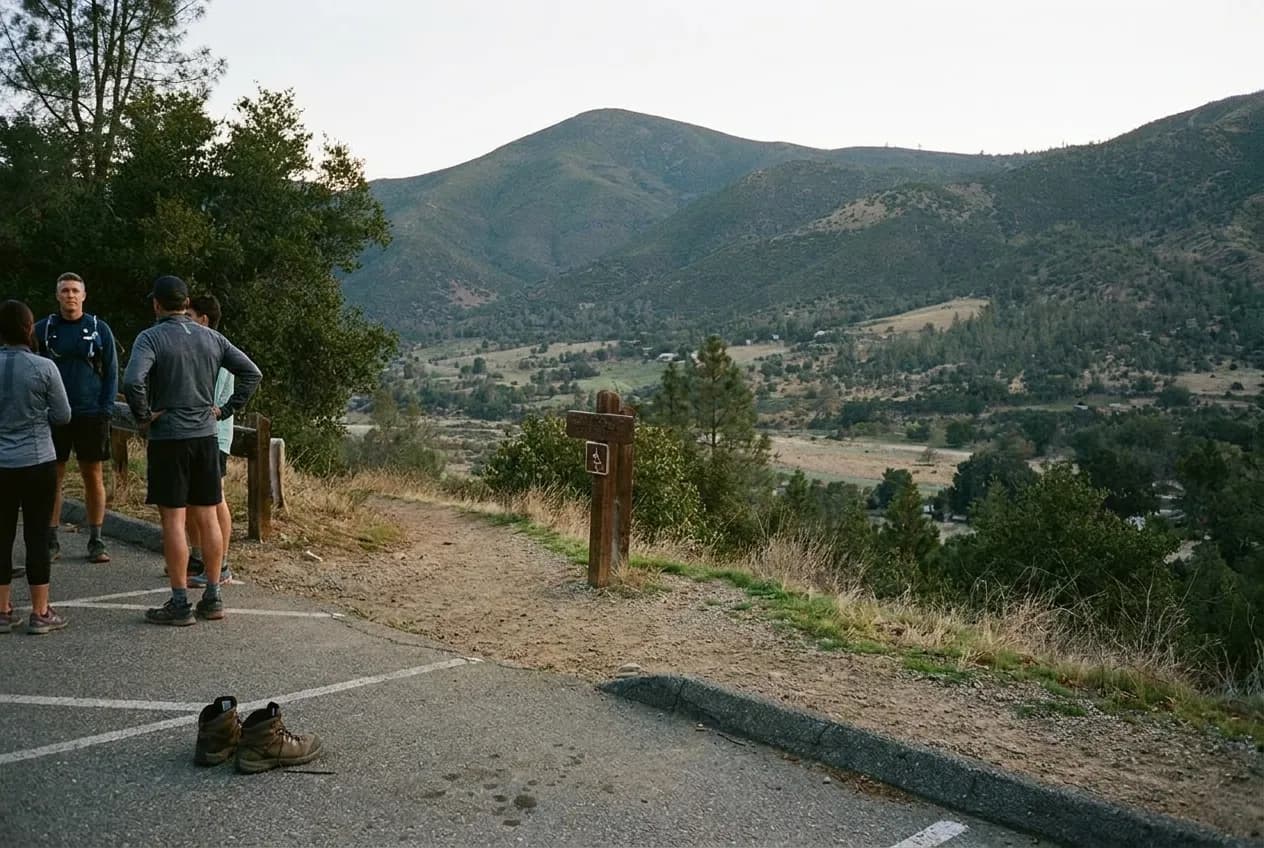
Location Lock-In Happens Faster Than You Think
The recurring meetup stays recurring because it happens in the same place at the same time, and the location becomes non-negotiable faster than anyone plans. A volleyball group that started on the Santa Monica sand stays on the Santa Monica sand even after half the regulars move to the Eastside, because changing the beach means losing the people who have built the commute into their week. A hiking group that meets at the Griffith Observatory lot will not shift to Temescal Canyon even when Temescal is objectively better for the current roster.
This matters for your first session because the location determines how much tolerance the group has for late arrivals and logistical confusion. Trailheads with one parking lot and one obvious meeting point are forgiving. Beach stretches where the volleyball nets run for a mile require you to ask in advance which specific net, and if you guess wrong, you will not find the group. Parks with multiple entry points and no central landmark mean you need the exact GPS pin, not just the park name.
The groups that last are the ones where the location makes the first visit simple. If you cannot figure out where to go from the listing alone, other newcomers cannot either, and the group is probably shrinking. A good organizer writes "north end of the lot, by the restrooms" or "third net from the lifeguard tower." A listing that just says "Runyon Canyon" or "Will Rogers Beach" is written for people who already know.
Drop-In Etiquette Splits on Whether the Group Keeps Score
Hiking groups and run clubs let you show up without introduction because the activity is parallel. You do not need to announce yourself; you fall in at the back or the middle and match pace. Beach volleyball and pickup soccer require you to rotate into a game, which means someone has to acknowledge you and deal with uneven numbers. The smoothest groups manage this with a rotation system posted in the chat or explained at the start. The awkward ones leave it to the regulars to decide when to integrate you, and your first session becomes a test of how much you are willing to stand on the sideline.
If the activity keeps score, arrive fifteen minutes early and make yourself available to help set up. Carrying a net or marking a field earns you immediate inclusion, and the regulars will remember you the next week. If the activity does not keep score, arrive exactly on time. Early reads as overeager, late reads as uncommitted, and both labels stick.
The single most useful question to ask in your first session is whether the group runs year-round or takes a break. Groups that pause in summer or winter are experimenting; groups that run every week regardless of weather have become institutions. The latter are worth the logistical trouble of a bad first visit. The former are not.
The transferable habit is to check the group's last three posts before you go. If the organizer is still confirming details the day before, the meetup is alive. If the last update was two weeks ago, the listing is a placeholder and the group has moved to a private chat or stopped meeting. Los Angeles outdoor meetups live and die on consistency, and the ones that survive are the ones where the organizer shows up every single week and posts proof.
Tags: #LosAngeles #EventsNearMe #LAMeetups #BeachVolleyball #HikingGroups #OutdoorLA #SportsAndSocial #RecurringMeetups #LATrails #PickupSports #SantaMonicaBeach #GriffithPark #RunyonCanyon #LAFitness #MeetPeople
Please drink responsibly. Must be of legal drinking age.
All trademarks are the property of their respective owners.
Ask Karpo first
Ask Karpo which hiking and volleyball groups are meeting today, what time they actually start, and whether the lot fills before the session begins. The app pulls live updates from the groups that still post and routes you to the exact meeting point so you do not spend your first visit hunting for strangers in a parking lot.