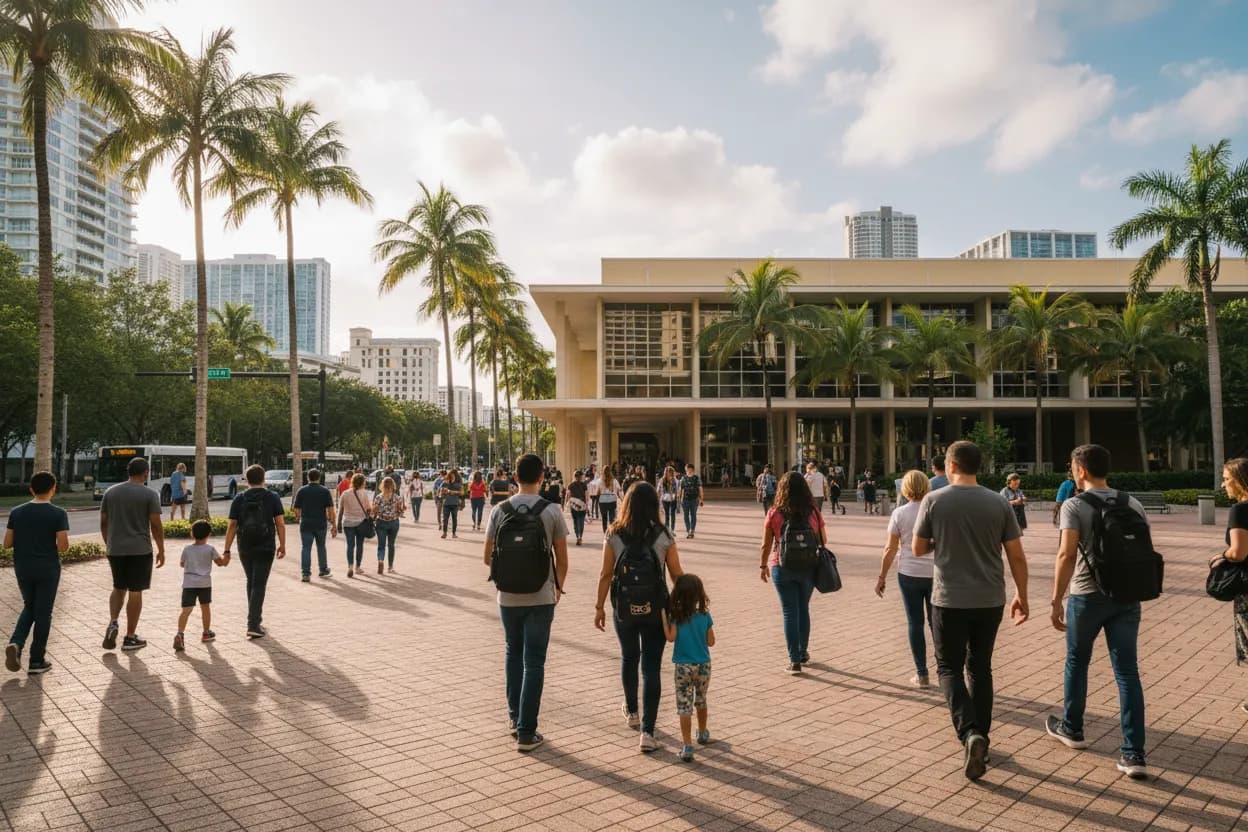
If enes kanter is the search term sending a student, parent, or teacher down a rabbit hole this week, treat it as a back-to-school media-literacy drill instead of a rumor to chase. Miami has enough official public tools to make the exercise practical: a library system with branches, digital materials, online newspapers and magazines, and account tools; plus a county transit department with trip planning, rider alerts, real-time tracking, and accessibility notices. The useful question is not whether a public figure is secretly connected to a local stop. The useful question is how a Miami reader can verify what is public, compare sources, and get to a dependable study location without wasting an afternoon on hype.
Want a quick route-and-source check before a student leaves home? Text Karpo with the branch idea, transit starting point, and deadline, and ask for the official pages to verify first.

Turn curiosity into a research question
Start by writing the assignment in one sentence: “What can I verify from public sources about enes kanter, and how should I separate confirmed information from commentary?” That framing matters in Miami because a popular search can make people assume there is a local appearance, event, or special access. Do not make that leap. For this plan, the name is only the hook for a research task, not evidence of a Miami visit, library program, school affiliation, endorsement, or private opportunity.
Give the student a simple evidence ladder. First, look for primary or official pages. Second, check reputable reporting that states where its information came from. Third, label opinion, social posts, and clipped videos as secondary unless they point back to documents, interviews, or official notices. A good back-to-school routine is not just finding an answer; it is knowing which answer is strong enough to cite.
Set a time box before opening tabs. For example, use the first block for official pages, the next for library newspaper databases or magazines, and the final block for notes. The exact length can be adjusted by the family or teacher, but the order should stay strict: verify first, react later.
Start with a reliable public resource
The Miami-Dade Public Library System is the cleanest starting point because its official site points readers toward locations, account login, library cards, an “Open Now” tool, a library app, eContent, and online newspapers and magazines. Those are the kinds of public resources students need when a name is circulating quickly and the goal is to slow down enough to check context.
Before choosing a branch, check the library site rather than relying on memory. The system’s patron notice says the Miami Lakes Branch and South Dade Regional Libraries are closed for construction, renovations, and improvements. That does not mean every other location is open at the moment you want to go; it means those two closures should be treated as known constraints, and branch-specific status should be verified on the official location page before leaving.
If the student already has a card, the first stop may not need to be physical. The library promotes digital books, audiobooks, movies, music, and more through eContent, plus online newspapers and magazines. For a source-checking assignment, those digital tools can turn a phone or laptop into the first research desk, especially when afternoon weather, traffic, or pickup windows make a branch visit harder.
Compare primary reporting before opinions
A Miami student researching a public figure should build a small comparison grid: source name, date, claim, evidence offered, and what still needs checking. Put official documents or direct statements in one column, news articles in another, and commentary in a third. This prevents a loud claim from getting treated as confirmed just because it appears repeatedly.
The library’s online newspapers and magazines are useful here because they are designed for reading beyond a single viral post. Search the exact phrase, then search related terms, dates, and organizations mentioned in the strongest article. If a story claims an event, campaign, or appearance, the next step is not to share it; the next step is to find the official event page or public notice. If none appears, write “unverified” in the notes.
For back-to-school work, require citations that another reader can follow. A screenshot without a link, a repost without a date, or a caption without the original source should be treated as a lead, not a conclusion. That habit is especially important when the subject is a public figure and the city name Miami might be added online to attract clicks.
Choose a study stop that fits the task
Match the destination to the work. If the task is citation checking, choose a library location where the student can use public research tools and focus. If the task is simply downloading articles or organizing notes, the library’s eContent and online newspaper access may be enough from home, provided the student can log in and save citations properly.
Build the route from the official transit page, not from habit. Miami-Dade Transportation and Public Works offers a trip planner, rider alerts, service updates, a transit tracker, and the GO Miami-Dade Transit mobile app for planning a trip, tracking a ride, and purchasing a mobile pass. The same page notes that full-time students ride Metrobus and Metrorail for half the price, so eligible riders should verify the current requirements through the official transit pass information before assuming they qualify.
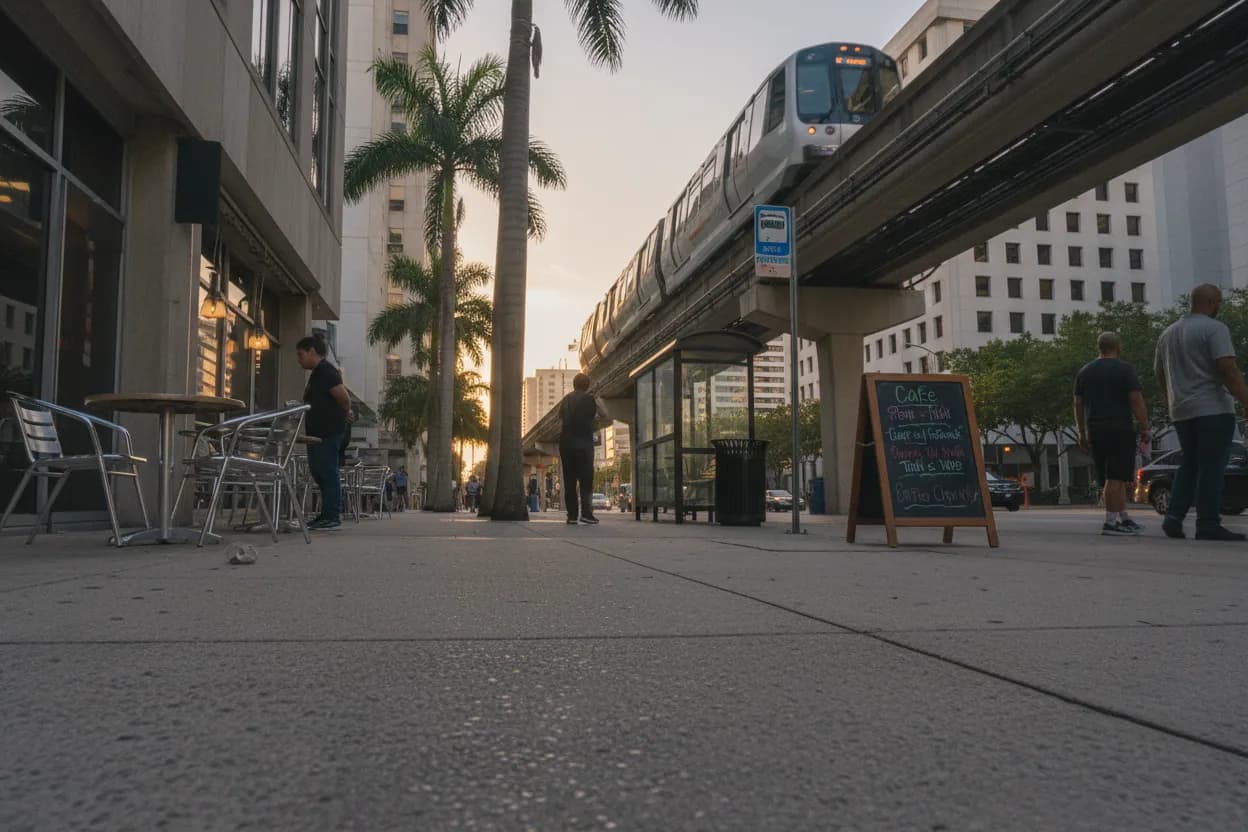
Crowd risk is real around school dismissal, work commutes, downtown events, and bad-weather delays, but do not guess your way through it. Check rider alerts and service updates close to departure. If using Metrorail or Metromover, also check elevator and escalator status when accessibility, strollers, heavy backpacks, or injury recovery make vertical access part of the route.
Add one low-cost reset nearby
A good Miami back-to-school plan includes a reset that does not depend on buying anything. The reset can be as simple as stepping outside the study location, reviewing notes, and deciding what is verified, what is doubtful, and what still needs an official source. Because the provided parks page extract is a 404 page, do not build a park promise into the plan from that source. Verify any nearby public space separately before making it the backup.
Use the reset to reduce misinformation momentum. Ask three questions: Did we confirm the original claim? Did we confuse commentary with reporting? Did any source imply a Miami connection without proving it? If the answer is yes to the last question, the student should write that clearly. Saying “I found no official local confirmation” is stronger than pretending a vague post is evidence.
If a branch is crowded, the low-cost reset can become the pivot point. Move from reading to outlining. Turn the research into bullet points, save links, and decide whether the remaining work can be completed later through the library’s digital resources. The goal is not to win the internet; it is to finish the assignment with clean sourcing.
Verify hours and access before leaving
The final check should happen within the same day of travel. Open the library site and confirm the chosen branch details, account needs, and any notices. Remember the posted closures for Miami Lakes Branch and South Dade Regional Libraries, and do not assume another location’s hours, rooms, computers, or services without checking its official page.
Then check transit. Miami-Dade’s transportation page highlights rider alerts, service updates, the transit tracker, trip planner, and elevator and escalator status. It also posts important service messages, including that on Saturday, Aug. 15, Metromover service will begin operating at 2 p.m. during system upgrade work. For Metrorail, the page describes single-tracking work on weekends and after 8 p.m. on weekdays, so riders should check current alerts before building a tight transfer.
Create a backup choice before anyone walks out the door. Backup one: stay home and use library eContent or online newspapers and magazines. Backup two: switch to another verified library location. Backup three: postpone the transit trip if alerts, access issues, or timing make the route unreliable. That is not overplanning; it is how Miami families keep a simple school research errand from turning into a missed pickup, a long platform wait, or a half-finished assignment.
Tags: #eneskanter #Miami #BackToSchool #MiamiDade #MiamiDadeLibrary #MiamiDadeTransit #StudentResearch #MediaLiteracy #SourceChecking #TransitTips #LibraryCard #AskKarpo #BeforeYouGo #Karpo
Sources consulted: mdpls.org · miamidade.gov · miamidade.gov
All trademarks are the property of their respective owners.
Ask Karpo first
Ask Karpo first when a trending name turns into a Miami errand. Send the claim, your nearest branch idea, and the time you need to be back. Karpo can help you separate official pages from noise and build a backup before you go.