If you ask where to eat dumplings in Los Angeles, everyone points east to the San Gabriel Valley, and they are right about the Chinese ones. Koreatown is a different proposition and a much closer one: dense, walkable by Los Angeles standards, open extremely late, and built around mandu rather than jiaozi. Mandu came to Korea from the same Central Asian lineage that produced every other dumpling on the continent, went its own way for several centuries, and the result is worth a crawl on its own terms rather than as a consolation prize.
Koreatown runs on hours that make no sense from outside - places that close at four in the afternoon and others that only get going at eleven at night. Tell Karpo what time you are starting and it will order the stops so nothing is shut when you get there.
Mandu is a different animal
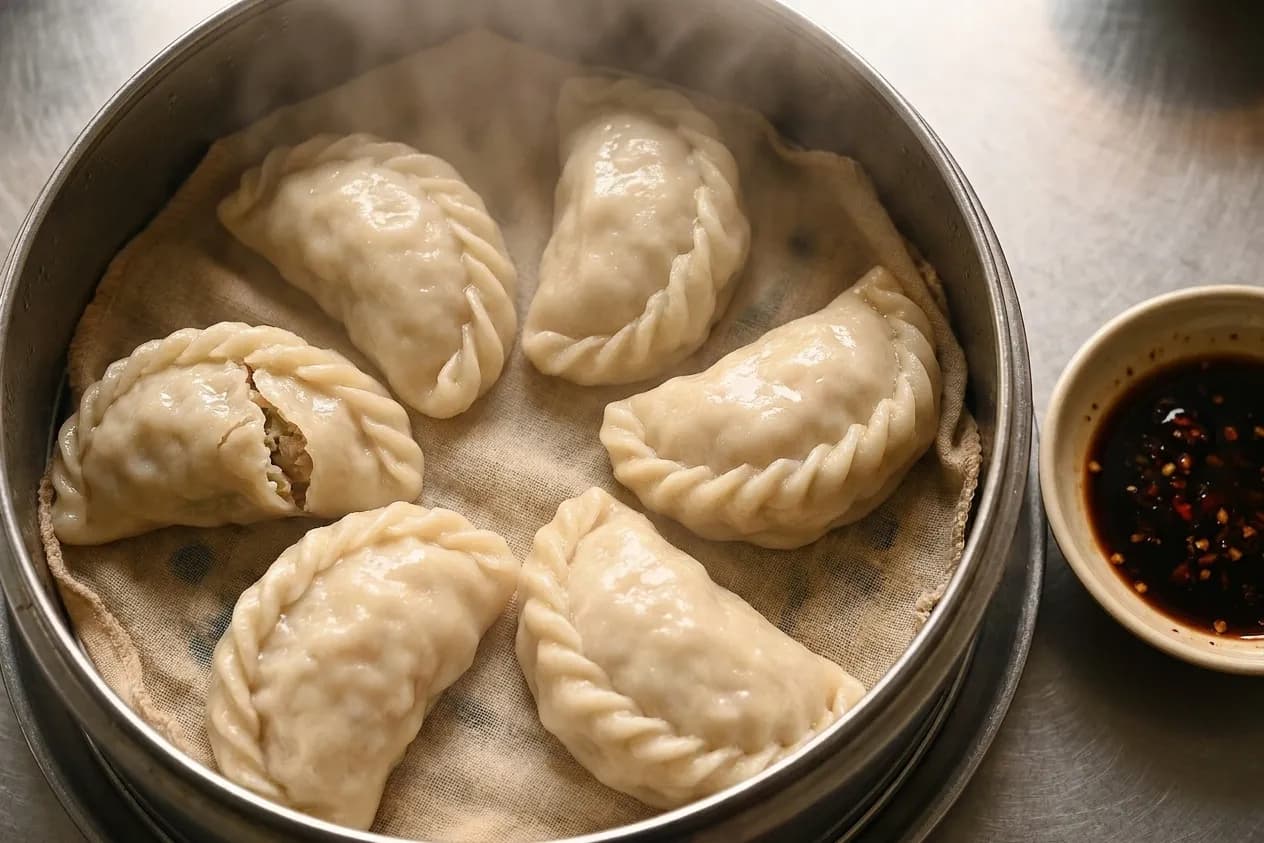
The skin is generally thicker than a Chinese jiaozi wrapper and the filling is more varied - pork and tofu and glass noodle and garlic chive, bound and seasoned rather than kept plain to let the dipping sauce do the work. Kimchi mandu, with fermented cabbage worked into the filling, has no real equivalent in the Chinese repertoire.
They also come considerably larger. Wang mandu are fist-sized steamed buns closer to a Chinese baozi, and a plate of four is a full meal rather than a starter. Scale your ordering accordingly or the crawl ends at stop two.
Stop one: mandu guk, to start
Begin with a bowl of mandu guk - dumplings in a clear beef broth, often with sliced rice cake and a ribbon of egg. It is the mildest thing on this route and the right calibration point, because a thin or over-salted broth tells you immediately what kind of kitchen you are in.
This is also the most reliably open item across the whole day. The rice-cake-and-dumpling soup houses run continuous service in a way the barbecue rooms do not, which makes them the correct first stop at almost any hour.
Stop two: the pan-fried plate
Gun mandu are pan-fried, flatter and crisper than the steamed version, served with a soy and vinegar dip with chilli flakes. Order half a portion if the place will do it. These are the closest thing on the route to a Chinese guotie and the comparison is instructive - the Korean version leans on the filling's seasoning where the Chinese one leans on the crust.
Look for a place doing them to order in a pan rather than reheating from a tray. The tell is the wait: four minutes is a good sign, ninety seconds is not.
Stop three: the Chinese-Korean detour
This is the interesting part of Koreatown that most crawls miss. There is a whole cuisine here - jjajangmyeon, jjamppong, tangsuyuk - developed by Chinese immigrants in Korea over a century and then brought to Los Angeles as a Korean cuisine. The dumplings served alongside it belong to neither tradition cleanly.
Order a plate of mandu with a bowl of jjamppong, the spicy seafood noodle soup, and you get the clearest picture available of what happens when a food tradition emigrates twice. These rooms are usually unglamorous, cheap and open late.
Stop four: the late one
Koreatown's real advantage over every other food neighbourhood in this county is that it does not close. A meaningful number of kitchens here run until two, three or four in the morning, and several are open twenty-four hours.
For a late fourth stop, a plate of gun mandu alongside whatever stew the room is known for is the right order. This is also where the crawl stops being about dumplings and becomes about being in Koreatown at one in the morning, which is arguably the point.
Walking it, and parking
The core - roughly Wilshire to Olympic between Vermont and Western - is genuinely walkable, which is rare here. Four stops inside a mile is realistic and the blocks are busy enough at night to be pleasant on foot.
Parking is the friction. Street parking is heavily restricted and enforced, most of the larger buildings have paid structures, and several restaurants validate if you ask. The Metro B and D lines both serve the neighbourhood and are the genuinely easier option for an evening that involves drinking.
How this compares to going east
Be clear about what you are choosing. The San Gabriel Valley has deeper and more various Chinese dumpling cooking and it is not close. Koreatown has a different tradition, a fraction of the drive, walkability and hours that run all night.
For a Tuesday evening with no plan, Koreatown wins on every practical axis. For a deliberate half-day trip built around dumplings specifically, drive east. They are not competing for the same evening.
A word on the neighbourhood itself
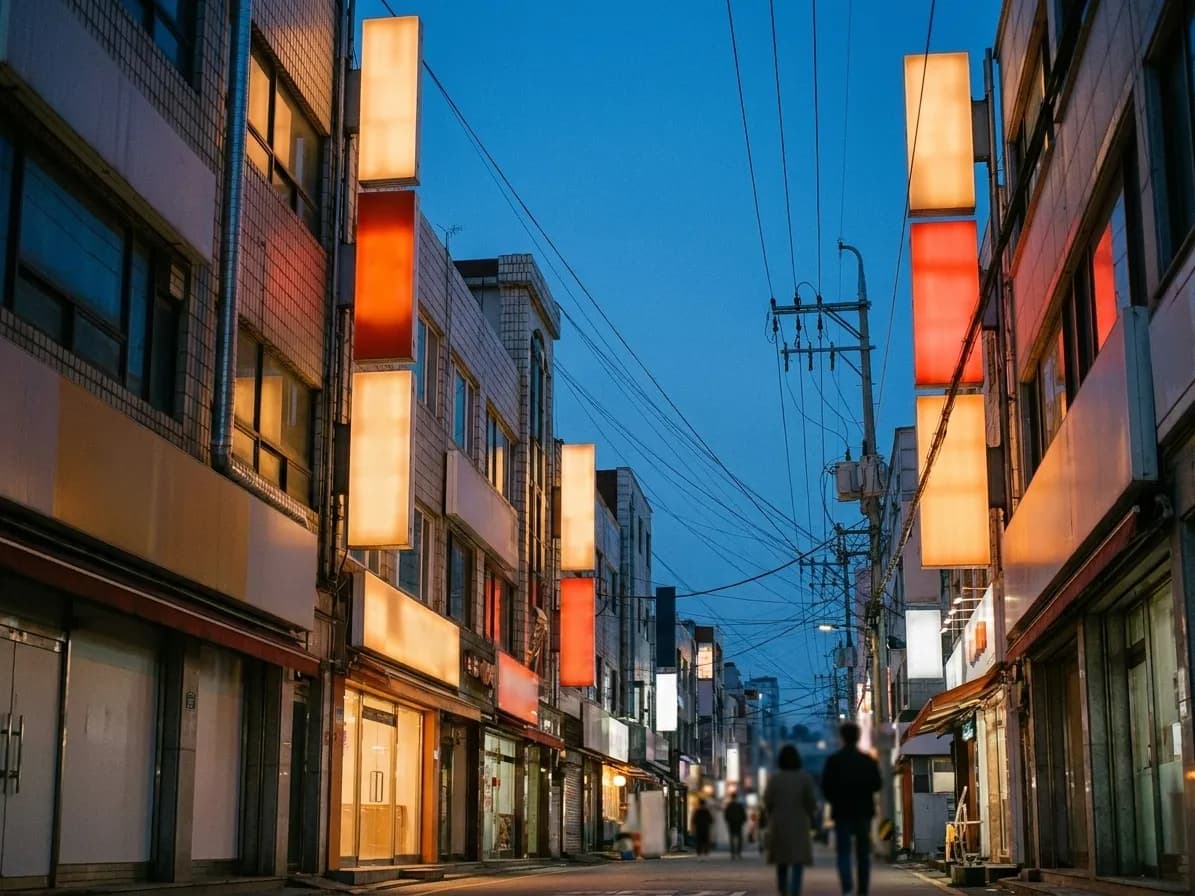
Koreatown is one of the densest neighbourhoods in the United States and it does not look like it from a car, which is most people's only experience of it. A great deal of what is good there is on the second and third floors of unremarkable buildings, reached by a lift and marked by a small sign in the lobby.
The habit worth acquiring is looking up and reading the stacked vertical signage. A building with eight names on it has eight businesses in it, and the ground floor one is frequently the least interesting. This applies to the dumpling stops as much as to anything else here.
Tags: #Koreatown #Mandu #LosAngeles #LAFood #DumplingCrawl #KTown #KoreanFood #LANights #LANeighborhoods #LAEats
All trademarks are the property of their respective owners.
Ask Karpo first
Koreatown is the dumpling answer for the night you do not want to drive twenty miles. Ask Karpo which rooms are still serving at the hour you are out and which do their mandu to order.