Miami’s beach forecast can change faster than a group chat plan, especially on a hot, humid Friday afternoon or a weekend morning with visiting family in tow. The useful move is not to panic over a drowning-related search spike, and not to treat a green flag as permission to stop thinking. Build a free safety loop into the outing: check Miami Beach Ocean Rescue’s current conditions, read the flag board at the nearest lifeguard tower, choose a guarded stretch, and keep Miami-Dade Fire Rescue’s child-water-safety rules in the plan. This route is for people who still want the beach, just with fewer assumptions.
Want a beach plan that checks flags before vibes? Text Karpo for Miami-specific safety stops, trolley-friendly timing, and a quick backup plan if Ocean Rescue conditions change.

Miami Beach Ocean Rescue Headquarters at 1001 Ocean Drive
Start at the Ocean Rescue information point rather than at the waterline. Miami Beach lists Ocean Rescue Headquarters at 1001 Ocean Drive and publishes an Ocean Rescue Hotline for daily beach conditions, with one option for weather conditions and another to speak with a person. That matters when the city page is stale, your browser cache is old, or the sky over South Beach looks different from the morning forecast.
This stop fits groups with mixed confidence: one strong swimmer, one parent managing kids, and one visitor who thinks calm-looking water means safe water. Use it to set the tone before anyone unpacks. The tradeoff is a few minutes of friction at the front of the day, but it prevents the worse failure mode: choosing a pretty patch of sand before confirming whether lifeguards are on duty nearby.
The Lifeguard Tower Flag Board on Miami Beach
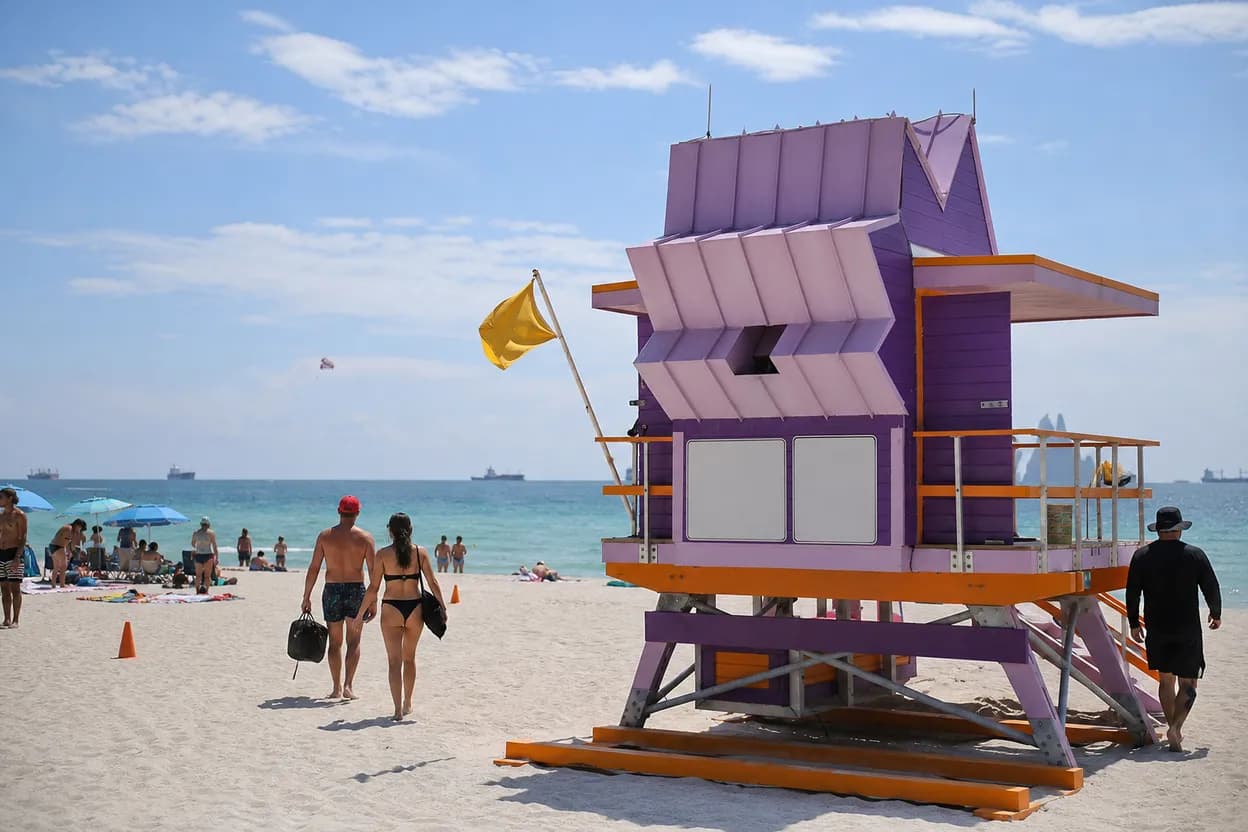
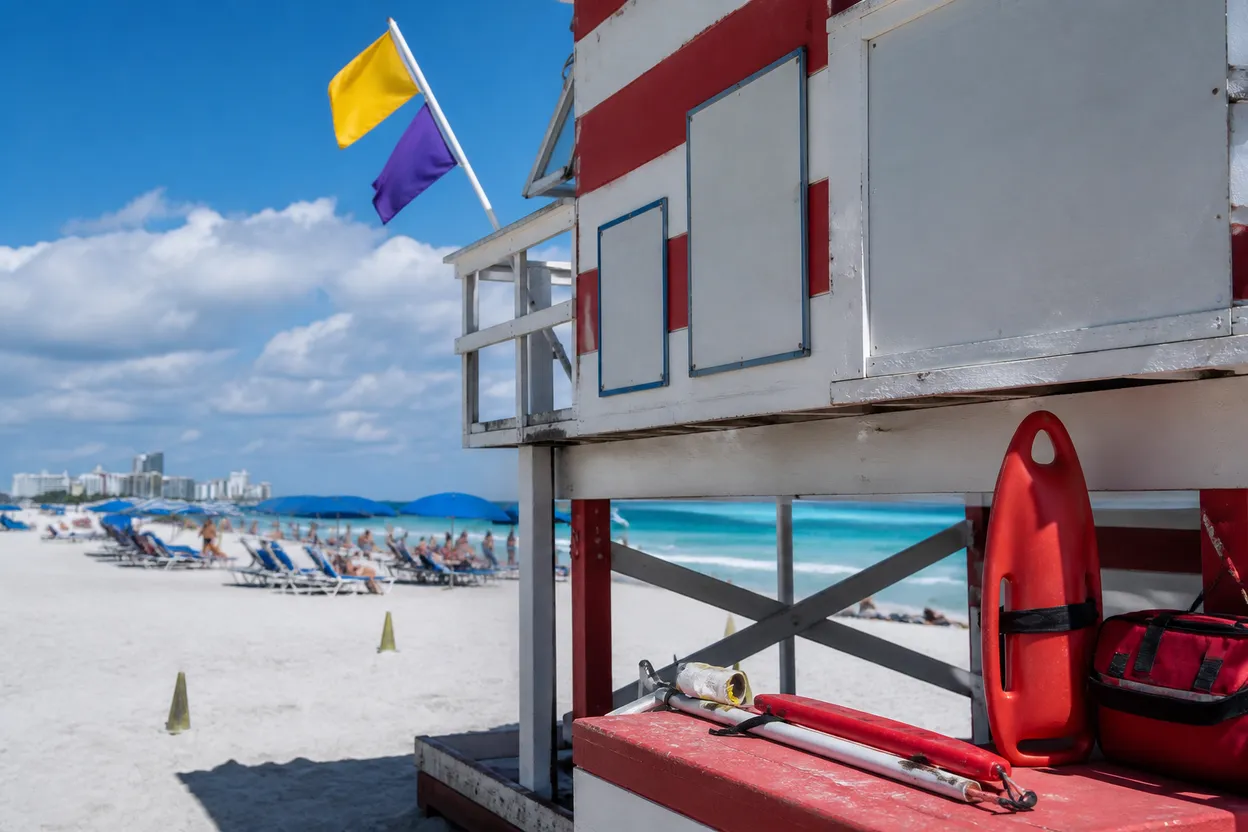
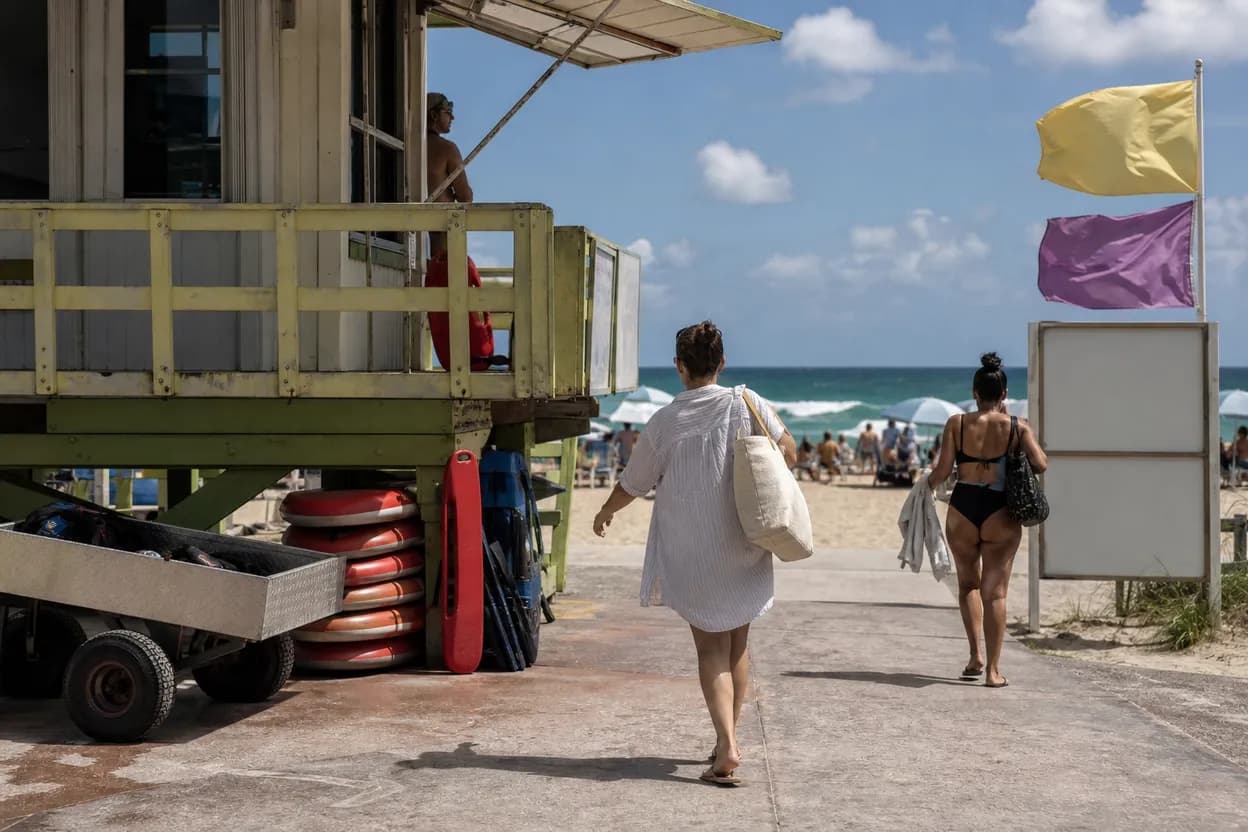
At the tower, read the posted statewide beach warning flag system as a decision object, not scenery. Miami Beach says the information is posted on all lifeguard towers: double red with swimmer crossed out means water closed, red means high hazard, yellow means medium hazard, green means low hazard with caution, and purple means dangerous marine life. The city also warns that flags can change with surf and weather.
The practical rule is simple: if your group cannot explain the flag aloud, do not enter yet. Ask the lifeguard, move to another guarded area, or switch to a dry beach walk. Absence of flags does not assure safe waters, according to Miami Beach, so a missing display is not a workaround. For accessibility, choose the tower with the clearest path from the street and avoid soft-sand detours when mobility is limited.
Current Beach Conditions Page Before South Beach Water Time
Miami Beach’s current conditions page is the closest free pre-arrival screen for the day’s beach logic. It has recently shown tower opening and closure times, lifeguard duty hours, surf and swimming conditions, water temperature, air temperature range, tide notes, wind direction, advisories, and webcam links. Because the page itself says warning flags can change at any time, treat it as a starting read, then confirm on the sand.
This is where Friday late afternoon gets tricky. A morning screenshot may not reflect lightning advisories, wind shifts, or stronger surf later in the day. If the current page does not show today’s date, call the Ocean Rescue Hotline or ask at the tower. The backup is still free: stay on the sand, walk Lummus Park, or use the trolley to move the plan north or south without forcing a swim.
Rip Current Check from the Guarded Swim Area
NOAA describes rip currents as powerful channels of water moving away from shore, and Miami Beach’s Ocean Rescue guidance points to clues such as darker water, sandy-colored washouts, seaward lines of foam or debris, and choppy confused water. Those signs are useful, but the city also notes rip currents are not always easy for an untrained person to identify. That is why the guarded area matters.
If caught in a rip current, NOAA guidance is not to fight it; swim parallel to shore, then return at an angle when clear. Still, this article is not asking visitors to self-rescue as a strategy. The safer decision is upstream: swim near a lifeguard, stay shallow when risk is uncertain, and skip water entry when red flags, storms, fatigue, alcohol, or poor visibility make the group slower to react.
South Beach Trolley Stops Near the Safety Route
The Miami Beach free trolley makes this route easier for visitors who should not be circling for parking in heat or traffic. The city says trolley service operates daily from 8 a.m. to 11 p.m. at about 20-minute average frequency, and the South Beach route uses Loop A and Loop B. Low-floor trolley vehicles support easier boarding and alighting, which helps families, older relatives, and anyone carrying beach gear.
Use the trolley as pacing control. If South Pointe, Ocean Drive, or the Collins corridor feels too crowded to keep children within reach, ride to a less congested guarded stretch instead of drifting into an unguarded pocket. The failure mode is assuming transit convenience equals water safety. It does not. Every new stop still needs the same sequence: current conditions, tower flag, lifeguard location, group limits, then water.
Miami-Dade Fire Rescue Child Supervision Rules
Miami-Dade Fire Rescue’s drowning-prevention page is not beach decor; it is the family rule sheet. The county says young children are attracted to water, small children can drown in only inches of water, and drowning can happen quickly and silently. Its first rule is never leaving a child unattended around pools, spas, bathtubs, or any body of water. That includes the ocean edge during photo breaks.
For a Miami beach day, assign one adult as active water watcher before anyone gets distracted by food, towels, phones, or rideshare updates. Rotate the job if the group stays longer, and keep a phone close without making it the focus. If a child is missing, Miami-Dade advises checking the water first, including nearby pools or spas. The backup decision is leaving early when supervision gets thin.
Ocean Rescue Hotline as the Final Verification Action
Make the final verification action boring and explicit: reopen Miami Beach current conditions, look at the tower flag, and call the Ocean Rescue Hotline at 305-673-7714 if anything conflicts before swimming. Miami Beach lists option one for weather conditions and option two to speak with a person. Use that when the flag, surf, sky, and web page do not tell the same story.
The best Miami beach plan is still reversible. If lifeguards are off duty, flags are unclear, lightning is nearby, or the group cannot stay within the guarded area, the free move is to keep the outing dry: walk the beach path, sit near the tower, ride the trolley, or reschedule swimming. That does not ruin the day. It keeps the decision matched to verified conditions instead of momentum.
Tags: #Miami #MiamiBeach #SouthBeach #OceanRescue #BeachSafety #DrowningPrevention #RipCurrents #LifeguardTower #FreeThingsToDo #FamilyTravel #PublicSafety #AskKarpo #BeforeYouGo #Karpo
Sources consulted: Source 1: miamibeachfl.gov · Source 2: miamibeachfl.gov · Source 3: miamidade.gov · Source 4: oceanservice.noaa.gov · Source 5: miamibeachfl.gov · Source 6: miamibeachfl.gov
All trademarks are the property of their respective owners.
Ask Karpo first
Tell Karpo your date, group size, budget, and starting point. We’ll check current access, timing, transit, and the cleanest Miami plan for Miami Beach Ocean Rescue lifeguard tower corridor, beach warning flag boards, and Miami-Dade Fire Rescue drowning-prevention resources before you head out.