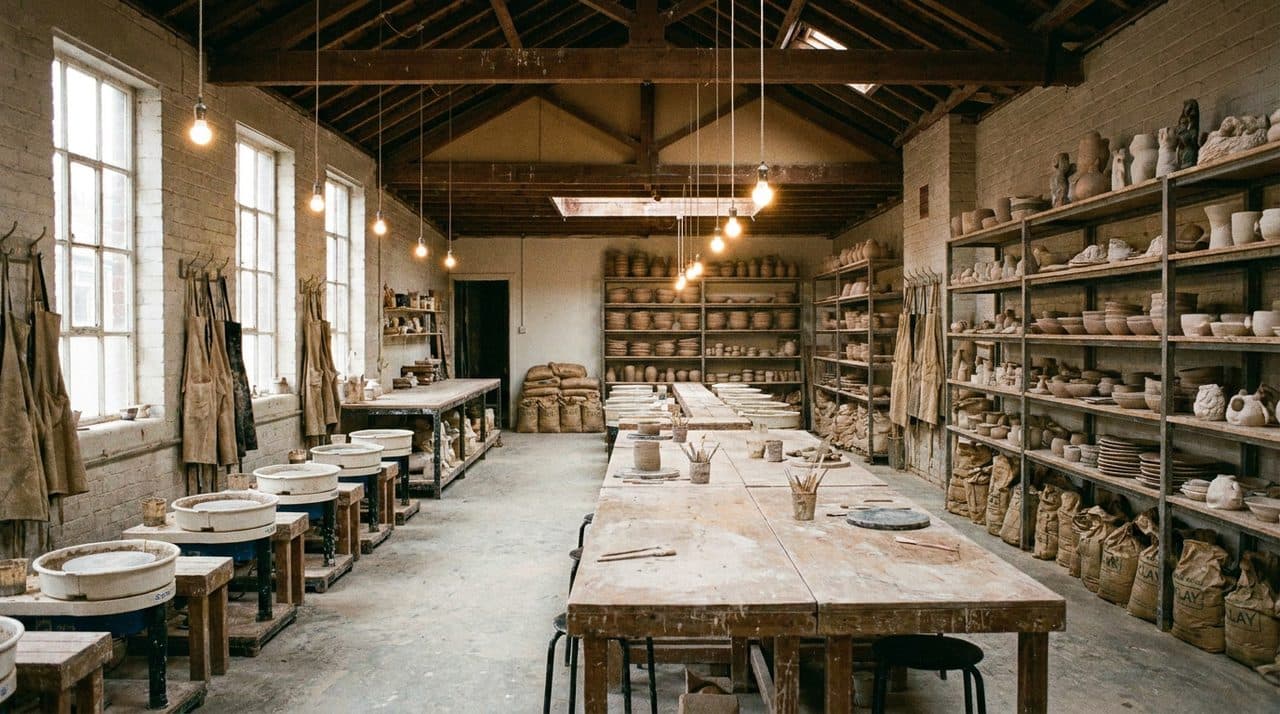
The drop-in ceramics studio sits on the second floor of a converted textile warehouse in East Williamsburg, where exposed brick meets twenty-foot ceilings and the hum of pottery wheels mixes with the clatter of the freight elevator. The space runs open sessions six days a week, no membership required, and the kilns fire every Tuesday and Friday like clockwork.
Clay Under Industrial Skylights
Morning light pours through the original factory skylights onto communal worktables scarred with decades of clay dust and glaze drips. The tables stretch nearly the length of the room, each one a battlefield of works-in-progress—pinch pots drying under plastic wrap, slab-built planters waiting for handles, experimental sculptures that may or may not survive the bisque firing. The wood is stained in layers of terracotta and porcelain white, a topographic map of every project that's been centered, trimmed, and abandoned here. Regulars claim the same spots by habit, leaving tools in mason jars and aprons hanging on wall hooks between visits. The floor is sealed concrete, perpetually dusted with a fine layer of dry clay that crunches underfoot and turns to slip the moment someone spills their water bucket.
Wheel Stations by the Loading Dock Windows
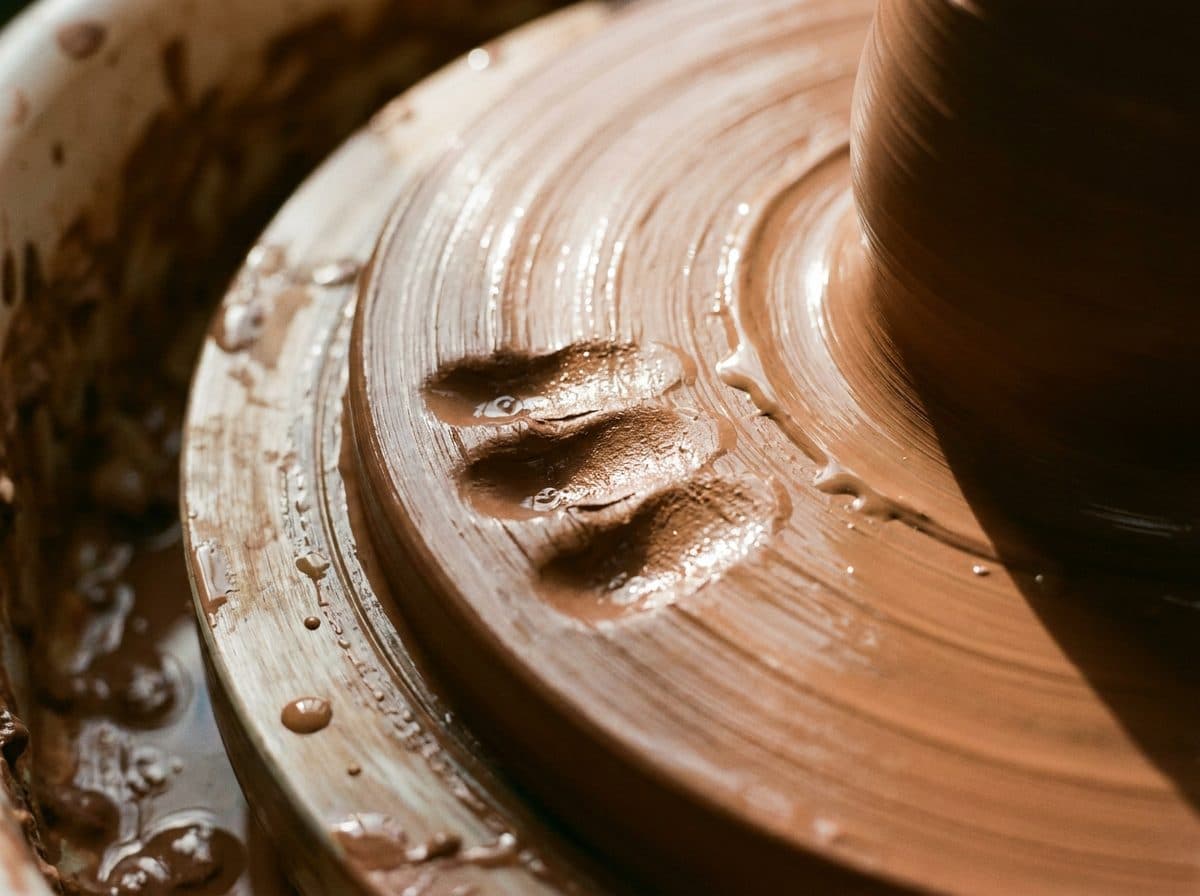
Six pottery wheels line the eastern wall where old loading dock windows look out onto freight tracks and the back sides of industrial buildings. The wheels themselves are a mix of eras—two vintage Brent kick wheels that require real leg power, three electric Shimpo models that purr when they spin, and one rebuilt beast from the seventies that shudders at high speed but centers like a dream. Whoever arrives earliest in the morning session gets first pick, and the veterans always take the wheel closest to the window corner where the light hits best for trimming. The rhythm of the room shifts when multiple wheels are running—the wet slap of clay being thrown, the scrape of trimming tools, the occasional collapse of a too-thin wall followed by good-natured cursing. A pegboard above the wheel station holds loop tools, ribs, and wire cutters, all hung in an order that makes sense only to the studio monitors who've been here since the space opened.
The Glaze Library and Its Cryptic Labels
The glaze room occupies what was once a supply closet, now crammed floor-to-ceiling with five-gallon buckets labeled in fading Sharpie with names like "Oribe Attempt #3" and "That Blue From Last Year." Test tiles hang on the wall in rough chronological order, showing the evolution of recipes and the way certain glazes behave differently depending on kiln position. Regulars know which combinations run, which stay put, and which turn a completely different color above cone six. The studio keeps a base selection of reliable glazes—a good white, a dependable celadon, a couple of matte blacks—but the real discoveries happen in the experimental buckets mixed by whoever's been testing new materials. A three-ring binder on the shelf contains handwritten notes and firing schedules, pages warped from clay-covered hands flipping through for reference.
Kiln Room Heat and the Tuesday-Friday Rhythm
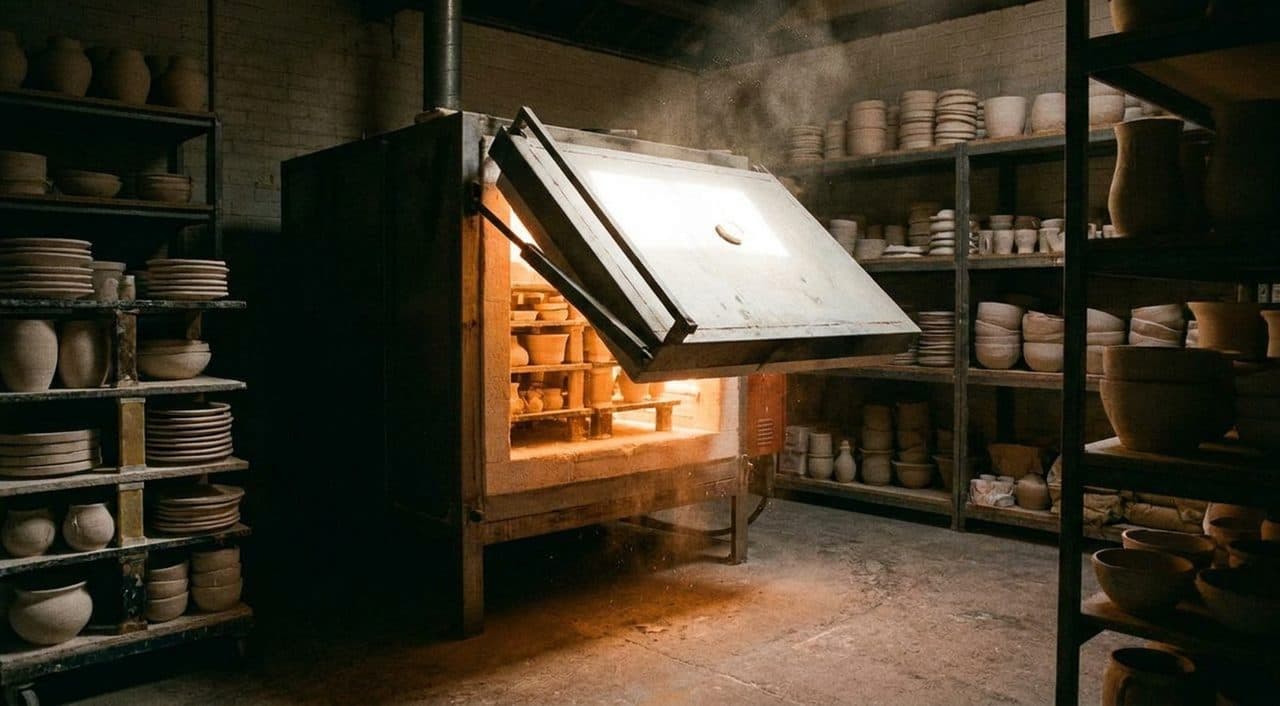
The kiln room sits behind a fire-rated door that stays propped open except during actual firings. Two electric kilns and one small gas reduction kiln set the weekly tempo—bisque loads go in Monday night and Thursday afternoon, glaze firings happen late Tuesday and Friday. The schedule is posted on a whiteboard that also tracks whose work is in which kiln, shelf assignments determined by a combination of seniority and whoever remembered to sign up first. On firing days, the room gets uncomfortably warm by mid-afternoon, and the smell of burning organic matter—bits of paper, dust, the occasional insect that wandered into a pot—seeps into the main studio. Regulars time their visits around the kiln schedule, knowing that unloading days mean fresh work coming out and shelf space opening up for the next round. The anticipation before cracking a cooled kiln has its own particular energy, everyone gathering to see what survived and what cracked or exploded into shrapnel.
The Crowd That Shows Up Between Shifts
The studio draws a particular cross-section of East Williamsburg—line cooks with flour still on their jeans, freelance designers taking a break from screens, teachers who come straight from classroom duty with correction papers stuffed in their bags. The late afternoon sessions skew toward people with irregular schedules, those who can slip in between a lunch shift and an evening gig. Weekends bring the nine-to-fivers and the couples looking for something to do with their hands that isn't staring at phones. Conversations happen across tables, advice offered freely about cracking problems and glaze compatibility, the social contract of the communal workspace enforced through gentle peer pressure rather than posted rules. Someone usually brings coffee from the roaster down the block, and there's an unspoken rotation of who's responsible for sweeping the clay dust before closing.
What the Studio Monitors Actually Do
Two or three studio monitors are always present during open sessions, identifiable by their clay-stained aprons and their ability to fix a wobbling wheel head with a single adjustment. They're not teachers in the formal sense—this isn't a class—but they'll demonstrate centering technique if someone's struggling, explain why a piece is cracking as it dries, or help load a kiln in a way that maximizes space without risking shelf-to-pot fusion. The monitors rotate through the space, checking that wheels are cleaned after use, that glaze buckets get stirred before someone dips their work, that the slab roller isn't being forced past its capacity. They're the ones who know which clay bodies are running low, when the last glaze firing ran hot, and where someone left their favorite trimming tool three weeks ago.
Practical Notes
The studio runs open sessions six mornings and afternoons throughout the week, with extended hours on certain evenings. No reservation needed for drop-in access, though calling ahead during holiday weeks is smart. The nearest subway stop is a walk through the industrial blocks where Bushwick meets East Williamsburg—look for the building with the loading dock and the fire escape covered in climbing vines. Studio time includes clay, tools, and glaze use; firing fees are separate and posted by the kiln room door. First-timers get a brief orientation on wheel safety and kiln-loading protocol. Bring an apron or wear clothes that can handle permanent clay stains. The freight elevator is temperamental but functional—take the stairs if impatience is an issue.
Tags: #CeramicsStudio #EastWilliamsburg #BrooklynMakers #PotteryWheel #OpenStudio #ConvertedWarehouse #BushwickArt #NYCCeramics #DropInStudio #KilnFired #CommunalWorkspace #HandmadeNYC #ClayWork #IndustrialSpace #RightOnTime
Sources consulted: timeout.com · secretnyc.co · thrillist.com
All trademarks are the property of their respective owners.
Ask Karpo first
Want to know which session times are least crowded or what the kiln-sharing protocol involves?
Ask Karpo for the drop-in schedule and the studio's clay-firing calendar before you head out.