Dream House is not a quick photo stop, and that is the point. Inside MELA Foundation’s third-floor Tribeca space, La Monte Young, Marian Zazeela, and Jung Hee Choi’s long-running sound-and-light environment asks visitors to slow down inside sustained frequencies and colored light. As of July 22, 2026, MELA lists the installation at 275 Church Street, 3rd Floor, with Wednesday-Saturday hours from 2 PM to 10 PM and $10 admission. That makes it useful for a humid, stormy, or too-bright downtown afternoon, especially after galleries or errands, but only if your group can handle stillness, volume, stairs or building access uncertainty, and a deliberately strange sensory frame.
Want a stranger downtown art stop without guessing what is open? Text Karpo before your Tribeca walk for a verified Dream House timing check and nearby backup logic.
Use Dream House as the Weird Pause Between Tribeca Errands
Dream House works best when you treat it as a reset, not another item to consume. The official MELA page describes it as a sound-and-light environment and a time installation measured through continuous frequencies. That tells you the practical truth: there may be little to “do” besides sit, listen, look, and notice changes in your perception. Plan it after a noisy gallery route, not before a reservation that already has everyone checking the clock.
The strongest audience is a repeat visitor, local, artist, musician, or curious gallery walker who wants something specific to downtown Manhattan. It is a poor match for a restless group, anyone expecting a conventional museum label sequence, or a companion who needs conversation to enjoy an outing. If your afternoon has already involved crowds, bright sun, or weather stress, Dream House can either deepen the calm or push sensory overload further. Choose accordingly, not optimistically.
Confirm MELA’s Wednesday-Saturday Window Before You Walk Over
MELA’s current homepage lists Dream House hours as Wednesday through Saturday, 2 PM to 10 PM, with $10 admission. Because small arts spaces can change hours for private events, staffing, maintenance, or seasonal programming, do the practical check the same day. Look at MELA’s site first, then call the listed phone number if your plan depends on it. Do not build a whole downtown evening around an unverified screenshot, old review, or map listing.
The early evening window is the cleanest use case: you can finish a gallery walk, cool down indoors, and still have dinner options afterward. Arriving near opening can feel too abrupt if you are still in errand mode; arriving too close to closing reduces the point of a duration-based installation. Give yourself at least thirty unhurried minutes inside, plus time to find the entrance, pay admission, adjust to the room, and leave without rushing your companion.
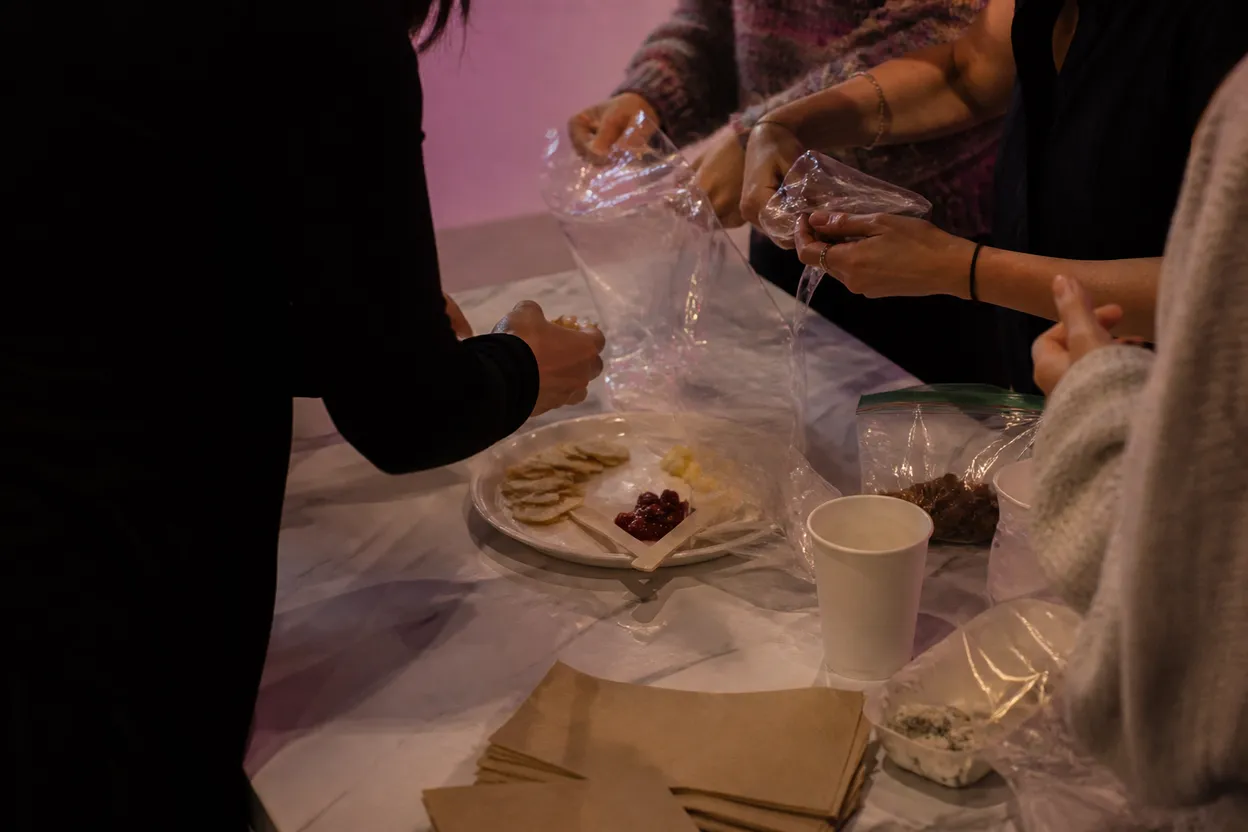
Find 275 Church Street Without Turning It Into a Quest
MELA’s visit page places Dream House at 275 Church Street in Tribeca, between Franklin Street and White Street. The same official directions name several nearby subway approaches: the 1 to Franklin Street; the 6, J, Z, A, C, E, N, R, Q, or W to Canal Street, depending on which line is actually useful that day. This is a downtown block where navigation is easy once you know the cross streets, but building entries can feel discreet.
For transit, the Official MTA app is the sensible final check because it offers real-time arrivals, service status, maps, and elevator or escalator outage information. Do that before descending into the subway, not after you are already committed to a delayed line. If you are walking from SoHo, Civic Center, Chinatown, or the Hudson side of Tribeca, compare the walk against the subway. Short downtown transfers often cost more attention than they save.
Read the Sound-and-Light Room as Duration, Not Decoration
The installation’s failure mode is misunderstanding the format. Dream House is not a pop-up immersion built around moving projections, timed rooms, or guided prompts. MELA identifies the work with continuous sound and light frequencies, which means the experience can change as you move, sit, or simply remain long enough for your ears and eyes to settle. The useful question is not whether it is exciting immediately, but whether you want to give subtle perception a chance.
A patient friend matters. You need someone who can sit quietly without narrating every reaction, checking messages, or treating the room as a dare. Enter with the assumption that the first minutes may be awkward, intense, or underwhelming. Then adjust: stand, sit, shift positions, close your eyes briefly if comfortable, and notice whether the sound feels fixed or spatial. If irritation rises instead of curiosity, leaving is a valid outcome, not a failed visit.
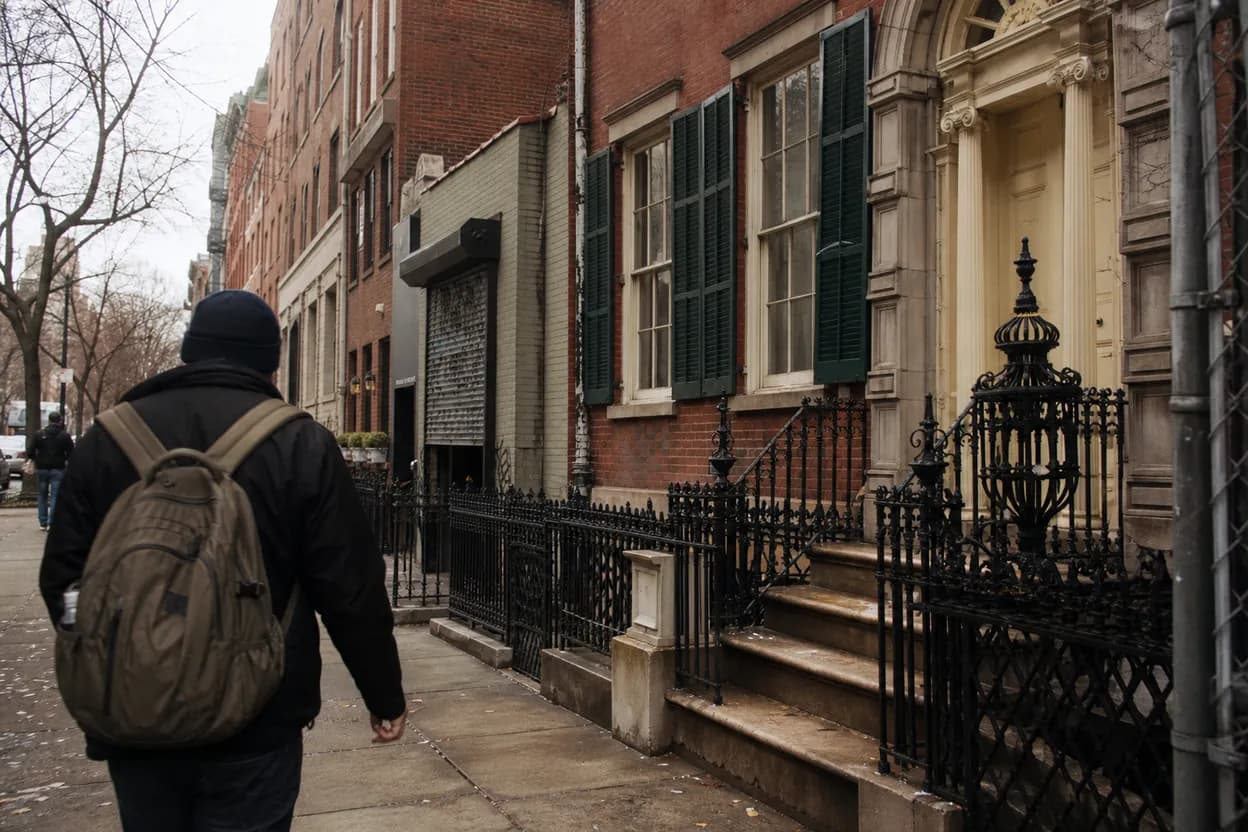
Budget for Admission, Cash-or-Card Uncertainty, and Low Friction
The verified admission figure from MELA is $10. Bring a card and enough cash because small nonprofit art spaces can have payment-processing interruptions, changed policies, or monitor-managed entry. Do not invent a free-night strategy unless MELA posts one. The low price makes Dream House useful as a compact detour, but it still deserves a decision: pay for focused time inside, not a two-minute peek to satisfy curiosity before the next neighborhood stop.
Because the installation is indoors, it is a strong option when the afternoon is humid, stormy, or too bright for pleasant sidewalk wandering. It is not automatically comfortable for everyone. Continuous sound can be fatiguing, colored light can bother sensitive eyes, and the quiet social contract can make whisper-heavy groups feel conspicuous. Bring only the people who consent to that tradeoff. If someone is already headache-prone, hungry, or overstimulated, choose a gentler backup first.
Treat Access at the Third Floor as a Must-Verify Detail
The address detail that matters most for accessibility is “3rd Floor.” MELA confirms that floor in its current listing, but the official pages opened for this draft did not provide a clear elevator, wheelchair-access, seating, restroom, or bag policy statement. That absence should shape the recommendation. Visitors who need step-free access, a certain seat type, low-sensory conditions, or service-animal clarity should contact MELA directly before leaving, rather than discovering the answer at the building door.
Transit accessibility needs the same discipline. NYC’s accessibility reporting points riders to MTA accessibility resources for current station information, and the Official MTA app includes elevator and escalator outage information. Since several subway lines can get you close, choose the route around your access needs instead of defaulting to the nearest dot on a map. If a station or building detail cannot be confirmed, shift to a nearby accessible museum, cafe, or gallery where access is published.
Make the Go-or-Skip Call on Church Street
Before you enter, ask three practical questions: is Dream House open today, does everyone understand the sensory format, and do you have enough unhurried time to sit with it? If the answer is yes, go in with a low-volume phone, flexible expectations, and no plan to turn the room into content. If one answer is weak, make the visit conditional. A strange installation is rewarding when chosen deliberately and annoying when used to rescue a bad itinerary.
The final verification step is simple and worth doing on July 22, 2026 or any later date: open MELA’s homepage for hours and admission, open MELA’s visit page for address and subway directions, then check MTA service and accessibility status for your chosen route. If those three checks line up, Dream House is a compact, sourceable Tribeca odd find. If they do not, postpone it and keep the idea for a calmer downtown evening.
Tags: #DreamHouseNYC #MELAFoundation #TribecaNYC #NYCSoundArt #ExperimentalArt #HiddenNYC #OddFindsNYC #GalleryWalk #DowntownManhattan #NYCArtGuide #RainyDayNYC #AskKarpo #BeforeYouGo #KarpoNYC
Sources consulted: Source 1: melafoundation.org · Source 2: melafoundation.org · Source 3: apps.apple.com · Source 4: home4.nyc.gov
All trademarks are the property of their respective owners.
Ask Karpo first
Tell Karpo your date, group size, budget, and starting neighborhood. We’ll check current access, timing, transit, and the cleanest plan for Dream House / MELA Foundation, Tribeca, Manhattan before you head out.