When a name like don nelson starts moving through chats, classroom conversations, and search results, the smartest Miami move is not to assume it means something is happening here. For back-to-school families, students, and teachers, the useful question is simpler: what can be verified from public sources before time, money, or attention gets spent? This guide treats the phrase as a timely search hook, not as proof of a Miami appearance, school tie, endorsement, or event. The plan below is built for a real weekday in Miami-Dade: confirm the claim, use public library resources, compare reporting before commentary, pick a study location that is actually accessible, check transit conditions, and keep one low-friction backup ready.
Want a quick reality check before you leave campus, home, or the library? Text Karpo with the headline, your neighborhood, and your deadline so you can separate public facts from hype.

Turn curiosity into a research question
Start by rewriting the headline as a question you can answer. Instead of “don nelson is connected to Miami,” ask: what public source says so, when was it posted, and does it name a place, date, institution, or official channel? That one change keeps a trending name from becoming a rumor with a backpack on it.
For a student, the research question might be: “Is this person or topic relevant to my assignment, or am I just seeing repeated mentions?” For a parent, it might be: “Does this affect school travel, library access, or a public program I planned to use?” For a teacher, it may be: “Can I point students to a primary or library source rather than a social post?”
Write down three things before clicking around: the exact phrase you saw, where you saw it, and what decision you need to make today. If the answer is only “people are talking,” that is not enough to change a school-night plan in Miami.
Start with a reliable public resource
Miami-Dade Public Library System is the first practical stop because it gives residents a public research base instead of a rumor stream. Its official site points users to branch locations, library cards, accounts, eContent, online newspapers and magazines, learning and training, eGovernment, and the library app. If you need to check whether a name, topic, or article has substance, those tools are more useful than refreshing a feed.
Use the library site’s location tools before choosing a branch. The official library notice says the Miami Lakes Branch and South Dade Regional Libraries are closed for construction, renovations and improvements. That matters for back-to-school planning: do not build an after-class study route around a closed facility. Use the library’s “Open Now” and “Find a Branch” tools to confirm what is usable today.
If you already have a library card, the digital path may be faster. The library describes eContent as digital books, audiobooks, movies, music and more available anytime, anywhere, free with a library card. It also lists online newspapers and magazines for staying informed. That is a clean way to verify context without promising that any specific article, database result, or title will be available.
Compare primary reporting before opinions
Do not treat a reaction post as the source. Once you have the phrase, look for reporting that names its evidence. A useful item should tell you who said what, when it was said, and where the information came from. If the story uses don nelson only as a label without a traceable source, keep it in the “unverified chatter” column.
Miami readers should also separate national relevance from local relevance. A name can be widely searched in the United States without creating a Miami event, school activity, library program, or transit impact. Unless an official Miami-Dade County, library, school, venue, or transportation page says something local and current, do not add assumptions.
For schoolwork, capture citations as you go. Save the official page title, URL, and date you checked it. If you later use a news article or magazine item through library access, note whether it is reporting, analysis, or opinion. That habit helps students avoid building an assignment on a claim that looked loud but was thin.
Choose a study stop that fits the task
Pick the study stop based on the job, not the vibe. If you need background reading, a library branch or digital library access may be enough. If you need to draft, cite, and submit, choose a location where you can stay focused and confirm access before leaving. The library site’s branch tools and account tools are the right starting points because hours, services, and access can change.
Build a Miami timing plan backward. First, set your deadline: homework due time, pickup time, practice time, or bedtime. Second, check whether your preferred library branch is open now or open when you expect to arrive. Third, check whether the branch is affected by a notice. The official notice about Miami Lakes and South Dade Regional being closed is exactly the kind of detail that can wreck a plan if you skip it.
Make the backup choice before you need it. A good backup is not “somewhere else later.” It is a specific second branch, digital library task, or at-home reading session using eContent or online newspapers and magazines. That way, if a location is closed, crowded, or inconvenient, you still complete the verification step instead of losing the afternoon.
Add one low-cost reset nearby
A back-to-school research errand can burn out quickly, especially when the original topic is noisy. Add one low-cost reset that does not depend on a special event or celebrity promise. With a library card, the library’s eContent includes digital books, audiobooks, movies, music and more, described as free and available anytime, anywhere. That can be the decompression plan after the serious checking is done.
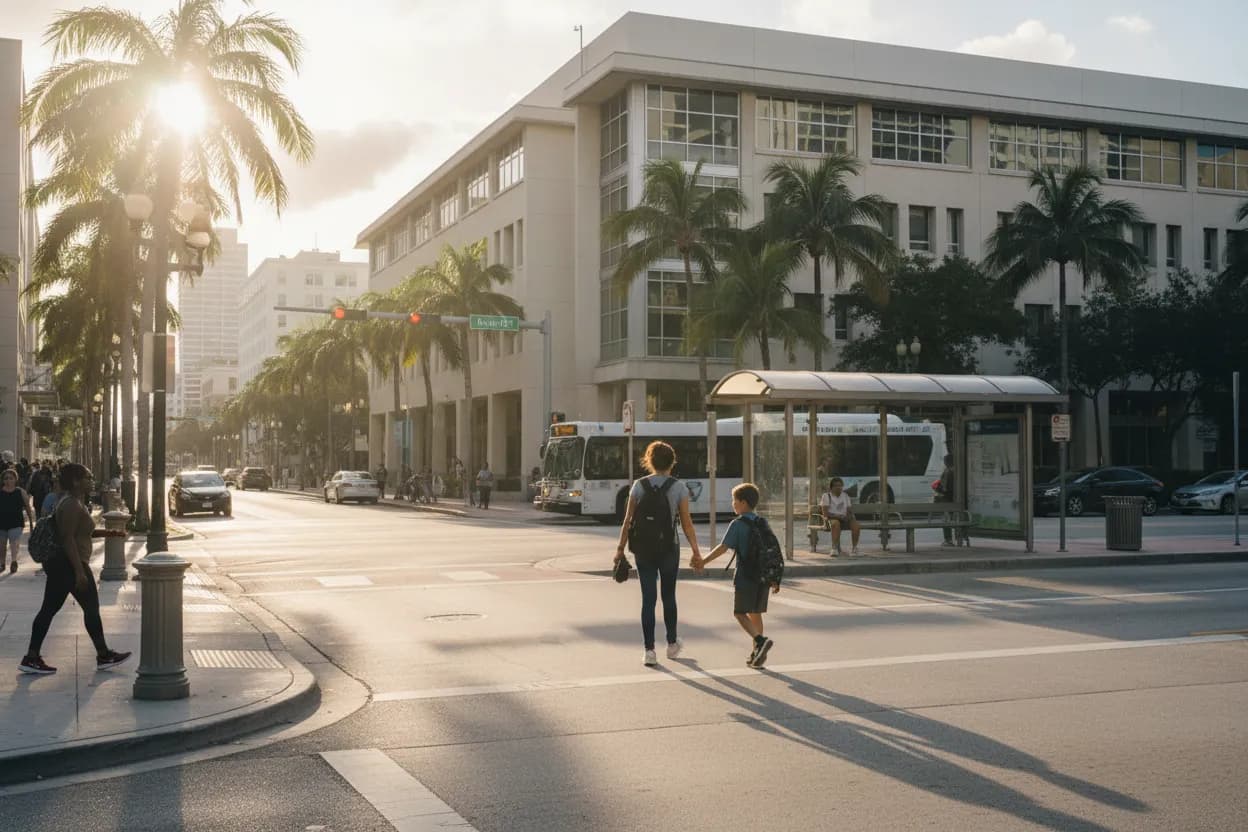
If you are traveling by transit, make the reset flexible. Miami-Dade Transportation and Public Works says riders can plan trips, read rider alerts, view service updates, and track buses and trains in real time. That means the reset should not require a fragile transfer or a tight arrival window. Choose something you can shorten, move, or replace if the tracker or alerts point to trouble.
Crowd risk is not just about big events. It can be a full branch after school, a delayed bus, an elevator or escalator outage, or a family schedule that leaves no margin. The official transit site includes an elevators and escalators status check, plus rider alerts and service updates. Check those before promising a child, classmate, or study partner that the trip will be easy.
Verify hours and access before leaving
The final check should happen the same day, close to departure. Open the library page for branch status, closures, and account needs. Confirm whether you need a library card for the resource you want. If you are using transit, use the official trip planner, rider alerts, service updates, and transit tracker rather than relying on a screenshot from earlier in the week.
Students should pay attention to fare and eligibility language, not hearsay. Miami-Dade’s transportation page states that full-time students ride Metrobus and Metrorail for half the price. It also points riders to transit pass information and mobile services. Before budgeting a trip, verify the current pass details and any student requirements on the official page.
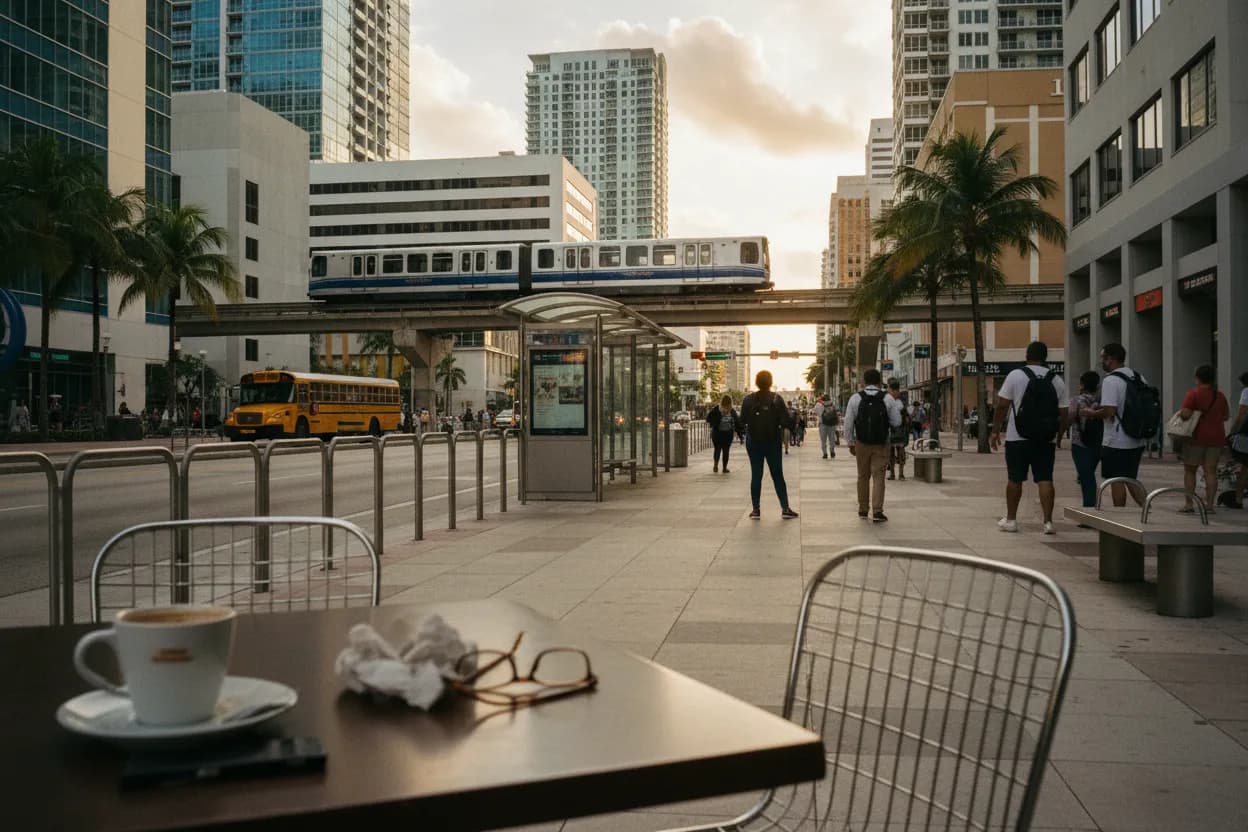
One date-specific item deserves attention this week: the official transportation page says that on Saturday, Aug. 15, Metromover service will begin operating at 2 p.m. while upgrades continue. If your plan touches downtown or Metromover that day, verify the alert before you go and build another route. A smart Miami plan is not dramatic; it is checked, timed, and replaceable.
Tags: #AskKarpo #BeforeYouGo #BackToSchool #Miami #MiamiDade #StudentLife #LibraryCard #MDPLS #MiamiDadeTransit #VerifyFirst #PublicSources #TransitAlerts #StudyPlan #LocalLife
Sources consulted: mdpls.org · miamidade.gov · miamidade.gov
All trademarks are the property of their respective owners.
Ask Karpo first
Ask Karpo first when a headline feels urgent but the local facts are unclear. Send the claim, your Miami-Dade starting point, and what you need to decide. Karpo can help you check public sources, transit alerts, library access, and a backup plan before you go.