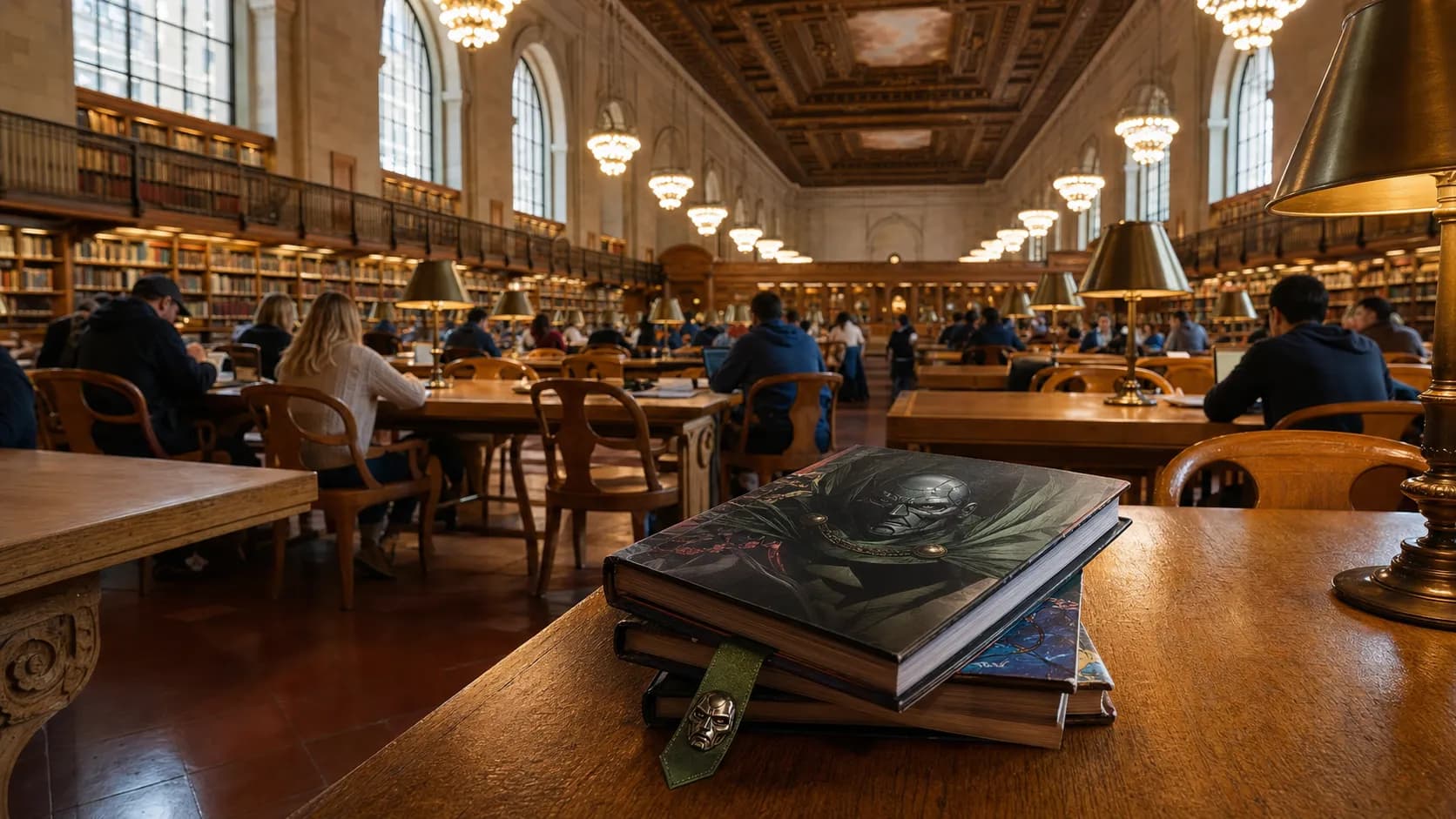
If the Google Trends spike around “doctor doom” sent you searching for a clean starting point, you are not alone. Victor von Doom is one of Marvel’s oldest, strangest, and most consequential villains: a scientist, sorcerer, monarch, and Fantastic Four nemesis whose stories can feel intimidating because they stretch from 1962 to current Marvel publishing. This NYC guide keeps the entry ramp simple. We are using official Marvel sources for the character’s comics origin and current screen information, then grounding the rest in New York City reading habits: public-library discovery, Midtown pull-list practicality, Union Square browsing, and what to ask for when you want Doom without buying a wall of back issues.
Text Karpo if you want a Doom reading route near your subway line. Ask Karpo to build a spoiler-light NYC comics crawl with library holds, shop stops, and beginner-friendly collected editions.
Why Doctor Doom still matters to Marvel readers
Doctor Doom endures because he is not just a masked strongman. Marvel’s official character materials describe Victor von Doom as a brilliant scientist whose armor, Doombots, and rule of Latveria make him dangerous on several levels at once. His best stories often work because Doom sees himself as the only person rational, powerful, and disciplined enough to impose order. That makes him an antagonist, but not a disposable one. He can be arrogant, theatrical, wounded, funny, terrifying, and weirdly honorable depending on the writer and era.
For NYC readers, the appeal also has a local flavor. Marvel’s superhero map is famously New York-heavy, and the Fantastic Four’s original world is tied to Manhattan-style science-adventure energy: towers, labs, celebrity heroes, and impossible threats arriving at the skyline. Doom comes from fictional Latveria, but he repeatedly crashes into that New York-facing Marvel tradition. Reading him is a way to understand not only a villain, but the older Marvel formula: family drama, public spectacle, big science, and operatic grudges.
The official origin: Fantastic Four #5 is the key first stop
Marvel lists Doctor Doom’s first appearance as Fantastic Four (1961) #5, published July 1, 1962, with Stan Lee as writer and Jack Kirby as penciller. That issue is the canonical doorway: Doom arrives as the Fantastic Four’s great nemesis and quickly establishes the blend that would define him for decades. If you want the historical starting line, that is it. It is also old-school Silver Age comics, which means brisk pacing, big declarations, and a very different rhythm from modern collected editions.
You do not need to start only with a fragile or expensive original issue. Marvel’s own Doctor Doom guide and comics listings point readers toward collected or digital ways to read the character’s essential stories. A useful approach is to treat Fantastic Four #5 as context, not homework. Read a reprint or digital edition, notice the ingredients—Reed Richards rivalry, technology, royal ego, theatrical menace—then move to later arcs that deepen the character.
Doom’s powers are not just armor
The easiest shorthand is “evil Iron Man with a country,” but that undersells him. Official Marvel materials emphasize Doom’s scientific genius and his armor’s combat abilities, including protection, force fields, and energy blasts. The armor matters because it makes him physically credible against superheroes who should outmatch a normal human. But the more interesting point is that Doom builds systems: decoys, machines, diplomatic leverage, laboratories, traps, and grand strategies that turn a fight into a political or psychological problem.
Then there is magic. Doom’s stories frequently connect science and sorcery rather than treating them as separate lanes. That combination is why he can appear in Fantastic Four, Avengers, Doctor Strange-adjacent, and event-comic stories without feeling out of place. When a clerk, librarian, or friend asks what kind of Doom story you want, answer with the lane: Fantastic Four rivalry, mystical Doom, world-conquest Doom, or morally complicated Doom. That will get you better recommendations than simply asking for “the best Doom book.”
What Marvel has officially said about the screen version
As of July 22, 2026, Marvel’s official Avengers: Doomsday movie page lists the film for December 18, 2026, with Joe Russo and Anthony Russo directing and Robert Downey Jr. in the cast. Marvel’s January 13, 2026 teaser article states that Downey, known in the MCU for Tony Stark/Iron Man, is returning in a new role as Victor von Doom. That matters because earlier Marvel event coverage from 2024 referenced a May 2026 release window, but current Marvel and Disney pages now point to December 18, 2026.
That does not mean every plot detail circulating online is settled. Treat unconfirmed casting theories, multiverse explanations, and leaked story claims as rumors unless Marvel, Disney, or another primary source says otherwise. For a reader who wants to be ready without spoiling a movie that has not opened yet, the safest preparation is character literacy: learn Doom’s rivalry with Reed Richards, his Latverian identity, his mix of technology and magic, and his habit of entering universe-scale stories when the stakes get enormous.
A clean reading path before you buy anything
Start with three buckets rather than one endless checklist. Bucket one is origin and rivalry: Fantastic Four #5 and other early Fantastic Four stories that define Reed Richards versus Victor von Doom. Bucket two is character depth: stories such as Books of Doom and Doctor Strange and Doctor Doom: Triumph and Torment are commonly recommended because they explore what drives him beyond villain-of-the-month plotting. Bucket three is event-scale Doom: Secret Wars-era material, especially if you want to understand why fans connect Doom with reality-bending Marvel stakes.
If you are using Marvel Unlimited or collected editions, build a two-week reading plan instead of a completist binge. Read one origin issue, one Fantastic Four confrontation, one solo or Doom-centered collection, and one big event appearance. Keep notes on what version of Doom you like: monarch, scientist, magician, rival, temporary antihero, or cosmic operator. That small preference list will help you shop smarter in NYC, where the shelves can be overwhelming and variant covers may distract from the story you actually want.
Where NYC readers can browse Doom without guessing
For new comics and collected editions, Midtown Comics is the obvious practical stop because its official site supports online ordering and free in-store pickup at its locations. That is useful if you already know the exact trade paperback, issue, or variant you want and do not want to gamble on shelf stock. Search the site before leaving home, choose the store pickup option, and remember that availability can change. For current Doom-related releases, this is often more efficient than wandering into Midtown during the busiest Times Square hours.
Forbidden Planet NYC, at 832 Broadway near Union Square, is another strong browsing stop, especially if your Doom curiosity overlaps with graphic novels, toys, genre books, and collectibles. Its official site describes the store as a comics, graphic novels, toys, and collectibles seller with roots going back to 1981. The neighborhood also makes an easy comics walk: browse, compare collected editions, then pair the trip with nearby bookstores. If you are buying for a younger reader, ask staff for age-appropriate Fantastic Four or Marvel collections rather than assuming every Doom story fits.
Use the library when continuity gets expensive
The New York Public Library is a good first filter for readers who are curious but not ready to buy five hardcovers. NYPL’s comics and graphic-novel resources note that the library maintains an extensive collection showing the cultural significance of comics and graphic novels, and its committees regularly highlight new comics for adults. That does not guarantee every Doctor Doom collection is on the shelf at your nearest branch on a given day, but it does mean the library system is worth searching before you spend.
A practical library workflow is simple: search for “Fantastic Four Doctor Doom,” “Books of Doom,” “Secret Wars Marvel,” and “Doctor Doom” in the catalog, then place holds where available. If a specific book is not held or is checked out, ask a librarian for adjacent Fantastic Four or Marvel villain collections. Libraries are especially useful for testing whether you prefer Silver Age issues, modern decompressed storytelling, or event comics. Doom is a character with many eras; borrowing helps you find your era before committing shelf space.
What to ask a comic-shop clerk, and what to skip
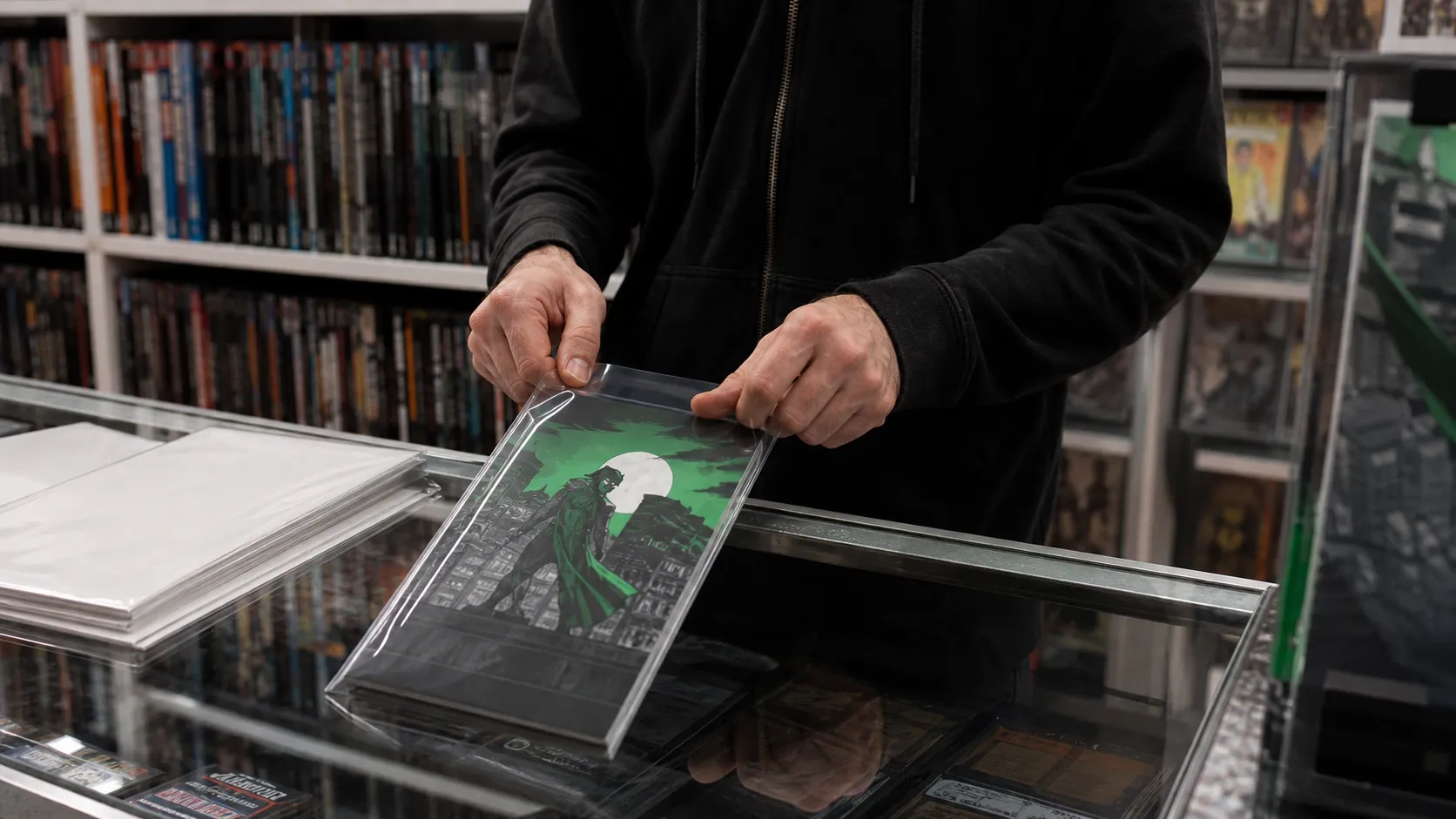
Walk in with a clear ask: “I want a Doctor Doom story that explains the character, preferably in collected form, and I’m trying to avoid major Avengers: Doomsday spoilers.” That one sentence gives a clerk enough direction to steer you toward evergreen material instead of only the newest issue on the rack. If you care about condition, say so. If you only want a readable copy, say that too. Collectors and readers often need different things, and Doom appears in both affordable reprints and premium editions.
Skip speculation-first buying unless you genuinely enjoy collecting for the hunt. Movie attention can push people toward sudden purchases of first appearances, variants, and graded books, but a news spike is not the same as a reading plan. For most New Yorkers, the better hidden gem is a solid trade paperback, a library hold, or a used copy that lets you understand why Doom matters. The character has lasted more than six decades because of stories, not just market heat.
Practical notes
Practical notes: check store and library listings on the day you plan to go, because hours, stock, holds, and pickup timing can change. If you are visiting Midtown Comics, search online first and use in-store pickup when you know the exact book. If you are browsing Forbidden Planet, give yourself time to compare editions rather than grabbing the first Doom cover you see. At NYPL, use holds and ask for help finding related Fantastic Four, Secret Wars, or Marvel villain collections. For the movie, rely on current Marvel or Disney pages: as of July 22, 2026, Avengers: Doomsday is listed for December 18, 2026.
Tags: #DoctorDoom #MarvelComics #FantasticFour #NYCComics #ComicBookGuide #HiddenGemsOddFinds #NYPL #MidtownComics #ForbiddenPlanetNYC #MarvelStudios #AvengersDoomsday #GraphicNovels #ComicShopping #NYCReaders
Sources consulted: Marvel official Doctor Doom comics profile · Marvel official guide: Who Is Doctor Doom? · Marvel official Fantastic Four #5 issue page · Marvel official Avengers: Doomsday movie page · Marvel official Avengers: Doomsday teaser article · The Walt Disney Company 2026 theatrical release update · NYPL comics and graphic novels reading resources · Midtown Comics official store and pickup information · Forbidden Planet NYC official store information
All trademarks are the property of their respective owners.
Ask Karpo first
Ask Karpo for “Doctor Doom near me” if you want help turning this guide into a one-afternoon plan: a branch catalog check, a shop pickup search, and a short list of collected editions that match whether you want origin, magic, Fantastic Four rivalry, or big-event Doom.