Booking dinner for six in Miami is an ordinary transaction. Booking for nine is a different activity with its own paperwork, and nobody tells you that until you are on the phone. Somewhere around the eighth guest, most restaurants in this city switch into large-party mode: an automatic service charge appears, a deposit or card hold may be required, the menu may narrow to a set list, and the number of rooms that can physically seat you drops sharply. None of this is unreasonable and all of it is manageable — but only if you know it is coming before you have promised nine friends a table on a Saturday night.
Karpo can find Miami rooms that genuinely seat a long table this weekend, check each one's deposit and set-menu rules, and tell you what a ten-top will cost.
The automatic service charge is the first surprise
Miami restaurants very commonly add an automatic gratuity to large parties, and the threshold is usually six or eight people. The charge is typically in the region of eighteen to twenty per cent and it appears on the bill as a line item rather than as a suggestion. It is legal, it is disclosed on the menu — often in small print at the bottom — and it is not going away.
The problem it creates is double-tipping. A group splitting a bill that already contains a twenty per cent service charge will frequently add another twenty on top without reading it, which is a large amount of money on a table of ten. Read the bottom of the bill out loud to the table before anyone reaches for a card. This one habit is worth more than any restaurant recommendation in this article.
Deposits, card holds and cancellation windows
Above eight, many Miami restaurants will take a card to hold the booking and will state a cancellation fee per head if you do not show or if the party shrinks materially. Some ask for a genuine deposit against the bill. Both are responses to a real problem — a ten-top that does not arrive is an evening's revenue gone — and both are entirely normal.
Ask two things when you book. What is the cancellation window, and what happens if the number drops. The second matters more than people expect, because groups always shrink. A restaurant that charges for eight when six arrive is within its rights if it told you, and most will be flexible if you call the day before rather than turning up light.
Set menus are usually a feature, not a downgrade
Large parties are frequently offered or required to take a set menu — a fixed number of courses at a fixed price per head, sometimes with a choice within each course. Groups often resist this and they are usually wrong to. A kitchen firing ten different mains at ten different cook times will deliver a worse meal than the same kitchen firing a coordinated set, and the set price is frequently lower than the average à la carte spend once everyone has ordered a starter.
The negotiation worth having is not whether to take the set menu but what is in it. Ask whether dietary requirements can be handled inside the set price, and get the answer before you confirm. A vegetarian at a set-menu table who was not declared in advance is the single most common way a large booking goes wrong.
Which formats actually work for ten people
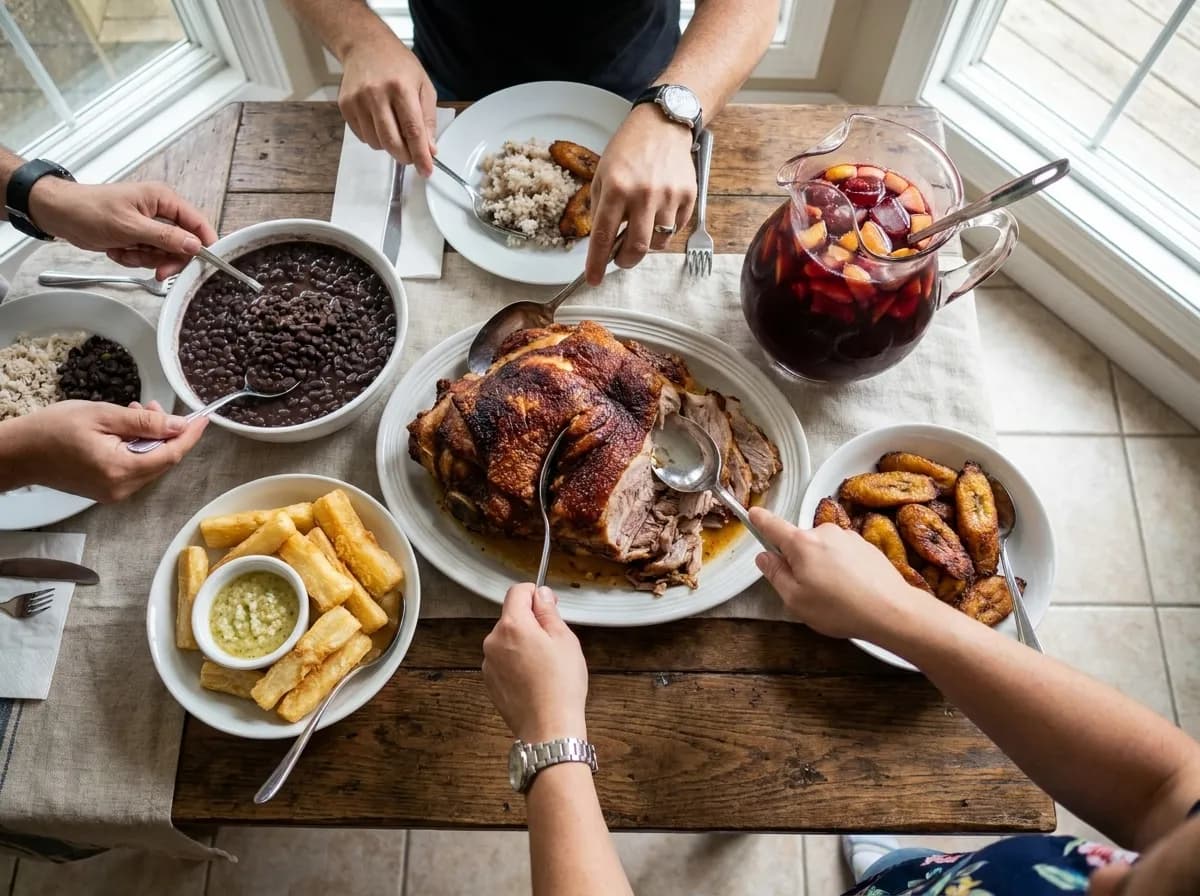
Family-style service is the correct answer for a large table in Miami, and the city is unusually well supplied with it. Cuban, Peruvian, Colombian and Argentine restaurants all cook in a tradition where large shared platters — roast pork, rice and beans, yuca, plantains, grilled meats — arrive in the middle of the table and everyone helps themselves. It is faster, cheaper per head, and structurally more sociable than ten individual plates.
Formats that do not work: tasting menus, anything counter-based, and rooms where the tables cannot be joined. A long table in a narrow dining room also means half the group cannot hear the other half, so where a restaurant offers a private or semi-private room for a large booking, take it even if it costs a minimum spend.
Where the long tables physically are
The practical constraint in Miami is architecture. Much of the newer restaurant stock in Brickell and on the Beach is built around two-tops and four-tops in tight rooms, and a table for ten simply does not exist there. The rooms that can do it tend to be older, larger, and further out — the big Cuban dining rooms, the Latin American family restaurants in Westchester and Hialeah, and the covered terraces in Coral Gables and the Grove.
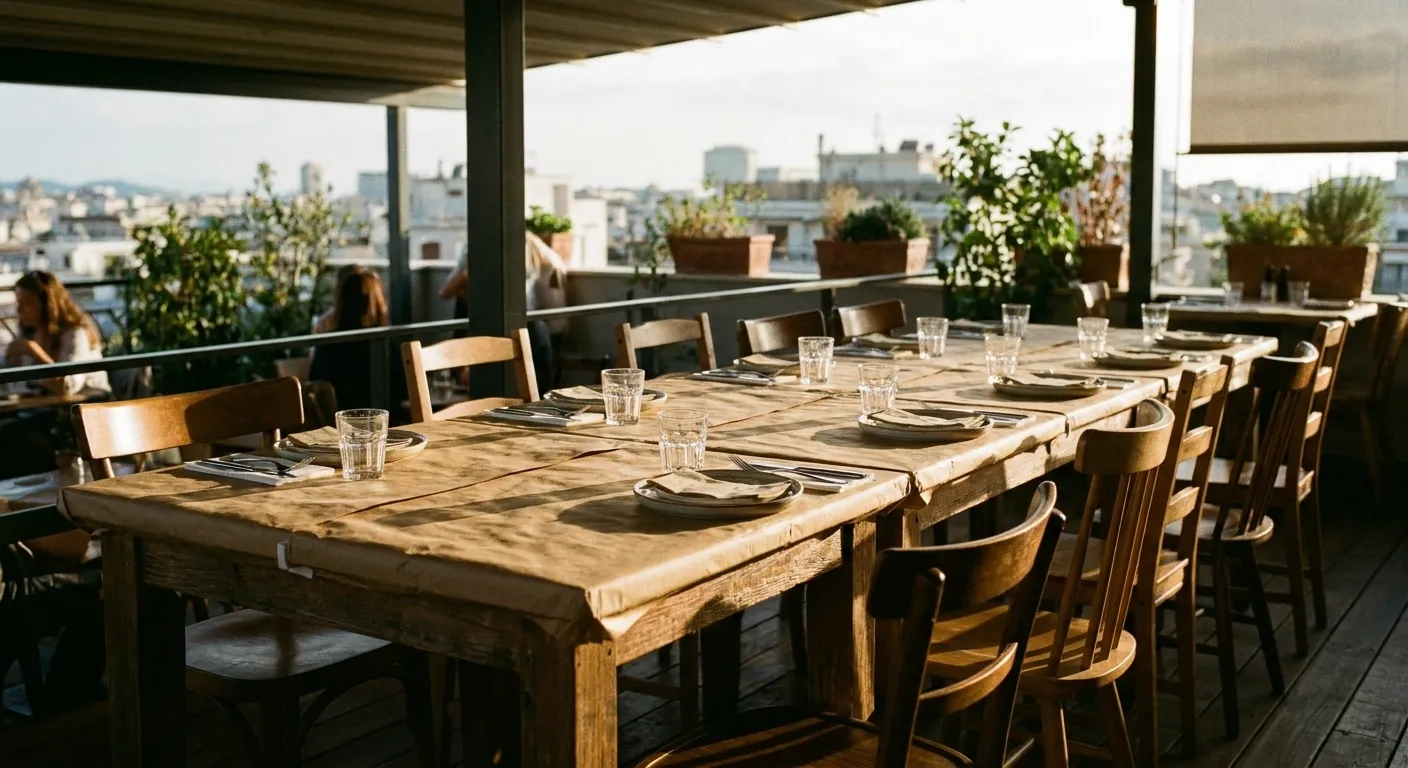
Outdoor and covered terrace seating is the other reliable source of long tables, with the standing Miami caveat: between June and September, confirm there is a covered option or an indoor fallback, because a storm at 8pm with ten people outside is a genuinely bad evening.
Running the night so it works
Give the restaurant a single point of contact and tell the group who it is. Ten people texting a host stand is chaos; one person confirming numbers the day before is a booking that goes smoothly. Arrive together or accept that you will be seated when most of you are there — most Miami restaurants will hold a large table for a limited time and then start seating around you.
And decide how the bill works before the meal, not after. Whether it is one card, an even split, or separate checks — which many kitchens will decline for large parties — settle it while everyone is sober and seated. Combined with reading the service charge line, it removes the two things that actually spoil large dinners.
Tags: #MiamiDining #BigGroups #GroupDinner #DinnerNearMe #MiamiFood #FamilyStyle #AutoGratuity #CoralGables #Hialeah #MiamiEats #LongTable #SetMenu #PartyOfTen #SocialDining
Please drink responsibly. Must be of legal drinking age.
All trademarks are the property of their respective owners.
Ask Karpo first
Want to know which Miami rooms can seat ten this Saturday, what each one's deposit and service-charge rules are, and which do family-style properly? Ask Karpo before you promise anyone a table.