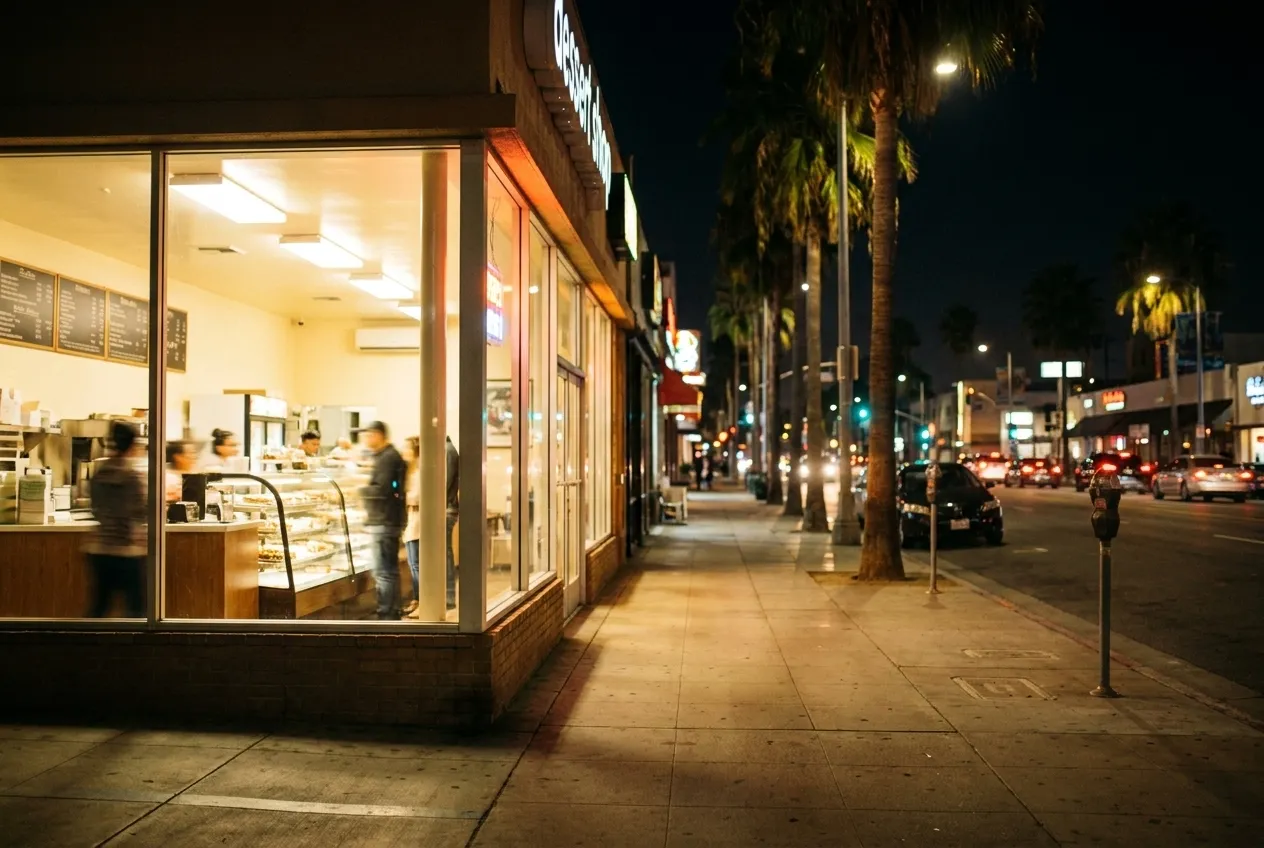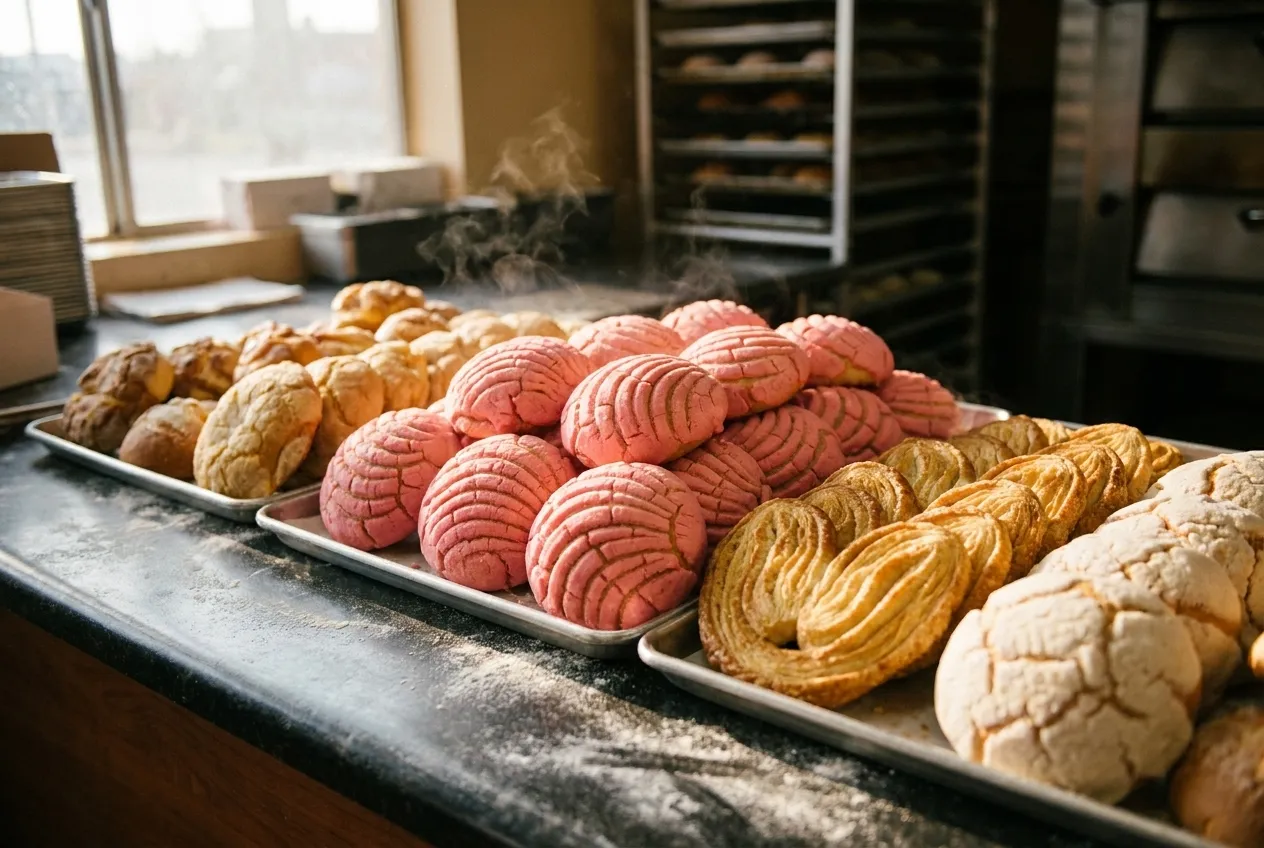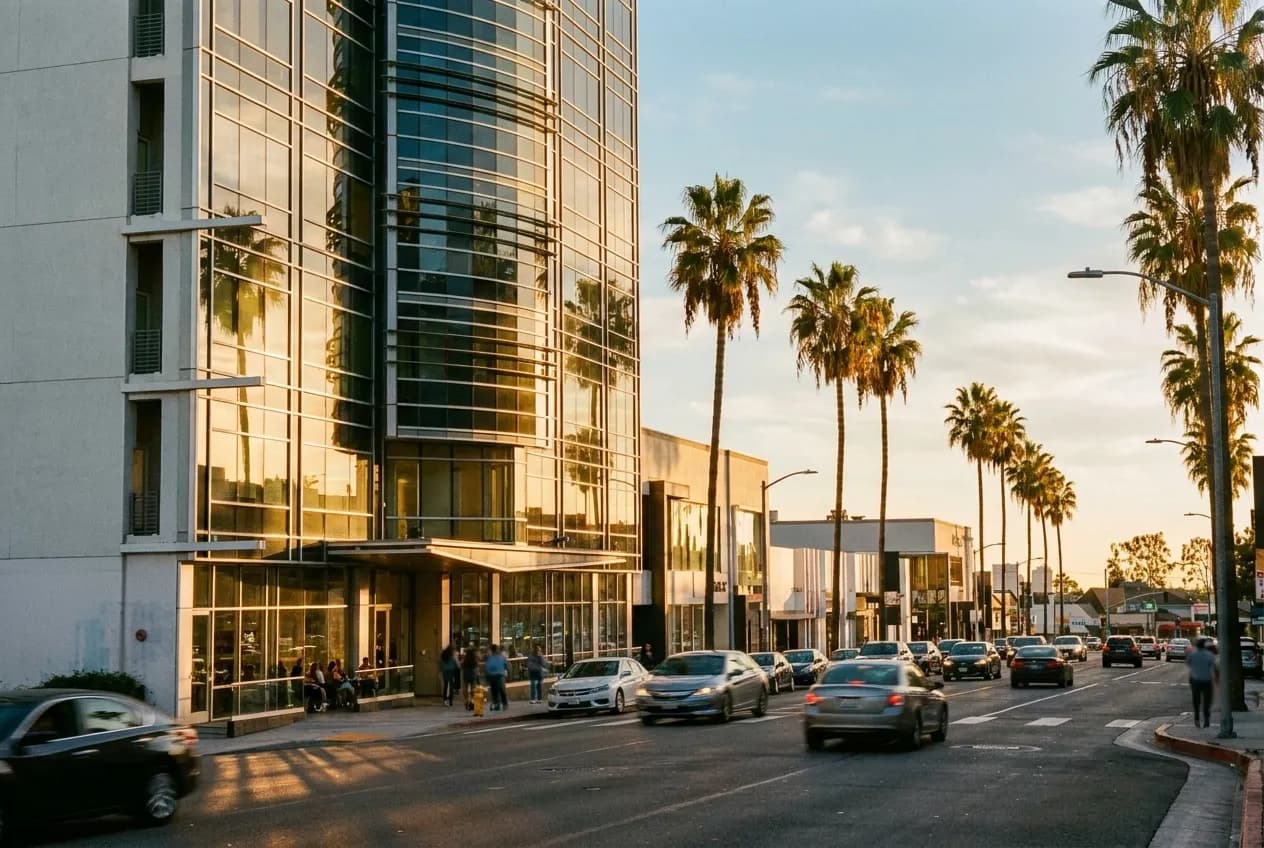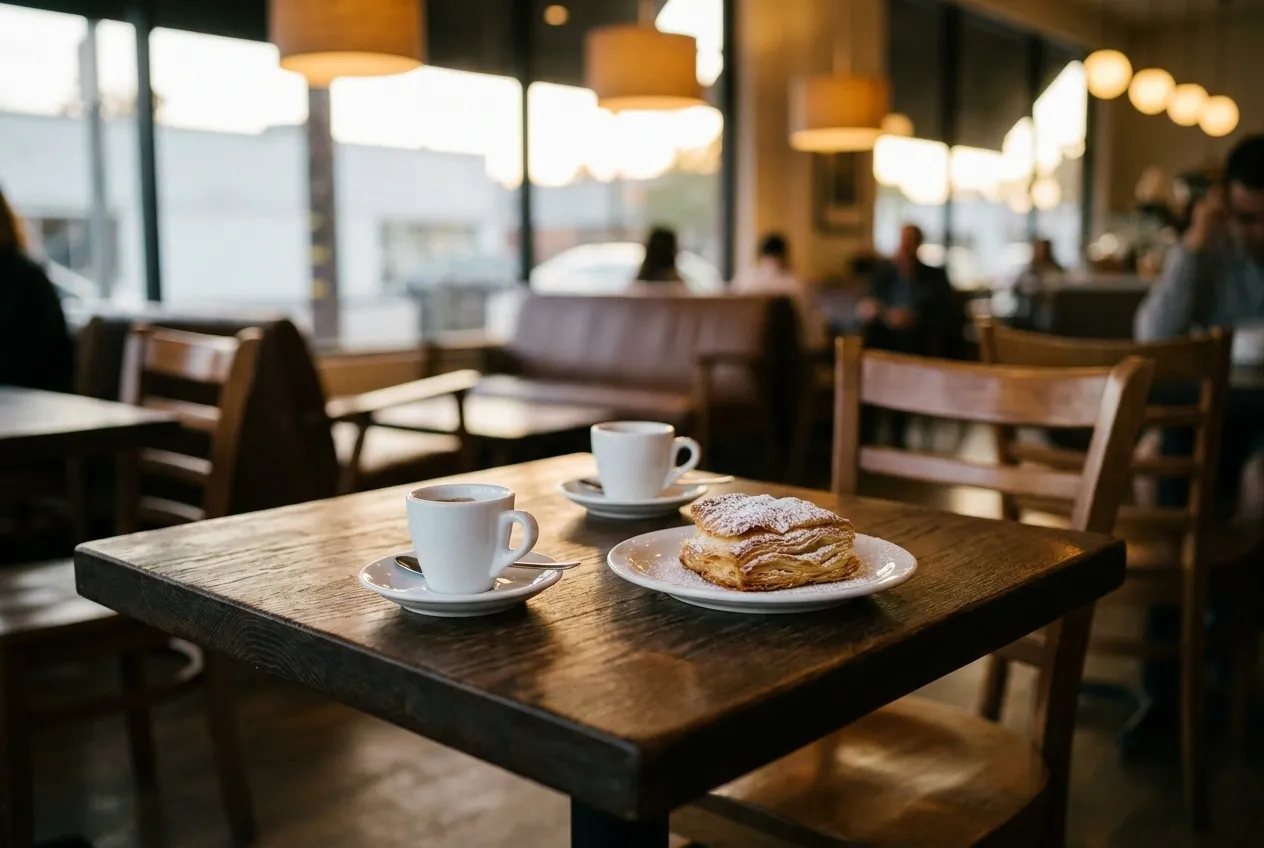
Los Angeles has a reputation for early closures and car-dependent sprawl, but the city's actual late-night dessert culture runs deeper than the reputation suggests. The gap is real: most full-service restaurants here do close kitchens by 9:30 or 10 p.m., but the neighborhoods that support good dinner also support a second room built for sitting until midnight or later. The upgrade is splitting the evening. Eat where the food is best, then walk or drive five minutes to somewhere with good pastry, proper espresso, and chairs designed for conversation. The second stop is where the night actually happens.
Open the Karpo app right now to see which dessert rooms are open late tonight in your neighborhood, how long the walk is from wherever you just ate, and what time the kitchen actually closes.
Which Dinner Districts Have a Real Second Room
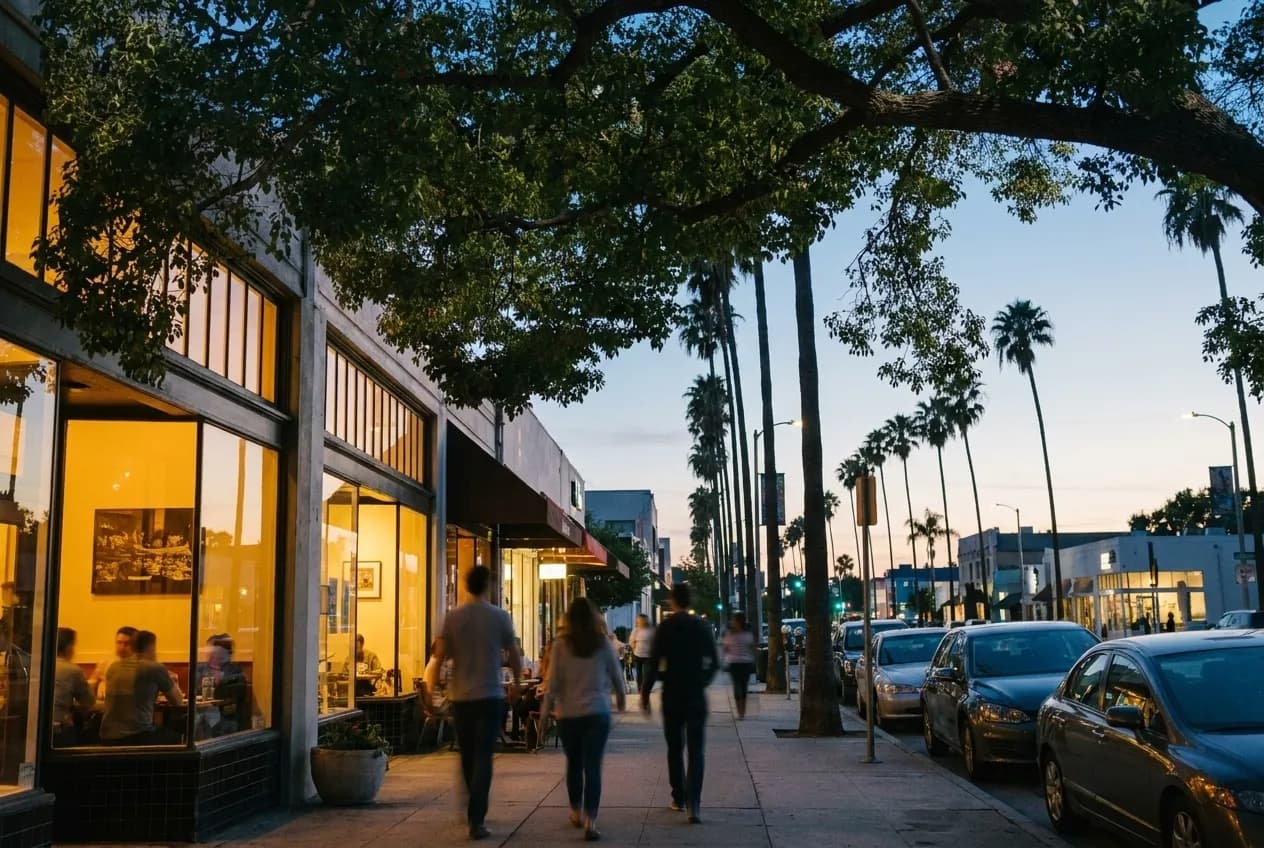
Not every Los Angeles dining cluster has a genuine late dessert option within walking distance, and knowing which ones do changes how you plan the first stop. West Third Street between Fairfax and La Cienega has both: a mile-long stretch of full-service dinner spots with French, Italian, and Japanese menus, plus pastry shops and gelato counters that stay open until 11 p.m. or midnight most nights. You can eat at one address, walk three blocks, and land somewhere with a proper dessert menu and seating that is not trying to turn the table.
Silver Lake and Los Feliz work the same way. Dinner on Sunset Boulevard or Hillhurst Avenue puts you within a ten-minute walk of cafes that run a full evening service with house-made pastries, seasonal tarts, and espresso drinks made to order. The timing matters: most of these second rooms do not take reservations, but they also do not fill up the way dinner reservations do. Arriving between 9 and 10 p.m. usually means you walk in and sit.
Downtown Los Angeles has clusters in the Arts District and around Grand Central Market, but the late-night dessert infrastructure is thinner. A few coffee roasters stay open until 10 p.m. on weekends, and there are ice cream windows near Spring Street, but the density is not the same as the Westside or the Eastside residential neighborhoods. If you are eating downtown, the second stop often means driving to Little Tokyo or Chinatown, where dessert cafes built around mochi, egg tarts, or taiyaki run later and expect the evening crowd.
Koreatown is the exception to the early-closure pattern. Dinner here can start at 8 or 9 p.m., and the dessert rooms are open until 1 or 2 a.m. on weekends. Shaved ice, soft serve, and pastry cafes line the blocks around Sixth Street and Western Avenue, and they are built for groups who just finished dinner and want to sit for another hour. The walk from a Korean barbecue table to a bingsu counter is five minutes, and the second room is almost always open.
How Late-Night Dessert Culture Actually Runs Here
Los Angeles dessert culture is not uniform across neighborhoods, and the timing varies by community and day of week. In the Westside neighborhoods like Sawtelle or West Third, most pastry-focused cafes close by 10 or 11 p.m. on weeknights and stretch to midnight on Fridays and Saturdays. These are sit-down rooms with table service, real plating, and a wine list. They are not quick stops. Expect to spend 45 minutes to an hour, and plan the dinner reservation accordingly so you are not rushing through the main course to make it before closing.
In Korean, Chinese, and Thai neighborhoods, the dessert culture runs later and operates on a different model. These are high-turnover cafes with counter service, menu boards in multiple languages, and seating designed for groups. The food is serious: layered shaved ice with fresh fruit and condensed milk, egg waffles, sesame balls, Thai rolled ice cream made to order. But the service is fast, and the expectation is that you order, sit for 30 or 40 minutes, and clear the table. Midnight closures are common, and some spots stay open until 2 a.m. on weekends.
The beach neighborhoods operate on their own schedule. Santa Monica, Venice, and Manhattan Beach have ice cream shops and gelato counters that stay open late in summer but scale back in winter. The second stop here is often outdoors: a walk along the pier, a bench facing the water, a cone from a window that closes at 10 p.m. The timing is tighter, and the winter months compress the window even further. If you are eating dinner near the beach between November and March, check closing times before you sit down for the main course.
Why the Second Room Is Where the Conversation Happens
The mechanics of the two-room evening are simple, but the effect is real. Dinner restaurants in Los Angeles are built to move covers, especially on weekends. Tables are timed, courses arrive in sequence, and the room is designed to keep things moving. The food is good, but the conversation is always competing with the pace of service. The second room removes that pressure. You have already eaten, the bill is settled, and the only thing on the schedule is sitting until you are ready to leave.
Dessert-focused cafes are designed differently. The tables are larger, the chairs are more comfortable, and the lighting is softer. There is no sommelier hovering, no pressure to order another round, no sense that the kitchen is waiting for you to finish. The menu is shorter, the decisions are easier, and the entire transaction takes five minutes. After that, the room is yours. This is where the long stories happen, where the conversation shifts from catching up to actually talking.
The walk between the two rooms matters, too. Even if it is just three blocks, the transition resets the evening. You leave the noise and the crowd of the dinner spot, you walk past storefronts and side streets, and you arrive somewhere quieter with a different energy. The second room feels like a choice rather than an obligation, and that small shift changes how the night unfolds.
Timing It So Nothing Is Closed When You Arrive
The most common mistake is booking dinner too late and arriving at the second stop 15 minutes before closing. The fix is working backward from the dessert room's schedule. If the cafe you want closes at 11 p.m., and dinner typically runs 90 minutes, book the dinner reservation for 8 or 8:30 p.m. That leaves a 30-minute buffer for slow service, a long check, or a detour on the walk over. The buffer matters more than it seems: a 10 p.m. arrival at a place that closes at 11 p.m. means you can actually sit and stay, while a 10:45 p.m. arrival means you are ordering to go.
Weeknight timing is tighter. Many dessert-focused cafes close at 10 p.m. Sunday through Thursday, which means dinner needs to start by 7:30 p.m. if you want a real second stop. If that does not work with your schedule, the alternative is choosing a dinner neighborhood where the late-night infrastructure runs deeper. Koreatown, Little Tokyo, and Chinatown all have dessert options that stay open past midnight on weeknights, and the dinner timing can flex later without losing the second room.
The other timing consideration is the drive. If the second stop is more than ten minutes away by car, factor in parking and the walk from the lot to the cafe. Los Angeles parking is unpredictable, and a five-minute drive can turn into a 20-minute ordeal if the first two lots are full. The walking-distance second stop solves this completely: you leave the dinner restaurant, walk three or four blocks, and you are there. No circling, no metering, no re-calculating arrival time in your head while you are supposed to be finishing the conversation.
Next weekend, try this: book dinner in Silver Lake, Los Feliz, or on West Third for 8 p.m. Finish by 9:30 p.m., then walk to the nearest pastry cafe that stays open until 11. Order one dessert to share, two espressos, and sit until you are ready to leave. The experiment costs an extra 30 minutes and whatever the pastry menu charges, but it will change how you think about eating out in Los Angeles. The second room is not a luxury. It is the part of the evening that actually matters.
Tags: #DinnerNearMe #LosAngelesDining #LADessert #SilverLakeEats #KoreatownNights #WestThirdStreet #LosFelizFood #LAFoodie #DessertCulture #LateNightLA #LAEats #DiningStrategy #CoffeeDessert #LANightlife #LocalDining
Please drink responsibly. Must be of legal drinking age.
All trademarks are the property of their respective owners.
Ask Karpo first
Open the Karpo app to see which dessert cafes are open right now near your last reservation, how late they are serving tonight, and whether the walk from the dinner spot is actually five minutes or fifteen. Karpo checks live hours and gives you a route that accounts for parking.