San Francisco has a reputation as a city where dinner starts at fifty dollars, and it is half deserved. The half that is not deserved is enormous: this is one of the great cheap-eating cities in America, with immigrant kitchens across a dozen neighbourhoods serving complete, satisfying dinners for well under twenty-five dollars. What takes practice is knowing which formats hold that ceiling once tax, tip and the city's various surcharges are counted.
The listed price and the number on the check are two different things in this city, and the gap is where a cheap dinner goes wrong. Tell Karpo your ceiling per person and where you are, and it will find dinners that land under it with everything included.
Do the real maths first
A twenty-five-dollar dinner in San Francisco is not a twenty-five-dollar menu item. Sales tax runs over eight and a half per cent here, most full-service restaurants add a surcharge of several per cent for employer-mandated health coverage, and a tip on top of that takes a nominally twenty-dollar plate close to twenty-six. In counter-service places, where tipping is optional and the surcharge is often absent, the listed price is much closer to what you pay.
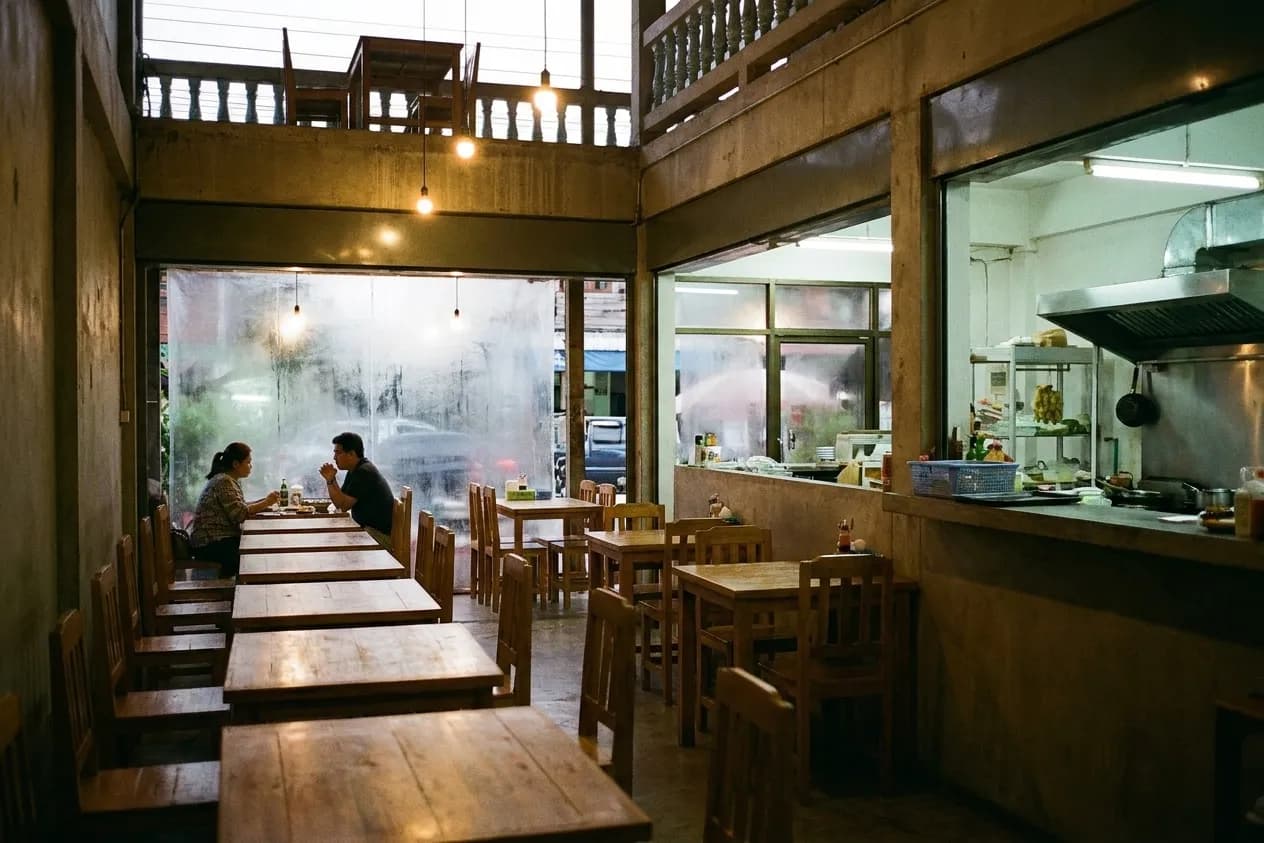
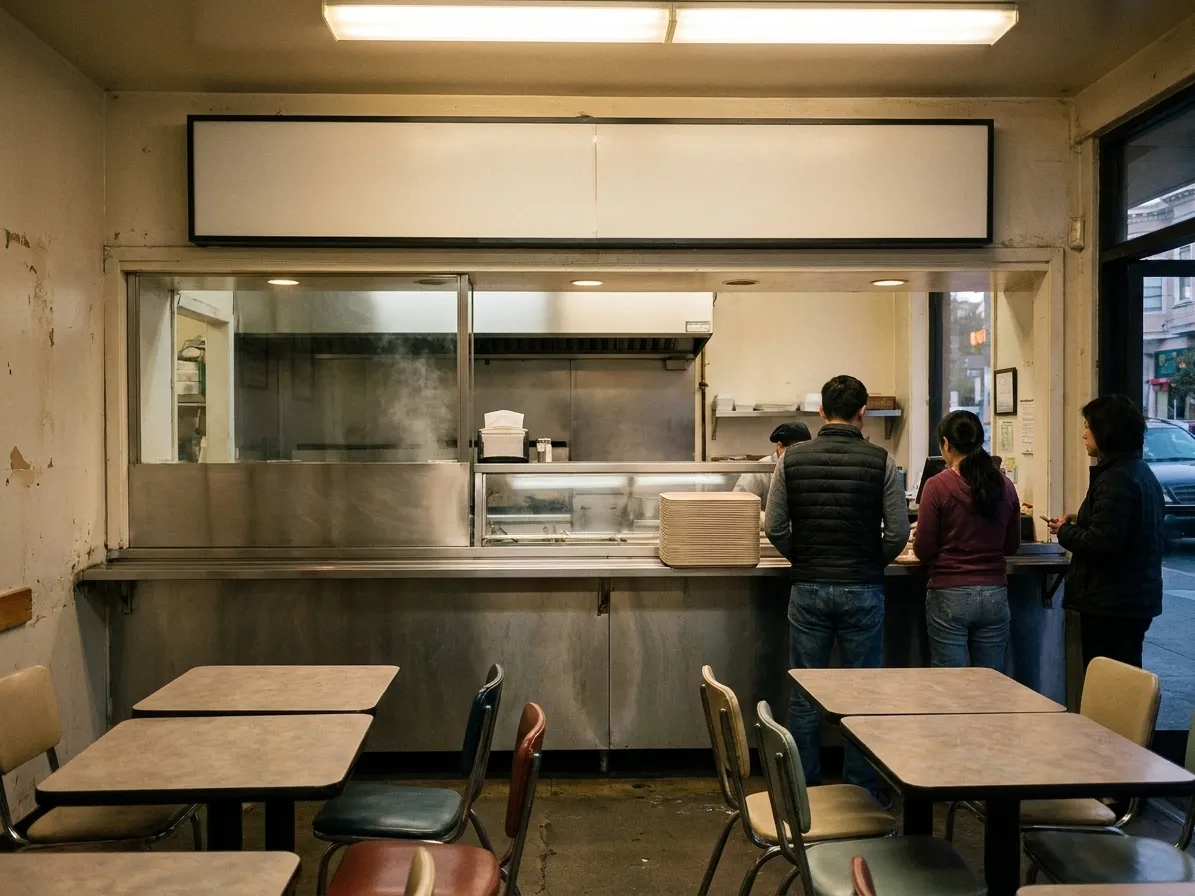
That single structural difference is why the practical answer to cheap dinner in this city is counters, windows and family-run rooms rather than sit-down restaurants with a cheap section on the menu. It is not about the cooking being worse — frequently it is better — it is about which twenty-five dollars is actually twenty-five dollars.
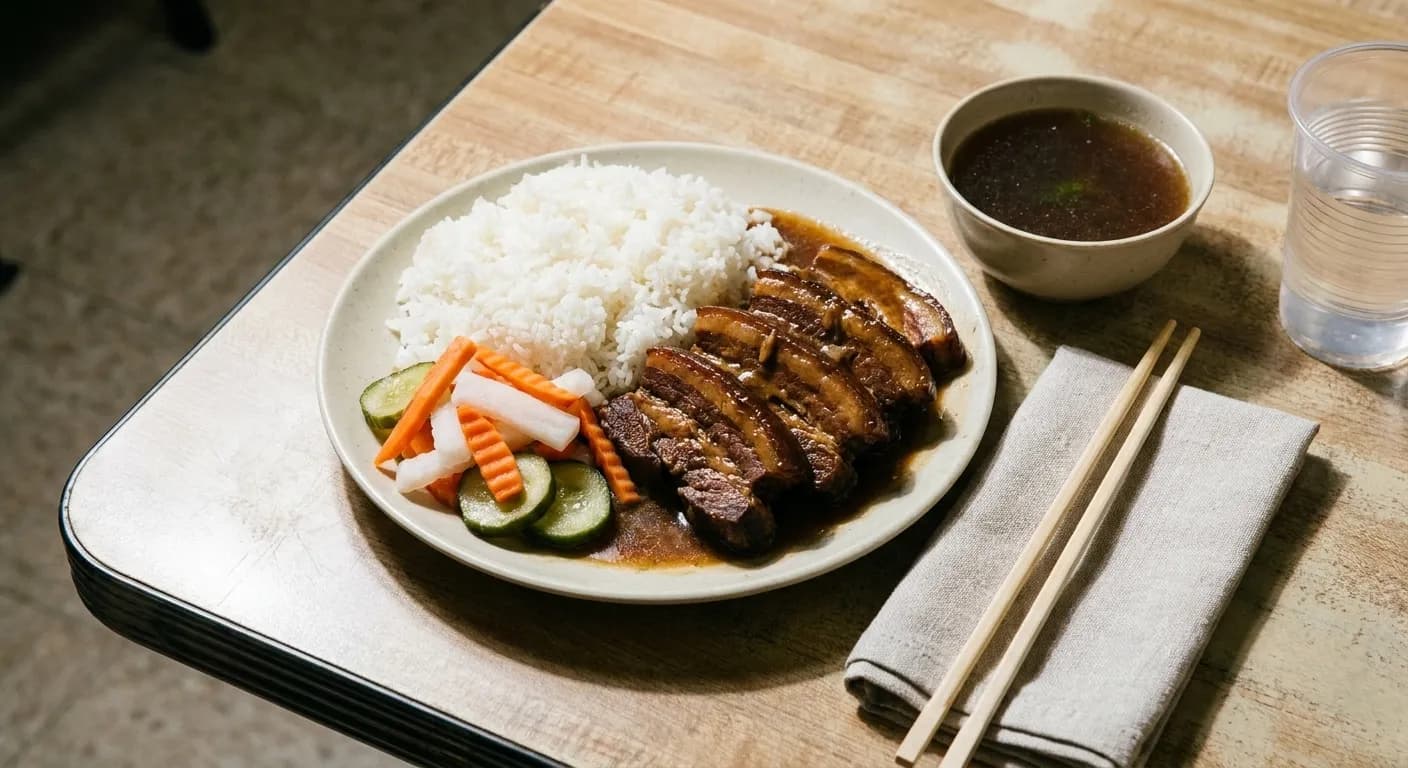
The formats that reliably land under the line
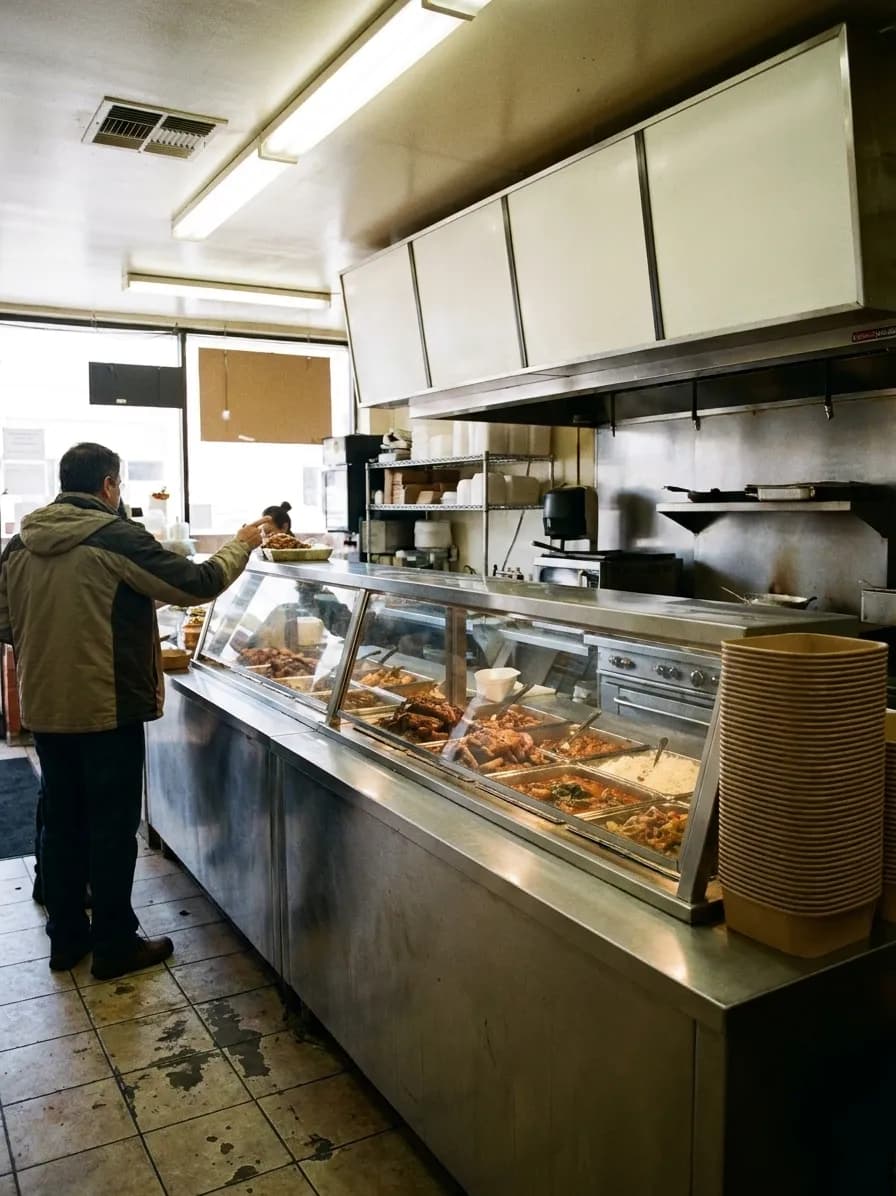
A few categories carry this city. The Mission burrito, which is a complete meal for one and half a meal for the next day. Cantonese roast meat over rice in the Richmond, Sunset and Chinatown, which is the best value hot dinner in San Francisco by a distance. Vietnamese pho and rice plates in the Tenderloin. Banh mi, which lands at a third of the ceiling. Dumplings and hand-pulled noodles across the western neighbourhoods. Salvadoran pupusas and Peruvian rotisserie chicken in the Mission and Excelsior. Indian and Pakistani thalis and biryani around the Tenderloin and the peninsula edge.
What these have in common is that they are single-plate meals from kitchens that make one category of thing at volume. The failure mode of budget dining is ordering three cheap components to build a meal; the successful version is ordering one thing that was designed to be the whole dinner.
The happy-hour route into rooms you could not otherwise afford
The second way under the ceiling is to eat expensive food at a cheap hour. A considerable number of San Francisco's better restaurants run a bar or happy-hour menu in the late afternoon and early evening — smaller portions of the kitchen's actual cooking, at a third to a half of the dinner price, served at the bar with no reservation.
Two or three of those plates is a dinner, and it is a dinner in a room you would otherwise not be sitting in. The constraint is the clock: these menus usually run between about four and six, they end sharply, and the bar seats go first. Arrive at the start rather than the middle.
Where the neighbourhoods stand
Geography does a lot of the work here. The Tenderloin, the Richmond, the Sunset, the Excelsior, Visitacion Valley and the outer Mission carry most of the city's genuinely cheap dinners, because rent is lower and the customer base is local. The financial district and the areas around the main tourist waterfront carry the least — the same dish costs a third more within a few blocks of a hotel cluster.
The useful move is to eat where you are going rather than where you are. A ten-minute Muni ride from downtown to Clement Street or Irving Street changes the price of dinner more than any coupon, and both streets have thirty options within a few blocks so you do not need to have picked in advance.
Three habits that keep the check down
Skip the drink, or drink where drinks are cheap. A cocktail in a San Francisco restaurant frequently costs more than the plate you are eating, and it is the single line item that breaks a budget dinner. Water at the table and a drink afterwards somewhere with a happy hour is the cheaper and usually better sequence.
Carry a card but check the minimum, because many of the best cheap kitchens still run card minimums or a cash discount. And go early — several of these places sell out of the thing they are known for by eight, and the version at nine is the second-best thing on the menu at the same price.
Tags: #SanFrancisco #CheapEats #DinnerInSF #SFEats #BudgetEats #WhereToEatSF #Tenderloin #TheRichmond #MissionDistrict #SFFoodie #BayArea #CheapDinner #HappyHour #SundaySupper
Sources consulted: sf.eater.com · sfstandard.com · sfmta.com
All trademarks are the property of their respective owners.
Ask Karpo first
Surcharges, card minimums and happy-hour windows are the three things that decide whether a cheap dinner stays cheap, and none of them are on the menu photo. Ask Karpo what a full dinner near you actually costs per person tonight, tax and tip included.