 Events Near Me in Little Havana: Calle Ocho Closes the Street for Miles
Free Things to Do
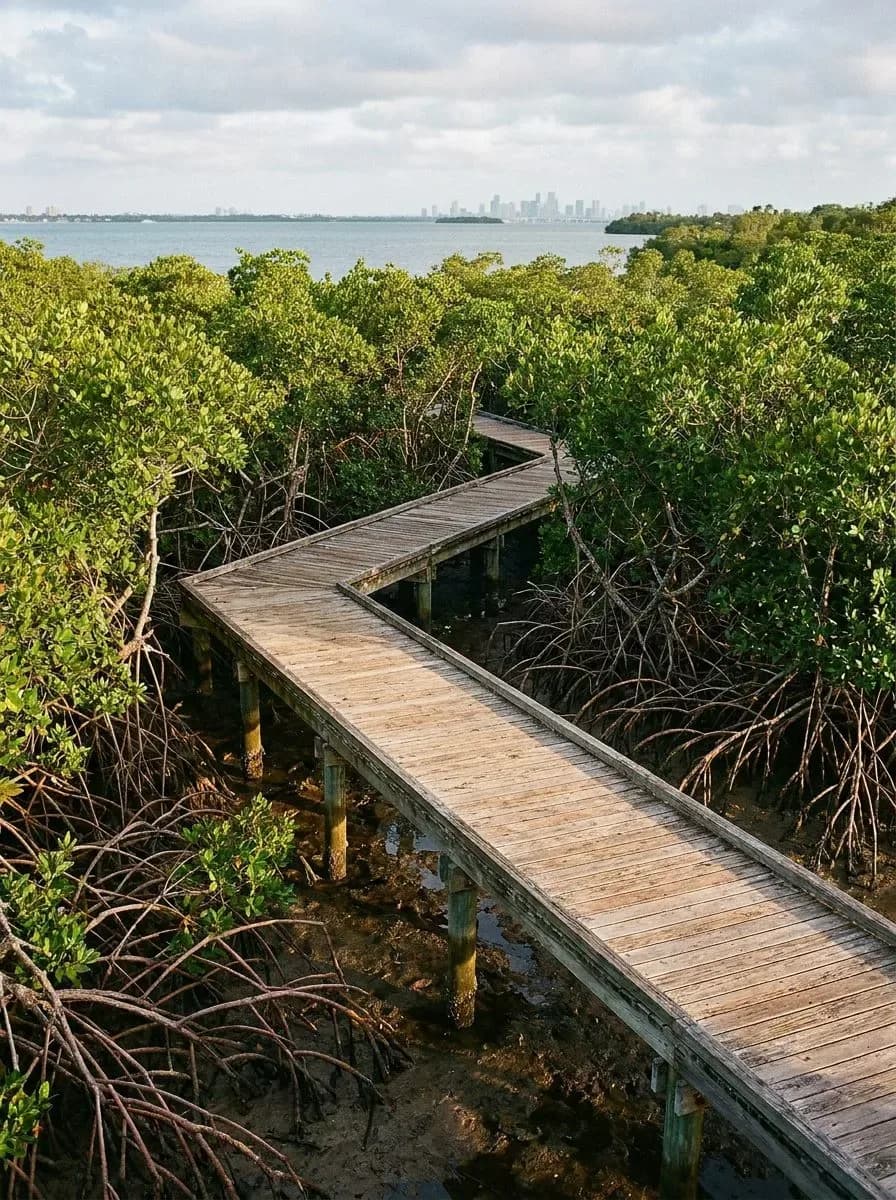
Deering Estate Mangrove Boardwalk and Fossil Pit Overlook in Palmetto Bay
Free Thursday evening access to elevated wooden walkways threading through red mangrove forests, a 100,000-year-old fossil reef outcrop, and bay shoreline where manatees surface at low tide.
The elevated boardwalk at Deering Estate doesn't announce itself with fanfare. You enter through the main gate, cross a clearing of salt-tolerant grasses, and then the wooden planks begin—narrow, weathered rails threading into a canopy of red mangroves that closes overhead like a chapel. The preserve opens its grounds for free every Thursday from five to eight in the evening, and in those three hours you can trace the full loop: from the historic Richmond Cottage overlook down through tidal creeks, past an exposed fossil reef that interrupts the path like a geologic interruption, and out to the Biscayne Bay shoreline where the light goes amber and manatees break the surface during the falling tide.
Timing the arrival window
Free entry begins at five, but the boardwalk empties fastest if you arrive by quarter past. The full loop takes roughly forty minutes at a wandering pace, and that timing matters because the ranger-led walk departs at six. Once that group enters the narrow sections—particularly the single-file stretch near the tidal observation deck—you'll find yourself either trailing behind a slow shuffle of fifteen visitors or waiting at a junction while they bottleneck. Arrive by 5:15pm to complete the full boardwalk loop before the 6pm ranger-led walk fills the narrow sections, and you'll have the mangroves almost to yourself.
Late spring and summer bring the best light for this window. The sun sits higher, casting dappled patterns through the canopy, and the humidity carries the brackish scent of tidal mud and decomposing leaves—the particular perfume of a healthy mangrove system. By early evening the temperature softens just enough to make the walk comfortable, though you'll still want water and bug spray in your bag.
The fossil reef interruption
Halfway through the loop, the boardwalk takes a sharp angle around a shallow pit where a section of fossilized reef lies exposed like a broken promise. The limestone shelf is pocked with coral impressions and mollusk chambers, a remnant of the Pleistocene epoch when sea levels rose and fell across South Florida. The fossil pit overlook at the halfway point exposes a 100,000-year-old reef shelf; the interpretive plaque was updated in 2024 with new carbon dating, and the revised timeline pushes the formation back further than earlier estimates suggested.
The pit itself is roped off but visible from the railing, and the light at this hour—angled, golden—picks out the textures in the stone. You can see the ancient architecture clearly: branching coral skeletons, the whorls of gastropod shells, the dense matrix where sand and calcium carbonate fused over millennia. It's a brief pause in the walk, but it reframes everything around you. The mangroves are young by comparison, a recent chapter in a much longer story of tidal flux and geological patience.
Tidal creek observation deck
The observation deck juts out over a tidal creek where the water runs clear enough to spot small fish darting between the prop roots. At low tide the mud flats emerge, stippled with fiddler crab burrows and the delicate tracks of wading birds. At high tide the creek fills almost to the boardwalk level, and the mangroves seem to float, their roots submerged in dark water that reflects the sky.
This is one of the quieter stations along the route, a place to pause and let the mangrove system reveal its workings. The roots filter sediment, the branches provide nursery habitat for juvenile fish, and the canopy itself cools the microclimate by several degrees. It's an ecosystem that operates on tidal rhythms, twice daily inundations that bring nutrients and carry away detritus. Stand here long enough and you'll notice the small dramas: a heron stalking the shallows, a school of silversides flashing in unison, the slow creep of the tide marking time on the roots.
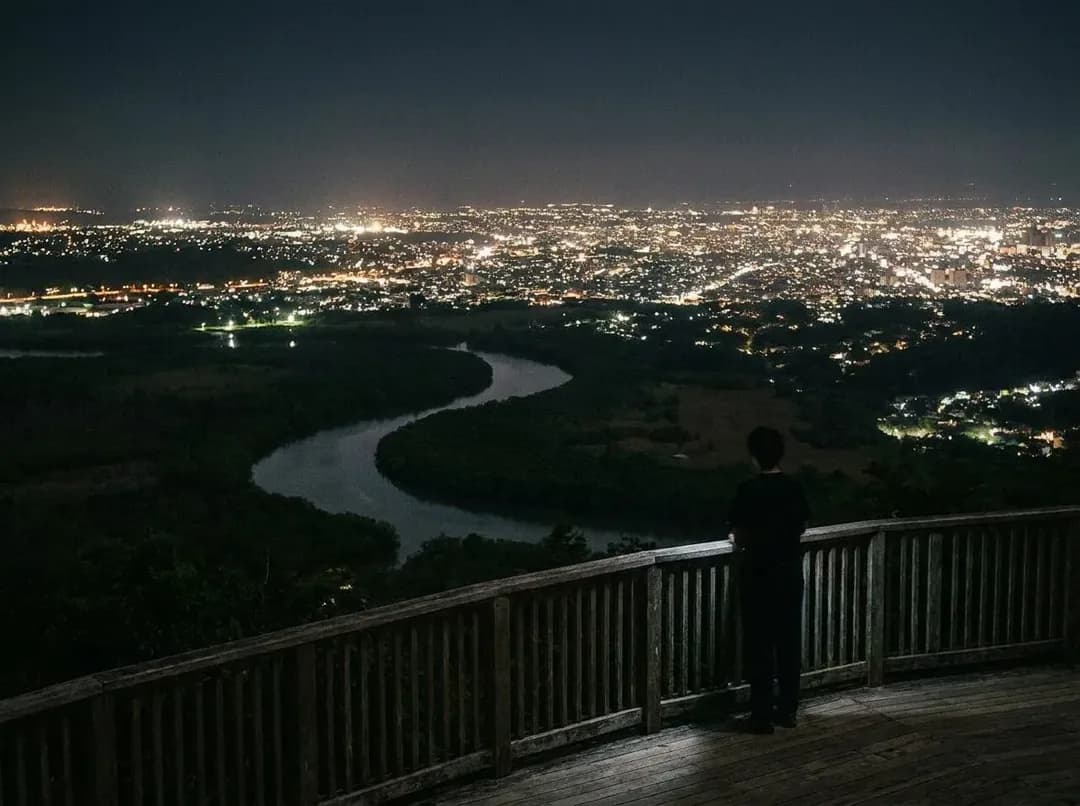
The bay shoreline and manatee sightings
The boardwalk terminates at a clearing on the Biscayne Bay shoreline, where the mangroves give way to open water and a narrow beach strewn with seagrass wrack. During the cooler months manatees drift into the shallows, surfacing to breathe with slow, deliberate exhalations that carry across the water. Even in summer you might spot one if you arrive near low tide, when they graze the seagrass beds just offshore. The visibility improves as the sun drops, the surface glare softening into a mirror finish that makes it easier to pick out the gray shapes moving below.
This stretch of shoreline faces west, and the westernmost bench before the shoreline clearing is the only seat with unobstructed sunset views over the bay and zero mangrove canopy obstruction. It's a deliberate placement, angled just so, and if you claim it around seven you'll have front-row seating as the light shifts from gold to coral to violet. The bench itself is simple—weathered wood, no back support—but the sightline is impeccable. Bring a hat; the sun sits low and direct.
What to expect in late 2026
By summer 2026 the boardwalk should show the benefits of recent maintenance work—new decking on the sections most exposed to tidal wear, reinforced railings at the observation points. The estate has also expanded interpretive signage along the route, with QR codes linking to audio guides that cover everything from mangrove ecology to the fossil record. The infrastructure improvements won't change the essential character of the walk, but they do make it more accessible and better suited to repeat visits. For those looking to fold free things to do into a broader summer travel itinerary, the Thursday evening window pairs well with the estate's other offerings may include guided programs and access to historic areas, subject to current admission policies.
The preserve remains one of South Florida's quieter corners, a place where the built environment recedes and the tidal systems dictate the rhythm. The boardwalk offers a rare chance to move through a mangrove forest without getting your feet wet, to see the fossil record exposed mid-path, and to watch the bay light up at dusk from a bench that someone, years ago, positioned with care.
Practical notes
Deering Estate is located at 16701 SW 72nd Avenue, Miami, FL 33157 (in the Cutler area near Palmetto Bay). Verify current public hours and admission policy directly with Deering Estate before visiting. Street parking is limited; the estate lot is your best bet. No Metrorail access; plan on driving or rideshare. The boardwalk is ADA-accessible with smooth, wide planks and gentle grades. Bring water, bug spray, and a hat. Restrooms available near the visitor center. Dogs not permitted on the boardwalk. Allow ninety minutes to cover the loop, fossil pit, and shoreline at a relaxed pace.
Tags: #DeeringEstate #PalmettoBay #Miami #MangroveWalk #BiscayneBay #FossilReef #FreeAndFine #SouthFlorida #NatureWalk #SummerTravel #FreeThingsToDo #MiamiNature #KarposFinds #ThursdayEvening #BayViews
All trademarks are the property of their respective owners.
Ask Karpo for more information.
Keep reading
- Events Near Me in Little Havana: Calle Ocho Closes the Street for Miles
 Fast Food Near Me in Miami: Sergio's Runs a Cuban Drive-Thru Ventanita
 Things To Do Near Me: Máximo Gómez Park Open Games, Little Havana